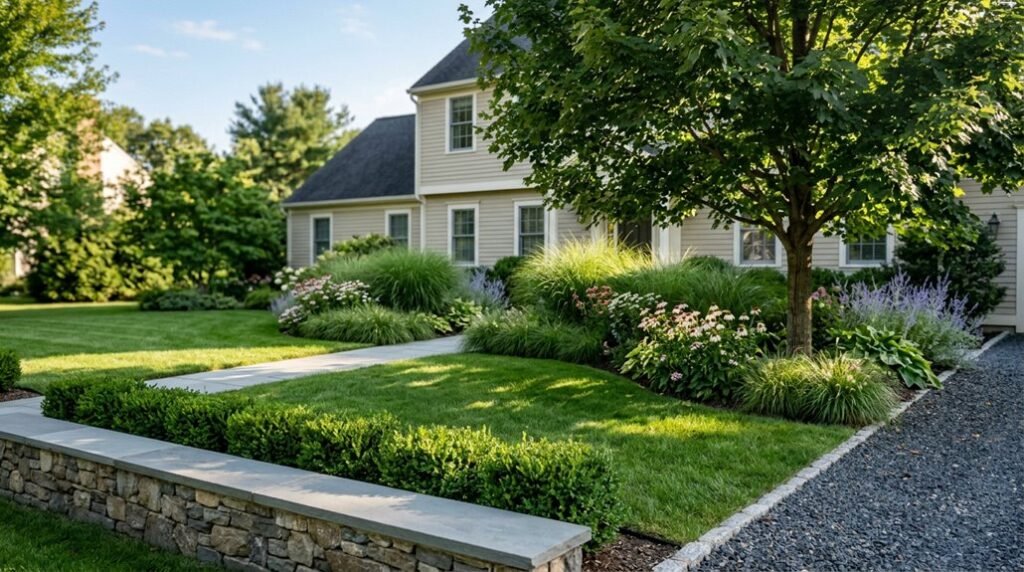
I’ve guided hundreds of homeowners through front yard transformations, and I can tell you this: most people dramatically underestimate where their money actually goes. The gap between a $5,000 refresh and a $40,000 overhaul isn’t just about plant size or paver quality, it’s about whether you solve underlying problems like drainage, soil compaction, or microclimates before adding visual features.
In 2026, labor shortages and climate-adaptive material costs are reshaping every budget tier, which means your zip code matters as much as your design vision. I’m going to walk you through seven real price ranges, what each actually delivers, and where smart substitutions protect your investment without sacrificing your home’s exterior appearance.
What Front Yard Landscaping Costs in 2026: Real Price Breakdowns
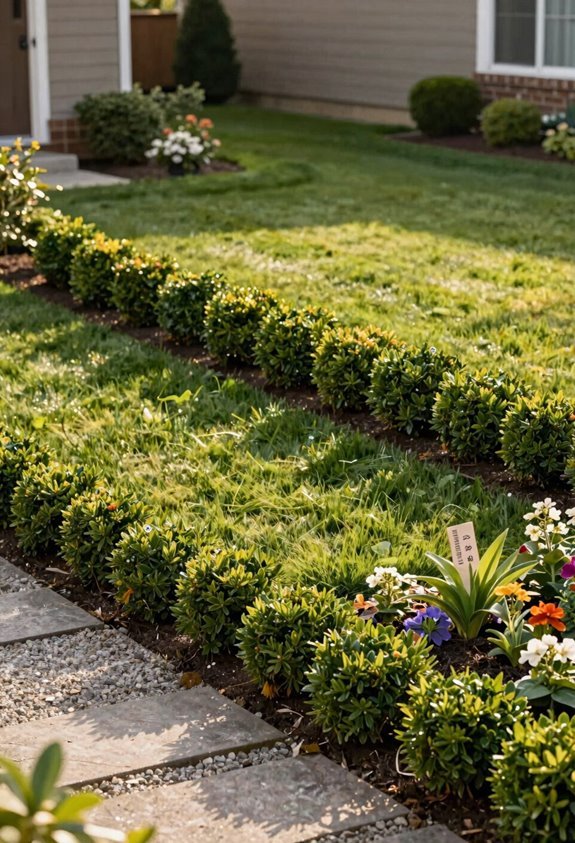
How much should you actually budget for front yard landscaping in 2026? I’ve studied the numbers, and here’s what you’re looking at.
Front yard landscaping costs typically run $5,000 to $15,000 for most homeowners. Per square foot, expect $5 to $20 depending on materials and complexity. Simple projects fall between $4,000 and $12,000, while mid-range work spans $8,000 to $15,000.
Budget $5,000 to $15,000 for most front yard landscaping projects, with costs varying by materials, complexity, and scope.
Basic packages covering mulch, edging, plantings, and minor walkways start around $2,000 to $5,000.
These price ranges reflect real scope differences. Softscape elements cost less than hardscape installations, and your choices directly impact the final figure. The investment pays dividends: strategic front yard improvements can drive up to 7% home value increase, making this spending worth it for property owners who plan thoughtfully.
7 Price Tiers: What $5K, $15K, $40K, and $75K Get You
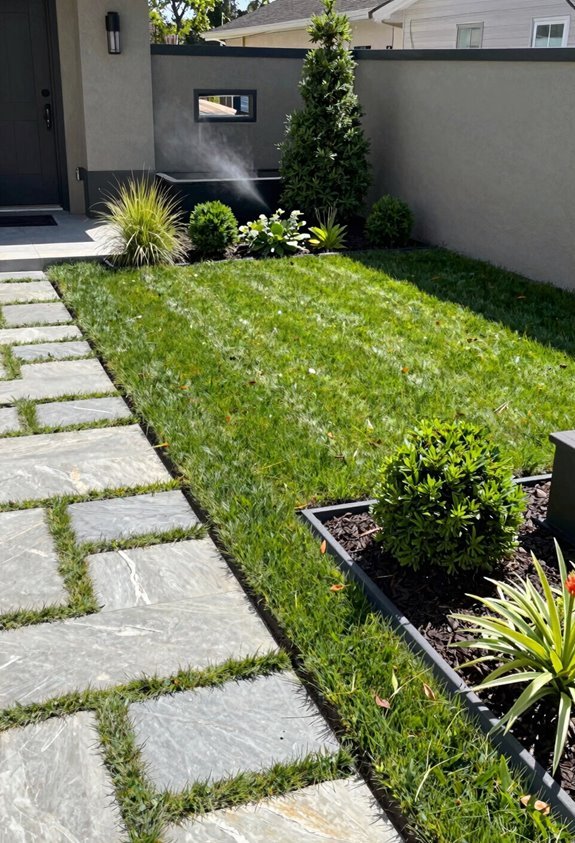
I’ve broken down seven real price tiers so you can see exactly how far your budget stretches, from basic exterior refreshes to full-scale outdoor transformations. Each tier pairs a clear budget breakdown with concrete project scope examples, showing what’s achievable at $5K, $15K, $40K, and beyond.
You’ll quickly spot where your investment delivers the strongest value for your specific goals.
Budget Breakdown by Tier
A $5,000 front yard budget gets you the essentials that make a visible difference without breaking the bank. In this 2026 cost range, you’re looking at refreshed planting beds, quality mulch, and perhaps some native perennials that establish quickly. It’s the entry tier where landscaping begins changing how your home looks from the street without major hardscaping.
Step up to $15,000, and your front yard gains modest hardscaping like a small walkway or retaining wall alongside improved plantings. This budget tier accommodates better materials and more comprehensive design.
At $40,000, your project incorporates extensive hardscaping, professional lighting, and irrigation upgrades that improve the entire property. The $75,000 investment delivers premium materials, custom features, and sophisticated drainage solutions. Each tier reflects realistic 2026 pricing, helping you align expectations with real possibilities for change.
Project Scope Examples
Those budget tiers look clearer when you see exactly what they deliver on the ground. At the $5K mark, your front-yard project scope covers basic curb-appeal essentials: refreshed planting beds, crisp edging, quality mulch, and perhaps a modest walkway repair. These landscaping costs fit snugly within starter budget ranges, giving your property a polished first impression without overwhelming complexity.
Step up to $15K, and you’re adding meaningful hardscaping; think decorative pavers, low retaining walls, and strategic lighting that extends your home’s welcome into evening hours.
- $5K tier: Refreshed planting beds, edging, mulch, and minor hardscaping repairs
- $15K tier: Expanded hardscaping, drainage solutions, lighting, and diverse plantings
- $40K–$75K tier: Comprehensive front-yard transformation with premium materials, irrigation, and architectural elements
Your yard size and regional labor rates ultimately shape where you land within these project scope possibilities.
Value at Each Level
How far can your investment stretch when you’re redoing a front yard? Understanding these cost ranges helps you plan with confidence and find your place among neighbors who’ve transformed their spaces.
At $5,000, your front yard project covers foundational planting, clean edging, fresh mulch, and modest hardscape touches. It’s an honest start that signals you care.
Step up to $15,000, and project value multiplies through defined beds, pathway hardscape, and subtle lighting that welcomes guests properly.
The $40,000 tier brings irrigation systems, premium materials, and substantial hardscape that commands genuine attention.
At $75,000, you’re achieving full curb-appeal transformation: sophisticated drainage, layered plantings, architectural lighting, and masterful hardscape integration.
Each level offers legitimate belonging in well-tended neighborhoods. Your choice reflects personal priorities, not social pressure.
Does Your Landscaping Spend Match Your Home’s Value?
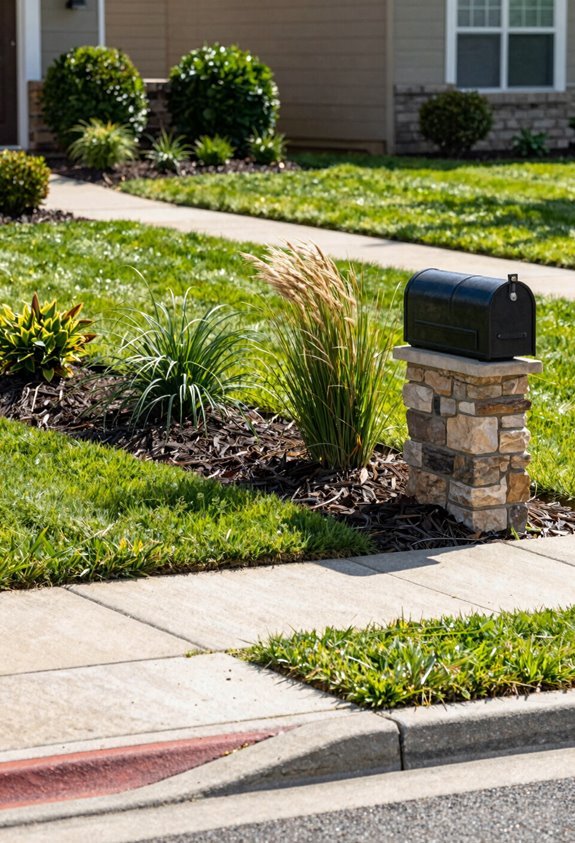
Why should your landscaping investment reflect your home’s total worth? Because your front-yard renovation directly shapes how neighbors, buyers, and guests perceive your place in the community.
I’ve seen how property value impact swings dramatically based on smart spending. At $5 to $20 cost per square foot, your budget stretches differently across options. Drainage costs often surprise first-timers, yet they’re essential for lasting results. Whether you’re exploring basic to high-end budgets, alignment matters.
Consider these factors when matching spend to worth:
- First impression projects in the $5,000–$15,000 range typically yield the strongest returns for mid-value homes
- Landscape materials quality signals attention to detail that resonates with visitors
- A full renovation can boost overall value up to 7%, creating real neighborhood pride
Your outdoor space should feel like home while honoring what you’ve built.
Why Front Yard Costs Vary So Much by Zip Code
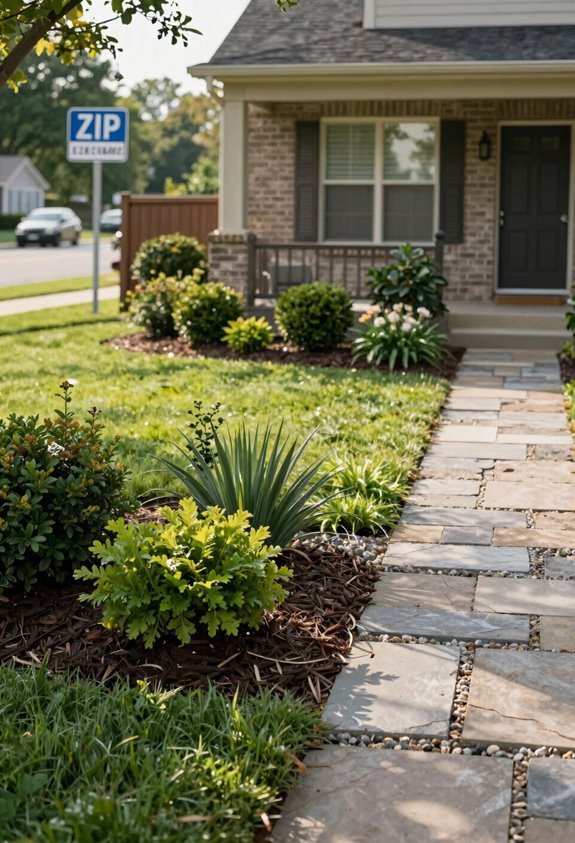
I want you to understand why your neighbor’s identical project might cost thousands less, or more, than yours. Regional labor rate differences, local material availability, and climate zone requirements create significant cost gaps between zip codes that aren’t always obvious upfront.
These three factors interact in ways that can either stretch your budget further or demand careful planning to keep your front yard transformation on track.
Regional Labor Rate Differences
Although you might expect similar projects to cost roughly the same across town, I’ve seen front yard budgets swing by thousands of dollars simply because labor rates shift dramatically from one zip code to another.
Regional costs reflect what skilled crews command locally. In the Bay Area, I’ve watched two-person teams bill $50–$100 hourly, roughly 20–40% above national averages. Your front yard investment hinges on several interconnected factors:
- Soil conditions demanding extensive grading and drainage solutions
- Permitting timelines that stretch schedules and inflate labor hours
- Local regulations requiring specialized compliance steps
These elements compound quickly. A modest refresh to your front yard’s appearance in a premium zip code easily reaches $5,000–$15,000, while identical scope elsewhere might cost considerably less. Understanding your area’s labor landscape helps you plan realistically and feel confident maneuvering estimates.
Local Material Availability
Labor rates tell only part of the story, because material availability shapes your front yard budget just as powerfully. In 2026, regional pricing swings dramatically based on what’s nearby, and I see this reality affect landscaping projects every day. When local quarries supply flagstone or native plants grow nearby, hardscaping costs drop markedly. Your zip code determines whether materials arrive quickly or need expensive shipping.
| Material Source | Availability Impact | Cost Effect |
|---|---|---|
| Local stone quarries | Abundant, low transport | 15-25% savings |
| Regional nurseries | Seasonal native stock | Moderate reduction |
| Imported specialty items | Limited distribution | 30-40% premium |
| Salvaged local materials | Community networks | Significant discount |
| Drought-tolerant natives | Climate-adapted stock | Lower long-term investment |
Smart front yard planning means embracing what surrounds you. This isn’t compromise, it’s belonging to your place.
Climate Zone Requirements
Across every zip code I’ve worked, climate zones dictate what’ll work in your front yard and what’ll drain your wallet. Your specific climate zone shapes everything from material choices to irrigation requirements. I’ve seen homeowners save thousands by planning around local conditions rather than fighting them.
Consider these regional factors:
- Drought-tolerant plants reduce long-term costs in arid zones, though initial installation may run higher due to specialized soil prep and local labor rates
- Seasonal scheduling becomes critical when weather impact limits workable months, compressing demand and raising prices
- Irrigation requirements vary dramatically: humid regions need minimal systems while dry climates demand smart controllers and efficient zoning
Understanding your microclimate helps you invest wisely, avoiding replacements and creating a front yard that fits naturally in your neighborhood.
Material Costs: Where to Splurge and Where to Substitute
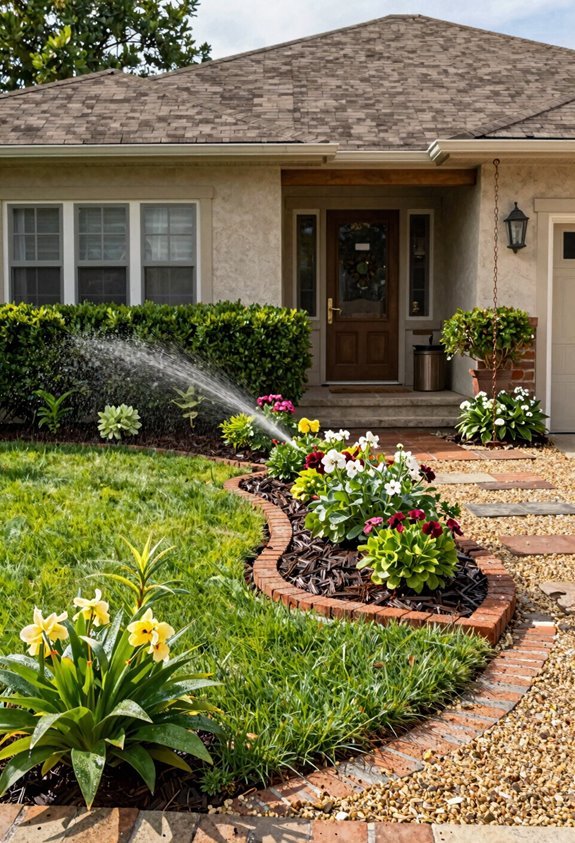
Where should your dollars work hardest in a front-yard transformation? I’ve learned that balancing softscaping and hardscaping matters for your material costs. Your front yard deserves quality where it counts.
I always splurge on irrigation systems because proper watering protects every other investment. For hardscaping, durable edging creates clean lines that improve the entire space without breaking your budget. Here’s where I substitute: premium stone becomes standard concrete pavers, and expensive bark gives way to shredded hardwood mulch that performs beautifully at half the price.
Softscaping offers flexibility too. I choose native plants over exotic varieties, reducing long-term maintenance while building regional character. Your neighbors notice thoughtful choices, not price tags. Smart substitutions in your front yard create belonging without sacrificing the polished, welcoming entrance everyone wants to come home to.
Labor vs. DIY: Smart Ways to Cut Costs Without Ruining Results
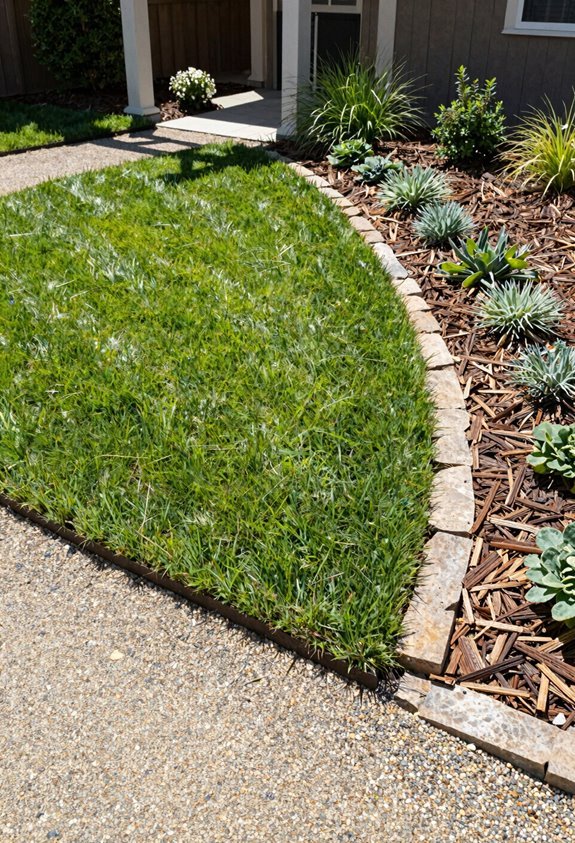
How do you know which tasks deserve your sweat equity and which ones demand a pro’s touch? I tackle DIY-friendly projects that slash labor costs without risking my front yard’s long-term value.
- Planting and mulching, straightforward jobs where I control materials quality and timing
- Basic edging and sod repair, physical but forgiving work that builds noticeable first impressions
- Grading adjustments, I stop here; improper drainage invites foundation headaches that dwarf any DIY savings
Labor eats 30-50% of most budgets, so I strategically outsource technical demands. Structural work, electrical elements, and complex drainage systems warrant certified expertise.
My rule: if mistakes cost more than hiring out, I hire. Smart delegation protects my investment while keeping total cost manageable.
Hidden Costs That Inflate Front Yard Projects: And How to Avoid Them
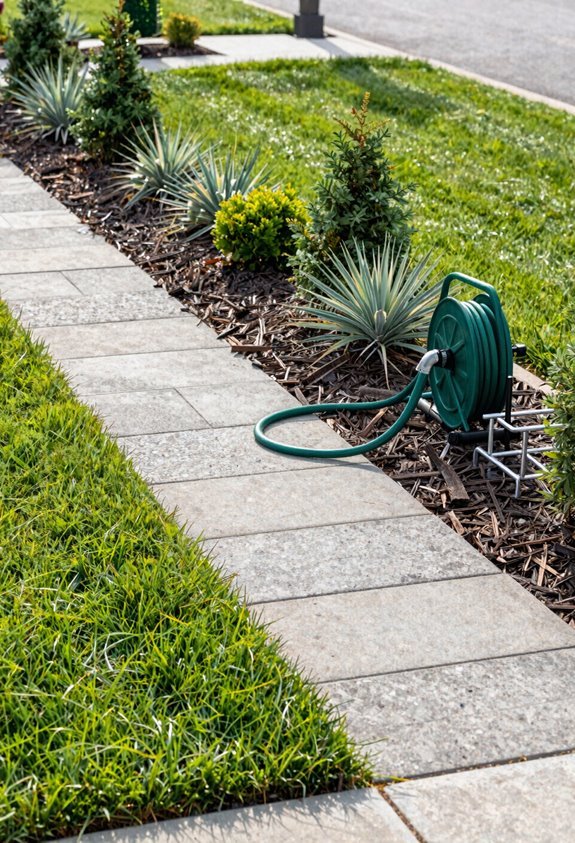
Once I’ve mapped out my labor strategy and set realistic DIY boundaries, I turn my attention to the expenses that don’t advertise themselves upfront. Hidden costs can derail even careful budget planning, so I investigate drainage issues early. Standing water demands drainage improvements that add thousands, and I don’t want surprises mid-project.
Permit requirements catch many homeowners off guard; I check local codes before breaking ground. Irrigation upgrades often become necessary when expanding planting beds, pushing my front-yard project beyond initial estimates. I’ve learned to build a 15-20% contingency into every plan. By addressing these factors proactively, I protect my investment and join the community of prepared homeowners who finish on budget.