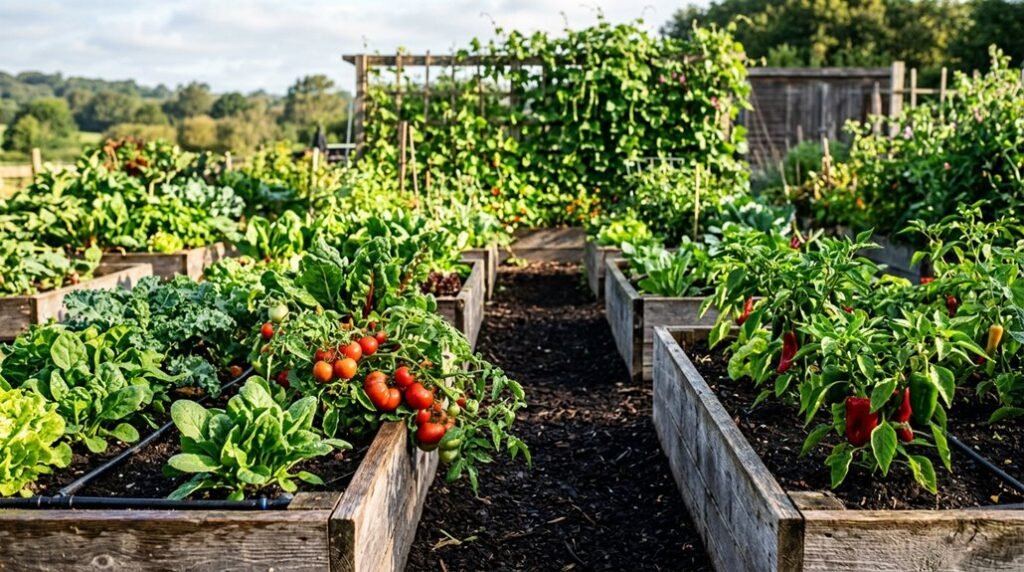
I’ve spent years refining my raised bed system, and the results consistently outpace my old in-ground plots. Warmer soil, custom root zones, and smart design choices reshaped my harvests from modest to abundant.
These seven advantages changed how I grow food, and they’ll likely change your approach too.
Raised Bed Drainage Solves Soggy Soil Problems
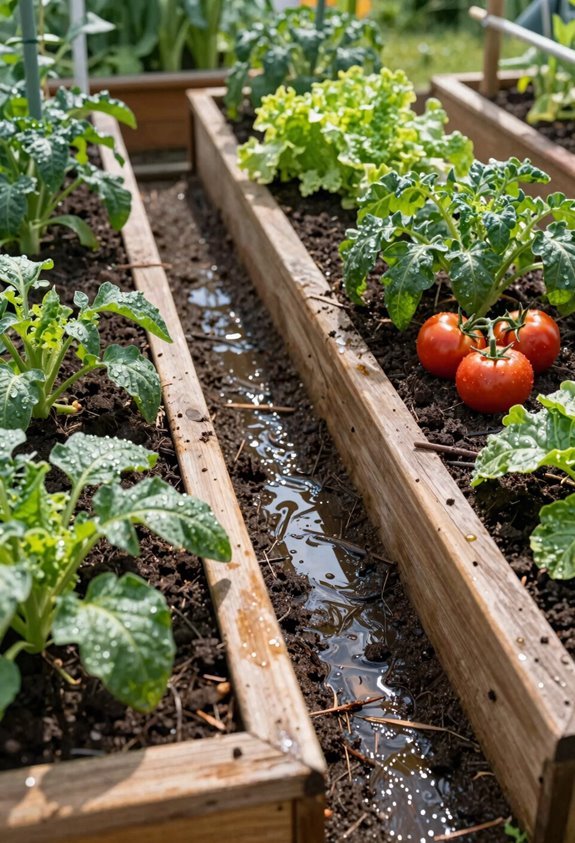
Why let waterlogged ground limit your growing potential when raised beds offer such an elegant solution? I’ve watched countless gardeners turn struggling plots into productive spaces by addressing drainage head-on.
Raised beds elevate your growing medium above problematic native soil, creating natural pathways for excess water to escape. This improved drainage prevents the root rot and compaction issues that plague traditional in-ground gardens. You’ll notice the difference immediately: no more standing water after heavy rains, no more delayed spring planting while you wait for soggy soil to dry.
The contained structure lets you customize moisture-retentive mixes that balance water availability with aeration. You’re not fighting your land anymore; you’re working with it. Targeted drainage planning means directing water precisely where roots need it, and away where they don’t.
Custom Soil Mixes Give Roots Exactly What They Need
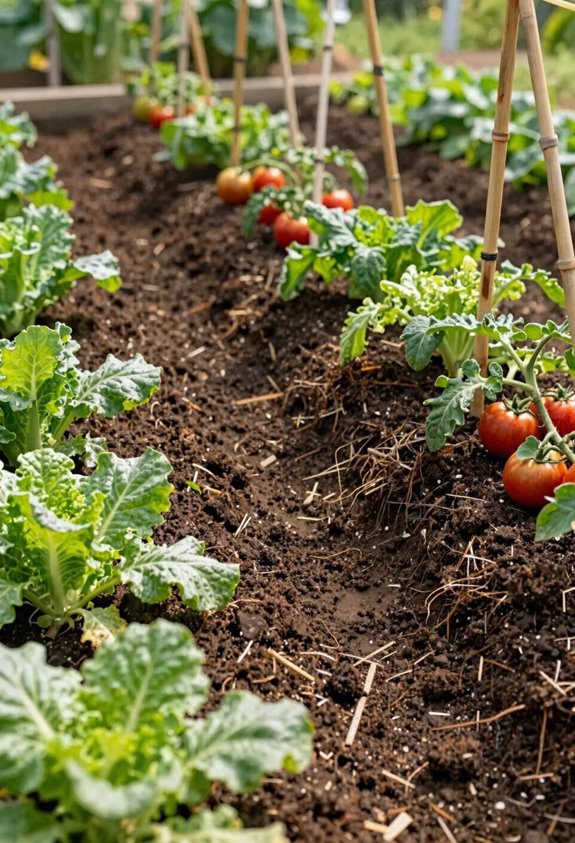
How often have you planted your favorite vegetables only to watch them struggle in soil that simply isn’t right for them? I’ve found that custom soil mixes solve this frustration completely.
| Component | Benefit |
|---|---|
| Compost | Boosts nutrient availability naturally |
| Perlite/Vermiculite | Improves drainage and aeration |
| Raised bed mix | Provides consistent base structure |
| Seasonal refresh | Replenishes micronutrients yearly |
| pH adjusters | Balances chemistry for target crops |
With raised beds, you’re not stuck battling compacted native ground. I’ve tailored blends for tomatoes needing sharp drainage, then shifted that same bed toward moisture-lovers by adjusting ratios.
This flexibility lets us build a soil food web that actively supports roots rather than fighting them. The control belongs in your hands.
Warmer Soil in Raised Beds Extends Your Growing Season
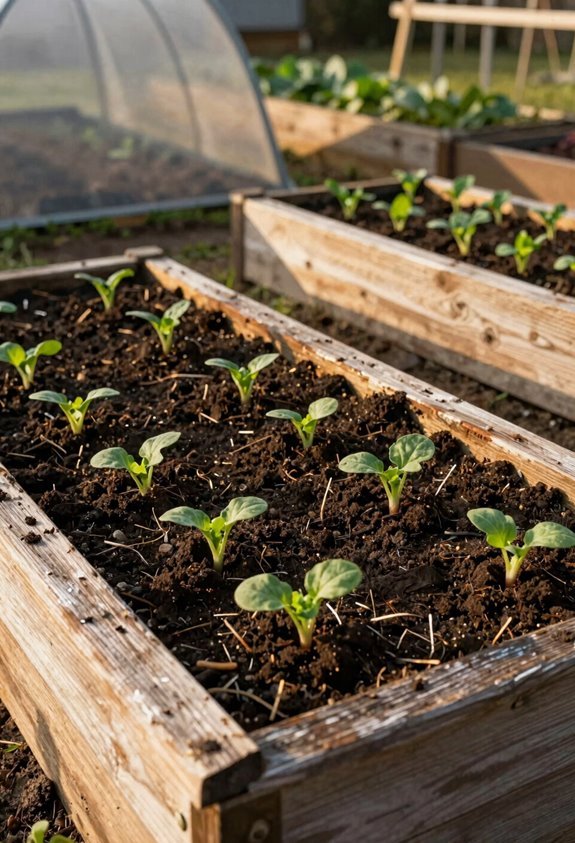
I’ve found that raised beds give me a serious edge when spring arrives, since the soil warms up weeks faster than my old in-ground plots ever did. That head start means I’m planting tomatoes and peppers while my neighbors are still waiting. I’m harvesting those same crops long after their gardens have finished.
The extended season isn’t just convenient; it’s the difference between a modest yield and one that keeps my kitchen stocked for months.
Faster Spring Planting
When spring finally arrives, I’m keen to get my hands in the soil, and raised beds let me start planting weeks earlier than traditional gardens.
Raised beds warm faster because improved drainage and sun exposure boost soil temperature quickly. This means I can begin succession planting of leafy greens and root vegetables sooner than neighbors with in-ground plots. The controlled environment limits moisture swings, so frost setbacks don’t derail my progress.
Key advantages I notice each season:
- Soil temperature climbs rapidly, accelerating germination and robust root development
- Drainage efficiency prevents waterlogged conditions that delay spring sowing
- Early planting establishes resilient crops before unpredictable weather strikes
These factors combine for greater spring productivity. I consistently achieve multiple harvests while others wait for their ground to dry, building confidence through tangible results my gardening community notices and shares.
Extended Harvest Window
Why let your growing season end when the calendar says it should? I don’t, and you don’t have to either.
Raised beds give us a real advantage here. The elevated design captures more sunlight, pushing soil temperature higher weeks before ground-level dirt warms. That drainage I mentioned earlier? It works double-duty, preventing waterlogged soil that stays cold and stalls root growth.
Together, these factors create an extended harvest window that stretches your productive months. You’ll pull crops longer into autumn because warm soil keeps plants active. I’ve found my harvests continue weeks past when neighbors’ gardens fade. The math is simple: faster warming in spring, sustained growth in fall, more total harvests in between.
This isn’t luck; it’s physics working in our favor.
Earlier Crop Maturity
How much sooner could you’re harvesting crisp radishes or tender lettuce? I’m consistently amazed by how raised beds deliver early maturity through superior soil warmth and drainage.
Here’s what I’ve observed in my own garden:
Loose, well-draining soil warms faster in spring, letting me seed and transplant earlier than traditional in-ground plots. Elevated temperatures reach optimum growing conditions quickly, effectively extending my local growing season. Denser planting and improved soil structure accelerate root development, bringing harvests weeks sooner.
The enhanced drainage prevents waterlogging, so roots establish immediately after planting. Combined with reduced soil compaction, raised beds support faster maturation for cool-season crops like peas and lettuce. Once you’re growing this way, you’ll join fellow gardeners who’ve discovered this reliable path to earlier, more abundant harvests.
Dense Planting in Raised Beds Produces More Food
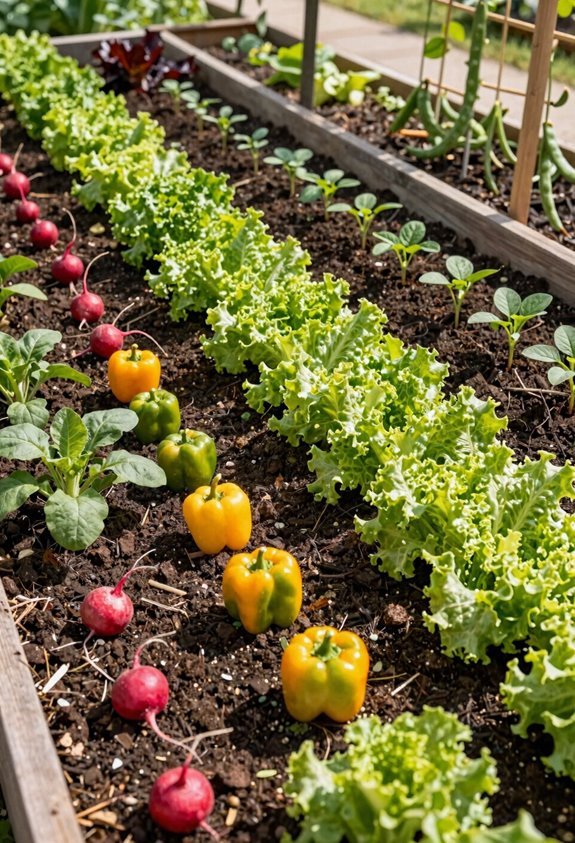
Where exactly does a modest backyard compete with sprawling farmland? Right here in my raised beds, where dense planting makes every square foot productive ground.
I pack my raised beds tighter than traditional rows allow, and the payoff is remarkable. The loose, uncompacted soil lets roots expand even when plants sit close together, while superior soil drainage prevents the rot and disease that usually trouble crowded plantings. I stack upward too, training tomatoes and beans on trellises that multiply my vertical real estate.
This approach delivers serious harvest density. My beds warm faster, so I start earlier and replant sooner, squeezing multiple successions into each season. The controlled environment means I push spacing limits without sacrificing plant health.
My small plot now outproduces sprawling gardens I used to maintain.
Raised Beds Save Your Back and Your Time
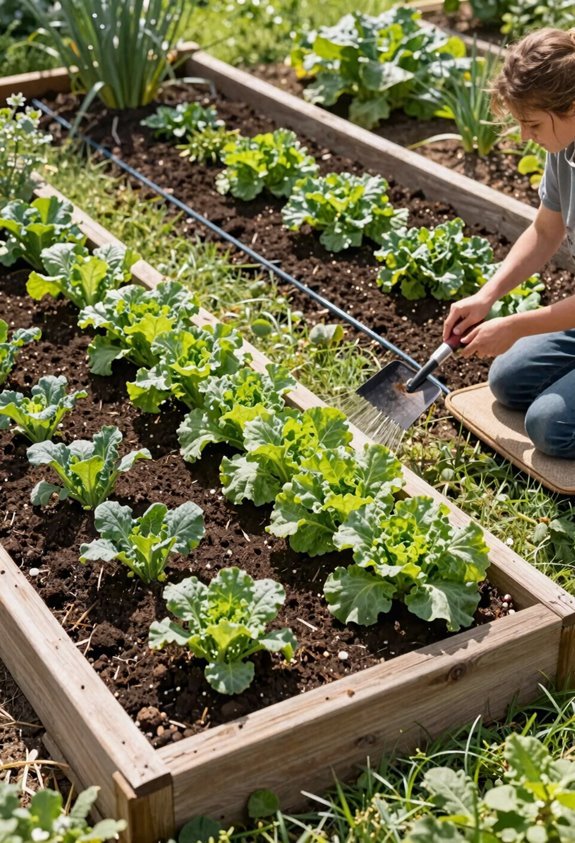
I built my raised beds at twenty-four inches high, and I’m never going back to ground-level gardening. The ergonomic working height lets me weed, water, and harvest without kneeling or hunching, which means I actually enjoy spending time in the garden now. That faster maintenance access translates to healthier plants and bigger yields, since I’m not putting off chores that used to wreck my knees.
Ergonomic Gardening Height
The right working height transforms gardening from a chore into a sustainable practice you’d actually enjoy maintaining. I discovered that raised beds revolutionized my approach to ergonomic gardening, eliminating the constant kneeling and bending that once left me stiff and reluctant.
My elevated beds stand at 24 inches, keeping me upright while I work. This accessibility means I garden more often, not less. The improved soil drainage from contained growing media prevents waterlogged conditions, protecting root health and reducing maintenance headaches.
You’ll stay cleaner since elevated designs minimize muddy contact. You’ll tend plants longer with heights adjusted to your specific needs. You’ll welcome gardeners of all mobilities into your shared growing space.
Ergonomic gardening through raised beds builds a community where everyone belongs, turning individual plots into collective success.
Faster Maintenance Access
Why spend hours wrestling with ground-level plots when raised beds put every task within easy reach? I’ve discovered that elevated designs change how I approach daily maintenance, eliminating constant kneeling that wears me down. The accessibility means I can reach every plant without compacting soil, keeping roots healthy while I work.
| Task | Traditional Ground Beds | Raised Beds |
|---|---|---|
| Weeding | Kneeling, back strain, 30+ min | Standing access, 15 min |
| Watering | Hose dragging, uneven coverage | Targeted delivery, efficient flow |
| Harvesting | Bending, searching, soil contact | Clear sightlines, clean produce |
| Path maintenance | Muddy, undefined routes | Organized, accessible walkways |
This improved accessibility encourages me to visit my garden more often, catching issues before they spread. Raised beds streamline every operation, from pruning to harvesting, creating a sustainable rhythm that respects my time and energy.
Fewer Weeds and Pests in Raised Beds
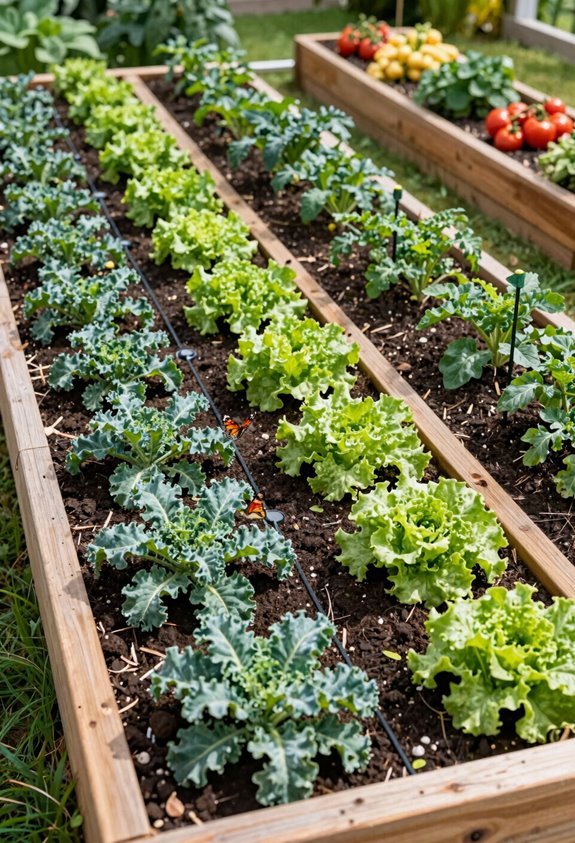
How exactly do raised beds cut down on weeds and pests? I’ve found the answer lies in smart design choices that work together seamlessly.
I install weed barriers at the base, then layer mulch or cardboard in spring to eliminate winter growth and reduce seeds left behind. My soil control and better drainage combine with minimal disturbance to stop weeds from establishing in the first place. Dense planting accelerates canopy development, which shades out opportunistic weeds naturally.
The heightened sides also act as physical barriers that deter certain pests, reducing pressure on my crops. This integrated approach means I’m not constantly battling invaders; instead, I’m cultivating alongside fellow gardeners who’ve discovered this cleaner, more manageable path. The result is straightforward maintenance and healthier harvests without the exhaustion of traditional methods.
Raised Bed Design Fits Your Space and Budget
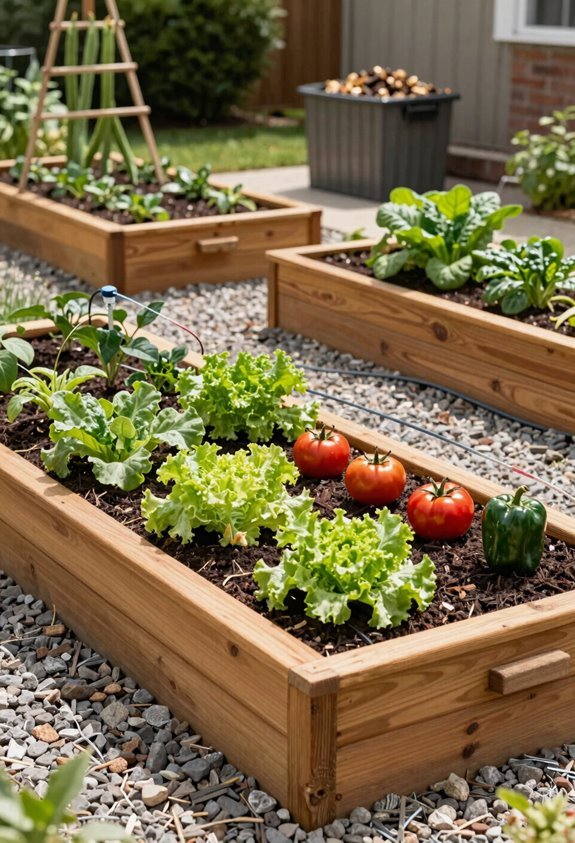
Wherever your garden grows, I’ve found raised beds adapt beautifully to the constraints you’re working with. You don’t need sprawling acreage to cultivate productive vegetables; I’ve watched compact designs transform balconies and backyards alike.
| Feature | Benefit |
|---|---|
| Six-to-eight-foot length | Maximizes growing area per soil volume |
| Three-to-four-foot width | Keeps every plant within arm’s reach |
| Adjustable height | Reduces strain, improves accessibility |
| Modular construction | Scales with your space and budget |
| Customizable shapes | Fills odd corners purposefully |
Taller designs keep soil contained and accessible, supporting years of comfortable gardening. I’ve built sturdy frames from salvaged lumber and affordable kits that respect tight budgets without sacrificing harvest potential.
Whether you’re filling a sunny patio or reclaiming a neglected corner, raised beds meet you where you are, inviting you into a community of growers who prove that limitation sparks creativity.