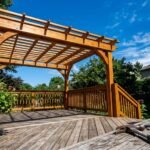
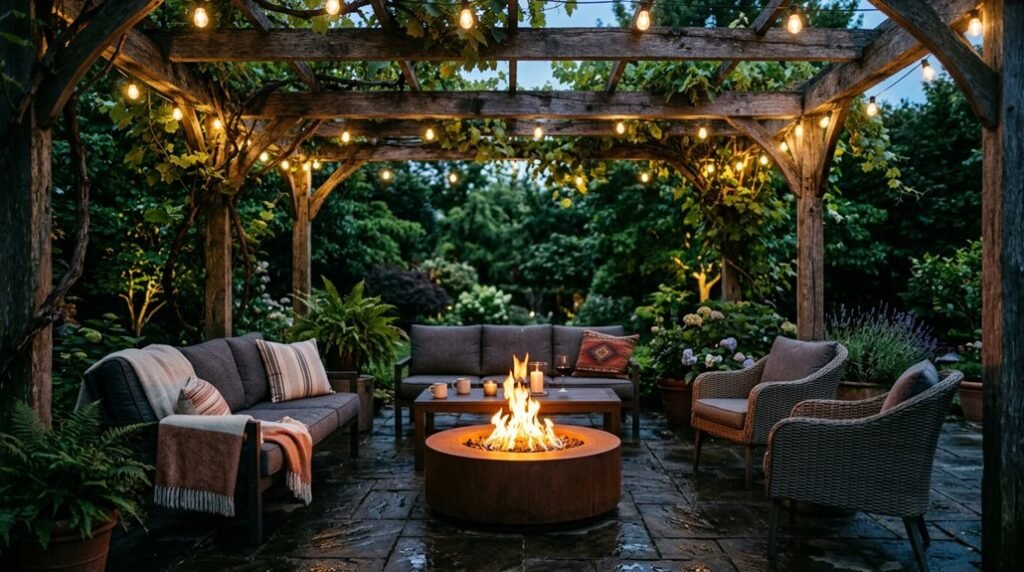
I’ve seen homeowners turn their pergolas into beautiful outdoor gathering spaces with carefully placed fire features, yet the question of safety always sparks important conversations. The short answer is yes, but with critical conditions that protect your structure and loved ones. Your local building codes and the specific design of your pergola will largely determine what’s actually possible.
I’m going to walk you through exactly what separates a cozy evening from a costly mistake, starting with the measurements that matter most.
Start With Safety: Fire Pit Rules for Pergolas
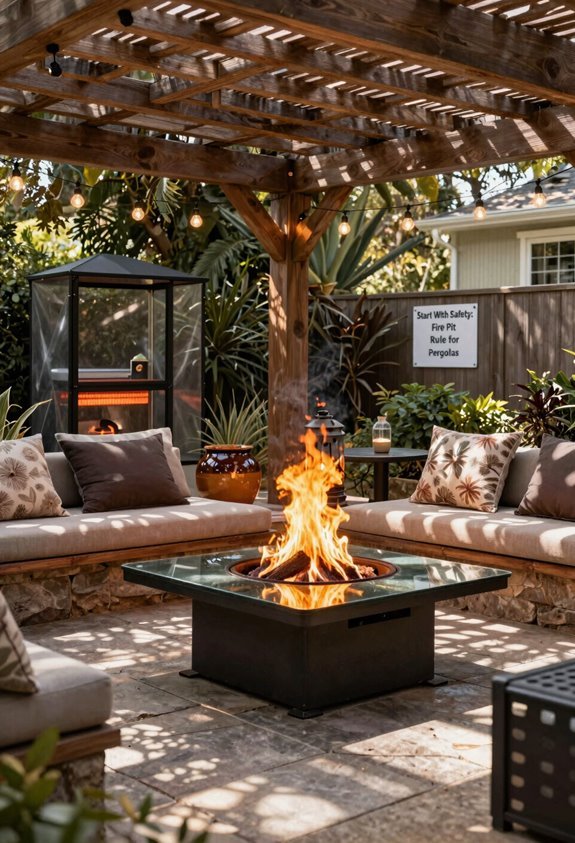
Why risk a backyard centerpiece becoming a hazard when a few precautions keep everything safely enjoyable? I’ve learned that placing a fire pit under a pergola demands respect for ventilation above all else; without it, smoke accumulates and turns relaxation into regret.
I always maintain ten feet of clearance between flames and overhead beams, because heat and embers respect no boundaries. I’ve found gas-powered options simplify the equation, offering cleaner burns with less airborne debris.
Still, I never skip spark screens or protective surrounds that catch stray particles before they reach wooden structures. I secure permits without hesitation, and I invest in professional installation when structural questions arise. Together, we create spaces where warmth and safety coexist naturally.
Check Local Codes Before You Choose a Fire Pit
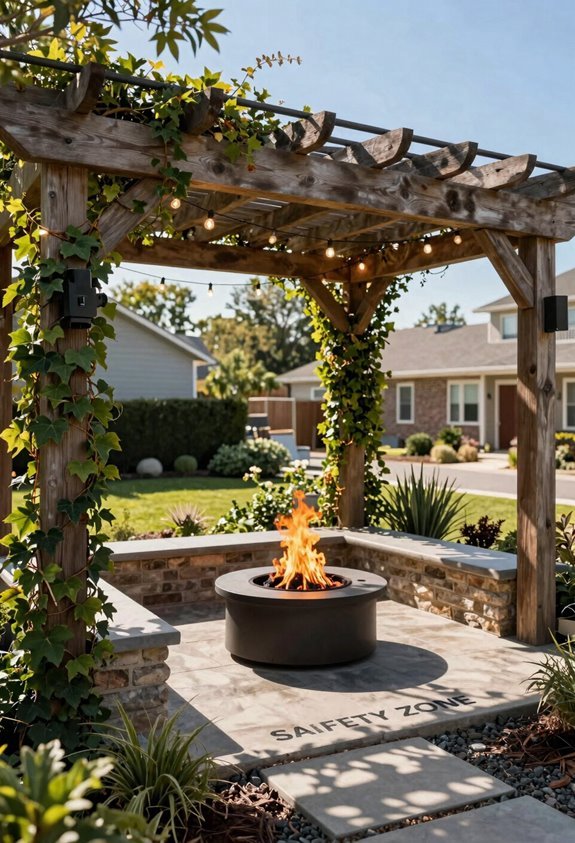
Safety considerations naturally lead me toward the paperwork side of fire pit planning, and I’ve learned that local codes shape every decision before I even browse models. I always check HOA rules first, since they can override municipal allowances entirely. Some neighborhoods restrict us to gas-burning pits only, while others ban outdoor fires completely. Knowing where I stand keeps me from costly mistakes.
| What I Risk | What I Gain | How I Belong |
|---|---|---|
| Fines, removal orders | Peace of mind, legal gatherings | Neighbors who trust my setup |
| Insurance headaches | Seamless permits and inspections | Community respect |
| Safety hazards | Proper setbacks, ventilation | Shared evenings under the pergola |
I study height restrictions and proximity to structures carefully, since setbacks protect everyone nearby. Securing permits early means I build confidently, creating a space where friends gather without worry.
Measure Clearance and Choose Heat-Safe Materials
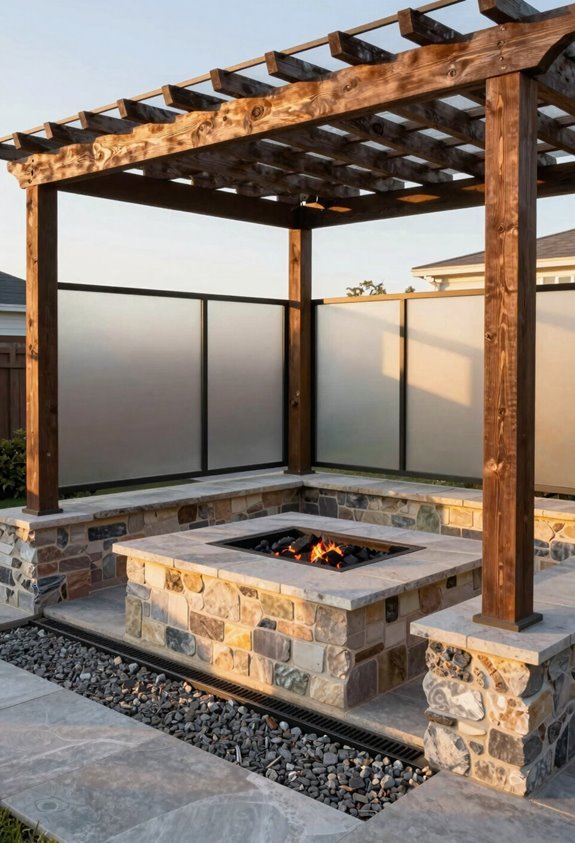
How do I protect my pergola while still enjoying the warmth below? I start with fire pit clearance: at least ten feet between flames and overhead beams keeps my outdoor living space secure.
For pergola safety, I’m choosing an aluminum pergola since it handles heat better than wood, though I’ll still add fire-resistant materials around the structure. My fire pit design sits on a non-combustible surface, steady and grounded, designed specifically for outdoor exposure.
If I’m considering gas propane installation, I’m hiring professionals to verify clearances and safe shutoffs; that’s non-negotiable for open flame safety. Heat-resistant materials surround my setup, protecting furniture and framework alike. Every choice I make builds confidence, creating a gathering place where friends feel welcome and I feel prepared.
Pick a Fire Pit Type for Your Pergola Space
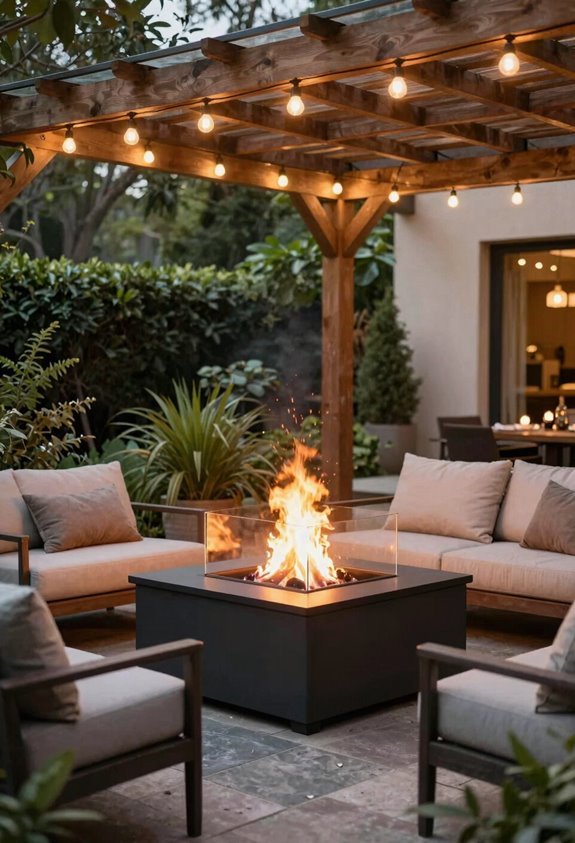
With my clearances mapped and heat-safe materials selected, I’m ready to match the right fire pit to my pergola’s specific conditions.
Gas fire pits give me instant control and cleaner burning, which simplifies safety under my structure. Their smokeless operation and minimal ember control concerns make them ideal when clearance is tight. Wood-burning options deliver authentic atmosphere, but I know they demand constant vigilance and spark screens for proper protection.
I’m drawn to smaller units since they ease clearance requirements and reduce heat stress on my pergola’s framework. Portable models let me reposition based on wind conditions, while permanent installation needs professional assessment for code compliance. Some contemporary designs combine smokeless efficiency with robust ember control, giving me flexibility without sacrificing peace of mind.
Design Your Pergola for Smoke Escape
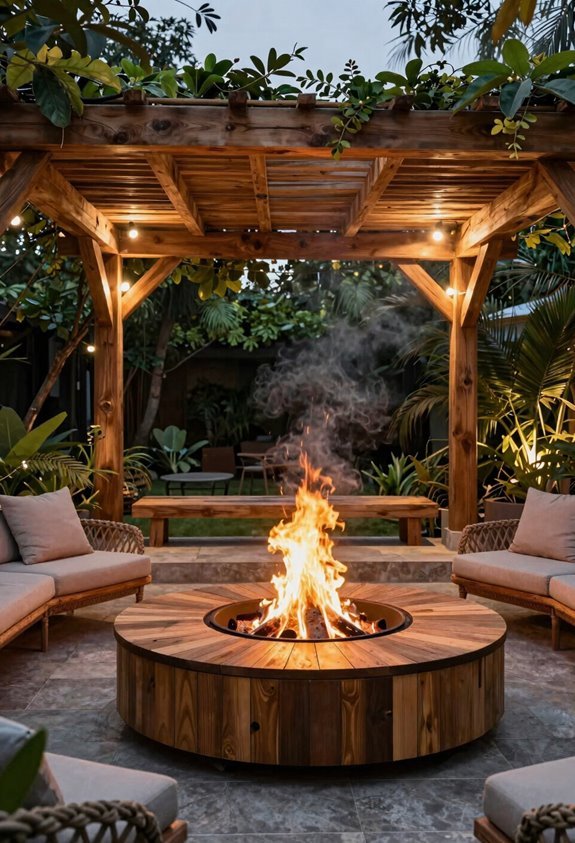
Because I’ve already chosen my fire pit type, I’m now shaping my pergola’s architecture to work as a natural chimney. Slatted or open roofs transform my pergola into a ventilation champion, letting smoke escape upward while fresh air cycles through.
Slatted roofs transform my pergola into a ventilation champion, letting smoke escape while fresh air cycles through.
I consider every element carefully:
- I maintain a minimum height of 10 feet above my fire pit, giving heat and smoke room to dissipate safely.
- I build in cross-ventilating gaps instead of enclosing my pergola with curtains, ensuring airflow never gets trapped.
- I prioritize clearance all around, protecting beams and furnishings from dangerous ember buildup.
This deliberate design means smoke rises freely, never lingering where my friends gather. My ventilated pergola works with, not against, every crackle of the flames.