Most gardeners underestimate how much soil actually drives their total investment, often doubling the upfront bed cost. I’ve seen $200 cedar kits turn into $600 projects once you fill them properly.
The real question isn’t which material looks best, it’s where your money works hardest over fifteen years. I’ll break down ten options that balance durability, maintenance, and hidden expenses you haven’t considered yet.
How Much Do Raised Garden Beds Really Cost?
When I’m planning a new growing space, I always start with one essential question: what’s this actually going to cost me? The answer depends heavily on your chosen materials and bed size, but I’ve learned that upfront cost rarely tells the whole story.
DIY wood runs $25–$50 per square foot, while galvanized steel commands higher initial investment, think $250–$600 for a typical 8×4-foot setup including soil fill. That soil fill alone adds $100–$250 for an 18-inch depth. Fabric beds start modest at $30–$100, though premium versions reach $120 with shorter lifespans.
Here’s what I’ve discovered: galvanized steel’s 30-year durability often beats wood’s maintenance costs over time. Stone demands $500–$2,000+, requiring professional hands. We’re all seeking value that lasts, and sometimes paying more initially means belonging to the group that gardens smarter, not harder.
What Drives Raised Bed Prices: Materials, Size, and Soil
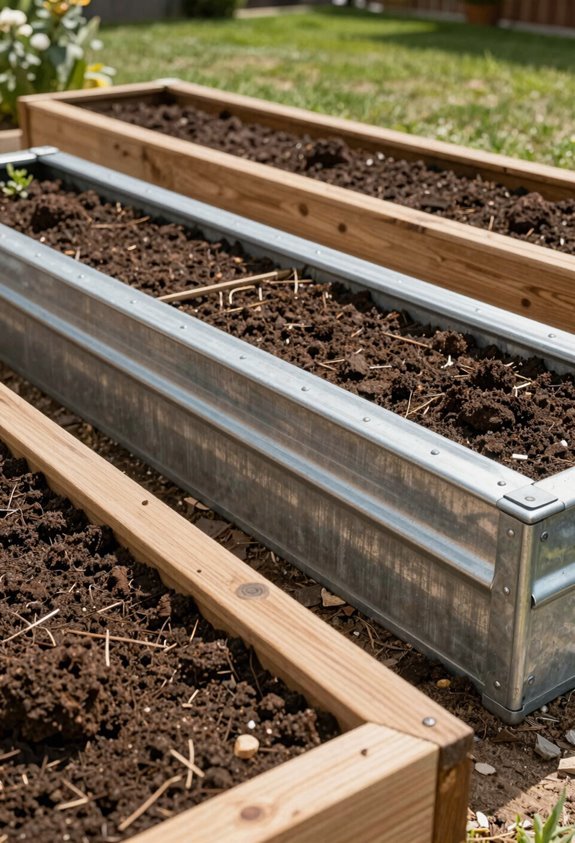
I’ve learned that material selection is the single biggest cost driver, with pressure-treated pine offering affordable entry points while galvanized steel and cedar deliver premium durability. Your bed’s dimensions directly impact expenses, since a 4×8-foot footprint requires substantially more lumber and soil volume than compact alternatives. Understanding these fundamentals helps you balance upfront investment against long-term performance without overspending on features you won’t use.
Material Choices Matter
Although I’d love to tell you that building a raised garden bed is as simple as picking the prettiest option, the reality is that your material choice will shape both your upfront investment and how many seasons you’ll enjoy fresh harvests. When I’m comparing raised beds cost, I always start with material choices because they create the biggest price spread.
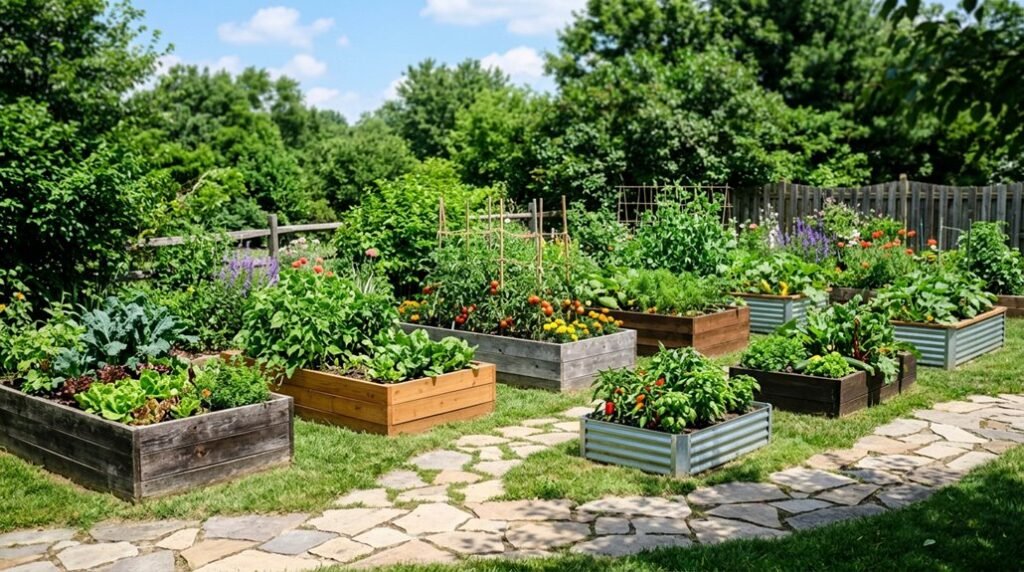
Wood/cedar beds feel familiar and welcoming, running $25–$50 per square foot if I build them myself, though professional installation jumps to $100 or more. Cedar lasts 15–20 years, which feels respectable until I consider galvanized steel stretching past 30 years with zero maintenance. That durability costs more upfront and weighs heavier, but I won’t replace it.
Stone demands $500–$2,000+ and professional hands, yet it endures generations. Whatever I choose, soil fill costs add $100–$250 for a standard 8-by-4-foot bed, so I factor that into my total vision.
Size Affects Cost
Material durability shapes my investment, but dimensions determine my actual spending. When I choose raised beds, I’ve learned that every extra foot multiplies both material options and soil fill requirements. My 8×4-foot galvanized steel bed, standing 18 inches tall, set me back $250–$600. That footprint demands serious soil volume.
Here’s how size hits my wallet:
- Height adds hidden costs: my 24-inch beds need 33% more soil than standard 18-inch versions
- Small starts smart: my 3×3 fabric bed cost $30 with minimal fill, perfect for testing my interest in growing
- Scale changes everything: jumping to 4×8 fabric raised beds pushes me to $70–$100, though drainage improves
I now calculate total cost by multiplying length, width, and height. Bigger isn’t always better for my budget.
Budget: DIY Wood Frame Raised Beds ($25–$50/Sq Ft)
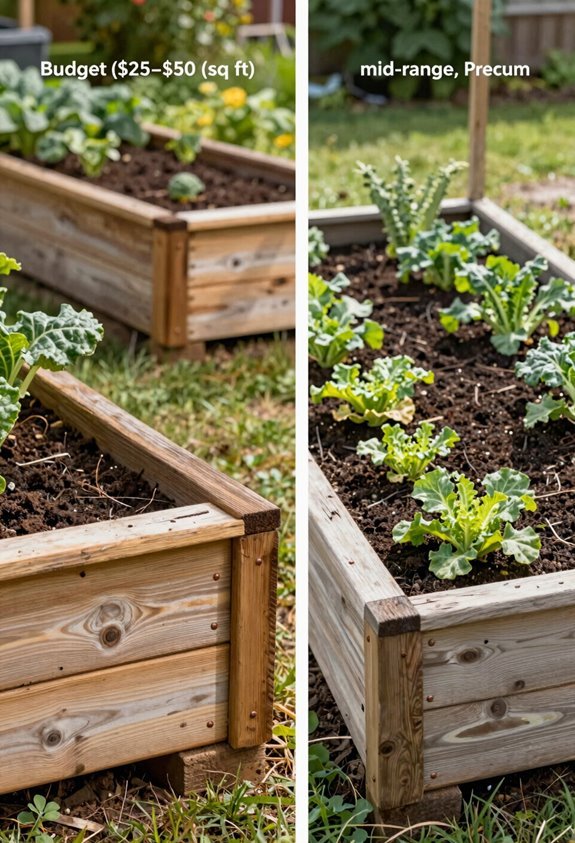
Why start with store-bought kits when building your own wood frame raised bed puts you in control of both cost and quality? I built my first DIY wood frame years ago, and I’ve never looked back. Raised beds in this category typically run $25–$50 per square foot for materials and construction, which puts you squarely in the driver’s seat.
I always recommend cedar for its natural rot resistance, though that choice nudges your cost per square foot toward the upper range. For a standard 4×8 foot bed, you’ll need substantial boards and quality hardware. Don’t skimp on thickness; I’ve learned that 2-inch boards prevent warping and save you from rebuilding. Remember, soil and amendments come later, so factor that into your long-term planning.
Budget: Fabric Grow Bags and Elevated Planters
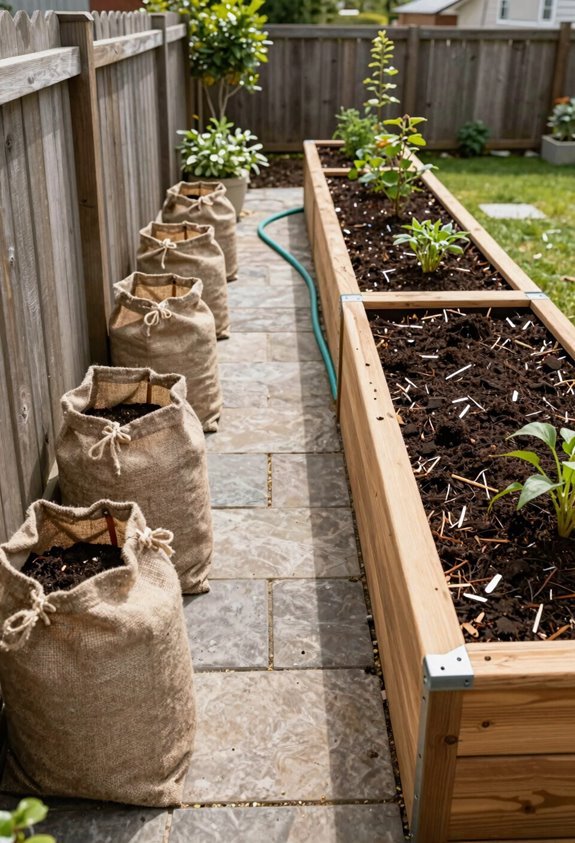
If you’re weighing options beyond traditional wood frames, fabric grow bags and elevated planters deserve a serious look. I’ve found these solutions welcome everyone, from balcony gardeners to community plot holders seeking affordable entry points.
Fabric beds run $30–$120 per unit, with soil fill adding $50–$150 depending on your dimensions and mix quality. Budget fabric beds start around $30 for compact 3×3 setups, though they typically last just one season. Premium fabric beds ($70–$120) deliver 5–10 years of service with 3–5 year warranties backing your investment.
Consider these practical advantages:
- Tool-free assembly keeps labor costs minimal
- Lightweight construction enables seasonal repositioning
- Enhanced drainage protects root zones in wet climates
Elevated planters share this accessible price tier, emphasizing portability over extended longevity and warranty coverage.
Mid-Range: Cedar and Redwood Kits ($50–$100/Sq Ft)
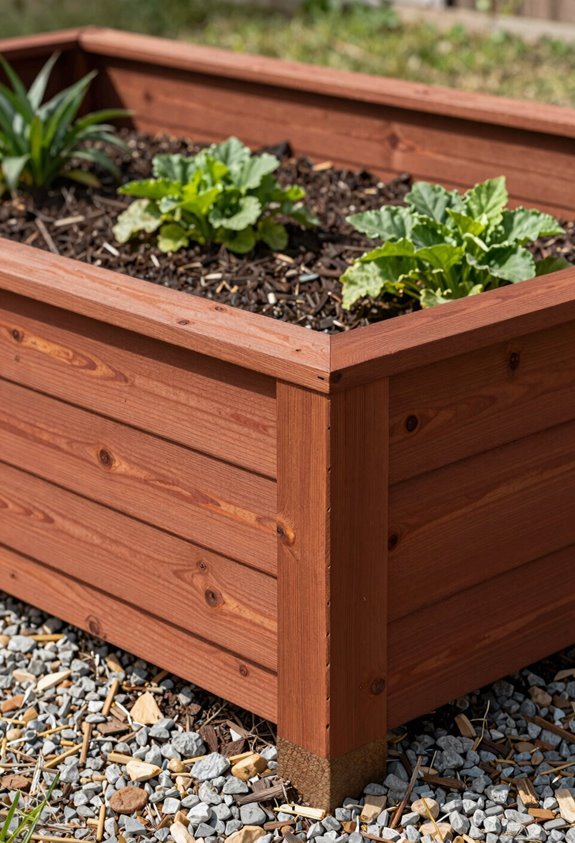
Where does lasting value meet manageable upfront investment? I’ve found it right here in Cedar and Redwood raised bed kits, where the per square foot cost lands between $50 and $100. You’re looking at roughly $1,600 to $3,200 for a standard 8×4-foot bed, which feels substantial until you factor in longevity.
These woods deliver 15 to 20-plus years of service with basic maintenance, and they age beautifully while doing it. I appreciate how this tier avoids the disposable mindset of cheaper options without demanding the premium of steel or stone. Regional pricing varies, and you’ll source soil separately, but you’re joining a community that values craftsmanship. This is where serious gardeners settle in for the long haul.
Mid-Range: Hybrid Wood-Metal Raised Bed Designs
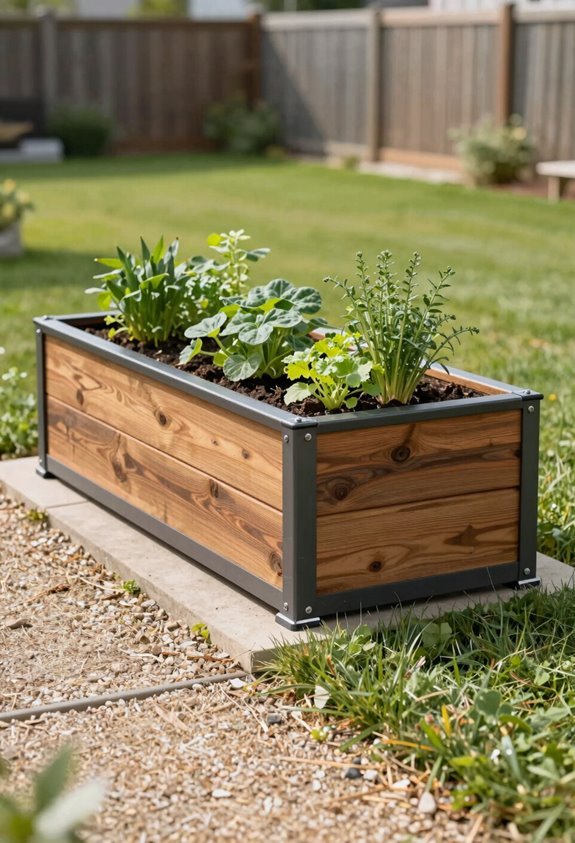
I find hybrid wood-metal designs offer the smartest middle ground for gardeners who want lasting performance without premium prices. These systems pair cedar frames with galvanized steel cores, giving you that warm, natural look upfront while the metal interior fights rot for 30-plus years.
You’ll pay more initially than basic wood kits, but you’re fundamentally buying decades of reduced maintenance and avoiding the replacement cycle that cheaper options demand.
Hybrid Design Benefits
Why settle for choosing between visual charm and durability when you can have both? I’ve found that hybrid design benefits shine when you’re building a garden space that feels like home.
Picture this:
- Galvanized steel cores hidden inside, fighting rust for 20–30 years while you never see the industrial finish
- Cedar exterior greeting neighbors with warm, natural grain that weathers gracefully without chemical treatments
- Thick wooden rails meeting steel corners, creating structural integrity that stays low-maintenance through harsh seasons
You belong in a garden that works as hard as you do. By pairing rot-resistant cedar with steel’s unyielding strength, you’re investing in longevity without sacrificing the welcoming aesthetic that draws people together. This balanced approach delivers premium performance at sensible cost.
Cost Versatility Analysis
That sense of belonging I built with hybrid designs comes with a price tag I’ve learned to read carefully, and I’m walking you through what I’ve discovered about mid-range investment. These raised beds blend cedar frames with galvanized steel cores, and I’ve found this pairing stretches my dollars further than single-material options.
The cost runs higher upfront than basic wood or metal alone, yet I’m gaining 15 to 20 years of durability from the cedar and 30+ years from that steel heart. I chose a 24-inch to 32-inch tall configuration for easier access and solid drainage. By mixing materials strategically, I’ve secured wood’s welcoming warmth plus metal’s structural staying power. This hybrid approach delivers real value, positioning itself as the smart middle ground where lasting performance meets approachable aesthetics.
Premium: Galvanized Steel Raised Beds ($100–$150/Sq Ft)
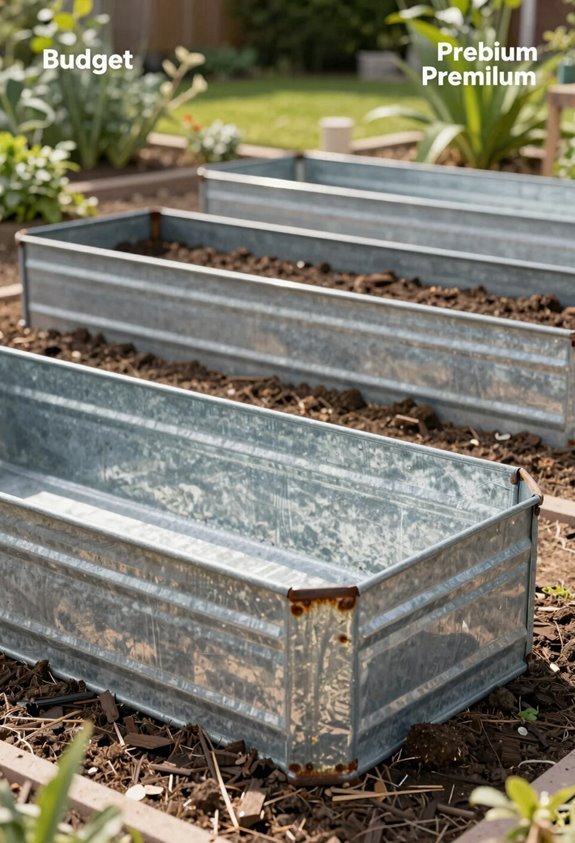
How do galvanized steel raised beds justify their steep price tag? I see premium raised beds as a long-term investment where cost per square foot meets genuine peace of mind. At $100–$150 per square foot, you’re buying into decades of reliability.
Picture what you’re actually getting:
Picture what you’re actually getting: decades of reliability, food-safe zinc coating, and truly maintenance-free growing from day one.
- Zinc-coated steel that stays food-safe through every season
- Thirty-plus years of structural integrity without rot or warping
- Truly maintenance-free growing after installation day
I won’t pretend these beds suit everyone. Their weight demands teamwork during setup, and you’re working within standard heights: 12, 24, or 32 inches, rather than custom builds. Yet that zinc protection delivers corrosion resistance that wood simply cannot match.
For serious gardeners who value durability over decades, the math favors galvanized steel raised beds.
Premium: Stone and Concrete Built-In Beds ($150–$300+/Sq Ft)
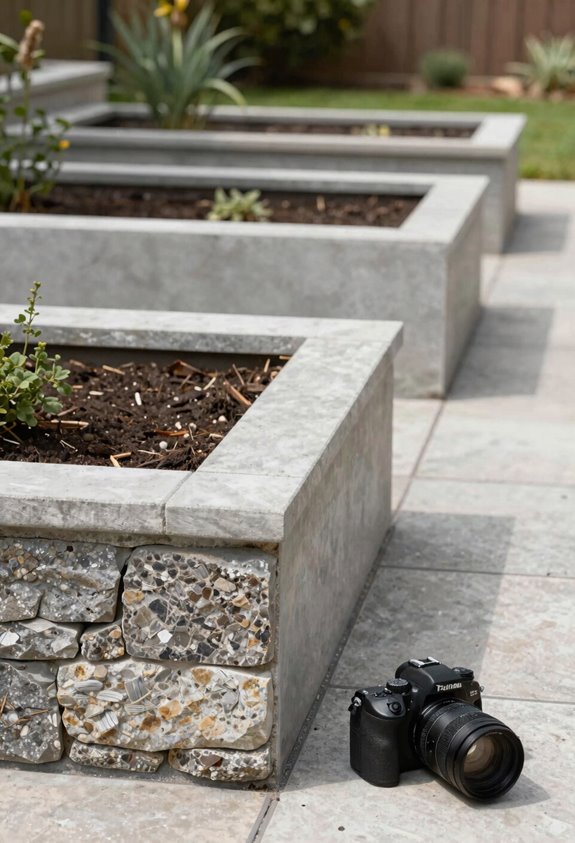
I’ve reached the apex of raised-bed construction with stone and concrete, where installation complexity factors like heavy material transport and specialized masonry work demand professional crews and rigorous site preparation. These permanent structures become an enduring asset, boosting long-term property value through their commanding presence and decades of service life.
While the upfront investment dwarfs other options, I’m confident this category delivers unmatched permanence when you’re building a legacy garden rather than a seasonal project.
Installation Complexity Factors
Why does a premium stone or concrete built-in bed command such a steep price per square foot? I’m breaking down the installation complexity for you, so you understand where your investment goes.
The cost reflects true craftsmanship. These aren’t simple raised beds; they’re architectural features requiring professional masonry skills. Every stone placement demands precision, while structural reinforcement and drainage engineering add layers of complexity.
Consider what skilled crews actually tackle during installation:
- Excavating sites and pouring concrete footings that prevent shifting
- Installing internal reinforcement and drainage systems behind walls
- Sculpting custom curves or multi-tier configurations beyond basic rectangles
Once complete, your built-in becomes a permanent community marker, beautiful, stable, and absolutely worth the craftsmanship for those ready to belong somewhere extraordinary.
Long-Term Property Value
What makes a $2,000 stone bed worth more than its cedar counterpart years down the road? When I examine raised beds through the lens of long-term property value, the material comparison shifts dramatically. Stone and concrete deliver durability that spans generations, not seasons.
Yes, the upfront cost stings, $150–$300+ per square foot demands serious commitment. But I see these built-in beds become permanent landscape architecture, boosting visual appeal decade after decade. You’re not replacing rotting boards every five years; you’re investing in a fixture that buyers notice.
The mathematics favors patience. Lower maintenance, zero replacement cycles, and seamless hardscape integration compound your return. For homeowners who value belonging in established, well-crafted neighborhoods, premium raised beds signal permanence others simply cannot match.
Raised Bed Soil Costs: What Setup Adds to Your Bill
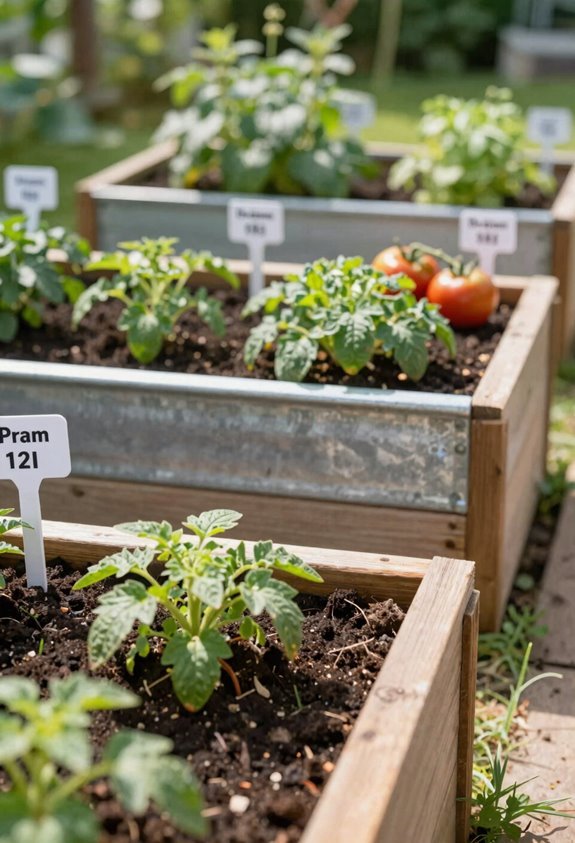
How much does it actually cost to fill a raised bed? I’ve found that initial soil fill for an 8×4-foot bed at 18 inches deep commonly ranges from $100 to $250, depending on mix quality and your local market. Soil costs represent a major budget item, though year-two expenses drop substantially as the bed develops.
Filling an 8×4-foot raised bed runs $100–$250 initially, with costs dropping significantly in year two.
A quality raised bed soil mix typically combines topsoil blend, compost, and coarse amendments like perlite or aged wood chips. Typical soil mix cost runs about $0.10 to $0.25 per liter.
Here’s what you’re really paying for:
- The base topsoil blend that anchors your root zone
- Rich compost that feeds soil biology
- Drainage amendments and accessories like mulch
These components work together, creating the foundation every successful gardener shares.
Which Raised Bed Fits Your Garden Goals and Budget?
Once you’ve sorted your soil budget, the real fun starts: picking a bed that matches both your wallet and your growing ambitions. I see you standing at this crossroads, wanting something that works without breaking you.
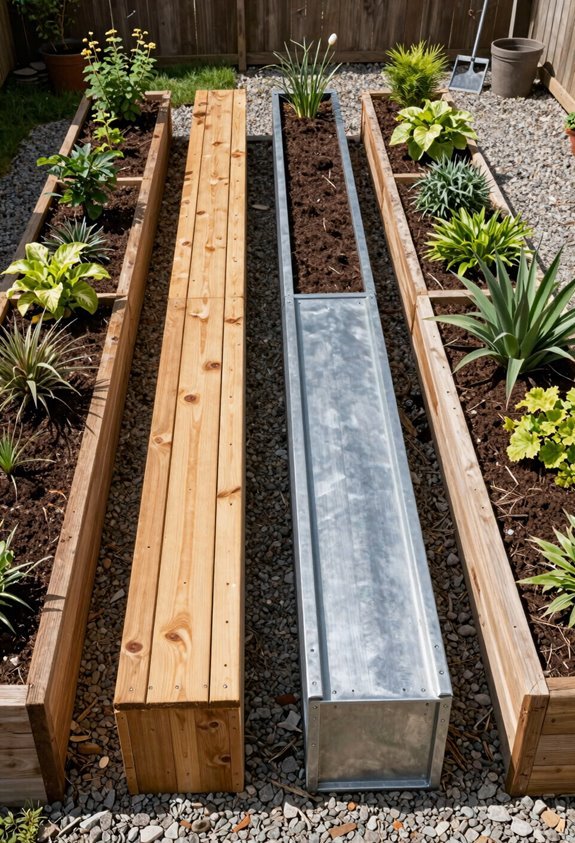
Let’s walk through your options together. Fabric beds run $30–$100, need no tools, and suit renters or experimental growers. If you’re staying put, cedar offers 15–20 years of natural rot resistance at $150–$250 per 4×8 setup. Galvanized steel brings 30+ years of zero maintenance, though you’ll sacrifice flexibility on dimensions. For many gardeners I’ve guided, the hybrid (cedar/metal) hits the sweet spot, balancing longevity, cost, and looks.
Your choice reflects your timeline. Short-term renters lean fabric; forever-home planters invest in steel or hybrid construction. Either way, you’re building something that grows with you.