I’ve spent years refining my Zone 5 plant palette, and three perennials consistently outperform the rest. Russian sage anchors the back of my borders with silvery stems that shrug off drought, while bearded iris delivers that essential vertical element when spring still feels tentative. Shasta daisy bridges the gap into summer with crisp, long-stemmed blooms that never quit.
The real question isn’t whether they’ll survive your winters; it’s how you’ll arrange them for maximum impact.
The 3 Best Perennials for Zone 5 Cottage Gardens
Where do you start when building a cottage garden backbone that survives those brutal Zone 5 winters? I’ve found that selecting the right perennials changes everything between a border that prospers and a disappointing season.
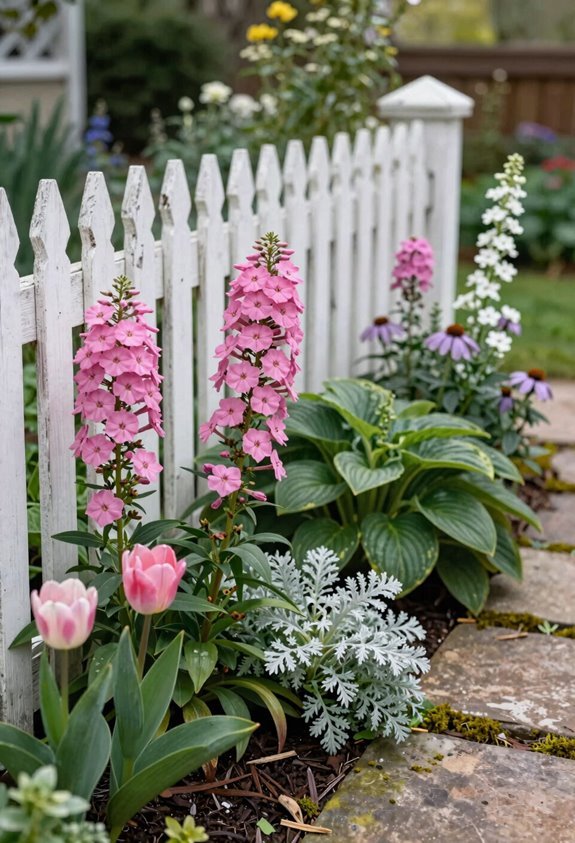
Russian Sage anchors my perennial backbone with drought-tolerant, upright silver stems that laugh at dry spells. I pair it with Phlox for fragrant summer clusters that draw you right into the garden’s heart. Shasta Daisy delivers crisp white blooms I can’t resist cutting for my kitchen table.
Beneath these taller players, I tuck Heuchera for year-round foliage texture, while Bearded Iris provides that essential vertical lift in early spring. Together, these Zone 5 workhorses create the layered, resilient cottage garden we’re all longing to belong within.
Why Catmint, Coneflower, and Russian Sage Thrive Together
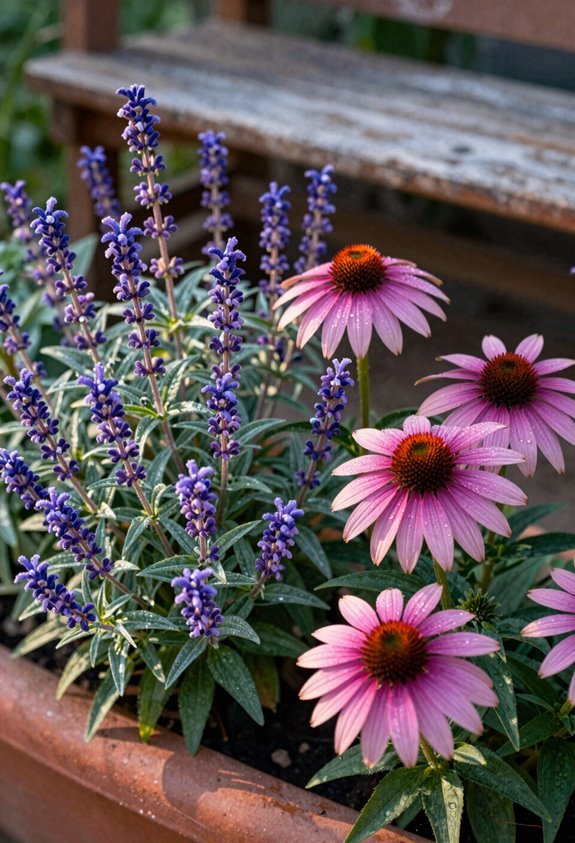
How do you extend color and pollinator activity across an entire Zone 5 summer? I combine catmint, coneflower, and Russian sage, and I’ve watched this trio turn ordinary borders into layered cottage gardens.
Catmint anchors the front at 17–20 inches with aromatic foliage and long bloom from summer through fall. Coneflower rises behind at 2–3 feet, offering robust, pollinator-friendly daisylike flowers that bridge the seasons.
Russian sage completes the picture with drought-tolerant, airy silver stems and violet-blue panicles, adding vertical contrast and late-season color when others fade.
All three demand full sun and well-drained soil, yet remain remarkably low maintenance. Together, they create continuous nectar sources for pollinators, resist common pests, and tolerate heat without fuss. This is the Zone 5 formula I’ve come to trust.
How to Layer Them for Color and Pollinators All Season
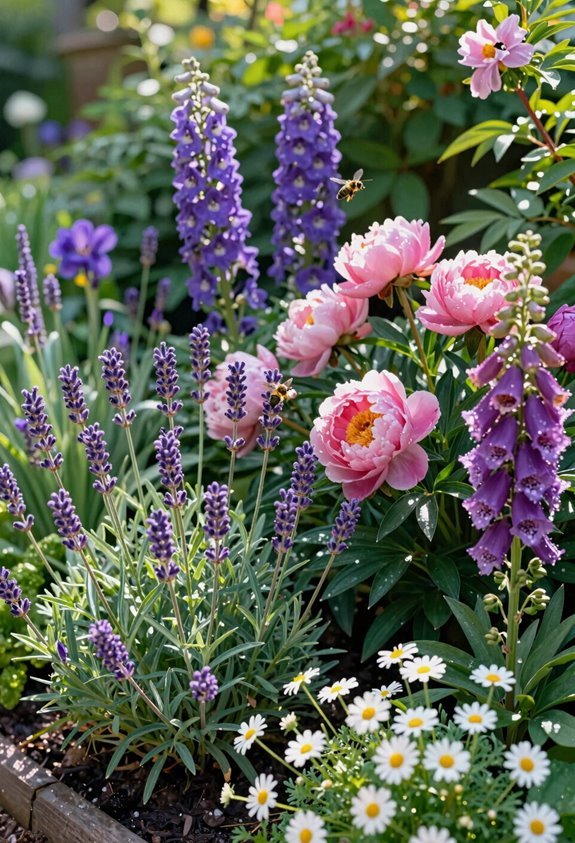
I’ve found that successful layering starts with understanding each plant’s growth habit and bloom sequence. In my Zone 5 cottage garden, I position back-row catmint at 17–20 inches, place mid-height coneflowers at 12–16 inches, and anchor front-line lavender at 12–18 inches. This layered planting creates continuous color that draws pollinators throughout summer.
I integrate bee balm and Shasta daisies into the middle tier, while mixing drought-tolerant with moisture-loving natives like Russian sage alongside hydrangea arborescens. This pairing extends bloom periods and supports diverse beneficial insects.
I plant in odd-numbered clusters of three to five, combining varied textures to simulate that abundant, informal cottage aesthetic. The result welcomes bees and butterflies from spring through frost, strengthening our shared ecosystem.