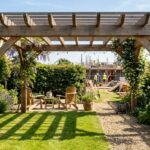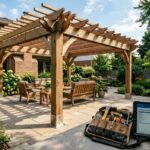
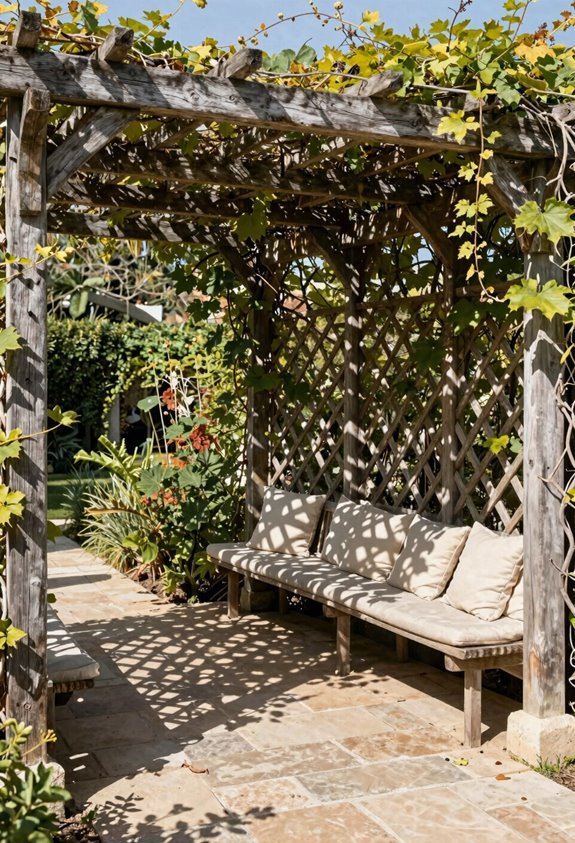
Like a doorway without a door, a pergola frames possibility rather than enclosing it. I’ve watched homeowners stand beneath those open beams and finally understand what their yard was missing. It’s not just shade you’re buying, or even shelter from the sky.
What a Pergola Actually Does: and Doesn’t
Why do so many homeowners invest in a pergola? I think you’ll find it’s about creating that perfect balance between exposure and comfort. A pergola delivers honest shade through its overhead grid of beams and rafters, though you’ll notice sunlight still filters through in appealing patterns. I love how this open-air design invites gentle breezes while defining your outdoor living space with architectural intention.
You’ll discover pergolas excel at hosting climbing vines, establishing visual anchors, and crafting transitional rooms for dining or relaxation. They’re typically more affordable than enclosed structures, built from cedar, vinyl, or aluminum depending on your priorities. However, I must be direct with you: without solid roofing or retractable canopies, traditional pergolas offer limited weather protection against rain. They’re fair-weather friends, not year-round shelters, so plan accordingly for your climate and usage patterns.
Pergola vs. Gazebo: Which Structure Fits Your Yard?
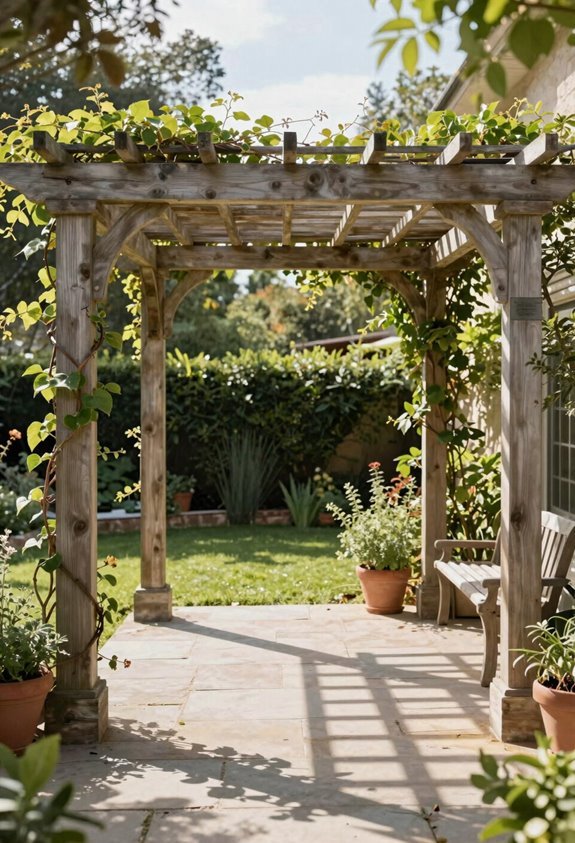
Where does your outdoor vision lead you, toward the architectural openness of a pergola or the enclosed shelter of a gazebo? I find this decision shapes how you’ll live in your outdoor spaces for years.
When I compare pergola vs. gazebo, I notice our needs differ. Pergolas offer an open structure that feels connected to nature, often attached to home for seamless indoor-outdoor flow. Gazebos provide complete enclosure.
| Feature | Pergola | Gazebo |
|---|---|---|
| Roof | Open lattice, adjustable shade and light | Solid pitched roof, full shade |
| Placement | Attached to home or freestanding | Freestanding only |
| Experience | Airy, integrated with landscape | Room-like, distinct retreat |
I prefer pergolas for entertaining, they deliver filtered shade and light without isolation. Your yard’s personality decides which structure welcomes you home.
How Pergolas Create Shade Without Blocking Light
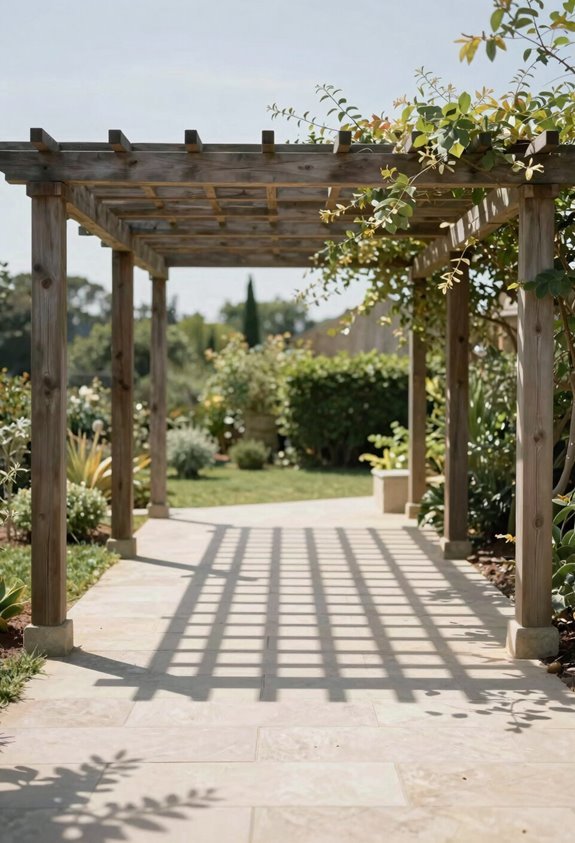
Pergolas balance shelter and brightness through their intelligent engineering. The open roof design uses strategically spaced rafters or lattice patterns that intercept harsh direct sunlight while scattering softer, diffused daylight across your patio.
When you need more control, adjustable shade options like rotating louvers and retractable canopies let you fine-tune sun exposure throughout the day without sacrificing that airy, open atmosphere.
Open Roof Design
How exactly does a pergola manage to soften harsh sunlight without plunging you into shadow? I find the answer lies in its ingenious open roof design, which transforms brutal midday rays into gentle, dappled light you’ll actually want to linger beneath.
| Feature | Benefit |
|---|---|
| Open lattice | Filters sunlight while preserving views |
| Beam spacing | Determines your shading control |
| Natural gaps | Maintains essential airflow |
| Light diffusion | Creates inviting partial shade |
| Structural openness | Keeps spaces feeling connected |
I appreciate how this architecture invites us outdoors without abandoning comfort. The open lattice doesn’t trap heat like solid coverings; instead, it breathes.
You’re never fully enclosed, yet you’re protected enough to relax. It’s partial shade that feels intentional, not compromised; designed for people who refuse to choose between sun and shelter.
Adjustable Shade Options
Often, you’ll want more control than fixed rafters can offer, and that’s where adjustable shade systems turn a basic pergola into a responsive outdoor room. I appreciate how louvres let us angle sunlight precisely, casting moving shadows that shift with the hours while preserving that essential connection to sky and breeze.
Unlike open rafters alone, motorized options respond to our needs without stepping outside. A retractable roof slides back for stargazing or extends when midday intensity demands relief.
Privacy panels add another dimension, creating sheltered intimacy without sacrificing ventilation near the edges. We select configurations that honor our specific site conditions. The beauty lies in customization: shade management that protects without isolation, filtering light rather than eliminating it. Your outdoor space becomes adaptable, welcoming you through every season and mood with practical, responsive design.
Can a Pergola Protect You From Rain?
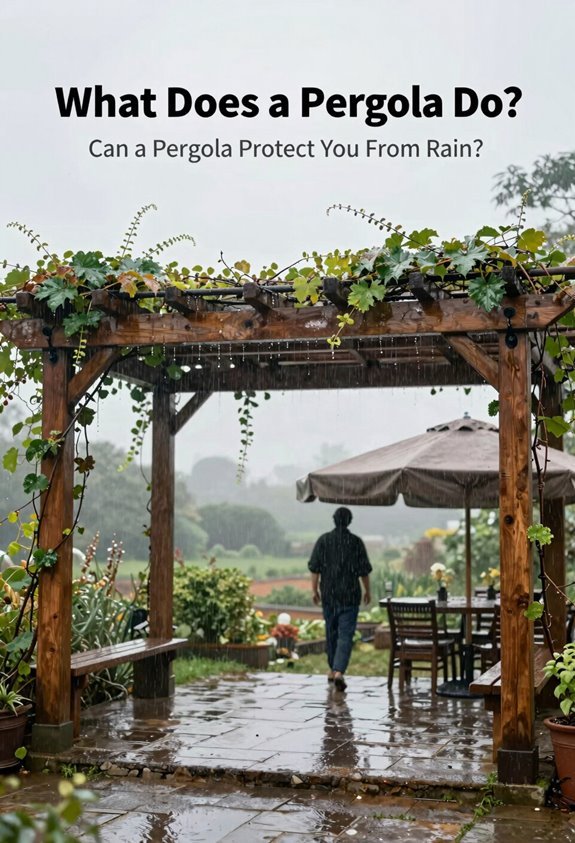
I’ll examine how rain protection limits define traditional pergola functionality, while solid roof options and waterproofing solutions offer practical upgrades for weather resilience. You can transform an open framework into a sheltered retreat by adding retractable canopies, polycarbonate panels, or integrated drainage systems that channel water away. These modifications preserve the pergola’s architectural appeal while delivering genuine rain coverage for year-round outdoor enjoyment.
Rain Protection Limits
Anyone who’s planned an outdoor dinner knows the weather doesn’t always cooperate, so I’m often asked whether a pergola can actually keep you dry. I tell my clients that rain protection depends entirely on your chosen roof options and how you address sealing and drainage.
Traditional open-rafter designs offer minimal rainfall resistance, letting water intrusion seep through gaps during storms. Retractable canopies improve coverage but struggle in downpours. For better results, I recommend integrated drainage systems and quality materials like powder-coated aluminum.
| Feature | Rain Performance |
|---|---|
| Open lattice | Minimal; heavy drips through |
| Retractable canopy | Moderate; fair-weather only |
| Louvered roof | Adjustable; good with pitch |
| Solid panels | Excellent; requires drainage |
Solid Roof Options
How do you transform a fair-weather structure into a genuine outdoor room? I install a solid roof, which creates complete rain protection and extends your living space year-round. These continuous surfaces, built from solid panels or polycarbonate, seal out moisture while blocking harsh sun.
I always recommend adding skylights or translucent sections; they preserve natural daylight without sacrificing coverage. Proper drainage matters enormously, so I specify sloped designs with integrated channels that move water away from your seating area. Ventilation prevents stifling heat buildup, and I typically include ridge vents or quiet fans that circulate air without compromising the roof’s integrity.
With these elements working together, you’re building a true outdoor space that welcomes you regardless of weather, deepening your connection to home and the rhythms of the seasons.
Waterproofing Solutions
While traditional pergolas invite sunlight and breeze through their open beams, I’ve found that strategic waterproofing transforms them into genuine shelters you can rely on when clouds gather. Solid roof installations, whether fixed panels or retractable systems, deliver consistent rain protection without sacrificing your outdoor lifestyle.
I recommend prioritizing weather-resistant materials like powder-coated aluminum or sealed vinyl, which resist moisture infiltration far better than untreated lumber. Proper drainage design matters equally; sloped surfaces and integrated gutters channel precipitation away from posts and foundations, preventing pooling that compromises structural integrity.
When you combine these elements thoughtfully, your pergola becomes a year-round gathering space where friends stay dry and comfortable. Waterproofing isn’t merely functional; it’s an invitation to extend your living area regardless of forecast uncertainty.
How Pergolas Define Outdoor Spaces Without Walls
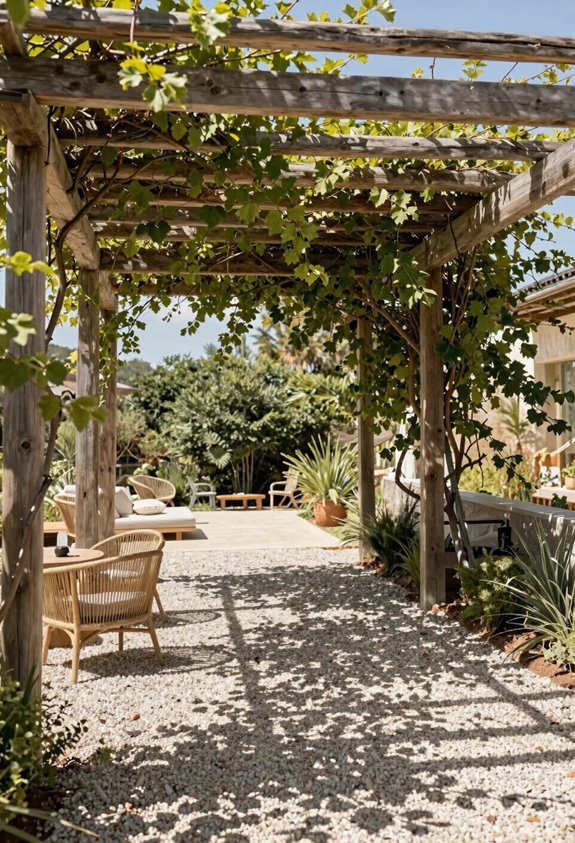
Why settle for a solid structure when you want definition without confinement? I find that a pergola perfectly balances structure and openness, creating an outdoor space that feels intimate yet connected. This open-air structure uses vertical posts and crossbeams to establish zoning without walls, so you feel belonging in your environment.
The lattice roof delivers gentle shade while preserving airflow, making your yard feel like an extension of your home. Whether freestanding or attached, pergolas create seamless transitions between indoor comfort and outdoor living.
| Element | Function | Benefit |
|---|---|---|
| Vertical posts | Anchor structure | Define boundaries |
| Crossbeams | Visual frame | Create zones |
| Open roof | Partial coverage | Balance sun and shade |
| Freestanding | Standalone placement | Flexible positioning |
| Attached design | Connects to home | Seamless flow |
I choose materials like wood or aluminum to match my architecture, preserving that airy atmosphere we all crave.
Which Pergola Upgrades Are Worth the Money?
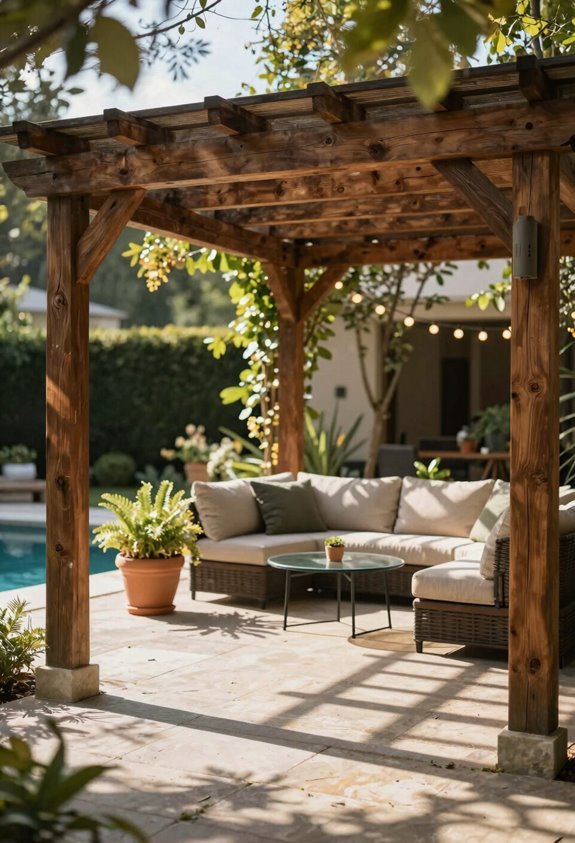
Where exactly should you invest when upgrading your pergola? I’ve found that smart spending transforms outdoor living from ordinary to exceptional.
Start with shade solutions that match your climate; adjustable louvers or retractable canopies give you control when the sun shifts. You’ll appreciate low-maintenance materials like cellular vinyl or aluminum, which free your weekends from staining and repairs while keeping structural integrity intact.
Architectural features elevate the entire space: integrated LED lighting extends evenings, ceiling fans improve airflow, and curtain tracks add privacy without sacrificing openness. These elements create that welcoming atmosphere where everyone gathers naturally.
A customizable design makes sure your pergola complements your home’s proportions and your family’s rhythm. When you invest thoughtfully, you’re not just building structure; you’re claiming space that feels unmistakably yours.
Wood vs. Aluminum vs. Vinyl: Choosing Your Material
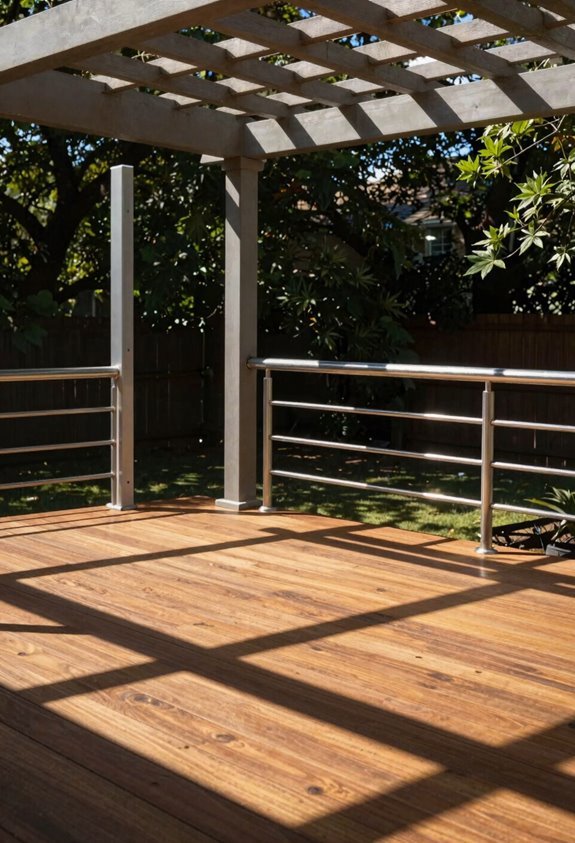
Your upgrades set the stage, but the material you choose becomes the foundation of every experience beneath your pergola.
I want you to feel confident in your selection, so I’ll break down what actually matters. Wood offers unmatched natural warmth with cedar or redwood, though you’ll commit to regular maintenance against rot and fading. Aluminum delivers exceptional longevity with minimal upkeep, its powder-coated finish resisting rust while remaining lightweight and strong. Vinyl provides that maintenance-free lifestyle you might crave, handling moisture without demanding paint or stain.
Consider your priorities carefully. Wood costs less upfront but demands ongoing attention. Aluminum and vinyl require higher initial investment, yet their durability and extended warranties create value over decades. Your outdoor space deserves material alignment with how you actually live.
Is a Pergola Worth It for Your Yard?
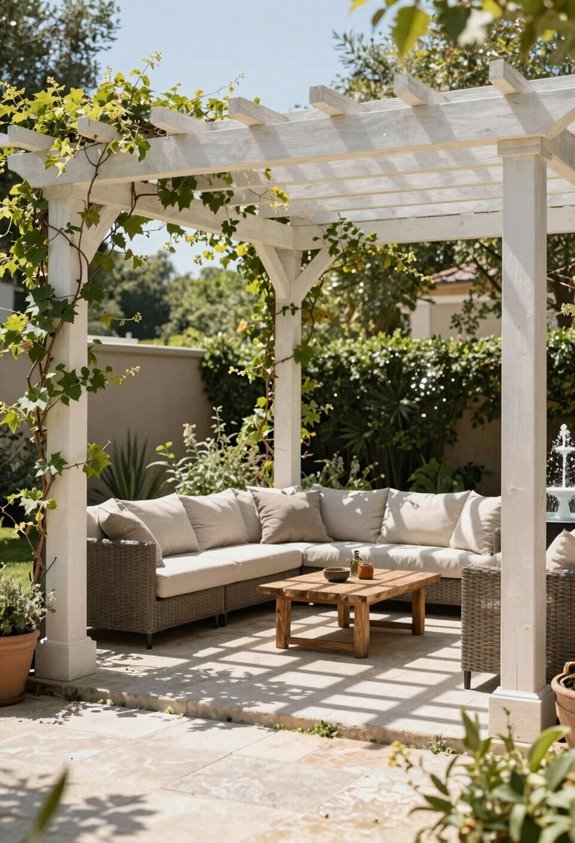
Maybe you’ve been standing in your yard, squinting into the sun and wondering what would finally make that space feel finished. I’ll tell you: a pergola changes overlooked square footage into an outdoor room you’ll actually use.
The beauty lies in that open roof design. You get dappled shade overhead without sacrificing sunlight or breezes, and a wooden pergola anchors your landscape design with natural warmth that ages gracefully. I’ve watched climbing vines turn bare beams into living architecture.
You won’t need deep construction knowledge or massive budgets. Compared to enclosed structures, pergolas install faster, cost less, and invite personalization through material choices and plant selection. Whether you build Western Red Cedar for character or choose low-maintenance alternatives, you’re creating defined space that draws people together.
That unfinished feeling? It disappears.