Let’s call landscaping an “investment in your home’s first impression” that can strain your wallet if you’re unprepared. I’ve seen too many homeowners sticker-shocked by final invoices they never anticipated, and that stops today.
Whether you’re refreshing a modest front yard or orchestrating a full backyard transformation with hardscaping, the numbers might surprise you, but they don’t have to derail you. Stick with me, because I’ll show you exactly where every dollar goes.
Average Landscaping Costs in 2026: What Homeowners Actually Pay
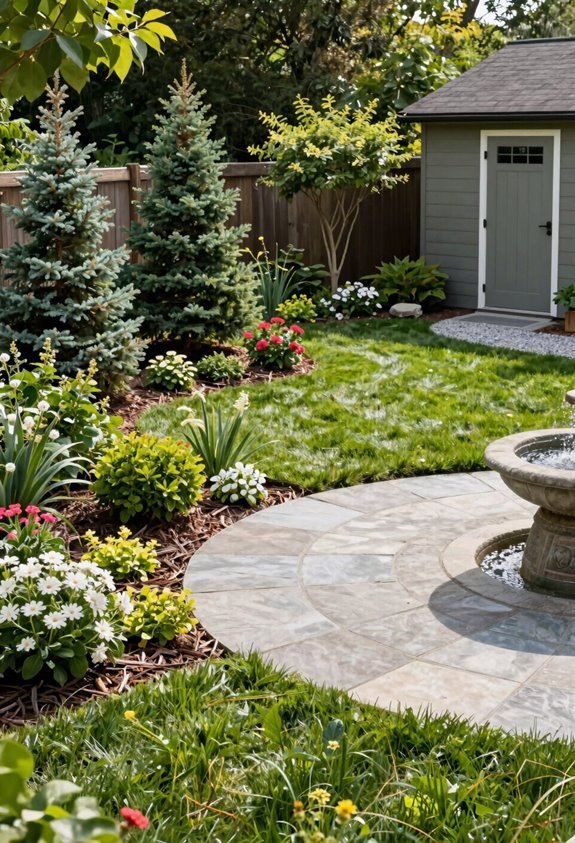
How much should you realistically expect to invest in transforming your outdoor space this year? I’m seeing most homeowners land between $3,300 and $13,200 nationally, with the average landscaping cost hovering around $8,700 for moderately complex projects. You’ll typically encounter per square foot pricing from $4 to $12, though I’ve watched simple jobs start at $300 and extensive installations climb toward $40,000.
Labor eats roughly 80% of your landscaping budget, so plan accordingly. Design services add another 10%–20% on larger projects, usually $700 to $3,000. When you’re mapping numbers, remember that new installations commonly run $3,000 to $16,000, and crew rates of $50 to $100 per hour add up quickly. Smart planning keeps you comfortably within the community of satisfied property owners.
Front Yard vs. Backyard: Cost per Square Foot by Project
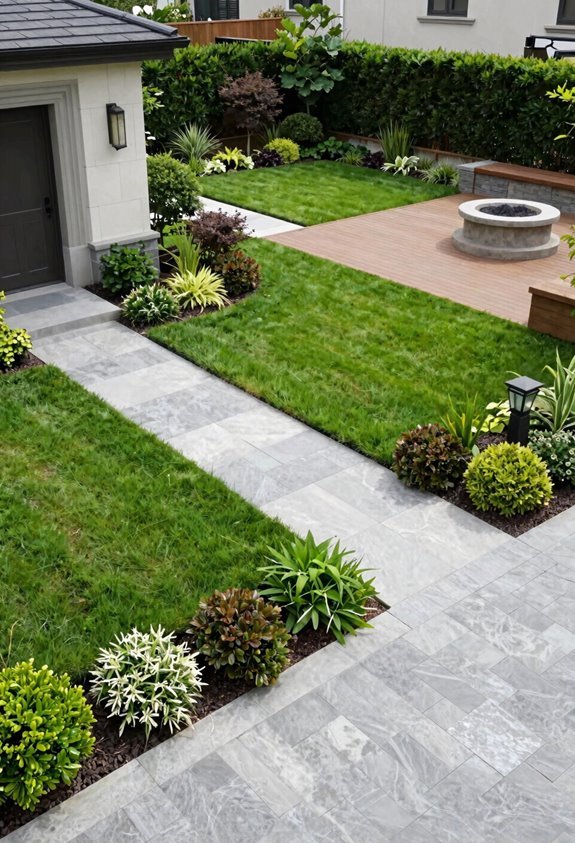
I want you to understand how front yard and backyard projects differ in pricing structure before we break down the specific numbers. Front yard basics typically emphasize the home’s appearance from the street through softscaping and modest hardscaping, while backyard variations often accommodate elaborate features like pools or outdoor kitchens that dramatically shift the cost per square foot. Several cost comparison factors, yard size, material selection, and feature complexity, ultimately determine whether your project lands on the lower end or pushes toward premium pricing tiers.
Front Yard Basics
Where exactly does your money go when you transform that first patch of green into genuine visual appeal? I’ve broken down what you’re really paying for, and it starts with understanding how front yard dimensions drive every decision.
Your landscaping cost per square foot typically runs $4 to $12, though I’ve seen high-end work push toward $20. For a standard 0.1–0.2 acre plot, expect $1,500–$5,000, while refined projects scale from $8,000–$15,000 and luxury installations exceed $30,000.
Here’s what shapes your investment:
Yard size and local market conditions directly adjust base rates. Labor consumes roughly 80% of your total budget allocation. Project complexity determines whether you land at $4 or $12 per square foot.
I recommend budgeting 5%–15% of your home’s value. This framework protects your investment while creating that welcoming entrance we all want to come home to.
Backyard Variations
Why does your backyard often demand a heftier investment than your front yard? I’ve noticed backyard costs stretch wider per square foot because we actually live back there. While front yards mostly need to look presentable from the street, backyards need to work for daily life.
| Project Tier | Per Square Foot |
|---|---|
| Simple Softscaping | $4 – $10 |
| Mid-Range Blend | $8 – $15 |
| High-End Hardscaping | $15 – $30+ |
Your cost drivers here differ dramatically from street-facing spaces. I’m talking patios, outdoor kitchens, fire pits, lighting runs, and water features. These pieces turn a yard into your personal retreat, but they stack expenses fast.
Front yard projects typically hover between $5–$20 per square foot. Meanwhile, your backyard ambitions easily launch toward that $40 ceiling when you weave hardscape with dense planting beds.
Cost Comparison Factors
Breaking down the numbers side by side reveals why your backyard budget often doubles what you’d spend out front. I see front yard landscape costs running $5 to $20 per square foot, while backyards climb to $5 to $40 because we’re adding pools, outdoor kitchens, and extensive hardscaping.
Your cost per square foot reflects these realities:
- Front yards prioritize visual appeal with simpler plantings and basic irrigation
- Backyards demand complex utilities, patios, decks, and fencing that drive expenses upward
- Design fees add 10% to 15% to total project costs, typically $1,900 to $6,800
I always remind clients that professional design improves both spaces, but backyard complexity requires deeper investment in infrastructure. When you understand where every dollar flows, you plan smarter and build the outdoor life you’re envisioning.
Where Your Money Goes: Labor, Materials, and Landscape Design
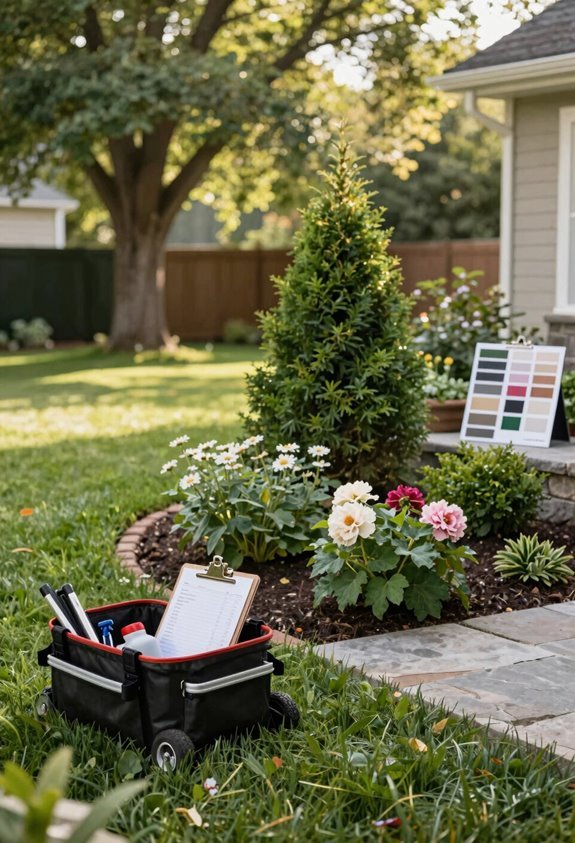
I’ll break down exactly where your landscaping budget flows, starting with labor costs that typically consume the lion’s share of your investment. You’ll see how material selections and design fees shape your final price tag, whether you’re refreshing softscapes or installing structural hardscapes. Understanding these three pillars, labor, materials, and professional design, lets you allocate resources strategically for maximum impact.
Labor Cost Breakdown
Labor typically consumes the lion’s share of your landscaping budget, and I’m going to show you exactly where every dollar travels. Labor accounts for roughly 80% of your total cost, making it the dominant factor in any project decision.
Here’s how professional crews structure their pricing:
- Per-hour rates typically run $50–$100 for a two-person team, which breaks down to $25–$50 per person
- Specialized tasks like hardscape installation command premium rates due to skill requirements
- Design consultation labor often falls between $50–$150 hourly, separate from physical construction
When I’m planning a project, I know that experienced crews deliver efficiency that offsets higher per-hour rates. You’re investing in expertise that prevents costly rework.
Most homeowners find that prioritizing skilled labor creates lasting value, turning outdoor spaces into genuine extensions of home life.
Material Selection Guide
Where exactly does the remaining 20% of your budget disappear after labor takes its cut? It flows directly into materials, the tangible elements that transform your outdoor space into something you truly belong in.
| Material | Typical Cost | Impact on Balance |
|---|---|---|
| Sod | $1–$2 per sq ft | Lower labor, higher coverage |
| Sprinkler systems | $3,000–$10,000 | Moderate labor, lasting value |
| Decks and patios | Variable | Heavy labor, premium materials |
Your per-square-foot spending shapes everything. At $4–$12 per sq ft nationally, I’m choosing materials that respect my total budget while building genuine outdoor belonging. Simple projects cost hundreds; expansive ones soar past $50,000.
I balance premium materials against labor demands, knowing each selection directly affects my final investment and the quality of my personal retreat.
Design Fee Structures
Before I commit a single dollar to sod or sprinkler systems, I’m sitting down with a professional who maps out the vision. Design fees typically run $1,900 to $6,800 overall, though I’ll pay $100 to $200 for an initial consultation to see if we’re a good fit. For my midsize yard, I’m expecting a flat fee between $2,200 and $6,180.
Heftier projects sometimes calculate design fees as 10% to 15% of total project cost.
Knowing who I’m hiring matters. Landscape designers handle aesthetics and planning, while architects bring engineering oversight and broader coordination. Their hourly rates land at $50 to $150, matching planning-phase work.
Here’s where my budget flows:
- 80% covers labor
- 20% buys materials
- Design and consultation sit upfront as my investment in getting it right
Why Your Neighbor Paid Less: Location Price Differences
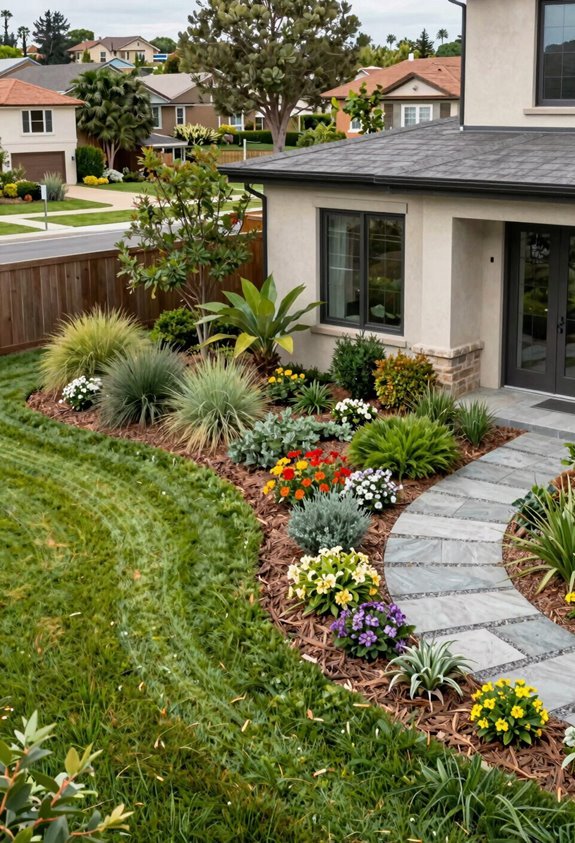
Why does the same backyard makeover cost my neighbor half what I’d pay? I’m seeing this question everywhere, and honestly, it comes down to location. I live in a market where regional differences drive serious cost variation, so I dug into the numbers.
New York runs $1,779 to $2,102 for comparable work, while Providence sits at $1,513 to $1,790. Same Northeast region, different reality. Out West, Seattle demands premium pricing against Salem’s lower-mid range.
Even coastal Southwest cities split: Houston hits $1,252 to $1,483, but San Diego breaks the pattern with steeper coastal premiums. Chicago lands mid-tier at $1,521 to $1,799, yet South Bend drops to $1,416 to $1,675. Roswell mirrors Houston’s moderate bracket.
I can’t escape my zip code’s pull on pricing, but I can benchmark smartly against nearby markets now that I understand these regional differences in landscaping costs.
DIY or Hire a Pro? Tools, Time, and Code Compliance Costs
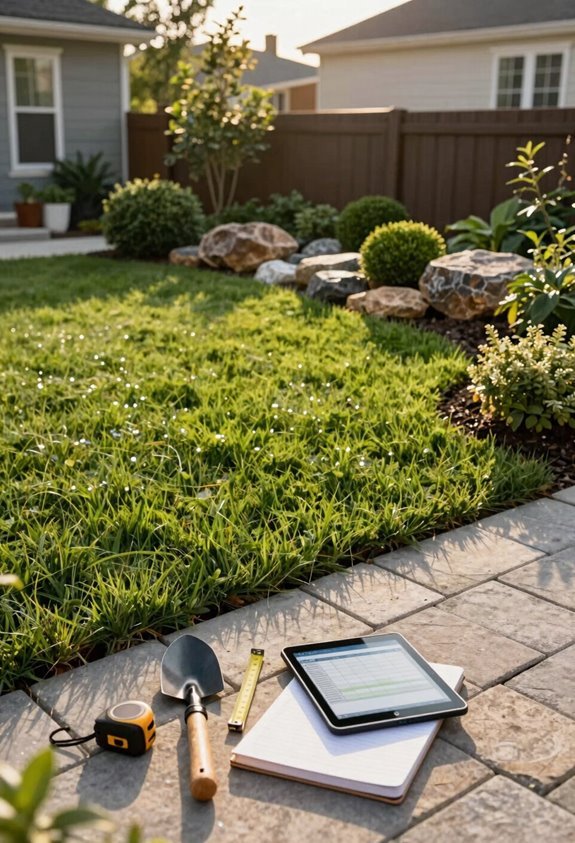
How much am I really saving when I haul mulch myself? I’ve learned that DIY starts around $347 for tools and first materials, but that number hides deeper math.
When I weigh DIY against hiring a pro, I consider three realities:
Permits and codes can surprise me, running $50 to $3,000 for fences or grading work I didn’t anticipate. My time carries value, and botched drainage or footings cost more than professional design fees. Design services at $1,900 to $6,800 often fold into project budgets, bringing expertise I can’t replicate.
Hiring a pro protects me from code violations and structural failures. Some tasks belong in my hands; others demand trained eyes. I’ve found that honest self-assessment saves money, not pride.
Permits, Drainage, and Compliance: Costs Often Left Off Bids
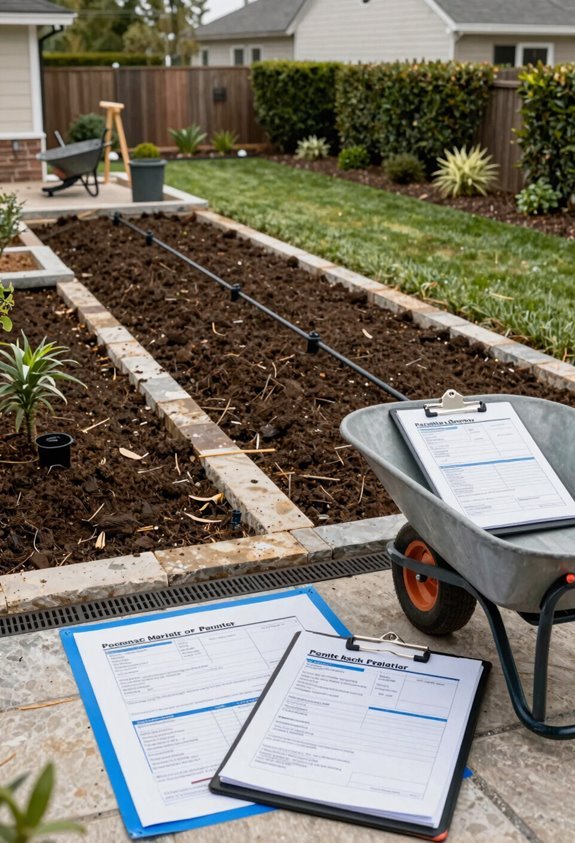
Where exactly does my budget bleed when the final invoice arrives? I’ve learned it’s the line items nobody mentions upfront: permits, drainage, and compliance costs that vanish from initial bids.
Permits run $50 to $3,000 depending on your municipality and project scope, yet contractors frequently leave them off. Drainage represents another hidden hit; grading costs $650 to $3,600, while French drains or bog systems range $1,500 to $11,000. These aren’t optional flourishes; they’re essential for code-compliant builds that protect your investment long-term.
Soil testing ($14.50-$100) and land surveys ($310-$750) complete the picture, though you’d never know it from most proposals. I always ask specifically about these items now, because comprehensive bids build trust.
When we anticipate these costs together, we avoid surprises and create landscapes that actually perform.
How to Cut Landscaping Costs Without Cutting Corners
When budgets tighten but vision stays bold, I’ve found the smartest cuts happen in planning, not performance. I’ve learned that cost-saving strategies protect your investment while keeping your yard on track.
I reuse existing materials, like relocating stone or salvaging mature plants, to stretch every dollar without looking cheap. I schedule phased installations, tackling softscaping and hardscaping first while deferring pools or Xeriscaping until later. I pull permits only when required, since permit costs swing wildly from $50 to $3,000, and I lock in flat design fees for midsize yards.
I always get multiple quotes, leverage local materials, and use a pro’s eye on my DIY plans. Phased installations let us build something beautiful together, without the financial strain.