Last spring, I transformed my 6×8 foot balcony into a productive growing space using block planting for compact greens, and the harvest exceeded my expectations by nearly forty percent. Small-space gardening demands intentionality, but the constraints actually sharpen your design thinking rather than limit it.
I want to show you three bed layouts that turn square footage into abundant yields, starting with a method that breaks the traditional row habit you probably learned from your grandmother. The solution that changed everything for me involves rethinking how plants occupy horizontal and vertical space simultaneously, and the first technique I’ll share proves why linear planting wastes precious real estate in tight quarters.
Ditch the Row Habit: Use Block Layouts to Maximize Small Gardens
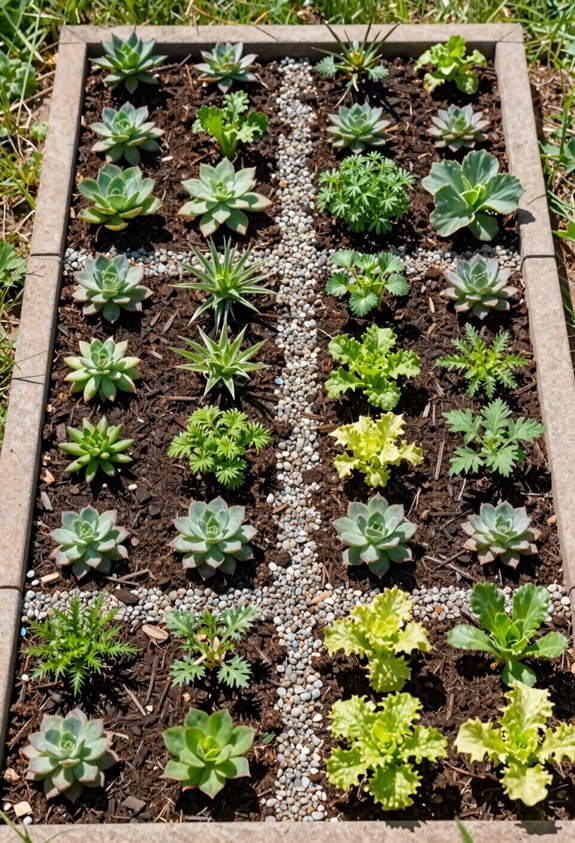
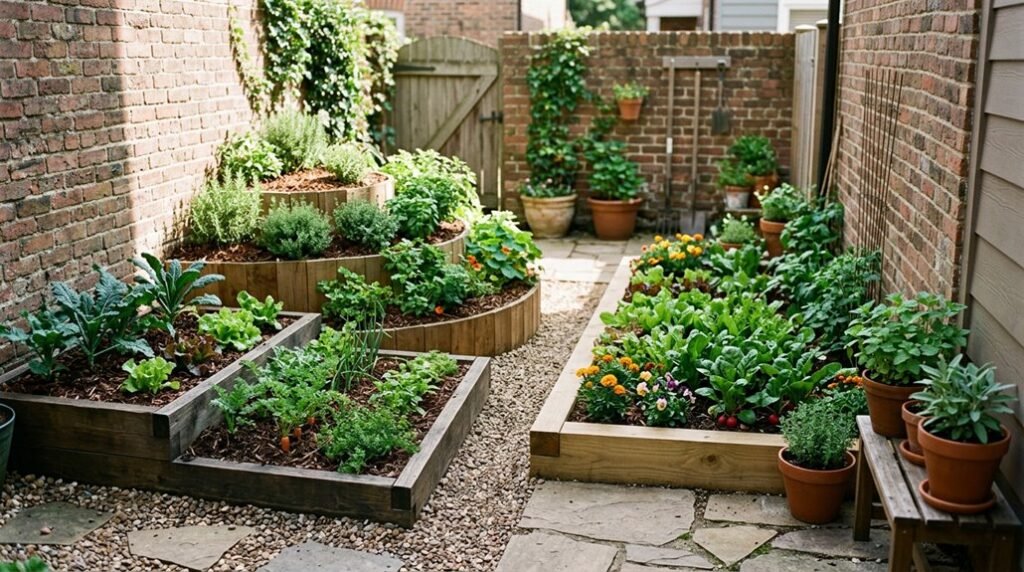
Why waste precious square footage on pathways between skinny rows when I can grow more food in less space? I’ve embraced block planting, and it’s changed how I approach my small garden. By arranging beets, carrots, and leafy greens in dense blocks rather than traditional lines, I’ve eliminated wasted aisle space and increased my harvest dramatically.
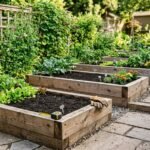
My raised beds now feature a compact layout where every inch serves production. I’ve integrated container gardening on my patio, extending my growing area beyond the main garden beds. This space efficiency means I’m cultivating more varieties than I ever thought possible.
I give perennial vegetables their own dedicated blocks to optimize long-term yields, while maintaining strategic exceptions for crops needing specialized access. Dense planting has become my signature approach, proving that limited space imposes no real limits on how much I can grow.
Build Upward: Add Vertical Layers to Your Garden Bed Design
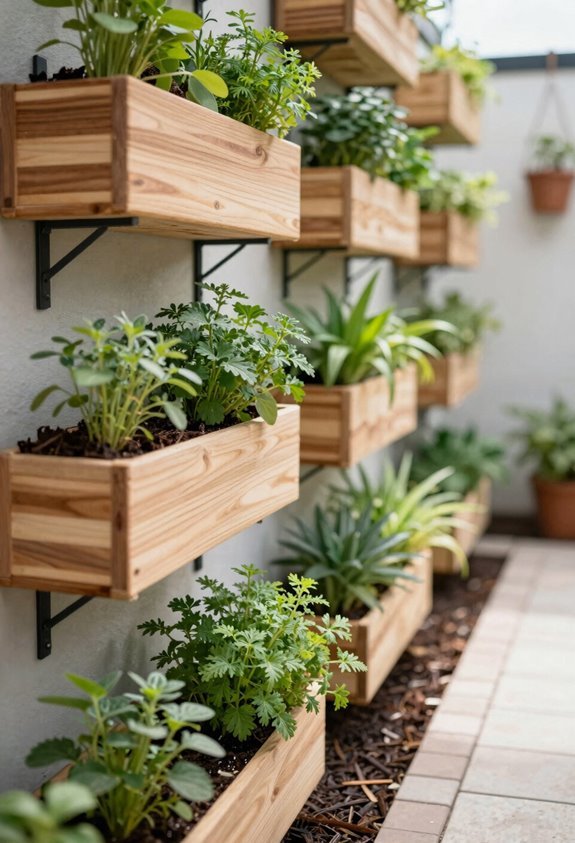
Once I’ve maximized my ground space with tight block plantings, I look up and see my next frontier. Vertical gardening changes my garden bed design instantly, adding dimension without expanding my footprint.
Look up—vertical gardening adds dimension without expanding your footprint.
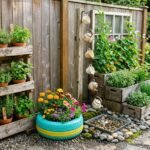
I install trellises along my raised beds and train climbing plants upward. Peas, pole beans, and runner beans grip tightly, while cucumbers and squash cascade skyward. This multi-layer gardening approach pairs vertical crops with leafy greens underneath; my A-frame structure supports achocha above, spinach below.
For true space-saving innovation, I hang baskets at varying heights, filling them with herbs and tender greens. Malabar spinach does well in this elevated environment, proving that small space limitations dissolve with thoughtful vertical strategy.
Every square foot matters, and now I’ve doubled my production without touching more soil.
Fill the Gaps: Interplant Fast and Slow Crops in the Same Space
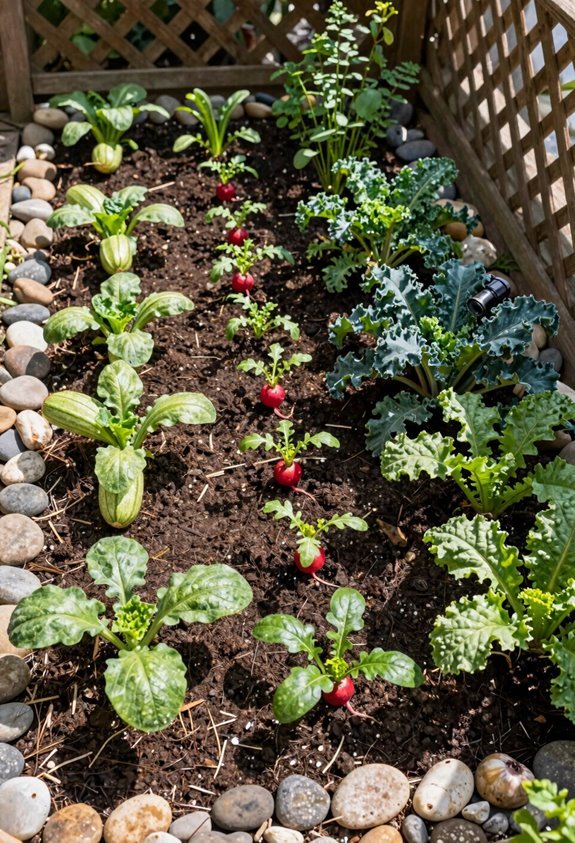
Where else can I squeeze more harvest from the same square footage? I’ve found interplanting changes tight spaces into productive zones. By pairing fast-maturing crops with slower ones, you’re practicing space-saving succession planting that doubles your yield.
I scatter radishes and carrots together, letting companion planting do its work. The radishes loosen soil and mark rows, then I harvest them early, freeing room for carrots to expand. Dense planting means ignoring seed packet spacing. I seed thickly, then thin strategically. This interplanting approach beats any vertical garden for ground-level efficiency.
| Technique | Fast Crop | Slow Crop |
|---|---|---|
| Interplanting | Radishes | Carrots |
| Succession | Spinach | Bush beans |
| Companion | Lettuce | Tomatoes |
| Dense blocks | Beets | Kale |
Thinning isn’t waste; it’s crop rotation in miniature. You’re managing living space, not just growing food.