
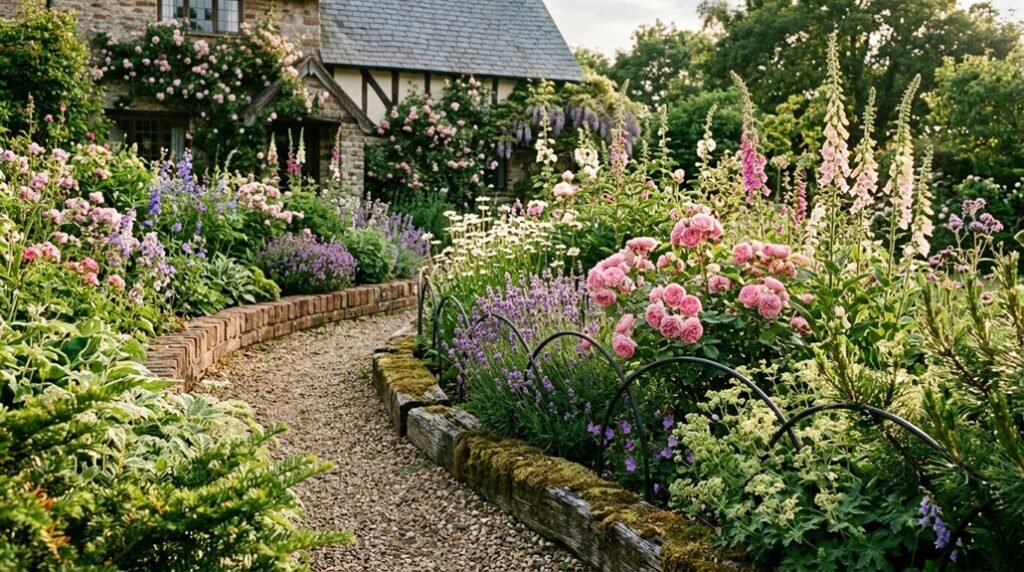
I once watched a watercolorist lift her brush mid-stroke, letting pigment bleed softly into damp paper, no hard lines, only suggestion. That’s the essence of cottage garden edging, where boundaries dissolve rather than declare themselves.
The right border treatment turns rigid geometry into living romance, and I’ve learned three approaches that consistently deliver this effect. Each one builds on the last, creating something far greater than the sum of its parts. You’ll want to see how they connect.
Curve Your Borders First: Shape Defines the Cottage Look
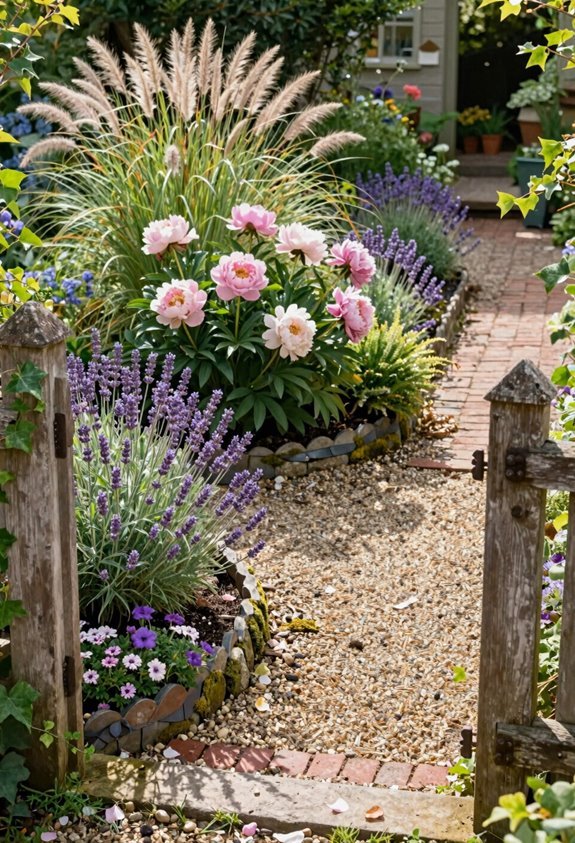
Before I plant a single bloom, I grab my garden hose and start shaping curves across the lawn. This serpentine outline becomes my guide, transforming straight edges into the flowing borders that define a true cottage garden.
I’ve learned that sharp angles feel formal and rigid, while a gentle curve invites you in. The romantic border shouldn’t announce itself with geometry; it should meander, letting your eye travel naturally through the space.
When I lay out my edging, I’m thinking about plant layering, tucking low mounds at the front, building toward taller blooms behind. That soft, blurred edge between lawn and bed isn’t lazy design. It’s intentional. Curved borders expand what feels possible, giving me room to weave groundcovers and trailing perennials into something full and cohesive.
Pick Stone and Timber That Weather Into the Garden
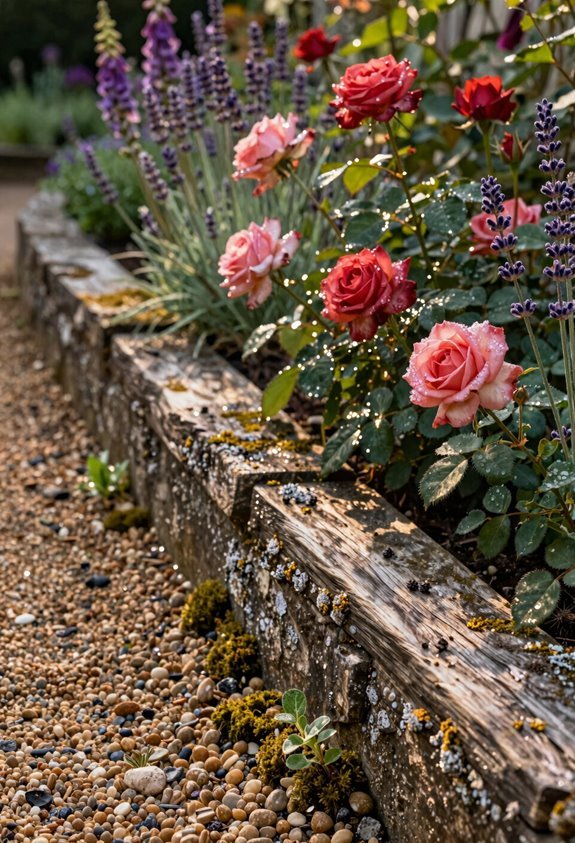
Where do I turn when soft, curving borders need something more permanent than hose-marked lines? I reach for materials that’ll settle in, not stand apart.
I reach for materials that’ll settle in, not stand apart.
Weathering matters in a cottage garden. I choose stone that’ll silver and timber that’ll grey, because romantic edging shouldn’t look factory-fresh. Stone pillars work for gentle curves if I source each piece individually, although straight runs install faster.
For real harmony, I alternate stone and timber bands; the contrast softens as both age together. Timber brings that traditional cottage feel I’m after, and I can raise or lower it to suit the bed. I seal it against mower contact and rot, but I don’t fight the greying.
The best border joins the garden’s story, and weathering tells it beautifully.
Spill Plants Over Every Edge: The Final Softening Layer
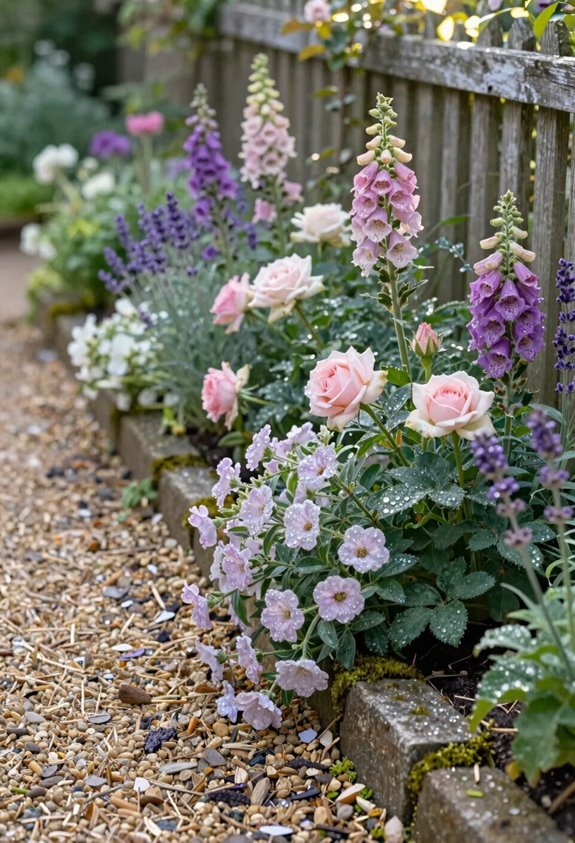
Why stop at ground level when I can invite plants to blur every boundary? I select trailing varieties like creeping thyme and ivy geranium for my cottage garden edging, letting them soften straight borders into gentle transitions. I layer cascading perennials in front of taller companions, creating depth that hides hard lines beneath living drapery.
Grouping romantic border plants in swaths rather than lonely specimens achieves that natural border spill we crave: effortless, welcoming, untamed. I favor soft foliage and airy blooms in light hues to amplify the softening border effect. Yet I balance this generosity with denser pockets, preventing chaos while preserving warmth.
| Spilling Plants | Best Use | Texture Quality |
|---|---|---|
| Creeping thyme | Path edges | Fine, aromatic mats |
| Creeping phlox | Stone wall tops | Dense color carpets |
| Ivy geranium | Timber borders | Bold, trailing stems |
| Aubrieta | Raised bed fronts | Soft purple cascades |
| Bacopa | Container spills | Delicate white mounds |