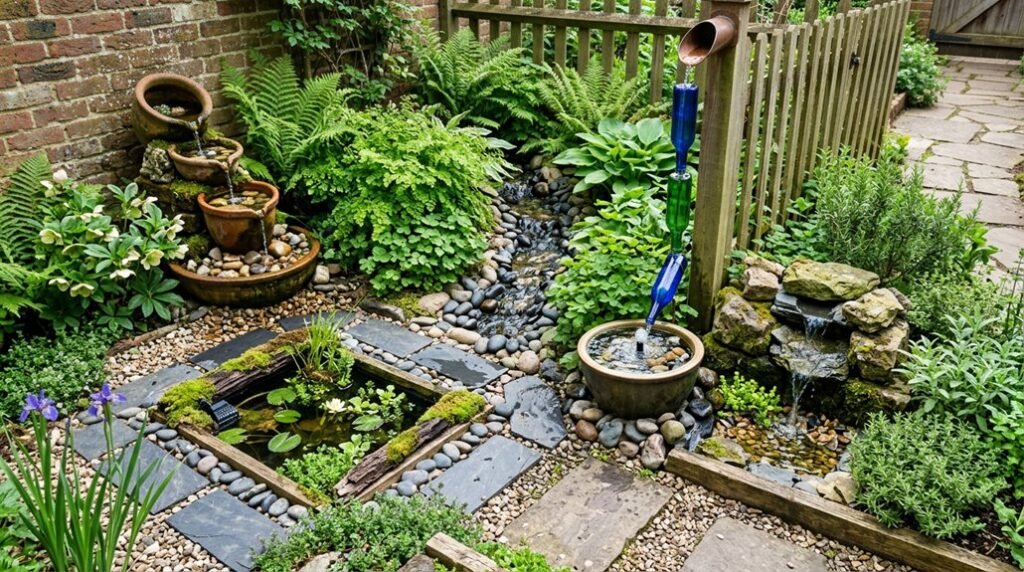
I once watched a hummingbird return to the same bubbling stone seven times in an hour, which taught me that water features aren’t just decorative; they’re infrastructure for life. You don’t need acreage to build this. I’ve installed pondless systems in spaces smaller than a parking spot, and the results outperform many sprawling installations.
The secret lies in what you hide beneath the surface.
Choose the Right DIY Water Feature for Your Space
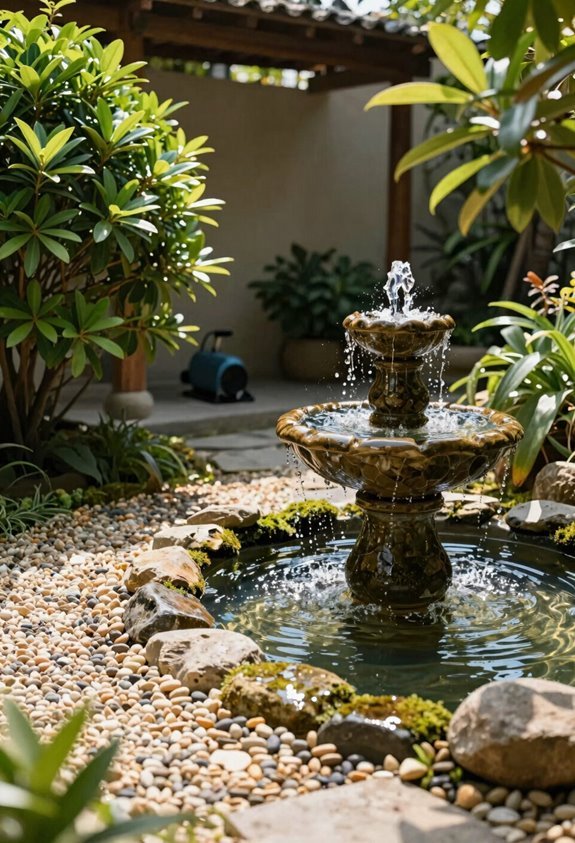
Where do you begin when every square foot counts? I start with pondless designs, the ultimate space-saving solution for compact gardens like ours. You’ll get that soothing bubbling sound and natural look without sacrificing precious ground area or worrying about safety hazards for kids and pets.
The basin hidden underground creates a seamless, built-in appearance that suggests professional installation. I recommend exploring pump options early: electric 110–120V models deliver robust 264 GPH flow at 16 watts, while solar 12V alternatives offer 160 GPH with battery backup for flexibility.
Plan for maintenance access from day one. I install a discreet trap door near the buried basin, ensuring I can reach components without dismantling everything. This foresight changes upkeep from dreaded chore to simple routine, keeping your water feature flowing beautifully season after season.
Build a Disappearing Fountain With a Hidden Basin
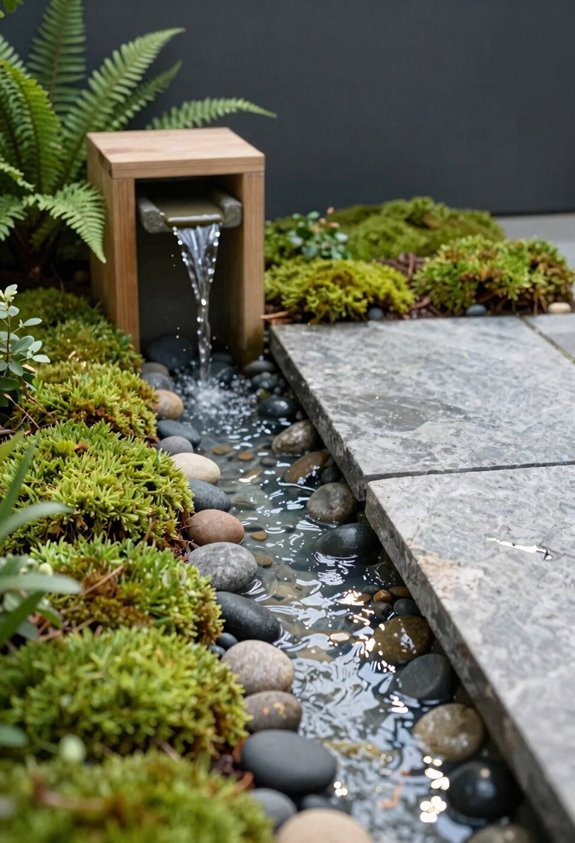
Why settle for a basic birdbath when you can craft something truly captivating? I built my disappearing fountain last spring, and it’s changed my patio into a gathering spot neighbors now ask about.
You’ll bury a hidden basin about two feet wide underground, then cover it with a sturdy grate. I layered hardware cloth and river rocks on top so water seems to vanish into the earth: no visible pool, just a neat effect. Your submersible pump sits in this hidden reservoir, pushing water upward through plastic tubing before it cascades back down.
Here’s what saves your sanity: install a maintenance trap door in that hardware cloth. When my pump needs cleaning, I lift one corner without disturbing a single stone. Come winter, you’ll drain everything and store the pump indoors.
Power Your Water Feature: Electric vs. Solar Options
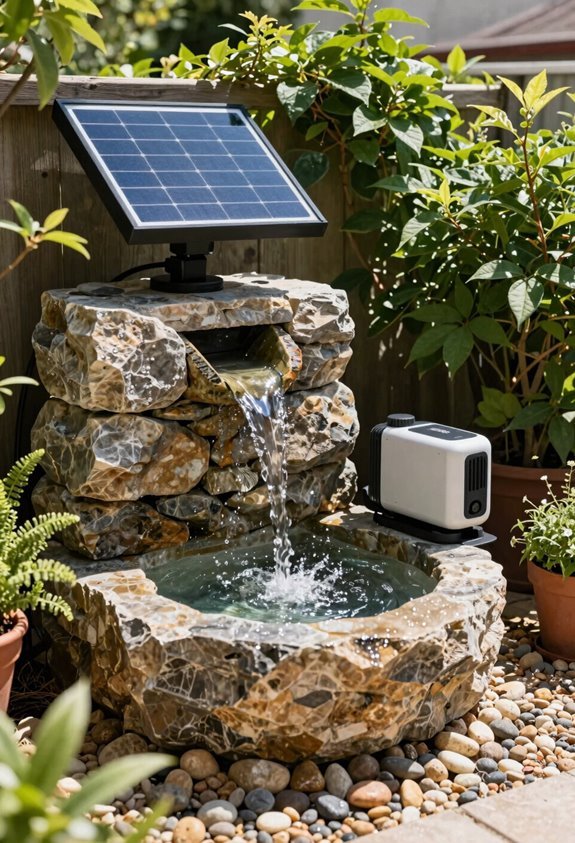
Once you’ve got your basin and grate in place, you’ll need to make a real decision about how that water keeps moving. I’ve weighed both power options, and each suits different situations. Electric pumps deliver steady performance, like 264 GPH with 16 watts and 5.5 feet of lift, ideal when reliability matters for your water feature. You’ll need underground conduit and GFCI protection, though.
Solar pumps offer freedom from outlets, typically pushing 160 GPH at 10 watts. I recommend adding battery backup, like the ECO-WORTHY system around $125, or your flow stops when clouds roll in. Position panels in full sun, zero obstructions.
For garden irrigation integration, electric wins on consistency. For off-grid charm, solar works with planning. Either water pump choice shapes your daily experience.
Install a Compact Bubbler for Patios and Balconies
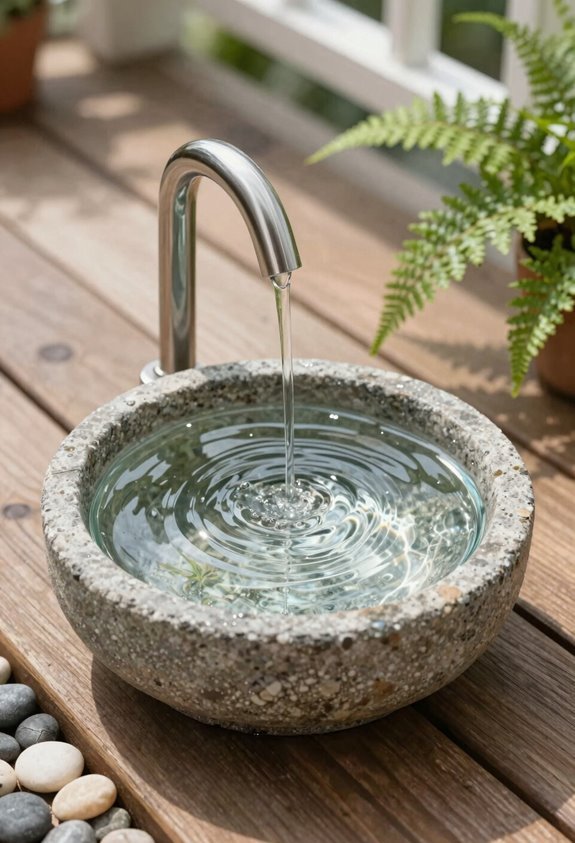
How do you bring moving water to a space barely larger than a doormat? I install a compact bubbler, the ideal water feature for any small garden patio where space demands creativity.
I start with a shallow basin or decorative pot, then nestle a small submersible pump inside. Flexible tubing routes water upward, creating that gentle, mesmerizing bubble effect we crave. A grate or mesh cover conceals the basin while keeping debris out.
For power, I’ve got options: a 110–120V electric pump delivering around 264 GPH at roughly 16 watts, or a solar-powered alternative when wiring isn’t practical. I always add a trap door for pump access, making maintenance straightforward.
With weatherproof materials and thoughtful stone placement, this bubbler turns tight balconies into tranquil retreats.
Winterize and Maintain Your Water Feature Year-Round
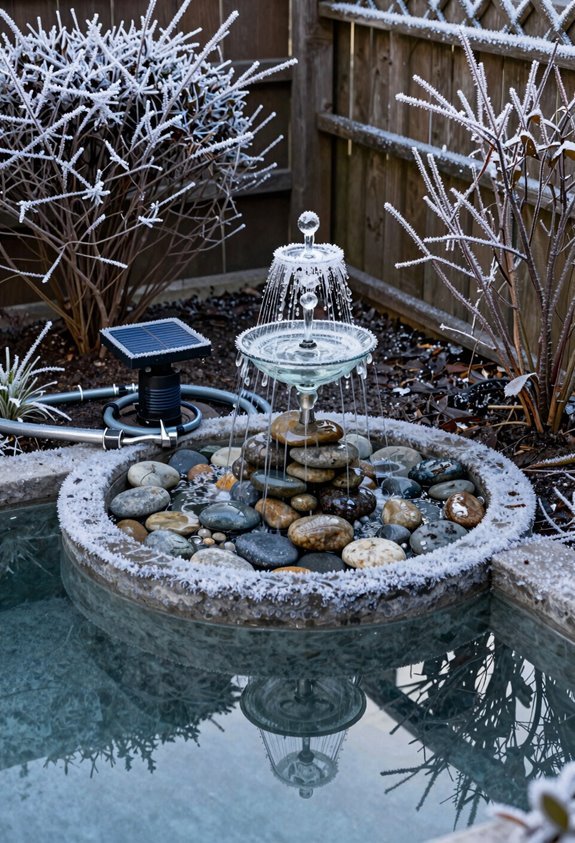
When winter approaches, I shift my focus from enjoying the bubble’s gentle murmur to protecting the investment I’ve built. I winterize by draining the basin and removing the pump, storing it somewhere frost-free to prevent cracking.
If I’m running the feature year-round, I install a pond-safe heater and monitor the water level diligently; low levels burn out pumps fast. For pump maintenance, I built a trap-door in my hardware cloth grate, which makes winter removal and spring servicing effortless. Frost protection also means covering the basin with a weatherproof shield against wind and debris.
I stay on top of debris clearance monthly, and I’ve mapped out a restart procedure so I’m flowing again by first thaw.