
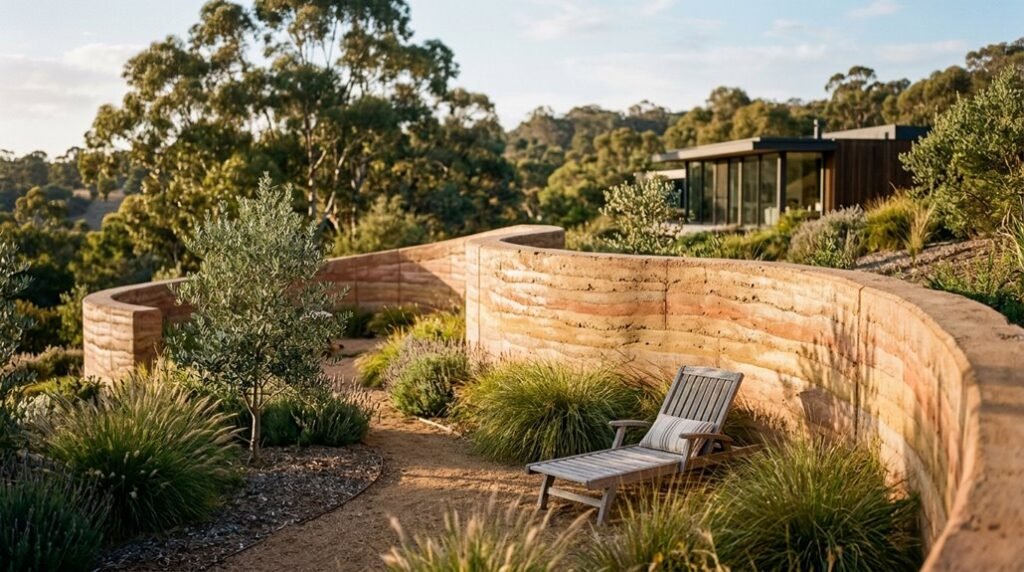
Building a retaining wall in 2026 is like assembling a puzzle where every piece must fight gravity, water, and time all at once.
I’ve watched materials evolve from simple stacked stone to engineered systems that would make a medieval mason’s head spin.
And honestly? The options can feel overwhelming when you’re standing in the supply aisle, calculator in hand, wondering if that geogrid rating actually matters (spoiler: it does).
But here’s the thing: once you understand what each material actually does beneath the surface, the decision gets a whole lot clearer.
You’re about to see how fiberglass geogrids, polypropylene reinforcement, and a few surprises stack up when it comes to keeping your soil where it belongs.
| Universal Retaining Wall Geogrid Roll 4′ x 98′ (50KN) | Best for Mid-Height Walls | Material: Fiberglass | Size Dimensions: 4′ x 98′ | Coverage Area: 392 sq ft | VIEW LATEST PRICE | Read My Analysis | |
| Universal Retaining Wall Blocks with French Drain (4-Pack) | Best Drainage Solution | Material: Plastic/aluminum | Size Dimensions: 9.84″ W x 4.72″ H (blocks) | Coverage Area: N/A (4 drainage blocks) | VIEW LATEST PRICE | Read My Analysis | |
| 4ft x 98ft Fiberglass Geogrid for Retaining Wall & Driveway | Best Versatile Coverage | Material: Fiberglass | Size Dimensions: 4′ x 98′ | Coverage Area: 392 sq ft | VIEW LATEST PRICE | Read My Analysis | |
| 3ft x 65ft Fiberglass Geogrid for Retaining Walls | Best Compact Size | Material: Fiberglass | Size Dimensions: 3′ x 65′ | Coverage Area: 195 sq ft | VIEW LATEST PRICE | Read My Analysis | |
| 3ft x 164ft Polypropylene Geogrid for Retaining Walls & Driveways | Best Extra-Long Roll | Material: Polypropylene | Size Dimensions: 3′ x 164′ | Coverage Area: 492 sq ft | VIEW LATEST PRICE | Read My Analysis | |
| Geogrid Retaining Wall for Driveway and Slope Stabilization | Best for Irregular Layouts | Material: Fiberglass/polypropylene | Size Dimensions: 3′ x 50′ (or 64′) | Coverage Area: 192 sq ft | VIEW LATEST PRICE | Read My Analysis | |
| Geogrid Roll 4ft x 164ft Fiberglass Retaining Walls Stabilization | Best Maximum Coverage | Material: Fiberglass | Size Dimensions: 4′ x 164′ | Coverage Area: 656 sq ft | VIEW LATEST PRICE | Read My Analysis |
More Details on Our Top Picks
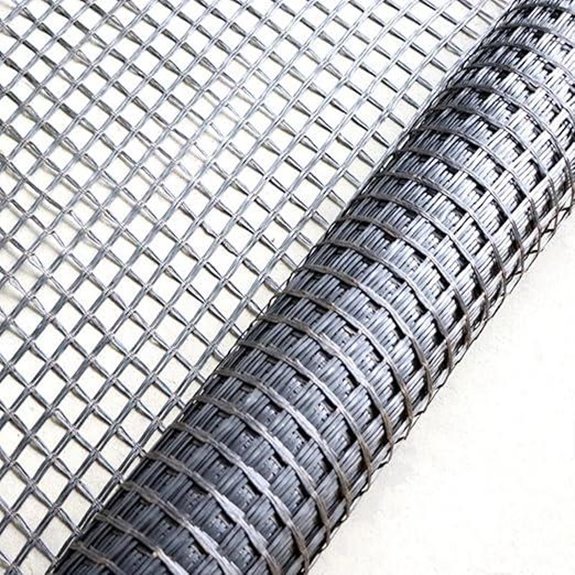
Universal Retaining Wall Geogrid Roll 4′ x 98′ (50KN)
This geogrid excels if you’re building walls up to six feet tall. I’m talking about Yeaborn’s Universal Retaining Wall Geogrid Roll, a 4′ x 98′ fiberglass workhorse. That’s 392 square feet of reinforcement in one roll, enough to tackle most backyard projects without breaking a sweat.
Here’s what makes this material worth your attention:
- Fiberglass construction delivers serious strength in both directions, longitudinal and transverse
- High temperature and corrosion resistance mean it won’t quit when conditions get nasty
- You can cut it to fit without special gear, and you won’t need complex equipment to install it
I appreciate how this grid improves soil compressive strength and bearing capacity while preventing that dreaded wall collapse or cracking. It reduces excavation depth and base material needs, which saves time and effort. Use it for courtyard roadbeds, slope protection, parking lots, docks, or freight yards. And yes, it extends service life while keeping things looking sharp. Pretty solid for a black roll of fiberglass, polyester, and PVC!
- Material:Fiberglass
- Size Dimensions:4′ x 98′
- Coverage Area:392 sq ft
- Primary Application:Soil/wall reinforcement
- Cut/Install Ease:Easy to cut, no complex equipment
- Form Type:Roll
- Additional Feature:50KN tensile strength
- Additional Feature:High temperature resistant
- Additional Feature:Corrosion resistant
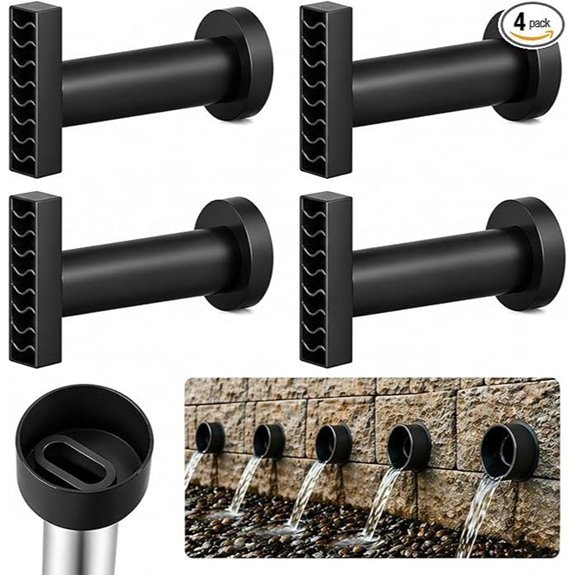
Universal Retaining Wall Blocks with French Drain (4-Pack)
Who needs a drainage solution that actually works without the headache of complicated installs? I’ve found that Wesnoy’s Universal Retaining Wall Blocks with French Drain hit that sweet spot between professional performance and DIY accessibility.
These blocks integrate directly into concrete, timber, or natural stone walls measuring 3 to 8 inches thick. No cutting, no modifications. You simply slot them into pre-drilled gaps or interlayer positions, and you’re routing water away from your structure before it becomes a problem.
Each 4-pack includes drainage pipes that do the heavy lifting: reducing hydrostatic pressure, preventing freeze-thaw damage, and keeping your wall stable through seasons of heavy rain and UV exposure. The plastic and aluminum construction shrugs off soil contact without corroding.
At roughly 9.84″ by 4.72″, these silver or black units disappear discreetly into your build. Whether you’re edging a flower bed or reinforcing a courtyard wall, this system simplifies what used to require complex engineering.
For landscapers and weekend warriors alike, that’s drainage elevated to plug-and-play simplicity.
- Material:Plastic/aluminum
- Size Dimensions:9.84″ W x 4.72″ H (blocks)
- Coverage Area:N/A (4 drainage blocks)
- Primary Application:Wall drainage
- Cut/Install Ease:No-cut installation
- Form Type:Block/pipe set
- Additional Feature:French drain included
- Additional Feature:3–8 inch compatibility
- Additional Feature:UV/freeze-thaw resistant
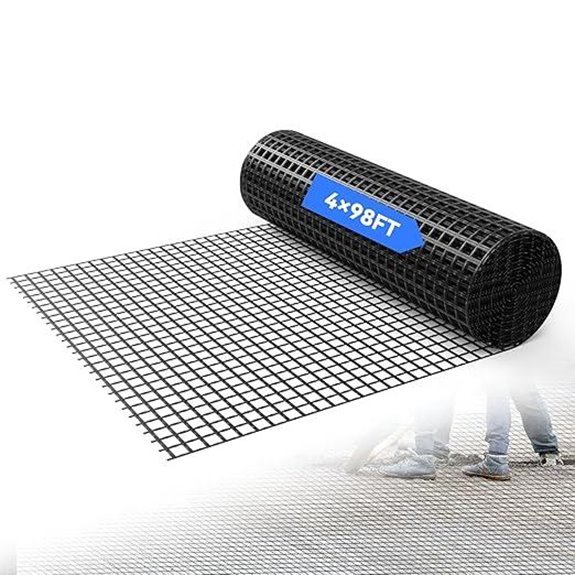
4ft x 98ft Fiberglass Geogrid for Retaining Wall & Driveway
Looking for a geogrid that covers serious ground without serious headaches? I’ve got you covered with this 4ft by 98ft fiberglass workhorse. That’s nearly 400 square feet of reinforcement in one 15-pound roll, and it hauls 50 kN tensile strength without breaking a sweat.
Fiberglass means corrosion resistance, heat stability, and oxidation resistance. Translation? It lasts.
The grid distributes load, stabilizes soil, and supports walls, slopes, driveways, even foundations. You’ll cut down excavation, use less base material, and keep your ground tidy. Time and money saved.
Here’s what makes installation painless:
- Cut it with basic tools: scissors, utility knife, whatever’s handy
- Trim to any shape your project demands
- No heavy machinery required
I see this geogrid working overtime in road construction, landscaping, terraces, parking lots, and garden borders. The flat black roll from DRKSBESTO stores easily, deploys quickly, and disappears into your build.
For anyone reinforcing retaining walls or tackling driveway projects in 2026, this is straightforward, effective, and honestly? A pretty smart pick.
- Material:Fiberglass
- Size Dimensions:4′ x 98′
- Coverage Area:392 sq ft
- Primary Application:Wall/road reinforcement
- Cut/Install Ease:Easy to cut, no machinery
- Form Type:Roll
- Additional Feature:Oxidation stable
- Additional Feature:Load distribution optimized
- Additional Feature:13 lb lightweight
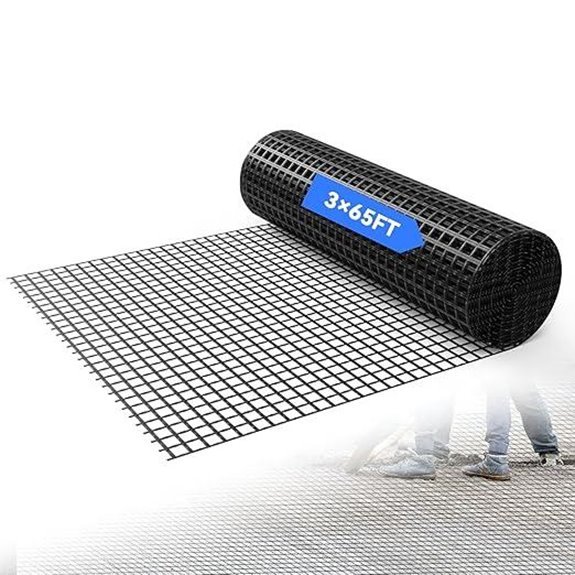
3ft x 65ft Fiberglass Geogrid for Retaining Walls
Why lug oversized rolls around a cramped jobsite when something trimmer exists? I recently spotted the DRKSBESTO 3ft x 65ft Bi-Directional Fiberglass Geogrid, and it solves exactly that headache. At just seven pounds and covering 195 square feet, this black fiberglass grid packs 50 kN tensile strength into a highly manageable package.
Here’s what makes it click for retaining wall builds:
- Load distribution that stabilizes soil without demanding deep excavation
- Corrosion-resistant fibers that laugh off heat and oxidation
- Clean cuts with basic tools
I picture it perfectly for:
- Terraced garden walls
- Residential driveways needing base reinforcement
- Parking lots where you’re fighting both cost and calendar
The bi-directional weave distributes stress evenly, so your wall pushes back against soil pressure instead of bowing or cracking. And because it plays nice with slopes, driveways, even foundations, you’re buying versatility alongside that reinforcement.
Installation stays straightforward: roll it out, cut to shape, layer properly. The 35 x 5 x 5 inch packaged dimensions slip into trucks already crowded with block and backfill. For 2026 projects where space, labor, and timeline all squeeze together, this geogrid earns its spot.
- Material:Fiberglass
- Size Dimensions:3′ x 65′
- Coverage Area:195 sq ft
- Primary Application:Wall/road reinforcement
- Cut/Install Ease:Easy to cut, no machinery
- Form Type:Roll
- Additional Feature:195 sq ft coverage
- Additional Feature:7 lb ultra-lightweight
- Additional Feature:Bi-directional reinforcement
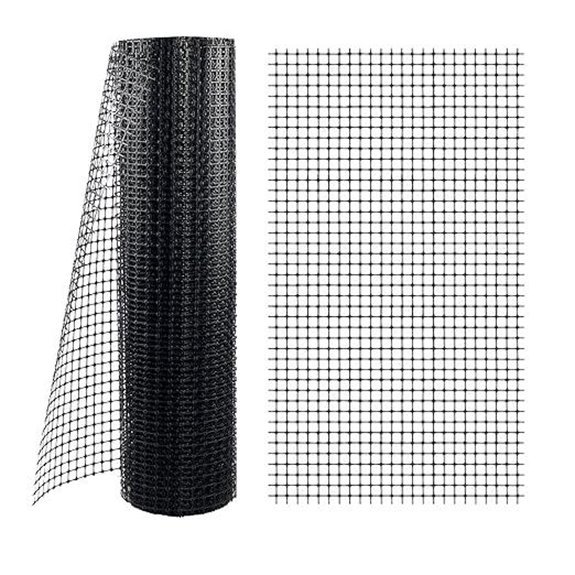
3ft x 164ft Polypropylene Geogrid for Retaining Walls & Driveways
I’ll tell you straight up, this 3ft by 164ft polypropylene geogrid is the finest extra-long roll I’ve found for anyone tackling a sprawling driveway or terraced hillside in 2026.
This bidirectional mesh stretches 164 feet of stabilization power across your project, and that length matters when you’re minimizing seams on long runs. The 2cm grid openings lock gravel and soil in place while the polypropylene construction fights oxidation and aging without breaking a sweat.
Here’s what makes it sing:
- Tensile strength hitting 850–1300 lb/ft at break, with solid performance at 2% and 5% strain
- 0.8-inch thickness that handles deformation without fuss
- Flexibility to cut and adjust on tricky contours
I use this as a bottom layer for roadbeds and retaining wall backfill, where it distributes loads and stops settlement cracks before they start. And sure, you could rig it for garden fencing in a pinch, but that’s not its calling.
One heads up: this geogrid reinforces and stabilizes beautifully, but don’t ask it to bear structural loads alone. Pair it with proper engineering, and you’ve got a hardscape foundation built to last.
- Material:Polypropylene
- Size Dimensions:3′ x 164′
- Coverage Area:492 sq ft
- Primary Application:Driveway/slope stabilization
- Cut/Install Ease:Easy to cut, flexible
- Form Type:Roll/mesh
- Additional Feature:2x2cm mesh grid
- Additional Feature:Poultry fence capable
- Additional Feature:15 kN strength range
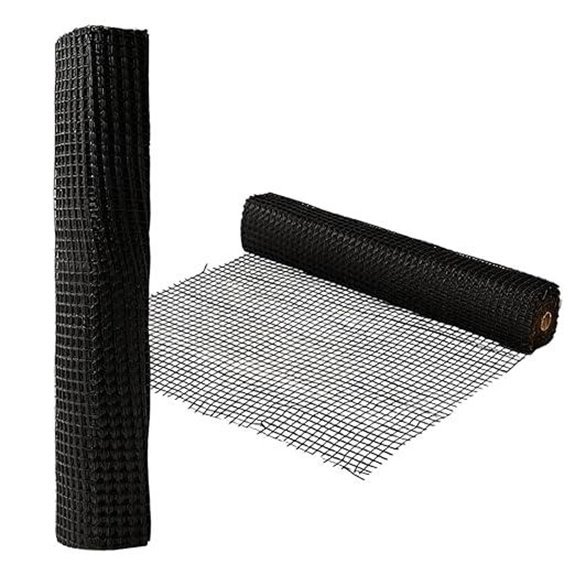
Geogrid Retaining Wall for Driveway and Slope Stabilization
Which driveway project keeps you up at night? For me, it’s always the slope that won’t quit shifting, threatening to swallow my asphalt whole. That’s where ZOIDONE’s Geogrid Retaining Wall comes in clutch.
This 3 ft x 50 ft fiberglass and polypropylene mesh covers roughly 192 square feet of trouble. I’m talking about 0.8 x 0.8-inch mesh holes with serious aperture stability (0.32 m-N/deg, if you’re numerically curious), distributing stress evenly so your wall doesn’t bulge like a cheap suitcase.
Here’s what makes it a workhorse:
- Cuts with ordinary tools. No fancy machinery required!
- UV, chemical, and photooxidation resistant. Parking lots, terraces, it handles them all.
- Flexible enough for weird layouts. Because slopes rarely cooperate.
It reinforces retaining walls, garden paths, and parking pads while extending service life considerably. Premium polypropylene core, black color, and zero special installation headaches.
For medium-sized projects that demand stability without contractor bills eating your budget? This is my go-to recommendation.
- Material:Fiberglass/polypropylene
- Size Dimensions:3′ x 50′ (or 64′)
- Coverage Area:192 sq ft
- Primary Application:Driveway/wall stabilization
- Cut/Install Ease:Easy to cut with ordinary tools
- Form Type:Roll/mesh
- Additional Feature:0.8-inch mesh holes
- Additional Feature:192 sq ft coverage
- Additional Feature:Photooxidation resistant
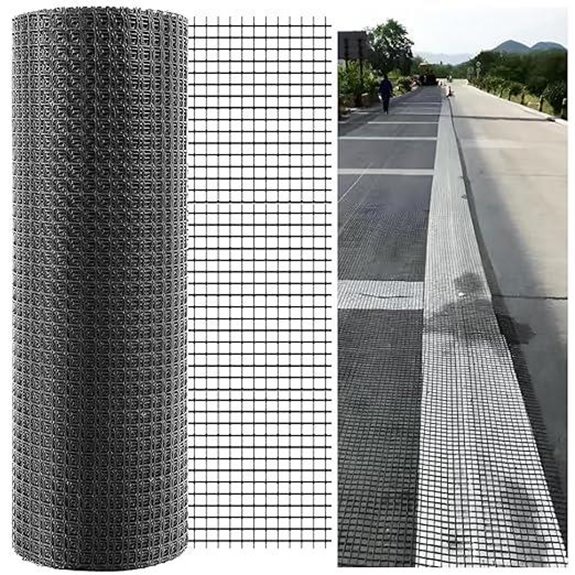
Geogrid Roll 4ft x 164ft Fiberglass Retaining Walls Stabilization
Need maximum coverage without the headache of endless seams? I’ve got a geogrid that delivers 656 square feet in a single roll, and it’s going to change how you think about wall reinforcement.
The Veonly fiberglass roll, 4 feet by 164 feet, stretches out with barely a break, meaning fewer overlaps and faster installation. At 50 kN tensile strength, it fights deformation under serious loads.
That fiberglass construction shrugs off UV exposure and nasty weather cycles.
Here’s what I appreciate about the physical reality of this material:
- Cuts clean with scissors or a utility knife, no special rigs required
- Secures with landscape staples or soil nails, your choice
- Weighs light enough that I don’t fight it during layout, yet carries highway-grade specs
I use this for retaining walls, sure, but also driveway bases, terraced garden beds, and slopes that want to migrate downhill when nobody’s watching. The 0.12-inch profile stays nearly invisible once buried, doing its soil-locking work in secret.
For DIYers and contractors alike, that seamless coverage means I spend less time piecing and more time finishing. Black color, rectangular grid, straightforward purpose: hold the earth where I put it.
- Material:Fiberglass
- Size Dimensions:4′ x 164′
- Coverage Area:656 sq ft
- Primary Application:Wall/slope stabilization
- Cut/Install Ease:Easy to cut with scissors/knife
- Form Type:Roll
- Additional Feature:656 sq ft coverage
- Additional Feature:Landscape staple compatible
- Additional Feature:Heavy load deformation-resistant
Factors to Consider When Choosing Materials for Retaining Walls
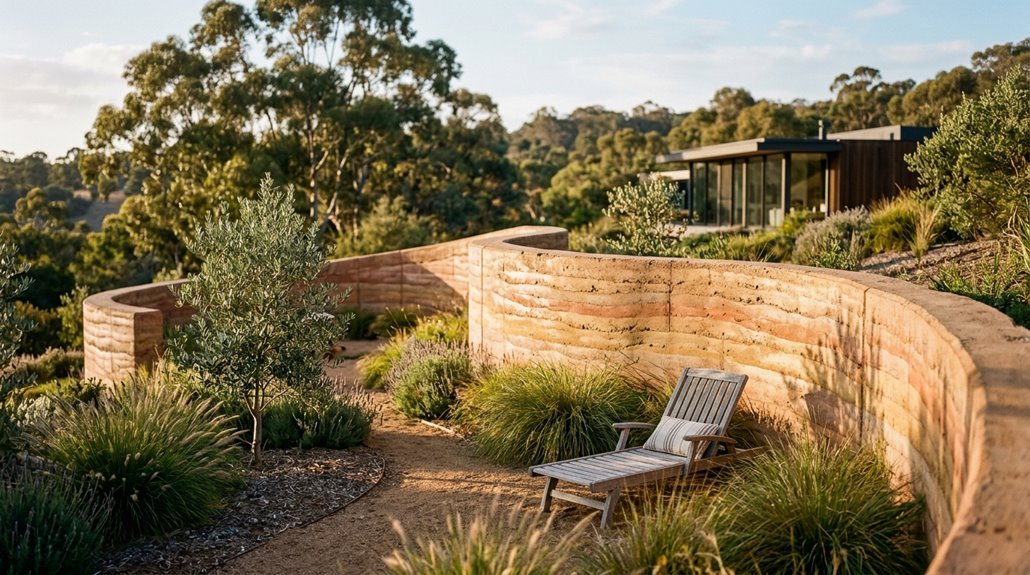
I know you’re eager to pick a material and start building, but hold on. You’ve got to match your wall to your site, or you’ll be rebuilding it sooner than you’d like. Soil type, local weather patterns, drainage needs, height restrictions, and load requirements aren’t just boxes to check. They’re the difference between a wall that lasts decades and one that leans like the Tower of Pisa after the first hard rain. Let’s break down what actually matters when you’re standing in the supply yard, trying to decide between concrete, timber, or stone.
Soil Type Compatibility
Soil type matters so much when picking reinforcement for a retaining wall because clay, silt, sand, and rock fill each behave differently under load, and materials are needed that distribute that stress without letting the whole thing settle or shift.
I’ve found geogrids handle this beautifully when matched properly. Here’s what I look for:
- Fiberglass geogrids: corrosion-resistant, high tensile strength, excellent for aggressive or variable subsurfaces
- Polypropylene geogrids: deformation and aging resistance, ideal for moisture-rich soils that stay wet
The aperture size matters too. A 0.8-inch opening with mesh stability around 0.32 m-N/deg lets the grid lock with everything from fines to coarse aggregate.
And don’t forget UV exposure and oxidation resistance, these keep the reinforcement consistent regardless of what’s underneath!
Climate and Weather
Once you’ve matched your geogrid to the soil, you’ve got to look up at the sky and ask what that wall will face year after year.
Climate’s your silent partner here, and it’ll make or break your setup. UV exposure, freeze-thaw cycles, and oxidation resistance matter big time for your geogrid’s lifespan. Temperature swings cause thermal expansion and contraction, so materials that keep their cool (and their shape) prevent cracking and maintain soil reinforcement.
Humid or coastal? Corrosion resistance isn’t optional: it’s survival. Salt and moisture attack components touching soil and water.
Here’s your quick checklist for climate-ready material choice:
- UV protection ratings for sun-baked locations
- Freeze-thaw durability for northern climates
- Corrosion-resistant coatings for wet or saline zones
- Thermal stability across your local temperature range
Match these to your seasonal patterns, and you’ll build something that lasts.
Drainage Requirements
There’s nothing quite like watching water undo a perfectly good wall, and I’ve seen it happen more times than I’d like to count. That’s why I always put drainage at the top of my materials checklist.
Proper drainage slashes hydrostatic pressure behind your wall, stopping the cracking, sliding, and outright failure that comes from water buildup. Here’s what I specify:
- Perforated pipes or French drains to collect and channel water away
- Geogrid reinforcement that pairs with drainage so moisture can’t weaken backfill
- Drainage capacity matched to wall height, soil type, and expected water load
And don’t overlook sealed or ventilated backfill options! They cut pore water pressure and fend off freeze-thaw damage.
Skip this step, and you’re basically building a dam instead of a wall. Trust me, water always wins if you let it.
Wall Height Limits
Water management keeps your wall upright, but it won’t matter much if you’ve sized your materials for the wrong height.
I’ve learned that geogrid-reinforced systems typically top out around 6 feet in standard installs, though your manufacturer’s specs always reign supreme.
Push higher, and you’re flirting with trouble: deformation, cracking, or outright failure without serious backup plans.
Here’s what gates your wall’s vertical ambitions:
- Tensile strength of your reinforcement mesh (many products clock in near 50 kN per unit)
- Soil quality and backfill compaction
- Drainage design that keeps hydrostatic pressure from building
Bigger walls mean beefier loads, tighter drainage, and more complex engineering. Skip the math, and you’ll watch your investment lean like a tired bookshelf.
Respect the limits, or budget for serious reinforcement upgrades!
Load Bearing Needs
Sizing up your load-bearing needs before you pick materials saves you from building a wall that’s all show and no backbone.
I always check how much weight my wall will shoulder because that dictates everything. Heavy loads demand serious geogrid muscle. I’m talking 50 kN tensile strength or higher to spread stress properly.
And here’s a tip: bi-directional grids reinforce both ways, which keeps walls, slopes, and driveways stable under pressure.
Size matters too. Wider, longer rolls (like 4 feet by 98–164 feet) mean fewer seams and smoother load transfer. One continuous sheet beats patchwork every time.
Don’t skimp on durability. Fiberglass or polypropylene grids laugh off corrosion, heat, and UV damage. That’s load-bearing performance that lasts.
Finally, grab material you can cut cleanly. Precise sizing eliminates weak spots. Your wall stays strong where it counts.
Installation Complexity
I’ll take a look at what I’ve learned about load-bearing capacity, and now I want to talk about how that material actually behaves when it hits your driveway.
Fiberglass geogrids make installation surprisingly painless. They’re lightweight, easy to cut with basic tools, and you won’t need heavy machinery. Just roll it out, trim to fit, and secure with staples or fasteners. Perfect for weekend warriors!
Here’s what speeds things up:
- Roll sizes like 4 ft by 98–164 ft minimize seams across large sections
- Higher tensile strength options (think 50 kN) cover more ground with fewer joints
And compatibility matters! These grids play nice with concrete, timber, or natural stone, bending around curves and irregular layouts without complaint. Wider rolls mean less time connecting pieces, more time admiring your progress.
Long-Term Durability
Resilience isn’t just a buzzword I’m throwing around, it’s the difference between a retaining wall that holds its ground for decades and one that surrenders to gravity, frost heave, and whatever chemicals your soil’s been hiding. I’ve learned that material selection here is everything.
UV exposure, corrosion, oxidation, chemical degradation, these are your enemies. Fiberglass geogrids stand up beautifully, delivering corrosion resistance and heat stability while keeping tensile strength under constant load stress. Polypropylene meshes fight deformation and aging, maintaining structural integrity year after year.
And don’t underestimate load distribution; a material that stabilizes soil properly prevents progressive settlement and cracking.
Here’s what saves your wall long-term:
- Corrosion-resistant fibers that don’t flinch at moisture or pH swings
- Heat-stable polymers that won’t go brittle in summer sun
- Consistent aperture sizes that reduce installation slip-ups
Choose wisely, and your wall won’t become a cautionary tale!