I’ve watched homeowners turn their open pergolas into year-round retreats by adding screens, but the real question isn’t whether you can, it’s how well you’ll do it. The mesh you choose, the mounting surface you prepare, and the wind load your system can handle will decide whether this project succeeds or fails.
I’ll walk you through what separates a drafty afterthought from a tight, functional outdoor room.
Can You Screen In a Pergola? How It Works and What to Expect
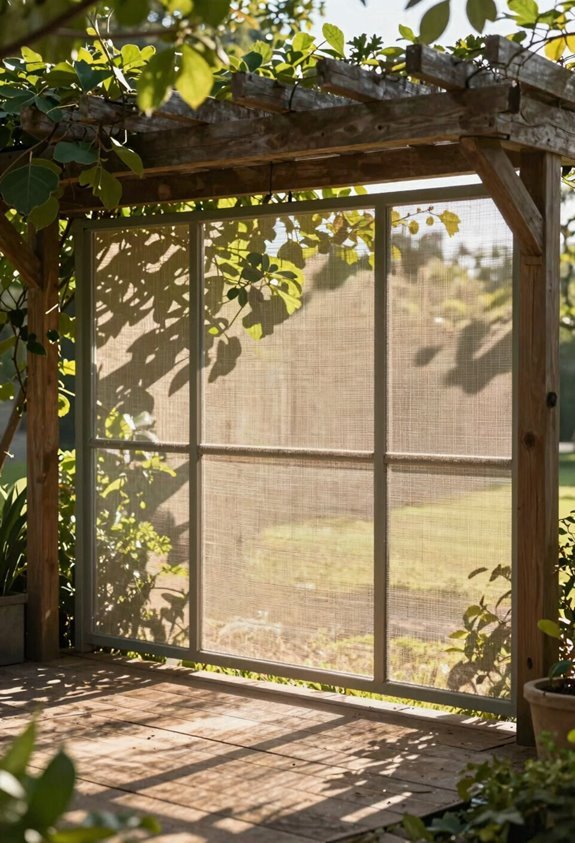
Why let bugs and harsh sun cut your outdoor time short? I’ve found that a screened pergola makes your backyard a true extension of your home, and I’m excited to share how simple the process actually is.
You’ll mount mesh screens to the sides and sometimes the top, creating an enclosed space that maintains airflow while blocking pests. I recommend retractable screens with SnapFIT installation; they’re weather-resistant, require no drilling, and let you adjust your environment instantly. You’ll find options in white, black, or anthracite to match your frame perfectly.
Before you start, check local permitting requirements. Size, height, and attachment to your home determine whether paperwork’s needed. Once installed, you’ll enjoy year-round outdoor living with privacy and protection, finally claiming that sense of belonging you’ve been missing in your own backyard.
What Pergola Screens Block: Rain, Wind, Bugs, and Sun
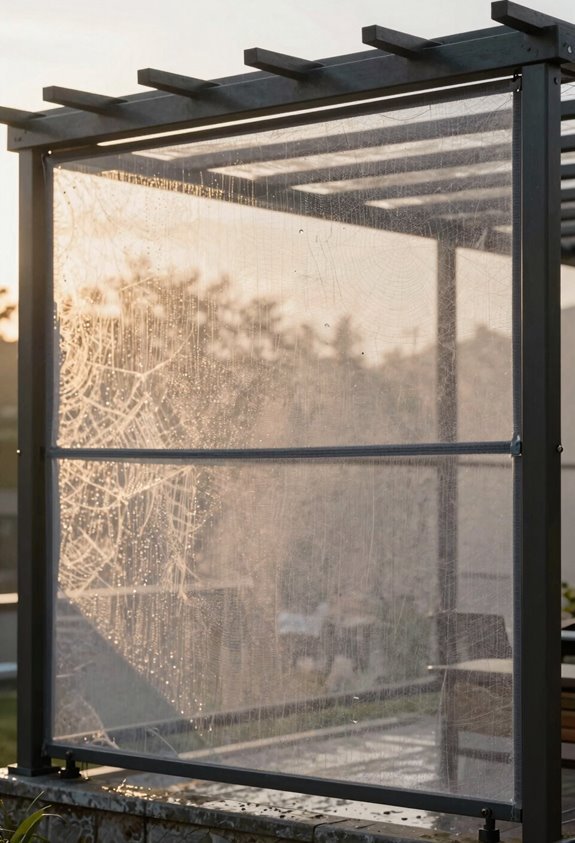
I’ve found that quality pergola screens do far more than keep mosquitoes at bay, though that alone transforms summer evenings. Retractable mesh systems with zip-track sealing create genuine barriers against wind gusts and light rain, extending your outdoor season by weeks. When you pair fine insect weave with weather-resistant fabrics, you’re building a convertible room that adapts to conditions.
Rain and Moisture Protection
When I’m relaxing under my pergola, rain protection is where screens really prove their worth, especially once you’ve paired them with the right roof system. A screened-in space transforms into a genuine retreat when you combine weather-resistant mesh with an all-weather roof overhead.
I’ve found that fixed insulated panels deliver full-time rain protection, letting me enjoy coffee while showers pass through. Alternatively, adjustable louvered roofs offer flexibility, draining moisture when open and sealing tight when closed. Dual-walled systems excel here, channeling drips away from my seating area while managing humidity.
Matching your roof to existing home weatherproofing, whether shingles or TRC-style materials, creates cohesive moisture defense. Together, screens and compatible roofing extend my outdoor season through light to moderate precipitation without compromise.
Wind and Insect Defense
How often have you settled into your outdoor space only to have a sudden gust scatter your papers, or a swarm of mosquitoes cut your evening short? I have found that pergola Screens solve both problems beautifully, giving us wind protection and bug-free evenings together.
Here is how screened pergolas create your protected sanctuary:
- Screens block forceful gusts, reducing wind impact by up to 80% in your seating area
- Retractable screens extending groundward eliminate gaps where mosquitoes infiltrate
- Gapless louvered roofs pair with vertical Screens for complete weather management
- Wind protection and insect blocking together extend your outdoor season significantly
I recommend combining adjustable roofing with quality Screen installation. This creates a controlled microclimate where you belong, comfortable during breezy afternoons and pest-free after sunset. You will reclaim your outdoor living completely.
Fixed vs. Retractable Pergola Screens: How to Choose
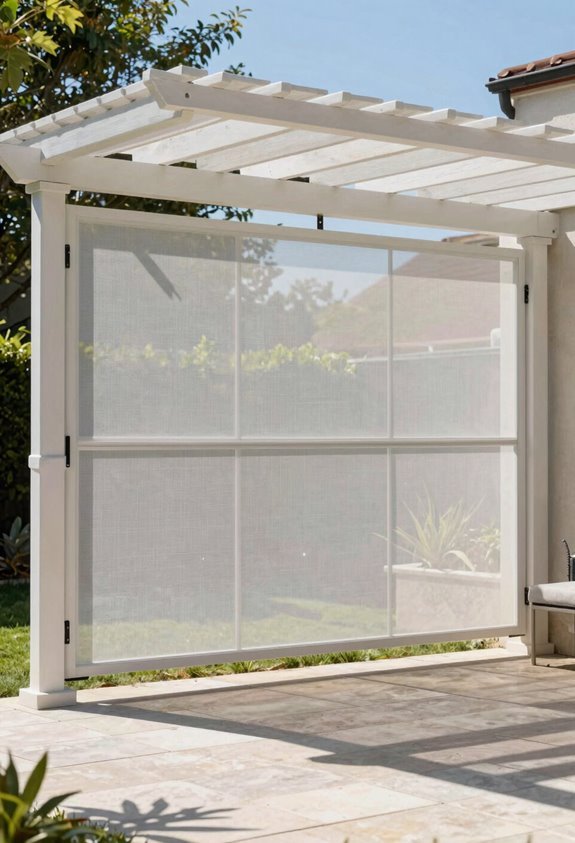
I need to choose between fixed and retractable pergola screens, and I’m weighing permanent protection against flexible control. Fixed screens give me constant defense from insects, sun, and wind, but I can’t open things up when I want that breezy, unenclosed feeling. Retractable options let me deploy coverage on demand and stash it away neatly, though I’ll pay more attention to mounting surfaces and post configuration during installation.
Fixed Screen Benefits
Why settle for seasonal compromises when fixed screens deliver year-round protection without the hassle of constant adjustments? I’ve found that fixed screens create a true extension of your home, a space where you belong without interruption.
Here’s what makes them worth considering:
- Zero deployment means insects and debris stay out permanently
- Consistent sun balance eliminates daily guesswork about shade needs
- Rail-mounted installation delivers that seamless, finished look we all want
- Superior wind resistance keeps everything tight and gap-free through storms
Professional installation ensures proper tension and alignment, which matters more than you’d think. ZIP-Lock anchoring means no flapping, no gaps, just reliable enclosure. For those of us seeking permanence, fixed screens offer the low-maintenance sanctuary we’re after.
Retractable Screen Advantages
When the evening breeze carries more than just the scent of jasmine, I reach for my retractable screen and create instant sanctuary without sacrificing the view.
Retractable screens let me choose when protection serves my pergola lifestyle. I draw them down during buggy evenings, then retract completely to embrace open skies. The track-and-housing system stores mesh discreetly, eliminating permanent visual barriers that fixed alternatives require.
This flexibility changes my pergola from enclosed refuge to airy pavilion within moments.
| Moment | Fixed Screens | Retractable Screens |
|---|---|---|
| Sunny afternoon | Blocks full breeze | Fully open, unobstructed views |
| Evening gathering | Same screen, no adaptability | Lowered for insect protection |
| Storage visibility | Permanent mesh or frames | Hidden in sleek housings |
| Wind resistance | Tension keeps rigidity | Requires sturdy guide systems |
| Seasonal transition | Year-round commitment | Weather-responsive flexibility |
I pair mine with robust guides to prevent flapping, making sure of reliability without compromise.
Do You Need a Permit to Screen In a Pergola?
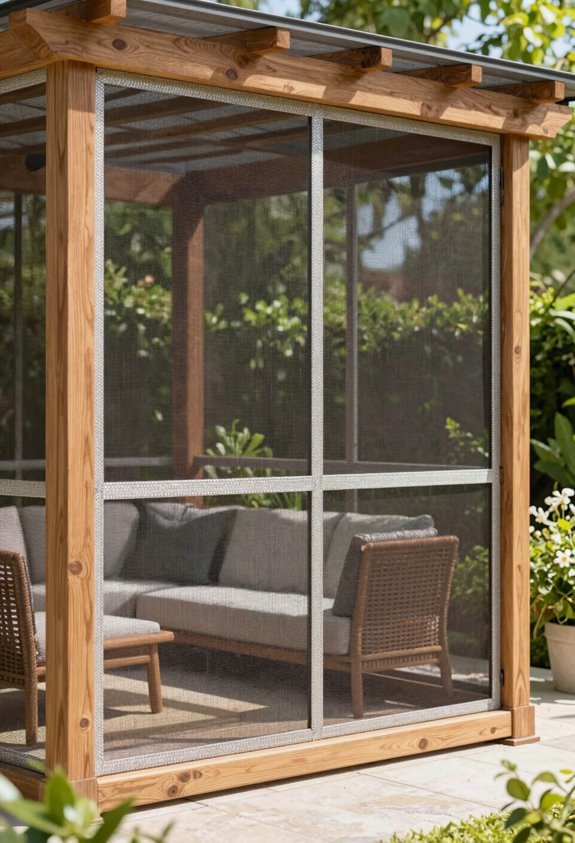
Figuring out permit requirements can feel overwhelming, but I’ll walk you through what most homeowners need to contemplate. Before you transform your open pergola into a screened porch, I always check local codes first.
Here’s what I’ve learned from years of helping people navigate this process:
- Call your building department early. I find most officials appreciate proactive homeowners, and they’ll tell you exactly what triggers a permit.
- Measure your enclosure ratio. I learned that screening all sides plus a roof often reclassifies the structure, which affects requirements.
- Bring your plans. I typically submit sketches showing dimensions, materials, and attachment methods to streamline approval.
- Ask about setbacks and height limits. I’ve seen screened porches rejected because they encroached on property lines.
Getting this right keeps our projects legal and straightforward.
Screen Materials: Mesh Types, Frame Colors, and Durability
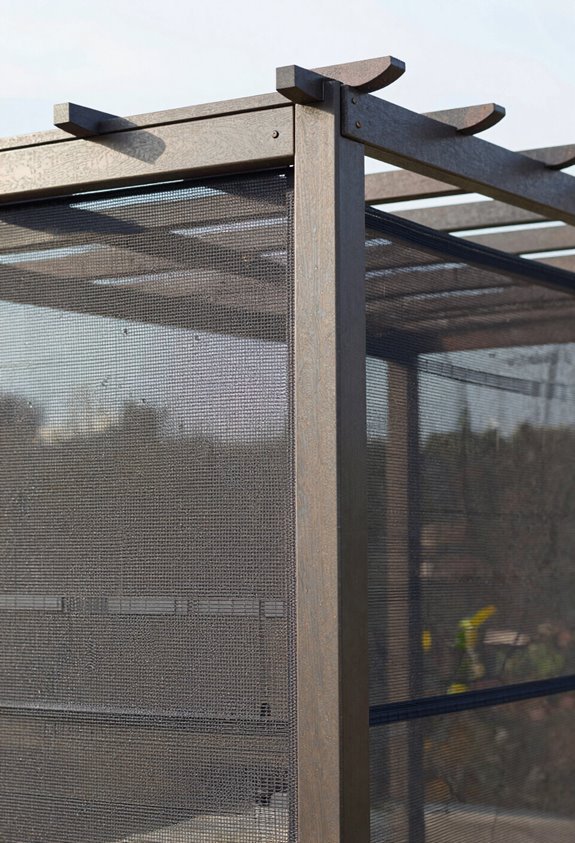
Selecting the right screen materials transforms your pergola from an open frame into a truly livable space you’ll actually use. I recommend exploring mesh types carefully, since fiberglass, aluminum, and stainless steel each balance durability with visibility differently for your pergola screen.
Fiberglass offers flexibility and affordability, while aluminum withstands harsh weather without corroding. Tight weaves like 18×14 or finer keep even tiny insects outside where they belong.
Fiberglass bends your budget kindly; aluminum laughs at storms. Either way, 18×14 weave keeps mosquitoes out of your sunset.
Frame colors matter more than you’d expect. White, black, and anthracite gray integrate seamlessly with most structures, creating that cohesive look your neighbors will notice. I prefer aluminum frames for all-weather resilience, though wood suits traditional aesthetics when you’re willing to maintain it.
ZIP-lock tensioning systems prevent annoying gaps and flapping, ensuring smooth operation when wind picks up. Your outdoor space deserves materials built to last.
Existing Deck vs. New Pergola: Where to Install Screens
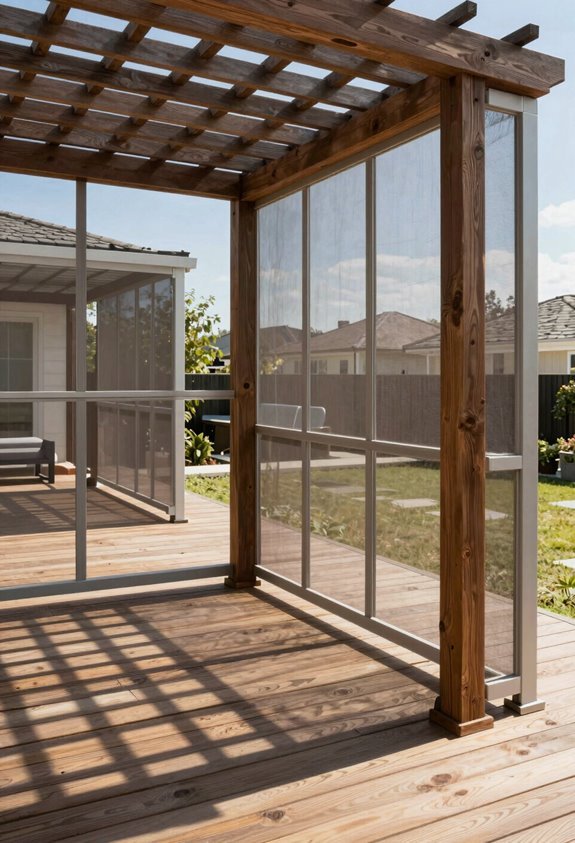
Now that you’ve chosen materials that’ll hold up, let’s look at where your screen project actually begins. I’ve found that starting with an existing deck saves time and money, since you can anchor your screened-in pergola directly to that solid foundation without pouring new footings. Here’s what matters most:
- Attachment surface: Your deck boards must be flat and structurally sound for secure screen mounting.
- Permit simplicity: Local codes often treat pergola screening more lightly than full porch enclosures.
- Height and placement: Check regulations on how tall your structure can stand and how close to property lines.
- Integration style: Unlike porches that blend into your home, a pergola maintains that open, standalone feel we love.
Your existing deck becomes the perfect launch point for outdoor living that feels connected yet distinct.
Motorized and Smart Screen Options for Push-Button Control
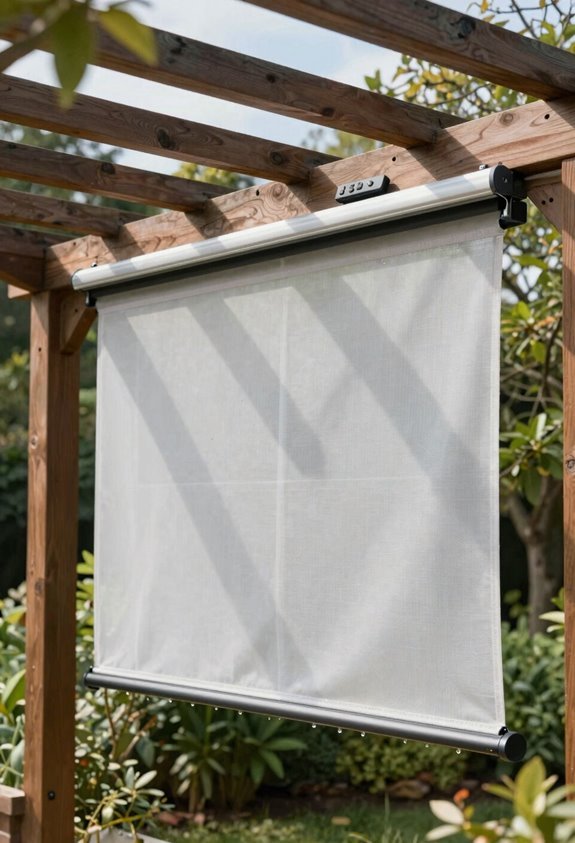
Manual screens work fine, but I’ve found that motorized systems completely change how you’ll use your space. Imagine transforming your screened pergola with one touch, adjusting shade and airflow without leaving your chair. Automated roof pergolas integrate motorized louvers and screens for seamless push-button control.
Embedded weather sensor arrays elevate this convenience further. Rain sensors detect moisture instantly, closing louvers automatically to protect your furniture. Wind sensors respond to gusts, opening louvers to prevent structural stress while keeping you comfortable. Thermo sensors monitor freezing conditions, adjusting the system to prevent damage and extend usability.
These smart features mean your motorized pergola adapts before you even notice the weather changing. You’re not just adding screens, you’re joining homeowners who’ve discovered effortless outdoor living.
How Screens Add Privacy, Block Noise, and Extend Your Season
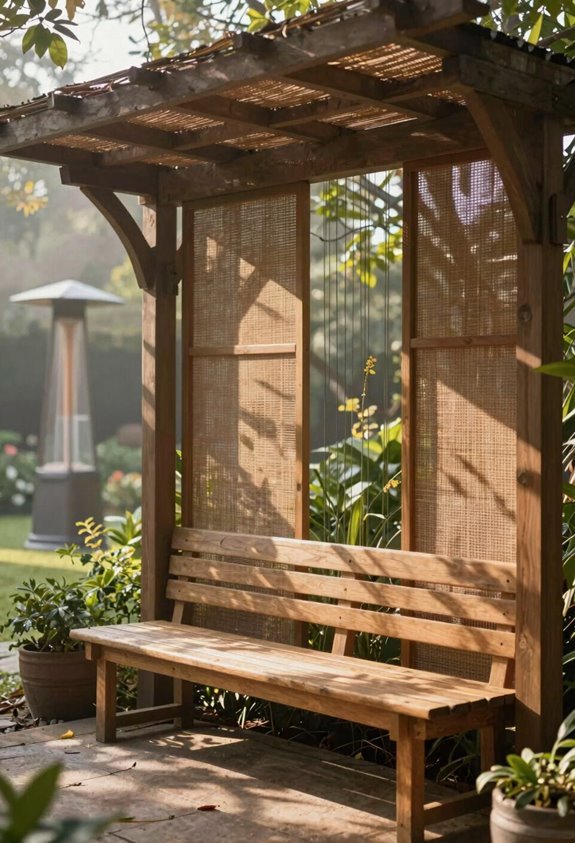
Beyond the convenience of motorized controls, the real payoff comes from how screens change your daily experience in the space.
Screens deliver privacy without sacrificing the open-air feeling you want. Perforated mesh blocks prying eyes while letting breezes flow through, creating that secluded retreat we all want in our backyards.
Here’s what screening actually delivers:
- Privacy barriers that shield you from neighbors without walls
- Sound dampening for intimate conversations, especially with floor-to-ceiling deployment
- Insect protection that extends your comfortable hours outdoors
- Season extension through combined wind, sun, and pest defense
Mesh materials reduce ambient noise modestly, establishing a sheltered atmosphere. When paired with overhead coverage, retractable systems stretch your usable months considerably. You’re not just adding features; you’re claiming year-round ownership of your outdoor space.