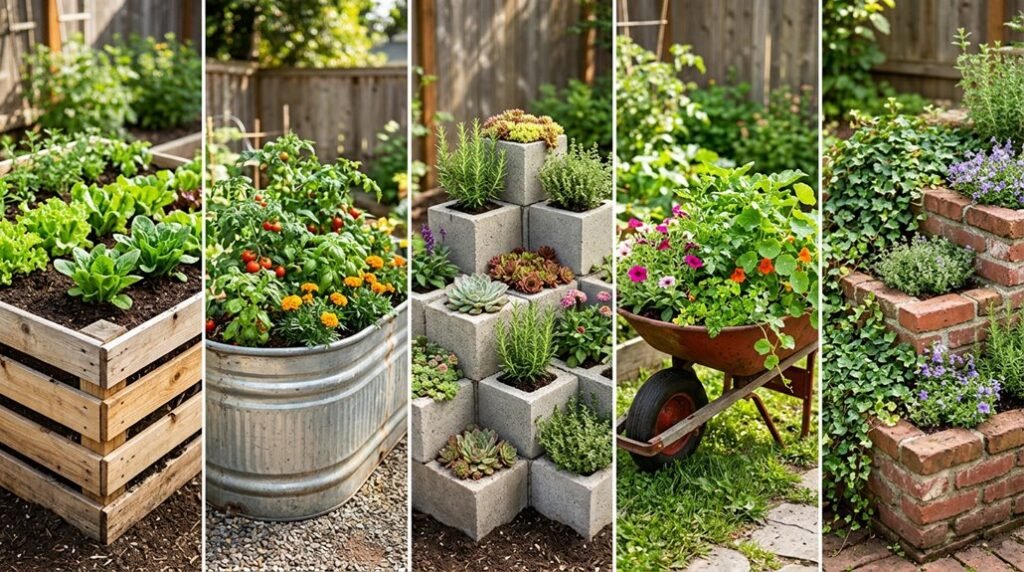
I was sketching raised bed plans during yesterday’s rainfall when I realized how many approaches gardeners overlook. You’ll find that material selection shapes everything: drainage, longevity, and whether your back complains by July.
I’m walking you through five builds I’ve tested, from planter wall blocks to reclaimed steel, each solving a specific yard challenge. The method that saved my hillside garden surprised me most.
Build a DIY Raised Garden Bed From Planter Wall Blocks
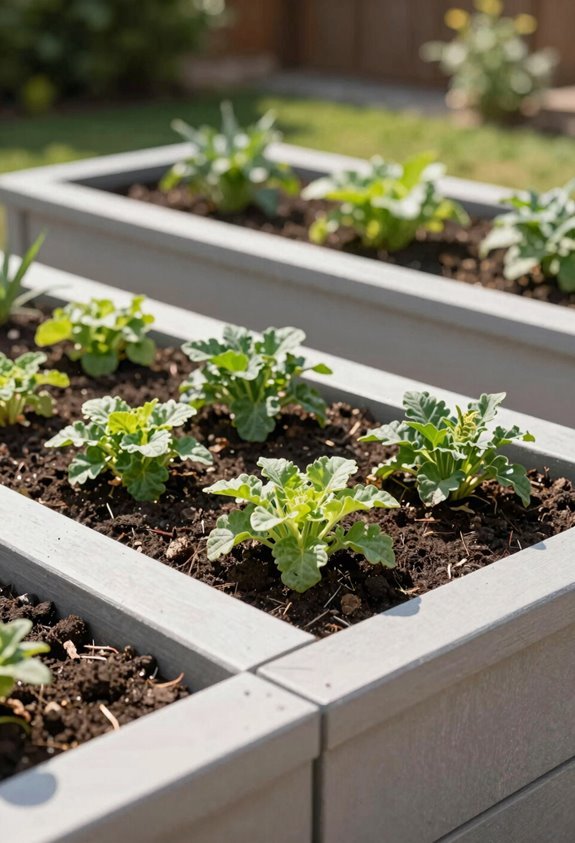
Why settle for flimsy planters when I can show you how concrete wall blocks and cedar boards create a raised bed that lasts? I’ll walk you through building a DIY raised bed that brings us together in the garden.
Start with planter wall blocks at each corner, open holes facing up. Slide 2×6 cedar boards into the notches for your first layer. I cut ends to 3.5 feet, sides to 4.5 feet, then add a wood cap with miter-cut corners secured by deck screws. This planter wall block system gives you a sturdy frame, while cedar resists moisture and looks natural.
I always visualize placement first, then install landscape fabric before soil layering. Your raised garden bed belongs here. Need more space? Project expansion happens easily; add blocks and boards at the ends.
Choose a Galvanized Raised Garden Bed That Outlasts Wood
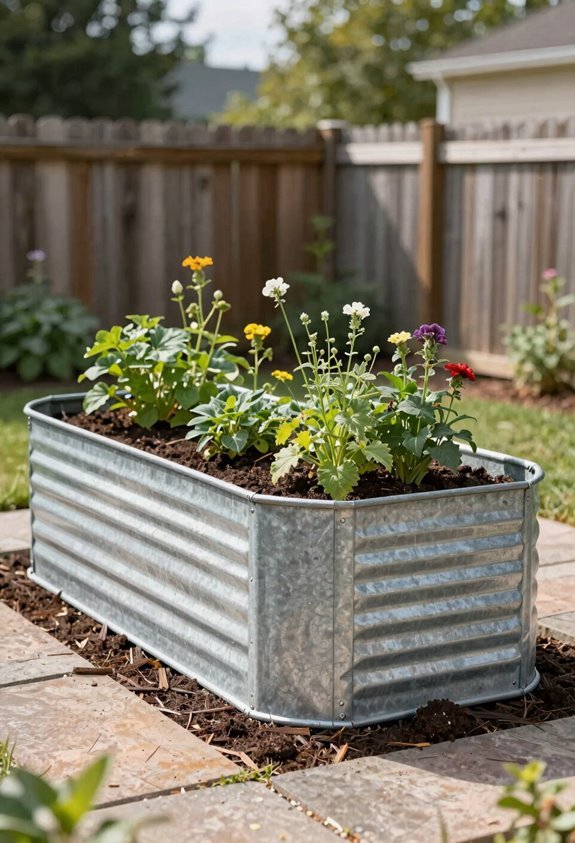
How often have I replaced rotting wood beds when galvanized steel offers two decades of reliable service? I’m done with that cycle, and I bet you are too.
Done replacing rotting wood beds every few years? Galvanized steel gives you two decades of reliable service instead.
Galvanized planters add a sleek, modern look to any outdoor space. These raised beds hold strong against moisture and decay, giving me materials that won’t splinter or warp. I’ve learned that long-lasting performance matters more than short-term savings.
When I’m installing, I always check for drainage holes, drilling them if the planter wall lacks a bottom. Waterlogged roots kill crops fast. Color options let me match my home’s style, whether I prefer rustic zinc or bold powder coats.
Galvanized steel suits every space, from compact balconies to sprawling yards. I configure panels into custom shapes, building the planter wall setup that serves my needs. That’s reliability I trust.
Build an Elevated Raised Garden Bed for No-Bend Gardening
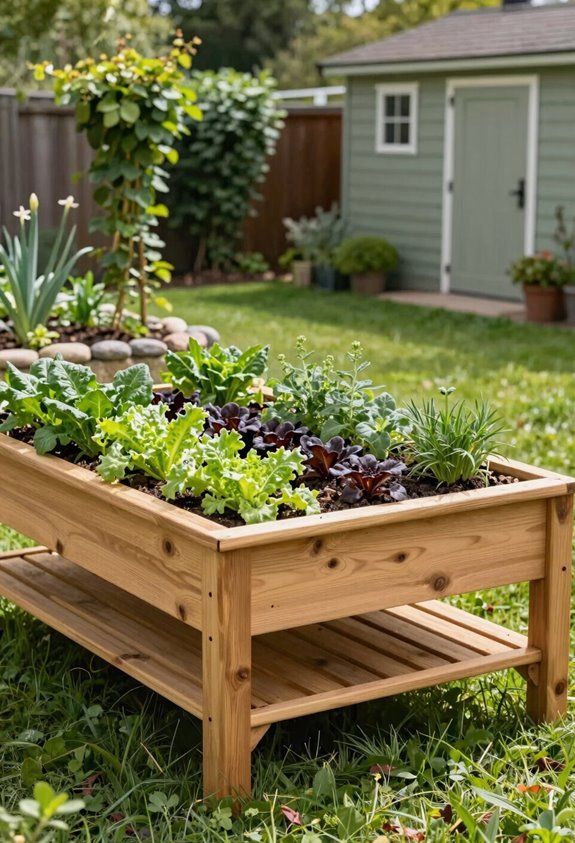
Although my back used to ache after every planting session, I’ve found that elevated cedar planter boxes transform gardening into a comfortable pursuit. A DIY raised bed built for waist-height gardening eliminates strain entirely, letting you tend vegetables without bending.
I recommend constructing a 48-inch raised garden bed using thick cedar boards, at least two inches, for natural cedar durability. As a pressure-treated lumber alternative, cedar resists moisture without contaminating soil. Join pre-cut four-foot boards into a sturdy frame and corners, adding top trim for clean lines. Drill drainage holes to prevent root rot, and seal the wood annually.
Standing planter options under $250 suit varied mobility needs. Build your elevated planter on level ground, and you’ll join countless gardeners who’ve reclaimed their hobby through no-bend gardening.
Stack a Tiered Raised Garden Bed for Hillside Slopes
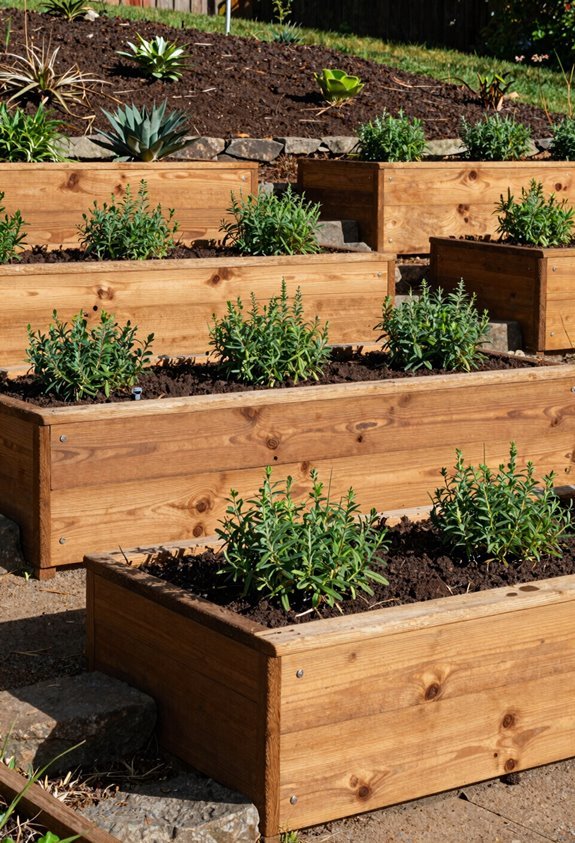
When I’ve faced steep backyard slopes that seemed impossible to cultivate, tiered vertical garden beds transformed that challenge into productive growing space. I build my DIY raised bed using cedar wood planter boxes arranged in stacked garden beds that follow the natural contour of hillside slopes. Each tier connects at varying heights, creating accessible planting steps without demanding level ground.
| Component | Purpose | Material |
|---|---|---|
| Cedar wood frames | Rot resistance, longevity | Natural, untreated boards |
| Landscape fabric | Weed prevention, soil separation | Permeable synthetic weave |
| Stability base | Erosion control, structural integrity | Compacted gravel, anchored posts |
I line each level with landscape fabric before adding soil, making sure proper irrigation drainage works throughout the system. This tiered raised garden bed design lets us grow herbs and greens on challenging terrain, turning awkward slopes into a productive, manageable garden space we can all enjoy.
Upcycle Materials Into a Budget Raised Garden Bed
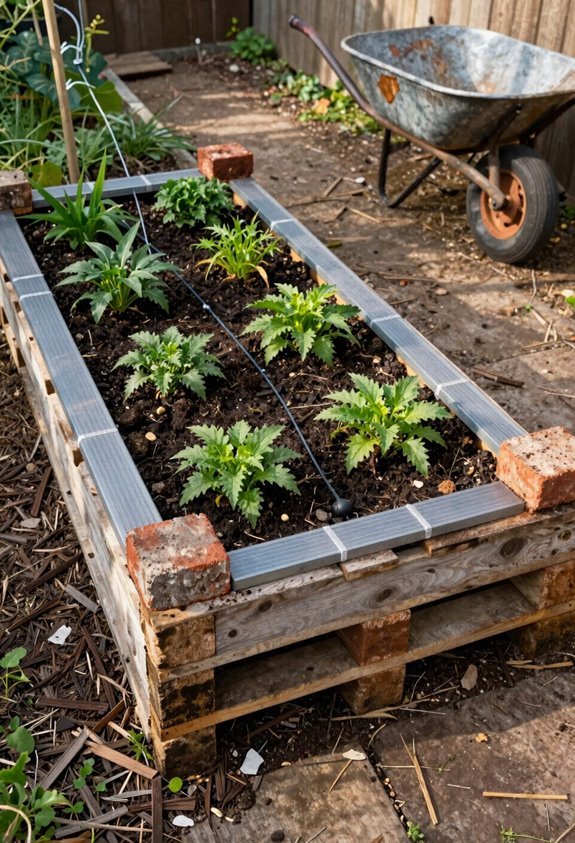
Steep slopes aren’t the only constraint I’ve worked around in my backyard projects. Tight budgets have pushed me to upcycle materials into creative solutions anyone can replicate.
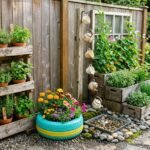
For a budget raised bed, I combine reclaimed wood with cinder blocks for modular, expandable frames. Freestanding bathtubs transform into quirky, deep-root containers, while heat-treated pallets form rustic walls when properly deconstructed. I avoid treated lumber and deteriorated painted brick to protect soil health.
Durable materials like galvanized panels paired with cedar scraps create lasting structures without premium costs. Cinder blocks offer built-in planting pockets for herbs. I always level the foundation first, adding legs when accessibility matters. These DIY garden bed ideas prove resourcefulness outperforms spending.