I’ve spent years refining outdoor spaces on modest budgets, and I’ve learned that the most striking garden transformations rarely require new materials. Each of these seven approaches repurposes overlooked objects into functional, weather-resistant features that elevate your landscape’s character.
You’ll discover how vintage kitchenware becomes sculptural planters, and why scrap metal outlasts seasonal blooms. The real challenge isn’t sourcing materials, knowing which techniques actually endure.
Upcycle Thrifted Kitchenware Into Whimsical Garden Planters
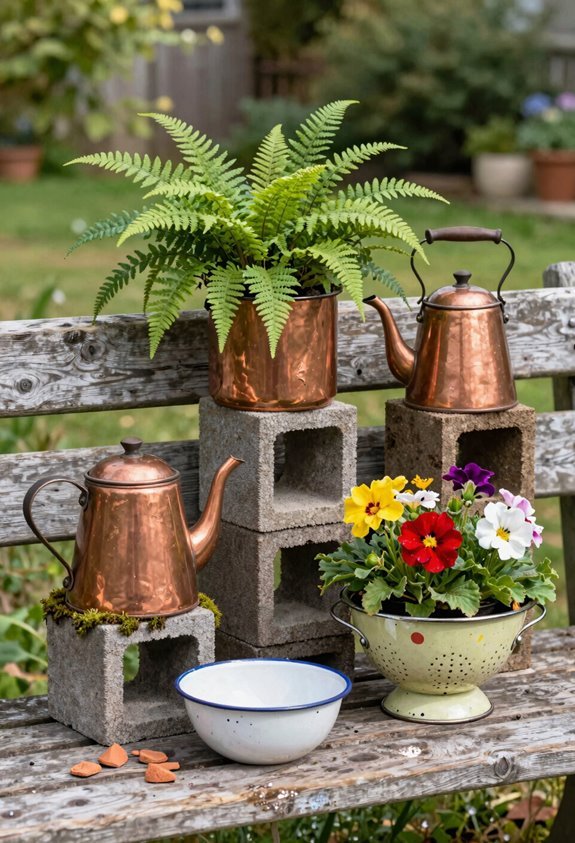
Why let vintage treasures gather dust when your garden’s begging for personality? I transform thrift store finds into upcycled kitchenware that becomes charming garden planters, and you can join this creative community too.
This DIY project lets you repurpose items like teacups, colanders, and enamel bakeware into weather-resistant planters that do well outdoors. I drill drainage holes, seal ceramic surfaces, and cluster mismatched pieces for that coveted cottage-core look.
Your whimsical décor creates instant conversation starters along pathways or perched on railings. I arrange vintage bottles among herbs, nestle succulents in gravy boats, and stack tiered stands from old cake plates.
This approach to outdoor décor proves sustainability belongs in every garden. You’ll craft distinctive spaces while honoring the past, one thrifted treasure at a time.
Grow Vertically With DIY Trellises From Old Ladders and Tools
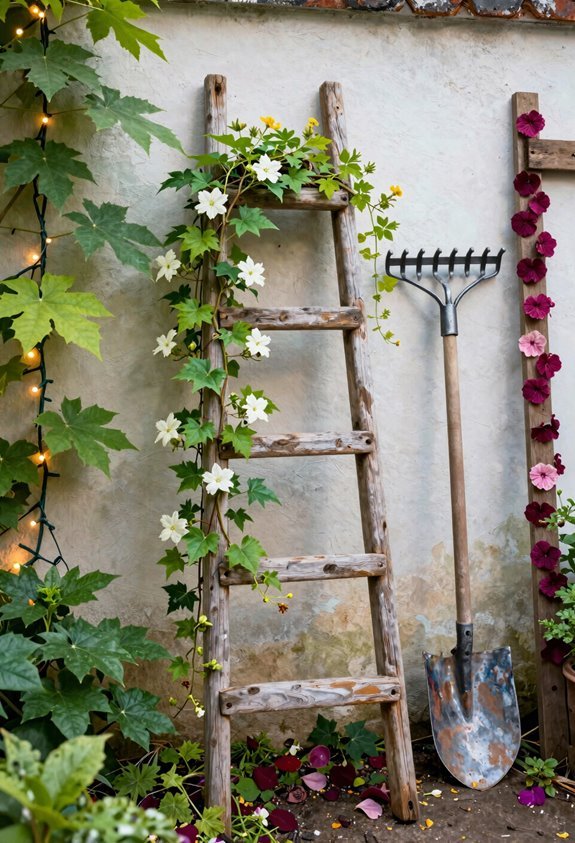
How do you reclaim precious ground space when your garden’s footprint stays stubbornly fixed? I build upward, transforming ordinary objects into living architecture that draws the eye skyward.
An old ladder becomes my favorite trellis, its rungs offering perfect footholds for climbing plants like clematis or morning glory. I lean repurposed wood against walls or suspend upcycled materials between posts, creating vertical garden systems that double as striking garden decor. These structures don’t merely save space; they invite us to reimagine our boundaries.
I’ve trained espalier fruit trees along weathered frames, maximizing sun exposure while sculpting living art. Whether marking an entrance or anchoring a quiet corner, each garden structure reflects resourcefulness. Your vertical garden awaits, start with what’s already waiting in your shed.
Turn Scrap Metal and Hair Accessories Into Everlasting Garden Flowers
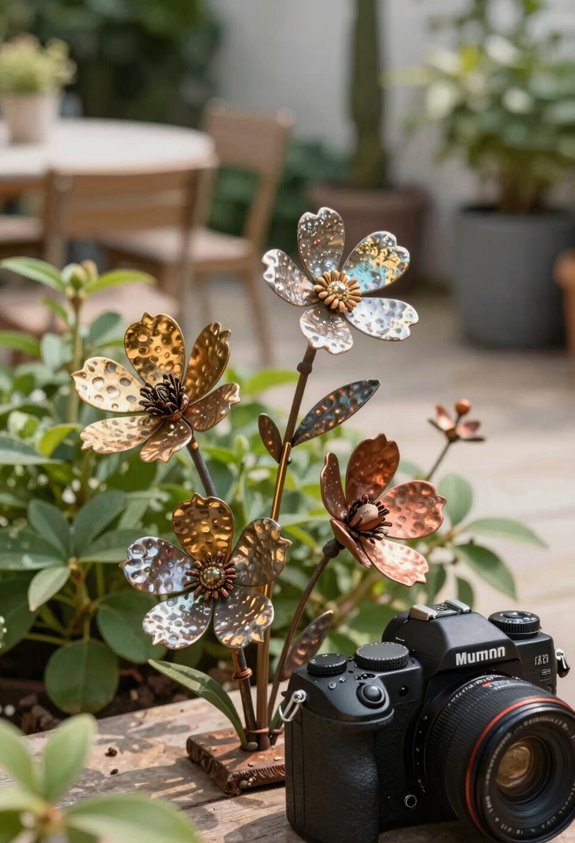
I’ll gather materials from scrap metal piles and old hair accessories to craft everlasting garden flowers that defy seasons. Vintage barrettes, tarnished brooches, and discarded tin become petals and centers in this upcycling approach.
These weather-resistant blooms anchor my outdoor space with permanent color, no watering required.
Metal Flower Materials
Transform discarded metal scraps and forgotten hair accessories into vibrant, weatherproof blooms that outlast any growing season. I’m crafting upcycled metal into eye-catching flower decor that anchors any whimsical outdoor space with personality and permanence.
Scrap metal art offers unmatched versatility for outdoor sculpture, letting me bend, cut, and layer repurposed materials into dimensional petals that catch morning light. These durable decor pieces resist rust when properly sealed, delivering patio accents that withstand harsh elements without fading.
My approach combines industrial grit with organic form, creating garden decor that sparks conversation among neighbors. Each finished piece becomes flower decor that transforms ordinary beds into curated displays. The result? Belonging in a community of makers who value sustainability, creativity, and outdoor spaces that reflect individual vision through lasting, colorful expression.
Upcycled Accessory Sources
Where do lasting garden blooms begin? I’ve found they start in overlooked places: stray hair clips, broken barrettes, and scrap metal destined for disposal. Together, we’re transforming these remnants into upcycled garden decor that defies seasons.
I follow Sadie Seasongoods’ philosophy, embracing whimsy through metal flower sculptures built from repurposed accessories. These outdoor accents carry playful color, turning yesterday’s adornments into durable garden art. You’re not just crafting; you’re joining a community that values resourceful beauty.
| Source Material | Transformation | Enduring Value |
|---|---|---|
| Worn hair clips | Petal frameworks | Weather-resistant color |
| Scrap metal rods | Stems and stakes | Structural longevity |
| Broken barrettes | Center details | Textural interest |
| Discarded wire | Leaf accents | Seasonal durability |
DIY enthusiasts like us create plucky focal pieces through this approach. Our yards become galleries of intentional, lasting expression.
Make DIY Mosaic Gazing Balls From Thrifted Bowling Balls

Why settle for ordinary garden ornaments when you can craft something eye-catching from an unexpected source? I discovered that transforming a thrift store bowling ball into upcycled mosaic gazing balls creates outdoor decor that stands out, with minimal investment. You’ll bond glass, ceramic, or tile fragments to the bowling ball using durable adhesive, building a colorful surface that catches sunlight beautifully. I position these DIY garden pieces as focal points, either singly in beds or clustered for greater effect.
After grouting, I seal everything with a weatherproof topcoat, protecting against moisture and UV damage. This project welcomes you into a community of makers who value creative repurposing. Your finished mosaic gazing balls will endure seasons, proving that meaningful outdoor decor starts with vision, not expense.
Lay a Garden Path With Mismatched Bricks and Found Stones
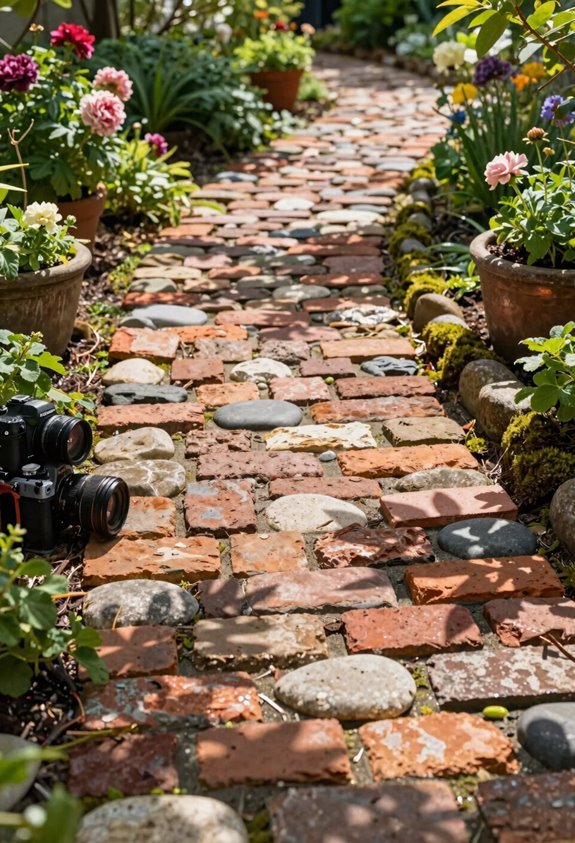
I’m going to show you how material selection tips and installation basics can turn scattered bricks and found stones into a walkway that actually lasts. You’ll want to find varied brick sizes, colors, and flat stones with similar thicknesses so everything sets evenly without wobbling underfoot.
Once you’ve mapped a gentle curve through your garden zones, I’ll walk you through prepping the substrate, setting each piece with outdoor mortar mix, and locking everything in place for proper weather resistance.
Material Selection Tips
How do I choose the right materials for a garden path that won’t drain my wallet? I start by mixing bricks and stones I’ve scavenged from neighbors, salvage yards, or my own yard. This approach gives me a variety of textures and color and pattern combinations that feel collected, not purchased.
I prioritize durable outdoor materials that weather gracefully. My gravel base provides essential drainage and stability, while landscape fabric underlayment delivers weed suppression without chemicals. I scatter stepping stones among larger pieces to break up the rhythm.
The real charm happens in the contrasts: rough against smooth, warm terracotta against cool slate. Each found piece tells a story, and together they create a path that feels like it belongs to this place, and to me.
Installation Basics
Once I’ve gathered my mismatched collection, I map a winding route that respects the landscape’s natural contours. I clear the way, then spread a gravel base layer for drainage and lasting stability.
Next, I nestle brick fragments and flat stepping stones slightly above grade, leaving gaps for character or future ground cover. Proper spacing prevents wobbles while inviting moss or thyme between cracks. I install edging, perhaps steel strips or tucked bricks, to anchor boundaries and halt stone migration through seasons. Low ground cover softens edges, blurring the line between garden path and lawn.
Finally, I sweep polymeric sand into joints, misting gently to activate its binding strength. This locks each piece against shifting, delivering a walkway that feels established, welcoming, and undeniably ours.
Light Summer Evenings With Solar-Powered Vintage Lamps
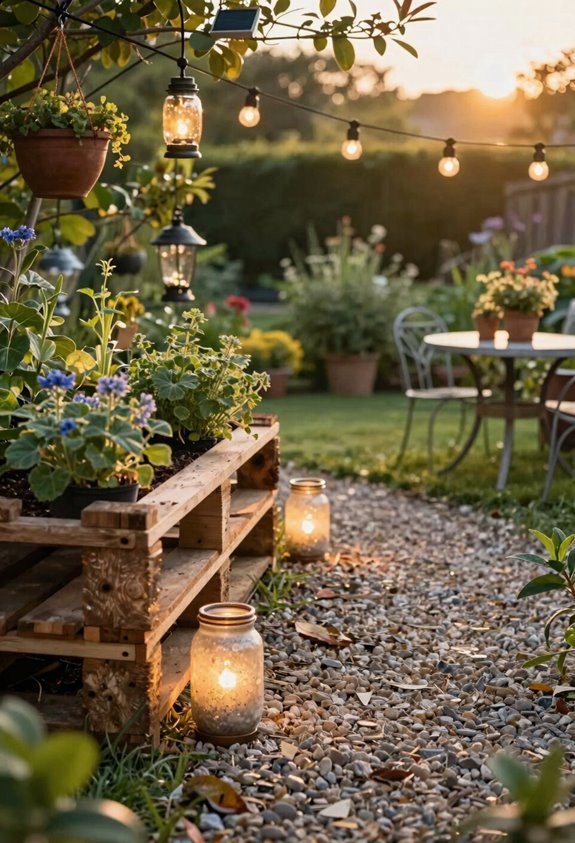
Where better to extend those long July afternoons than a garden glowing with repurposed light? I’ve found that solar-powered vintage lamps offer the perfect marriage of nostalgia and function for outdoor lighting that welcomes everyone home.
My approach starts with hunting flea markets for brass chandeliers, copper lanterns, or glass pendulums; those forgotten beauties begging for new purpose. I retrofit these repurposed items with solar LEDs, swapping cords for discrete panels that drink sunshine all afternoon.
Weatherproof housing keeps my investments safe through sudden showers, while water-resistant seals protect the circuitry without compromising character.
For real backyard illumination that gathers people, I cluster vintage lamps along paths and nestle them among seating. Pairing these with string lights defines conversation zones and guides footsteps safely through summertime evenings.
| Memory You’re Creating | Feeling It Brings |
|---|---|
| Children chasing firefly-like glows between chairs | Belonging to generations past and present |
| Neighbors pausing to admire your brass find | Pride in curated, storied spaces |
| Dinner lingering past sunset without hunting switches | Effortless hospitality |
| Rain pattering on glass you restored personally | Quiet accomplishment |
| First guests arriving to a lit pathway | Anticipation fulfilled |
Invite Birds With Thrifted Houses, Baths, and Peanut Butter Pinecones
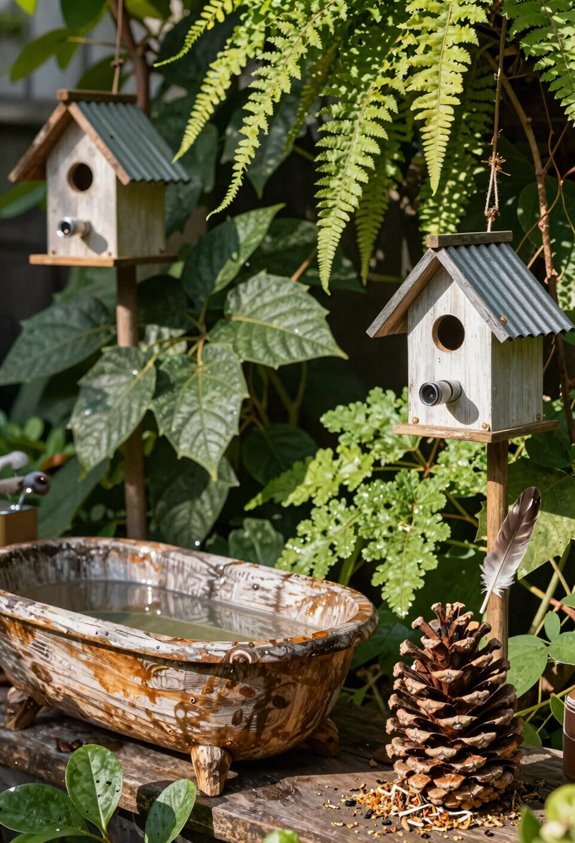
Why let your garden sit silent when feathered neighbors are waiting for an invitation? I transform my outdoor space into a lively refuge using birdhouses crafted from repurposed materials, and you can too.
Upcycling old teapots, license plates, or weathered wood into unique shelters creates distinctive garden art that welcomes sparrows and wrens. I hang these thrifted decor pieces in maple branches, pairing them with peanut butter pinecones my kids help prepare; simple, sticky fun that doubles as nutritious birdfeeders. Nearby bird baths, often vintage finds refreshed with sealant, complete this wildlife-friendly vignette.
Together, these elements build a fanciful garden where feathered visitors gather, and where you’ll feel connected to something larger than your own backyard.