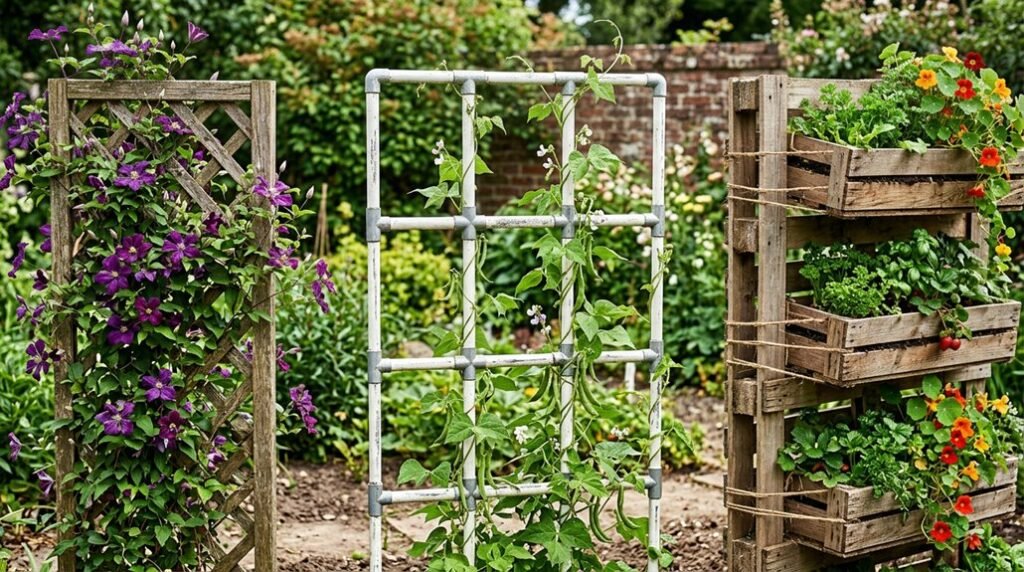
Small-space gardening demands vertical solutions, and I’ve found that three proven trellis designs consistently outperform traditional sprawling methods.
Whether you’re wrestling with container-grown tomatoes or heavy winter squash, the right structural support improves yield and airflow.
I believe these builds are simpler than most gardeners assume.
Make a Pipe-and-Netting Trellis for Container Vegetables
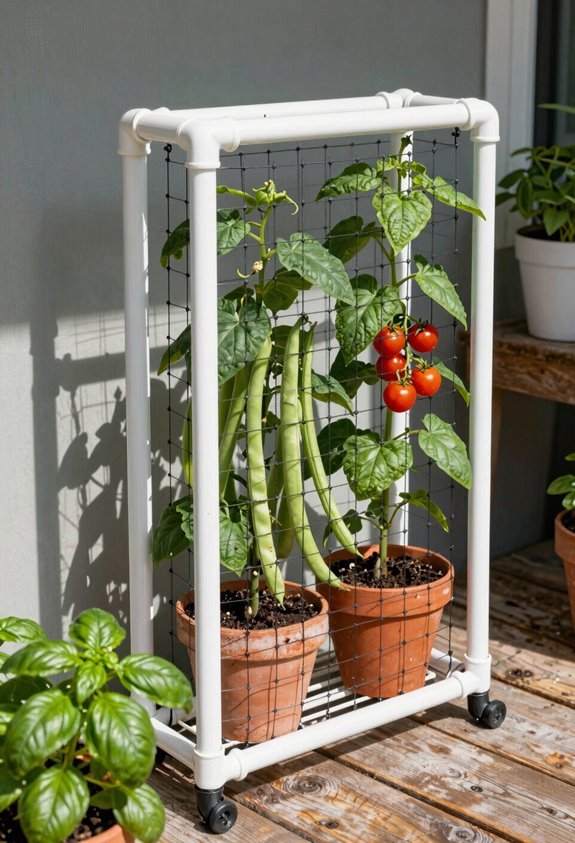
Why struggle with sprawling cucumber vines when you can build vertical support in under an hour? I built my first pipe-and-netting trellis last spring, and it’s changed how I approach vertical growing for container vegetables.
Stop fighting sprawling vines—build a vertical trellis in under an hour and transform your container garden.
I use 1/2-inch EMT conduit cut to ten-foot lengths for the vertical frame. It’s lightweight, rust-resistant, and slides easily into soil or weighted containers. I attach nylon netting with six-inch openings using zip ties at multiple points, creating a taut climbing surface that won’t sag under fruit weight.
Wind resistance matters, so I add a stabilizing connector at the top and anchor the base securely. This cucumber trellis handles gusts that would topple lesser structures.
I’ve integrated mine alongside raised beds, letting vines reach toward railings. The result? Clean harvests, healthier plants, and growing space I never knew I had.
Mount a Trellis on 4×8 Raised Beds for Beans and Peas
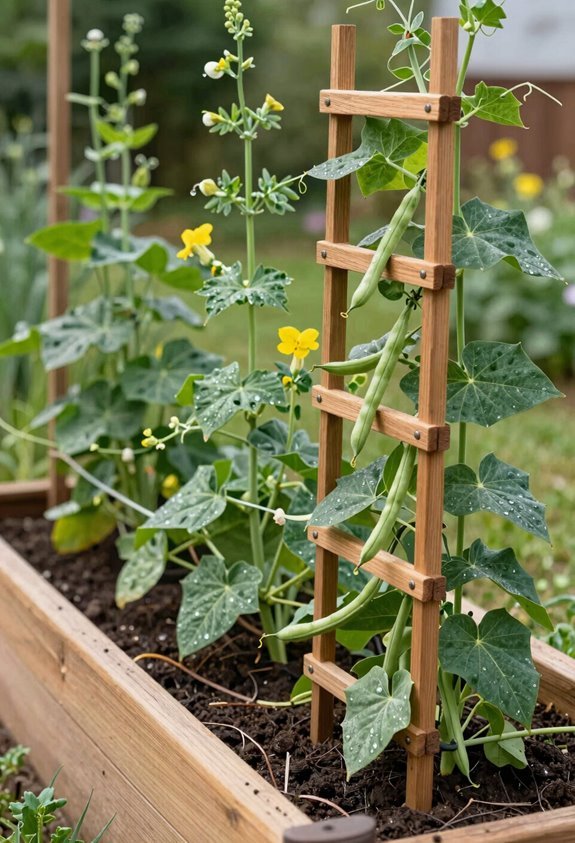
How much harvest do we leave on the table when bush beans sprawl across damp soil? I’ve stopped accepting that loss, and vertical gardening on a 4×8 bed changed everything for me.
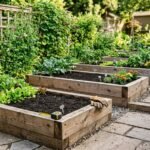
For this trellis, I mount vertical boards, cut to 77 inches, inside my raised bed, then cap them with a horizontal top board. I follow bed-first assembly, predrilling posts and sinking 2.5-inch galvanized deck screws before stretching nylon netting taut. The taut installation matters; sag defeats the purpose. I secure netting with 1/8 × 1 zinc washers and #8 × 1.25 inch screws.
Beans and peas grip this net eagerly, offering reach-through access and clean harvests. Don’t skip irrigation considerations; I angle drip lines to prevent pooling near wood. This portable frame keeps fruit pristine, season after season.
Build a Cattle Panel A-Frame for Heavy Squash and Cucumbers
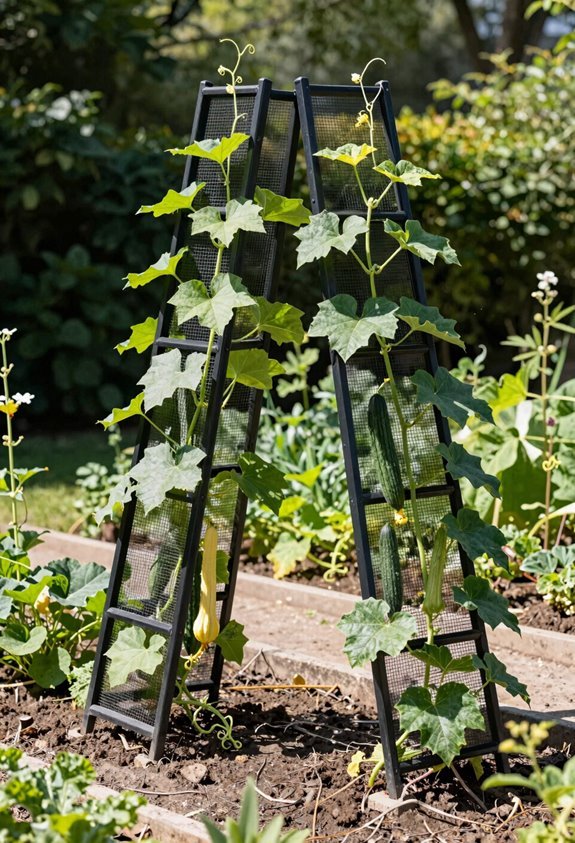
Bush beans taught me the value of going vertical, but summer squash and cucumbers demand something sturdier. I build my A-frame trellis from a 16-foot cattle panel cut into thirds, joined at the peak with zip ties to cradle heavy squash without sagging. I drive T-posts deep, anchor the panel with more zip ties, and see my vertical garden do well. For wider beds, I use the arch variation, spanning two rows so sprawling vines reach outward and upward. Galvanized hardware gives durability season after season.
| Challenge | Solution |
|---|---|
| Heavy squash bending flimsy supports | Cattle panel distributes weight across the A-frame trellis |
| Rusting fasteners reducing longevity | Galvanized T-posts and nylon components withstand weather |
| Limited bed width restricting growth | Arch variation spans multiple rows freely |
| Treated wood leaching near edibles | Freestanding DIY trellis avoids direct contact entirely |
| Winter storage concerns | Elevated base prevents standing water damage |
This system belongs in every serious grower’s arsenal.