Your front yard is the handshake your home offers the world, and I’ve learned that lasting first impressions don’t require weekend warfare with a mower. After fifteen years of watching homeowners trade sweat equity for smart design, I can tell you that low-maintenance curb appeal isn’t about settling for less. It’s about choosing plants and materials that work harder so you don’t have to.
The real secret? It starts with one simple shift that most people overlook entirely.
Swap Your Lawn for Ground Covers That Thrive on Neglect
Why spend every weekend pushing a mower when your front yard could practically tend itself? I’m going to show you how a no-mow lawn changes your weekends from chore time to free time.
Transform your weekends by trading your mower for a thriving, self-sustaining yard that practically tends itself.
I replaced my thirsty grass with drought-tolerant ground covers and native plants, and I’ve never looked back. Creeping thyme now carpets my pathways with durable texture, suppressing weeds while improving soil health beneath my trees.
I pair these plantings with hardscape elements like a small patio, creating cohesive spaces that expand my usable yard while shrinking what needs tending. I group my native plants in blocks of similar colors, achieving a neat, polished look without constant pruning.
Once established, this low-maintenance landscape gets by on rainfall alone. My pollinator-friendly choices belong here, and yours do too.
Widen Your Walkway to Cut Mowing and Boost Curb Appeal
How often have you trudged up a narrow, cracked path that fights against your lawn mower every weekend? I’ve changed cramped entries into welcoming passages that work for busy homeowners seeking beauty and function. Widened walkways eliminate those awkward trimming battles while creating grand sightlines toward your entry that impress every visitor.
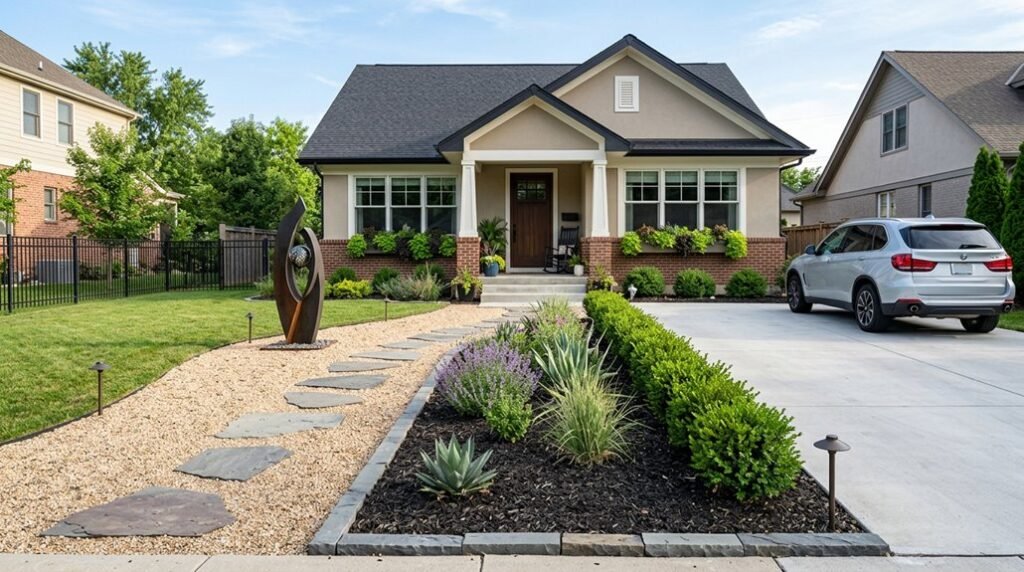
Consider curved pathways that meander through plantings, offering foot traffic protection that preserves turf while guiding guests naturally toward your front door. Choose durable low-maintenance materials like bluestone or compacted gravel that withstand heavy seasons without constant attention or costly repair work.
Add subtle landscape lighting along the widened route to highlight textures and provide safe passage after dusk. You’ll gain immediate curb appeal and finally reclaim your weekends for yourself now.
Pick Native Plants Grouped by Sun and Water Needs
I’ll match each native plant to its ideal sun and water conditions, grouping dry-tolerant species together while clustering moisture lovers in shaded pockets. This approach eliminates guesswork, reduces sprinkler adjustments, and creates resilient microclimates that flourish with minimal intervention.
Your maintenance routine shrinks dramatically when every plant occupies its natural niche.
Match Plants to Conditions
Before I spend a single dollar on new plants, I take a hard look at what my yard actually offers: where the sun lingers, where runoff pools, and which corners stay stubbornly dry.
I match native plants to these real conditions because fighting nature exhausts both gardener and garden. I group by sun exposure and water requirements, placing drought-tolerant species in baking beds while reserving moisture-loving types for cooler shadows.
- Dense purple aster thriving in morning light
- Wispy prairie grasses nodding at sidewalk edges
- Low ground covers carpeting dry slopes with color
- Bees and butterflies hovering over blooms that feed them
This approach builds a front yard that belongs exactly where it grows: no coddling required, no replacements needed, just resilient beauty that welcomes me home.
Group by Water Needs
Once I’ve mapped my yard’s conditions, I sort my plant list into hydrozones, groups that share the same thirst and sun tolerance. I’m building a front yard that works smarter, not harder, and this step makes low-maintenance success achievable for anyone. I’ll cluster drought-tolerant natives where sun exposure bakes the ground, while tucking moisture-loving species beneath tree canopies.
My front yard needs natives matched precisely to their water needs, so I repeat colors and textures within each hydrozone for cohesion: chartreuse blooms here, wispy grasses there. I use a planning worksheet to map every zone before buying a single plant. This approach connects my plot to the broader community of homeowners embracing sustainable, regional landscapes. Together, we’re proving native plantings do well with less.
Simplify Maintenance Routines
Where do I even begin when I want a front yard that practically tends itself? I start with native plants grouped by sun/shade microclimates, building a cohesive low-maintenance landscaping plan that works smarter, not harder.
I match each species to its ideal conditions, so I’m not fighting against nature. My strategy includes:
- Drought-tolerant perennials anchoring sunny borders with resilient color
- Ground covers weaving between stones, crowding out weeds naturally
- Evergreen structure providing winter backbone without constant shearing
- Shade-loving natives doing well beneath trees where turf always failed
This approach eliminates irrigation waste, reduces pest pressure, and creates belonging with neighbors who share similar regional plant palettes. I’ve stopped babysitting my landscape and started enjoying it.
Layer Evergreens With Perennials for Year-Round Structure
I anchor my front yard with compact evergreens that provide a year-round green backbone, then weave in perennials for shifting seasonal color transitions. This pairing lets me build textural depth layers without exhaustive upkeep, since the evergreens hold structure while flowers rotate through their cycles. The result reads as intentional and full, not chaotic, and I don’t sacrifice weekends to pruning marathons.
Year-Round Green Backbone
How do you keep a front yard from looking bare when the growing season winds down? I build a backbone with evergreens, layering in perennials for shifting year-round color that welcomes you home every month.
Emerald arborvitae borders frame your entry with living architecture. Compact boxwood hedges anchor foundation plantings through winter’s gray pause. Hellebores and spring ephemerals punctuate evergreen masses with tender promise. Dwarf spruce specimens punctuate pathways, keeping structure visible beneath cycling blooms.
This approach delivers low-maintenance structure without sacrificing seasonal soul. I select evergreens scaled to your specific climate envelope, making sure they remain unobtrusive hosts as perennials enter and exit the stage. Your front yard becomes a cohesive community where every plant belongs, contributing to a resilient landscape that never quits working for you.
Seasonal Color Transitions
What keeps a front yard alive when one season fades into the next? I layer evergreens with perennials to build year-round structure that feels welcoming through every month.
I start with drought-tolerant evergreens as my foundation, then weave in perennials that shift with the calendar. Russian sage and lavender keep seasonal color flowing without demanding constant attention from me.
I plan fall color deliberately, choosing chartreuse hydrangeas that mellow into autumn-toned perennials as temperatures drop. Hellebores push through late winter, offering early texture against my evergreen backdrop.
My cohesive color strategy repeats similar hues across planting beds, unifying the space while maintaining visual rhythm. This approach lets me create belonging through intentional design, not coincidence. The result feels both considered and effortlessly maintained.
Textural Depth Layers
Why settle for flat, one-note plantings when you can orchestrate a living composition that rewards you every month of the year? I blend evergreens with perennials to build layers that anchor your home’s presence through every season.
Consider how these partnerships reshape your front yard:
Dwarf conifers stand like quiet sentinels, their needles catching frost while the neighborhood sleeps. Hostas unfurl beside variegated willows, their broad leaves breathing against fine textures. Ferns sway in mid-height layers, bridging ground-hugging foundations with sky-reaching accents. Specimen trees command the sightline, completing vertical planes that shift yet never collapse.
This approach delivers real low-maintenance structure. Your evergreens carry the visual weight year-round, while perennials add rotating color. Together, they create belonging, a landscape that feels intentional, welcoming, and unmistakably yours.
Lock In Weed Control With Mulch and Steel Edging
Since weeds compete fiercely for water and nutrients, I’ve found that a strategic mulch layer stops them in their tracks while giving beds that polished, intentional look buyers notice immediately. I spread two to three inches of quality mulch for solid weed control without smothering roots, and I refresh it annually to keep suppression strong and colors vivid.
For sharp bed definition, I install steel edging between lawn and planting areas. It prevents grass creep, holds mulch in place, and delivers clean lines that raise curb appeal at once. This pairing creates a low-maintenance system you’ll manage with minimal effort, and that’s something every homeowner wants. Your beds stay crisp, your weekends stay free, and your front yard belongs among the neighborhood’s best.
Add Efficient Path Lighting for Safety and Nighttime Depth
How often have you driven past a home at dusk and noticed how thoughtful lighting changes an ordinary front yard into something magnetic? I’ve found that strategic path lighting does exactly this for your own landscape design, creating safety and nighttime depth that welcomes everyone home.
Consider these elements for your plan:
- Lanterns casting pools of warmth along stone walkways
- Sculptural plants emerging from shadow like living sculptures
- Fixtures matching your home’s architecture for cohesive style
- Sunpatiens adding daytime color without blocking evening glow
When you integrate path lighting with hardscape and plantings, you’re not just installing fixtures. You’re crafting a front yard that works around the clock. Your front yard becomes a place where neighbors pause, where guests feel guided, where you belong completely.
Choose Hardscaping Over High-Maintenance Seasonal Decor
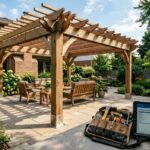
Although seasonal inflatables and rotating flower displays might catch passing glances, I’ve learned that permanent hardscaping delivers lasting visual appeal without the weekend drain. You belong here, among neighbors who’ve discovered that a well-designed hardscape extends your living space while freeing you from constant yard work.
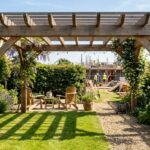
I’ve embraced a lawn-free approach, replacing thirsty turf with patios and walkways that pair naturally with drought-tolerant native plantings. The result feels intentional, not sparse.
When selecting durable materials like black locust or composite decking, you’re investing in decades of performance without replacement cycles. These choices define crisp bed boundaries and clear sightlines, creating structure that seasonal décor simply cannot match.
This low-maintenance strategy isn’t about sacrificing beauty. It’s about building a front yard that welcomes you home every single day, effortlessly.