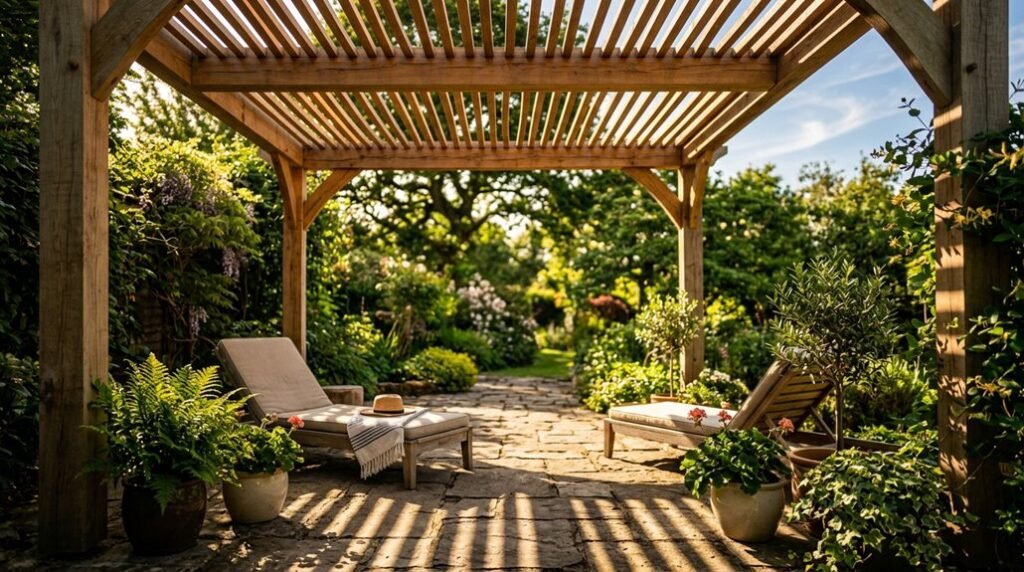
I’ve seen pergolas transform brutal midday glare into livable outdoor space, and the engineering behind it isn’t magic; it’s physics. Your pergola’s sun-blocking power depends on roof type, material density, and angle, which means you can dial in exactly how much protection you need.
Let me walk you through how each system actually works, and why your climate should dictate the choice.
How Pergolas Block Sun: From Open Slats to Solid Covers
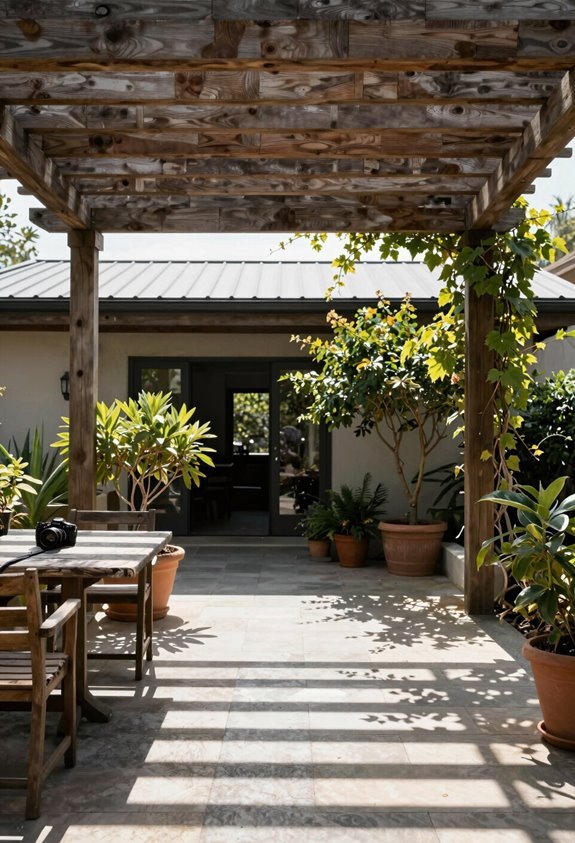
How exactly does a pergola transform harsh sunlight into usable shade? I’ve found it’s all about the roof design you choose.
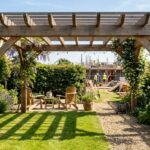
Traditional slats filter sunlight beautifully, casting gentle patterns while offering partial shade throughout your day. When I want flexibility, I turn to louvers; they tilt open for breezy brightness or close completely for total coverage.
A solid roof delivers maximum sun protection, though it darkens the space beneath more noticeably. For adaptable control, nothing beats a retractable canopy; I adjust mine as the sun shifts, creating perfect conditions for morning coffee or afternoon gatherings.
Each option balances aesthetics with function differently. Your ideal solution depends on how you’ll use the space, and I’m here to help you find where you’ll feel most at home.
Louvered or Slatted Pergola Roofs: Which Blocks More Sun?
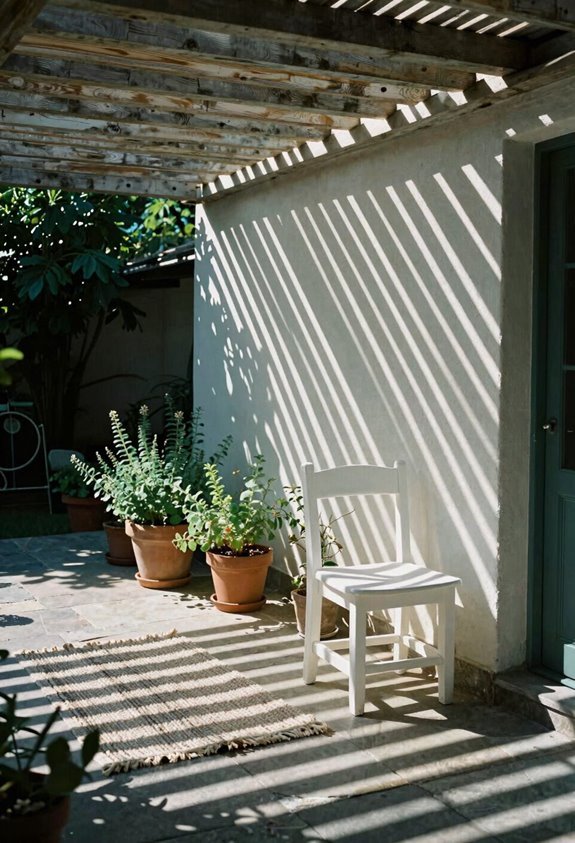
When I’m choosing between louvered and slatted roofs for serious sun control, I always start with one critical question: how much coverage do I actually need? Louvered roofs deliver superior shading effectiveness when closed, blocking near-100% of sun exposure while fixed slatted roofs leave permanent gaps that guarantee particle light filtering.
Adjustable louvers let me tilt blades precisely, tightening spacing to reduce direct sunlight or opening fully for sky views. Fixed slatted roofs create that dappled effect we recognize from traditional designs, but they cannot adapt. I appreciate how modern systems balance form with function, offering rain protection closed and ventilation open. For anyone seeking flexible outdoor living, adjustable louvers simply provide more control over daily comfort.
Pergola Canopies and Retractable Covers for Adjustable Shade
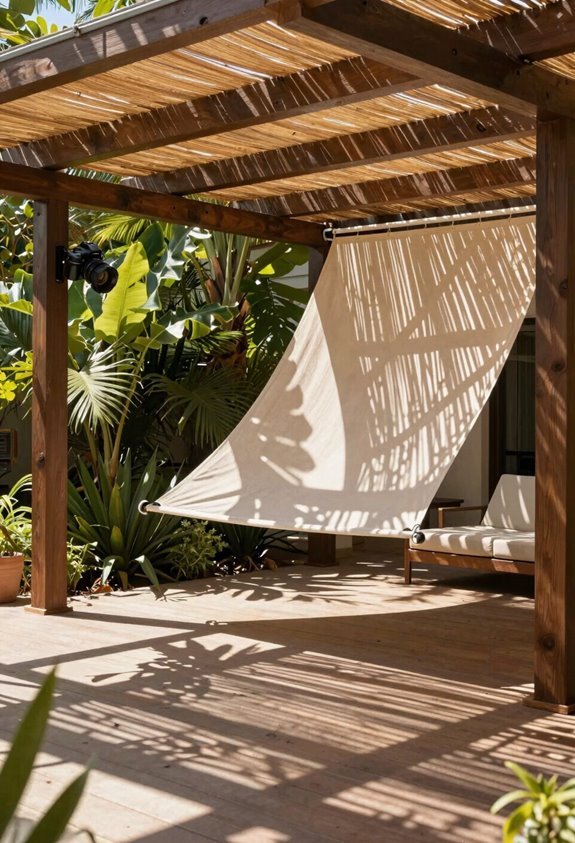
Why settle for fixed shade when I can adapt my coverage hour by hour? Pergola canopies give me that freedom, blending form and function into one smart solution.
I appreciate how retractable fabrics slide along tracks, letting me extend or retract coverage as the sun shifts across my space. This adjustable shade means I’m never stuck with too much darkness or too little protection.
The UV-resistant material blocks harmful rays while keeping my outdoor area comfortable, and many options repel light rain too. I control shade through manual or motorized systems, draping fabric exactly where I need it.
For maximum flexibility, I combine these canopies with adjustable side panels. I get the open-air feel I love plus reliable sun protection when I want it.
How Climate and Orientation Affect Your Pergola’s Shade
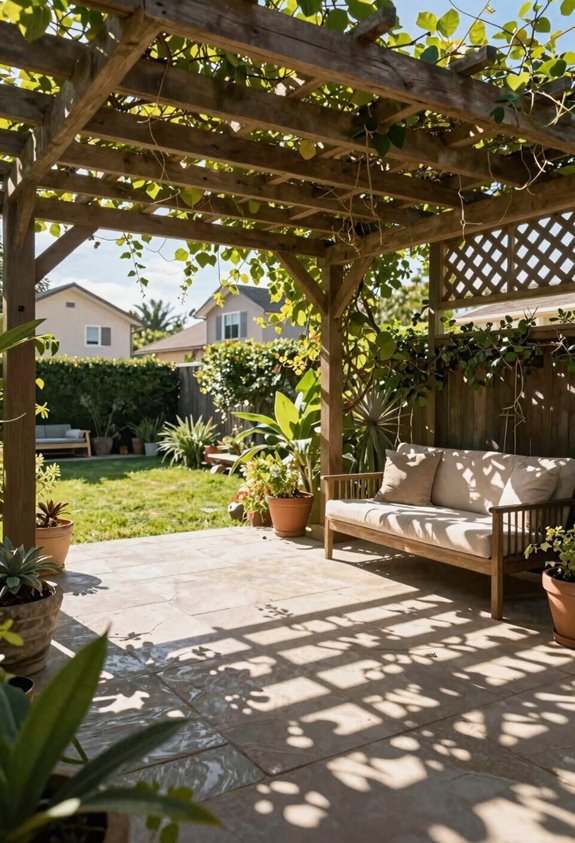
I’ve chosen my canopy and louver systems, but I still need to position them wisely. Pergola orientation determines when and how much shade you’ll actually enjoy, so I always track the sun’s path before finalizing placement. East-facing structures capture gentle morning shade, while west-facing designs combat harsh afternoon exposure.
My shade design must balance aesthetics with function, and slat spacing directly controls light penetration. I tighten spacing for cooler spaces, or widen it for that coveted dappled effect. When conditions shift, louvers retractable canopies let me adapt instantly, sealing out glare or welcoming filtered brightness.
Climate conditions ultimately dictate my best strategy. In scorching regions, I rely on UV-resistant fabrics and aluminum systems for maximum protection, while temperamental weather demands waterproof, solid solutions for reliable coverage.
Choose Pergola Materials for Your Climate and UV Needs
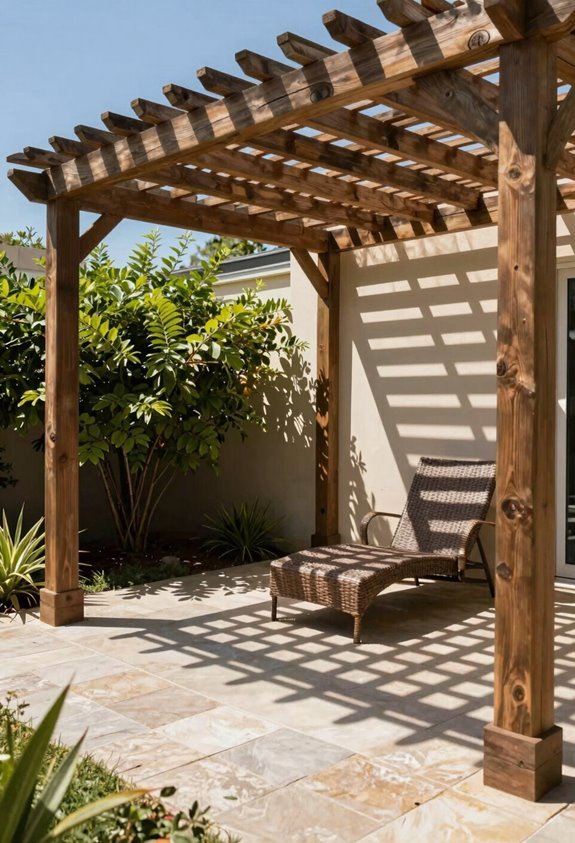
I want you to feel confident selecting materials that work for your specific situation, so let’s compare how wood and metal frames perform against UV exposure and regional weather patterns.
You’ll see why aluminum dominates humid coastal zones while cedar holds up well in arid climates with proper sealing cycles. Fabric choices matter just as much; UV-resistant canopies and polycarbonate panels create adjustable shade layers that adapt when summer intensity peaks.
Wood Versus Metal Frames
When you’re weighing materials for your pergola frame, climate and UV exposure should guide your decision as much as aesthetics do. I find wood frames offer natural warmth, and you can shape their pergola roof with slats for dappled shading that feels inviting. However, you’ll need to seal them regularly for UV protection, or you’ll face cracking and insect damage that shortens longevity.
Metal frames, particularly aluminum, resist warping and rot with minimal upkeep. Their powder-coated finishes maximize UV resistance, and they’re lightweight yet durable. In hot, humid, or coastal climates, I recommend metal frames paired with proper canopies for consistent shading and superior longevity. Your choice ultimately depends on how much maintenance you’re willing to embrace for that perfect outdoor space.
UV-Resistant Fabric Options
Why settle for a pergola that merely looks good when you can choose fabrics that actively protect your skin? I recommend investing in UPF fabrics rated 30+ or shade cloth blocking 95%+ UV radiation for serious UV-protection.
Your UV-resistant canopy options center on solution-dyed acrylics and polyester blends, materials engineered for color fade resistance that keep your outdoor space looking fresh season after season. The fabric weave matters substantially; tighter weaves deliver superior sun shading, while darker colors naturally boost UV blockage compared to lighter alternatives.
I clean and inspect my canopy regularly for tears or degradation, extending both fabric life and protective performance. Many quality options also repel water, combining weather resistance with sun defense. Choose wisely, and your pergola becomes a genuine sanctuary.
Climate-Specific Material Choices
Since I’m building a pergola that’ll actually survive my local weather, I’ve learned that material selection isn’t just about aesthetics; it’s the difference between a lasting investment and annual repairs.
I’ve discovered that climate-specific materials transform ordinary structures into resilient outdoor sanctuaries. In scorching regions, I specify aluminum frames paired with UV-resistant fabrics, creating durable shade without warping or fading. For maximum protection, I recommend solid roof panels: polycarbonate delivers exceptional coverage while filtering harsh light.
Motorized louvers provide dynamic control, adapting from open sky to complete shelter with remote precision. I balance this technology with living canopies, accepting seasonal patience for organic maturity.
Regional demands shape every decision: waterproofing dominates rainy zones, while wind resistance anchors coastal installations. Your climate dictates the materials that’ll welcome you home, season after season.
Add Shade to an Existing Pergola Without Rebuilding
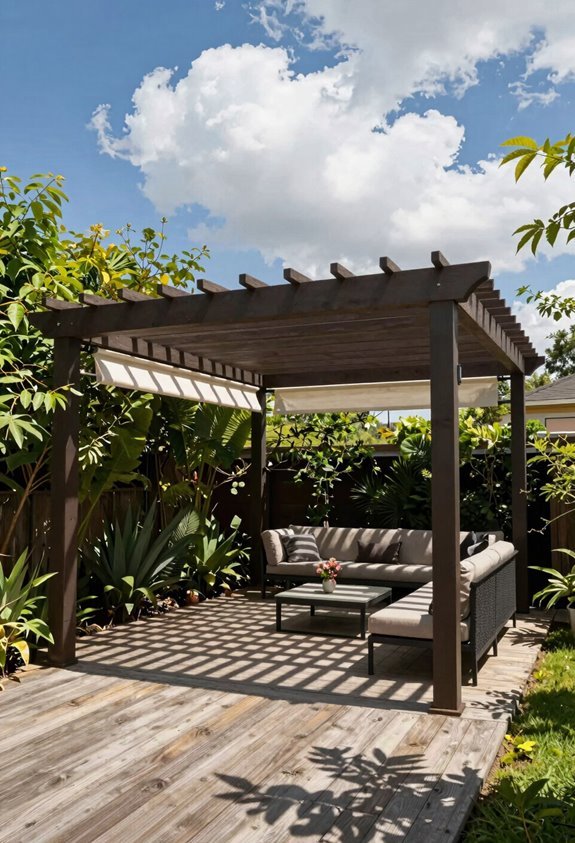
I’ve found that retrofitting shade onto an existing pergola doesn’t require demolition or reconstruction. Retractable canopies and fabric systems offer adjustable coverage, while climbing vines trained on mesh create living shade that matures season by season. These solutions balance immediate sun protection with long-term flexibility, letting you adapt your outdoor space without structural changes.
Retractable Canopy Options
How easily can you transform an existing pergola into a flexible, shaded retreat? I find that adding a retractable canopy offers the perfect balance of control and convenience for your outdoor space.
You’ll appreciate how these systems use UV-resistant fabric stretched over lightweight frames, creating a comfortable shaded area when you need relief from intense sun. I recommend considering whether a motorized canopy fits your lifestyle, or if manual operation better suits your budget and preferences. Both options deliver impressive adaptability throughout changing daylight hours.
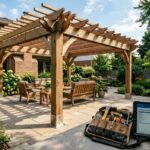
Installation kits simplify the process considerably, typically including mounting brackets and tracks sized for standard pergola dimensions. I measure your existing frame first, then secure the hardware without structural modifications. The result is instant protection that retracts cleanly, preserving your open-sky moments whenever you desire them.
Fabric and Plant Solutions
What if you could shade your pergola this weekend without touching a single beam? I’ll show you how fabric and plant solutions deliver flexible sun protection without reconstruction.
A retractable canopy transforms your space instantly, extending when UV peaks and retracting for sunset views. I prefer shade cloth for budget-friendly coverage, attaching it with grommets or zip ties across beams for semi-permanent relief. Side panels block low-angle glare while adding privacy.
For living architecture, I train vines on trellis frameworks, creating evolving canopies that filter light naturally through seasonal growth. Shade sails offer modern aesthetics with turnbuckle tensioning between posts.
Each approach builds your outdoor space progressively. You’ll find community in these accessible upgrades, joining countless homeowners who’ve discovered that meaningful shade doesn’t require demolition, just strategic, layered solutions tailored to your lifestyle.