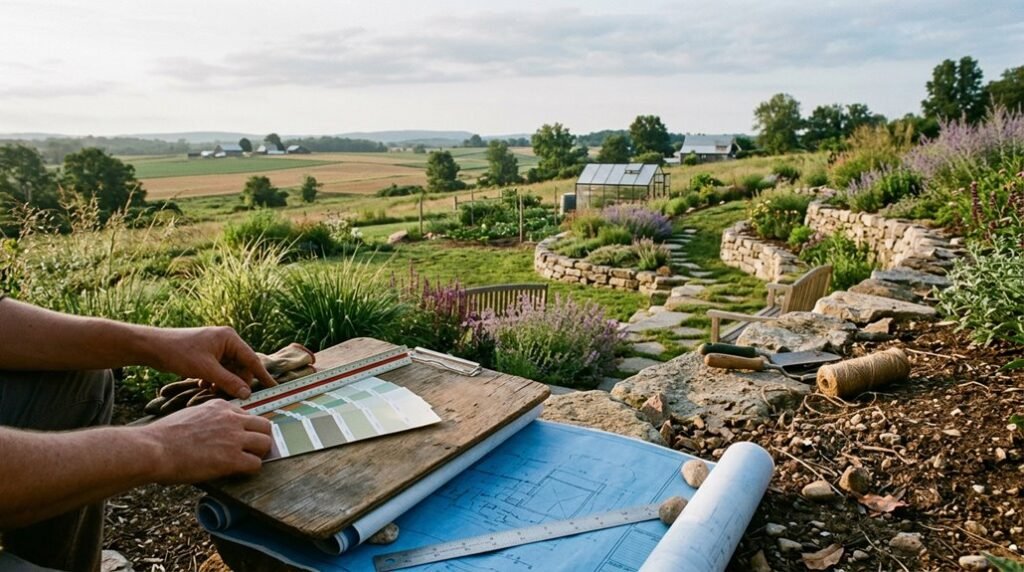
I’ve spent fifteen years watching talented people stumble into landscape design without a roadmap, and I’ve learned that clarity beats raw talent every time. You don’t need a four-year degree to start, but you do need ten deliberate steps that build real competency.
I’ll walk you through exactly how I trained my eye, earned my credentials, and built a practice that sustains me. The path isn’t obvious, but it’s absolutely navigable.
What Landscape Designers Actually Do (Vs. Architects and Contractors)
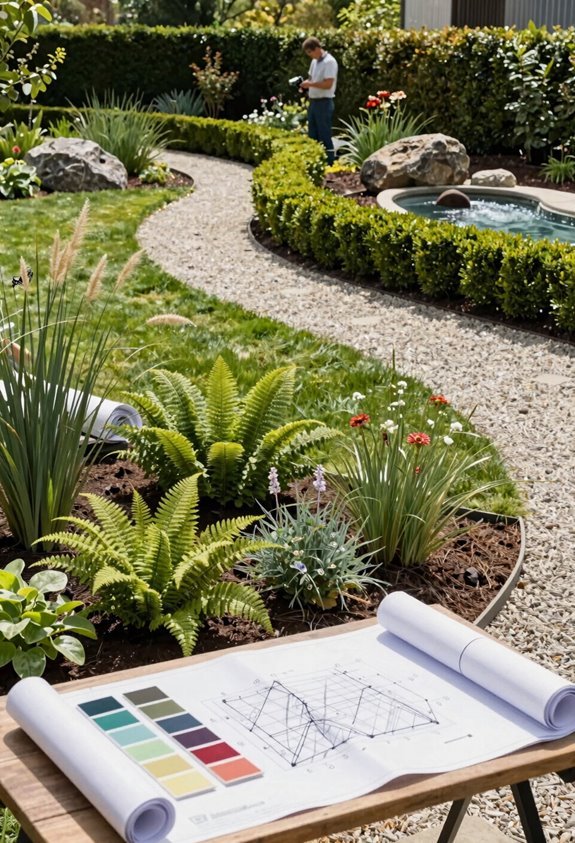
What exactly separates a landscape designer from the other professionals shaping outdoor spaces? I translate your needs into living environments through landscape design, balancing beauty with how you’ll actually use the space.
Unlike architects, who tackle structural bones and building codes, I focus on what grows, flows, and feels right on your specific site. I select plants suited to your conditions, solve drainage puzzles, and weave softscapes with hardscapes into cohesive experiences. Contractors bring my drawings to life, but I’m the bridge between your vision and their tools.
You’ll find me sketching concepts, refining designs in CAD, and walking sites with measuring tape in hand. I coordinate with engineers when structures enter the picture, yet my heart stays with soil, seasonality, and sustainability. Landscape design isn’t just planning; it’s crafting belonging outdoors.
Become a Landscape Designer: Degree, Certificate, or Self-Taught?
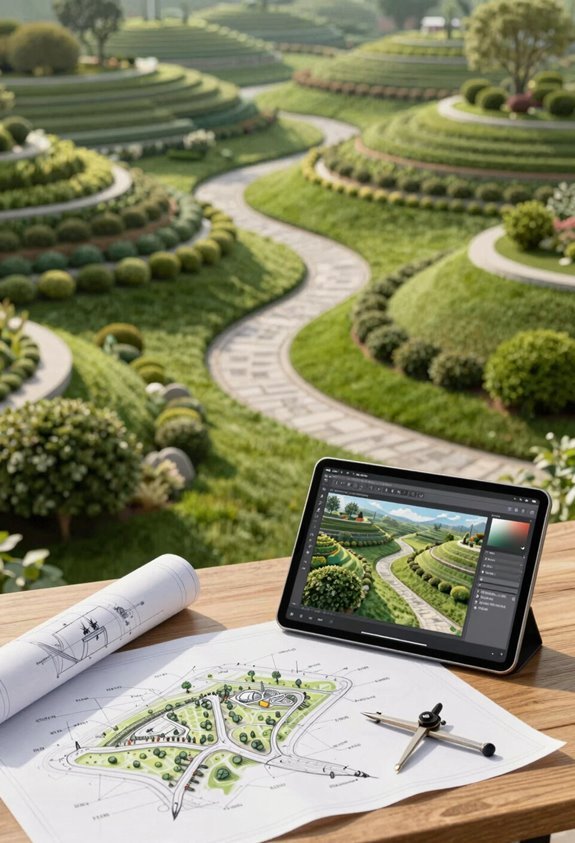
I didn’t arrive in this field through a single prescribed doorway, and you won’t need one either. Landscape design welcomes diverse origins, whether you’re drawn to formal academia or practical immersion.
Degree programs deliver comprehensive training in design theory, technical drafting, and structured internships, opening pathways toward licensure and established firms.
Certificate programs concentrate specific competencies: graphic communication, plant selection, spatial planning; within compressed timelines that respect your existing commitments.
Self-directed study combines courses, software mastery, and hands-on projects, though you’ll invest additional energy building credibility through professional credentials like APLD’s CPLD designation.
Regardless of your route, your portfolio speaks loudest. Document every project, gather client testimonials, and showcase both digital renderings and hand-drawn work.
This field values demonstrated skill over pedigree, so find your entry point and begin building evidence of your vision.
Core Design Rules and Plant Knowledge Every Beginner Needs
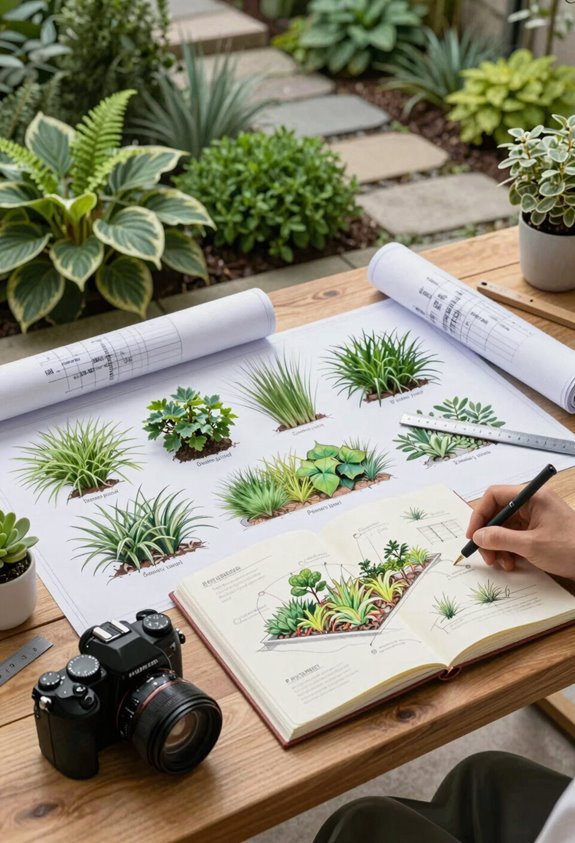
Where do you begin when staring at a blank yard, unsure how to turn it into something intentional? I start with design principles that guide every decision: balance creates visual stability, scale ensures elements fit their surroundings, hierarchy directs the eye, unity ties everything together, and rhythm establishes movement through repetition. These aren’t abstract concepts; they’re tools I use daily to craft cohesive outdoor rooms.
Plant knowledge anchors these principles in reality. I study my climate zone, track sun patterns across seasons, test soil composition, and always check mature sizes before placing anything in the ground. I sketch ideas by hand, draft precise plans, and use CAD when projects demand technical precision.
Sustainability shapes my choices too: native plants, efficient water use, and realistic maintenance expectations from day one.
Get Field Experience That Actually Teaches Design
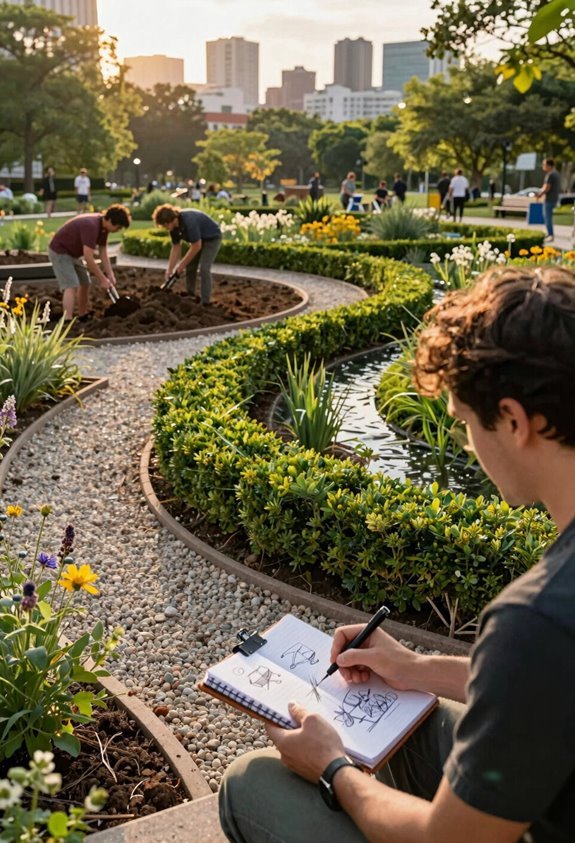
Three years in the field taught me more than any classroom could about how designs actually live and breathe. Landscape design isn’t theoretical; it’s sweat, soil, and sudden rainstorms that rewrite your plans. I learned to build before I could truly design.
I started with shovels and stakes, watching crews interpret my sketches on real ground. Every pour, every root ball, every drainage failure became instruction. I documented what worked, what warped, what weather changed.
Progress to leading teams taught me coordination beats perfect lines. I read plans with contractors’ eyes now, translating intent into achievable steps.
- Start hands-on with construction crews to master field processes and problem-solving under real pressure.
- Advance strategically to lead roles where you coordinate teams and align builds with design intent.
- Close every loop by comparing outcomes to plans, documenting deviations, and refining future landscape design decisions.
Site Analysis Skills: Reading Land Before You Draw It
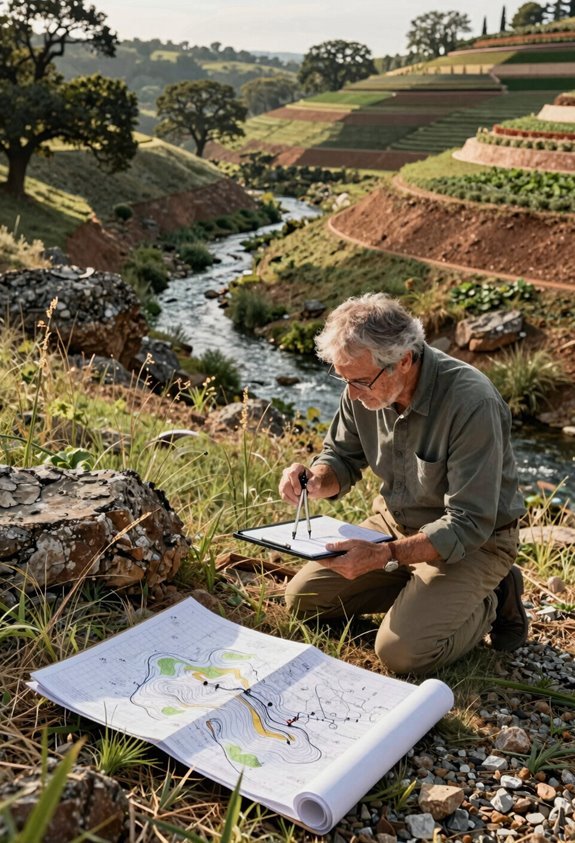
How deeply can you claim to know a landscape if you’ve never watched light move across it through every season? I learned that true site analysis demands patience, and it transforms how you design.
When I assess a property, I document sunlight patterns, soil composition, drainage flows, and topography before sketching anything. I measure, photograph, and sketch existing conditions, hunting for constraints that spark creative solutions.
Here’s what I always track:
| Element | What It Reveals |
|---|---|
| Sun/shade patterns | Plant placement and seating zones |
| Soil conditions | Species viability and amendment needs |
| Microclimates | Wind exposure and moisture retention |
| Utilities and access | Safe routing for paths and structures |
| Views and noise | Privacy screening and focal points |
I study how heat lingers in corners, where frost pockets form, and which views deserve framing. Site analysis isn’t bureaucracy; it’s listening. The land speaks first, and I translate.
Build a Portfolio That Wins Clients (Even Without Paid Work)
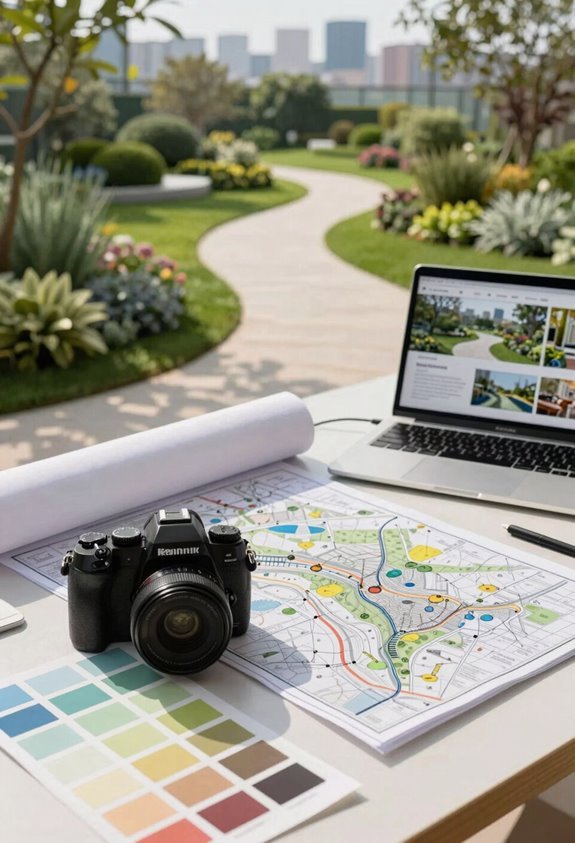
When I started out, my portfolio held nothing but passion projects and late-night sketches, yet it still opened doors that paid work never could. I learned that showing your process matters more than fancy credentials.
Here’s how I built mine:
- Gather your range : I compiled photos, sketches, and CAD drawings into categories like parks and residential, keeping formatting consistent throughout.
- Tell the story : I added before-and-after shots, explained site challenges, and included measurable results to prove impact.
- Borrow credibility : I gathered testimonials from volunteer work and internships, because every honest opinion counts.
Your portfolio works hardest when you share it actively. I keep mine ready on my phone and website, pulling it up during conversations that turn into real opportunities.
Employee, Freelancer, or Firm Owner: Pick Your Path
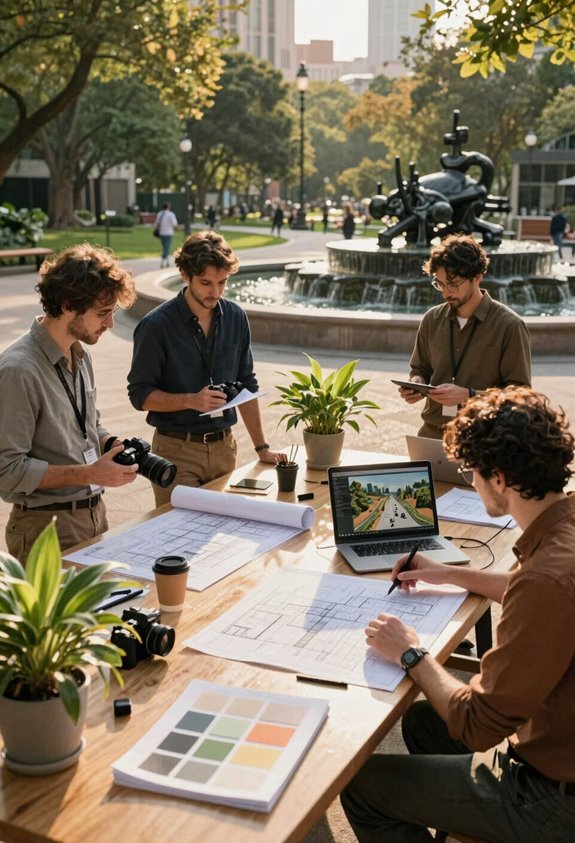
Where you land in this field shapes everything from your daily rhythm to the risks you’ll shoulder, so I’ve learned to weigh each path against what actually sustains me. As an employee in landscape design, you’ll absorb practical constraints through employer-backed projects while sharpening CAD skills under seasoned mentors. This foundation matters.
Freelancing demands self-direction: you’ll court clients, manage permits, and build credibility through tested portfolios. Firm ownership layers business acumen atop design vision, requiring team assembly and relentless client cultivation. I’ve watched peers succeed in each lane, but the most resilient designers usually begin with paid employment. That stability breeds confidence, refines your eye, and funds the portfolio expansion that fuels independent work.
Choose deliberately. Landscape design rewards those who match their ambition to their readiness, not merely their dreams.
Certifications That Matter in Landscape Design
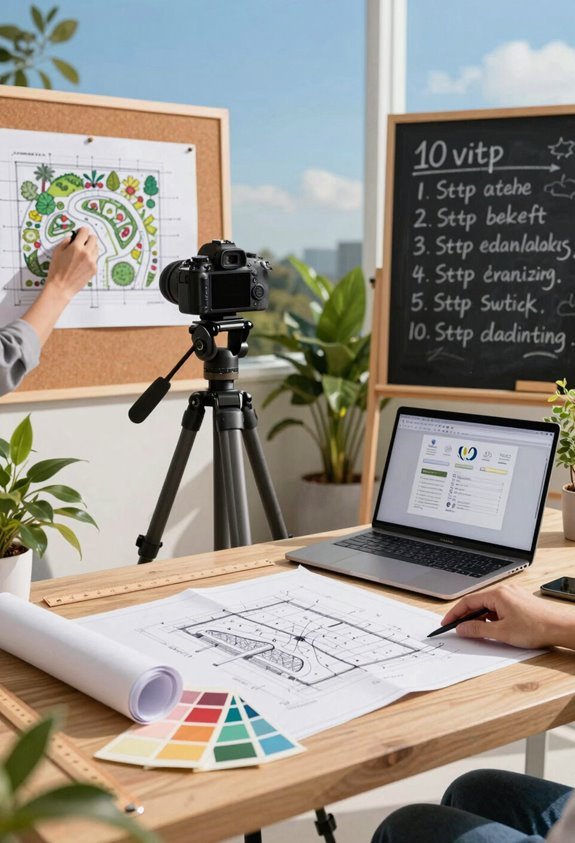
Once you’ve charted your professional path, you’ll want credentials that validate your expertise to clients and peers alike. I’ve found that professional certifications open doors, and none carries more weight in our field than the CPLD.
The Certified Professional Landscape Designer credential, issued by APLD, demonstrates you’ve met rigorous third-party standards. It signals you’re committed to ongoing learning and professional excellence.
Here’s what earning your CPLD involves:
- Meeting eligibility through education, membership, or contact hours plus three years of experience
- Submitting a portfolio evaluated against the Certification Score Sheet Rubric and industry Codes and Standards
- Maintaining annual renewal with continuing education requirements and fees
When I pursued my CPLD, I joined a community of designers who hold themselves accountable. You’ll belong to professionals who value ethics, competence, and growth.
Stay Current: Trends and Skills Worth Your Time
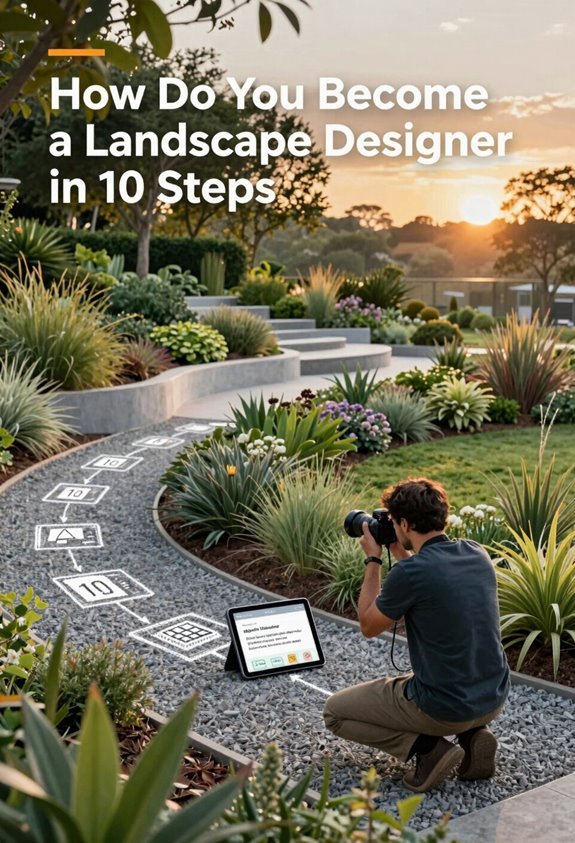
I keep my edge sharp by tracking emerging design technologies like parametric modeling and drone surveying, which are reshaping how we conceptualize and document outdoor spaces. Sustainable practice trends, from regenerative stormwater systems to carbon-sequestering planting palettes, have become non-negotiable expectations rather than optional add-ons in my project work. By weaving these evolving tools and standards into my ongoing education, I’m positioning myself, and by extension you, to deliver relevant, resilient landscapes that meet tomorrow’s demands.
Emerging Design Technologies
Few investments in your career will pay off as handsomely as staying current with emerging design technologies. I prioritize Landscape Design Technology because it changes how we communicate ideas and win clients. You’ll want to build fluency across three core areas:
- BIM-enabled workflows using Revit and Rhino/Grasshopper for parametric modeling that responds to site constraints in real time
- GIS and spatial analysis for interpreting topography, drainage patterns, and soil data with precision
- Drone surveying and photogrammetry for rapid site documentation and construction monitoring
I follow professional organizations and vendor tutorials to maintain my edge. This commitment signals you’re serious about craft. It also connects you to peers who share your standards.
Sustainable Practice Trends
Why let your designs become outdated when sustainability now defines excellence in our field? I stay current by integrating sustainable practice trends that transform ordinary spaces into resilient ecosystems. You’ll find me prioritizing native plants, which slash irrigation demands while supporting local wildlife, and mastering low-impact development techniques that honor natural water cycles.
I lean heavily into climate-responsive design and xeriscaping, tools that help me predict challenges before they arise. Bioswales, permeable pavements, and rain gardens let me merge beauty with function, creating landscapes that manage stormwater gracefully. I’m also deepening my expertise in lifecycle analysis and sustainable materials selection, so every project succeeds economically and environmentally for decades.
Through APLD and ASLA networks, I continuously sharpen these skills. Join me in embracing these evolving standards, and together we’ll build landscapes that endure.
Land Your First Landscape Design Clients
Where exactly do you begin when your portfolio’s still growing and every potential client asks about your experience? I started by embracing portfolio-building as my foundation, documenting every project with before-and-after photos and detailed design plans.
- Offer low-cost or pro bono work to gain hands-on experience and generate your first references.
- Network with local landscapers, horticulturists, and engineers who’ll send referrals your way.
- Build a simple website or social presence showcasing your process and samples.
I gathered testimonials from early clients, even friends and family, to establish credibility. This social proof turns hesitant prospects into confident collaborators. You belong in this field, and each completed project proves it. Start where you stand; your reputation grows with every garden you shape.