Gardeners waste up to 50% of irrigation water through timing mistakes, and I’ve watched raised beds thrive or fail on this single factor.
You’re about to learn why deep, infrequent watering builds stronger roots than daily sprinkling ever could.
Water When the Top 2 Inches Feel Dry: The Only Rule You Need
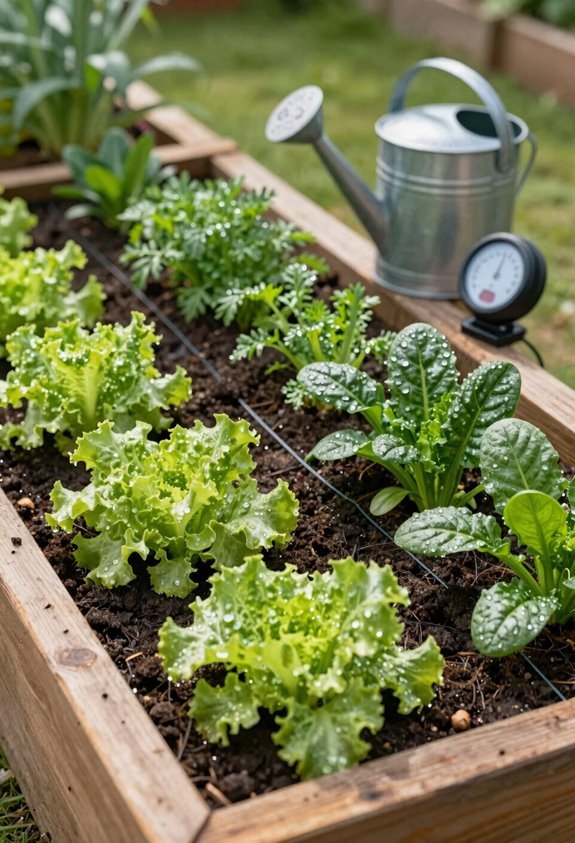
How do you know when your raised beds actually need water? I stick my finger into the top 1, 2 inches of soil, and if it feels dry, I water immediately. This simple check of topsoil moisture tells me everything I need to know.
I don’t follow a rigid irrigation schedule because plants don’t drink on command. When the surface dries, shallow roots are already stressed, and growth suffers. I trust what I feel rather than what the calendar says.
After I water, I make sure the moisture reaches deeper layers through a proper soil depth soak. This prevents the cycle of drought stress and drowning that kills so many gardens.
Every 2–4 Days: The Watering Frequency That Actually Works
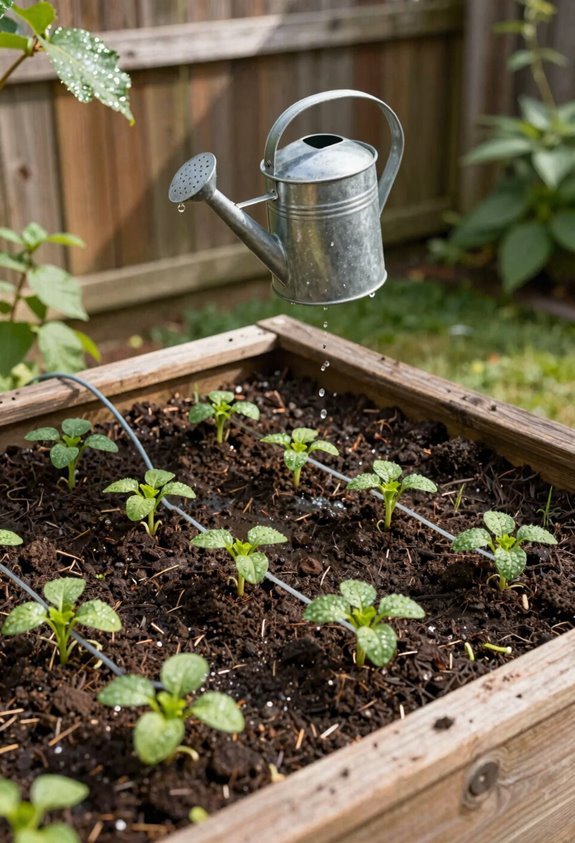
Why does a 2–4 day rhythm serve most raised beds so well? I’ve found this watering frequency strikes the perfect balance between saturation and oxygen flow, letting soil moisture penetrate deeply without drowning roots. I stick my finger down to the root zone; if it feels dry at two inches, I know it’s time.
I always favor deep soaking over daily sprinkles, since shallow watering trains roots to stay near the surface where they fry. Drip irrigation makes this rhythm effortless, delivering slow, steady moisture that matches natural absorption rates.
My cucumbers and ripening tomatoes often stretch toward four days, while leafy greens keep me closer to two. A thick mulch layer buys me extra insurance, locking in hydration between cycles. Test your soil, adjust accordingly, and let the process work.
Daily Watering Kills Plants: Find Your Ideal Frequency
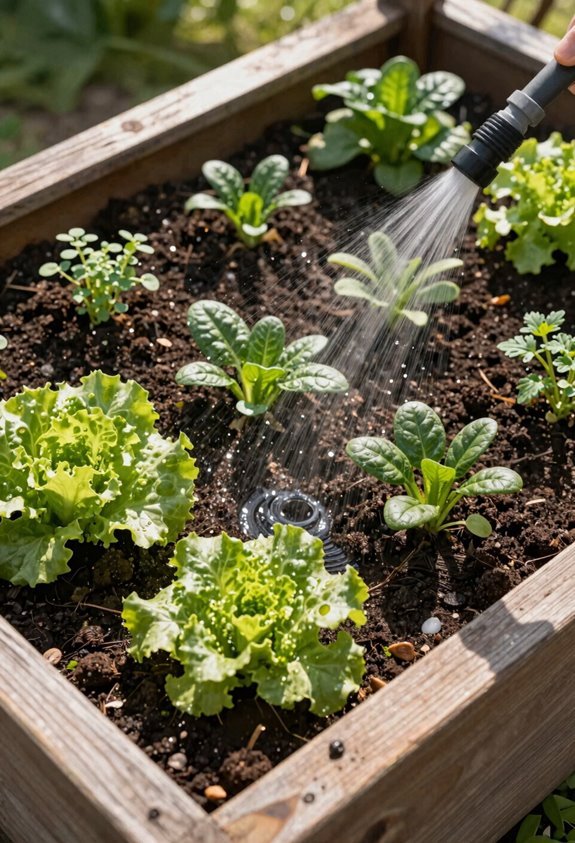
Where exactly did we get the idea that plants need a daily drink? I used to believe this myself, and I watched my raised beds suffer for it.
I’ve learned that daily watering creates shallow roots and waterlogged soil, which suffocates plants. My current watering frequency hits every 3–4 days, letting soil moisture settle naturally between sessions. I aim for about one inch weekly, adjusting when rainfall helps.
I check soil moisture with a simple finger test; when the top 1–2 inches feel dry, I water deeply, penetrating below the surface rather than spraying lightly. This encourages robust roots that withstand gaps between irrigation.
I mulch everything, reducing evaporation and extending those intervals further. Finding your ideal frequency means observing, adjusting, and trusting your plants to do well with less intervention than you’d expect.
Drip Irrigation Timing: Duration and Frequency Made Simple
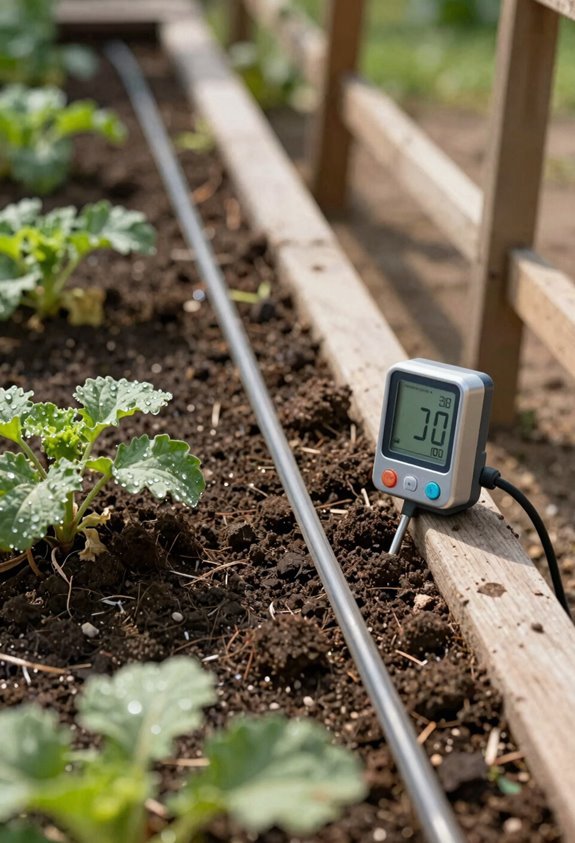
I set my drip timer after checking my emitter flow rate, since that determines how long I need to run the system to hit my weekly water targets. Most raised beds need fifteen to forty-five minutes per session, several times per week, to deliver that one-inch baseline without runoff.
I’ll show you how to match your specific components to a schedule that keeps roots consistently moist, not soggy.
Drip Run Duration
How long should you actually run your drip system before you’ve done more harm than good? I’ve found that drip run duration typically ranges from fifteen to forty-five minutes per session, depending on your emitter flow and bed size. Unlike sprinklers, drip lines deliver precise moisture with shorter, more efficient runs.
I calculate my weekly water needs for each bed, then divide that total into several timed sessions throughout the week. This approach prevents the shallow watering that wastes resources and stresses roots.
Deep, penetrating moisture requires adjusting your run time so water reaches the root zone, not just the topsoil. I monitor soil moisture closely, using a timer to extend or shorten sessions seasonally. With consistent observation, you’ll maintain ideal moisture without overwatering.
Weekly Frequency Targets
When should you actually run your drip lines each week? I aim for roughly one inch of water weekly through my drip irrigation system, which usually means 15 to 45 minutes per session spread across several days. Deep, penetrating soaks beat quick surface sprinkles every time.
Let me share my weekly rhythm:
Run sessions 2-3 times weekly as your baseline drip irrigation schedule. Shift weekly frequency upward during heat waves or dry spells. Scale back cycles when temperatures drop or winds calm.
Test soil with your finger or a moisture meter before adding water. Embrace moisture-based watering instead of rigid daily timers.
I water early morning, often before dawn, cutting evaporation and disease pressure. Your plants will tell you what they need once you learn to read the soil.
Emitter Flow Rates
Emitter flow rates fundamentally determine how long you’ll run your lines, and I always start by checking my drip tape’s gallons-per-hour rating before setting any timer. My drip system delivers water slowly to the root zone, so I run it longer than sprinklers but use less water overall. I aim for about one inch weekly, adjusting my watering schedule through seasonal shifts with a moisture meter.
| Emitter Type | Flow Rate (GPH) | Typical Run Time |
|---|---|---|
| Low-flow drip tape | 0.5 | 30-45 minutes |
| Standard emitters | 1.0 | 20-30 minutes |
| High-flow bubblers | 2.0+ | 15-20 minutes |
I calibrate my emitter flow rates regularly, extending duration when it’s hot or windy, shortening when humidity rises. This precision keeps my raised beds productive without guesswork.
Hand Watering vs. Drip: Pick Your Raised Bed System
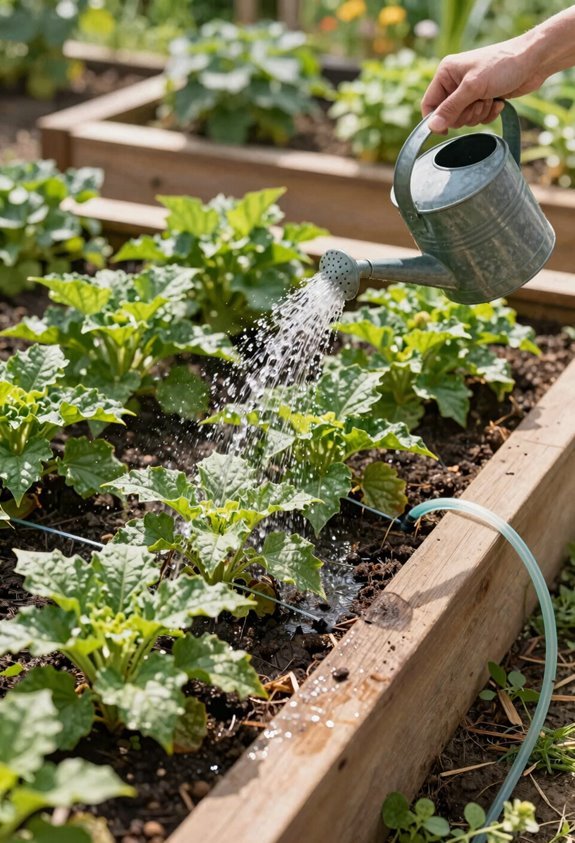
Although I’ve tried both methods in my own beds, choosing between hand watering and drip irrigation really comes down to your lifestyle and what you’re growing. Let’s break down what I’ve learned about matching your raised bed watering approach to your plants’ water needs.
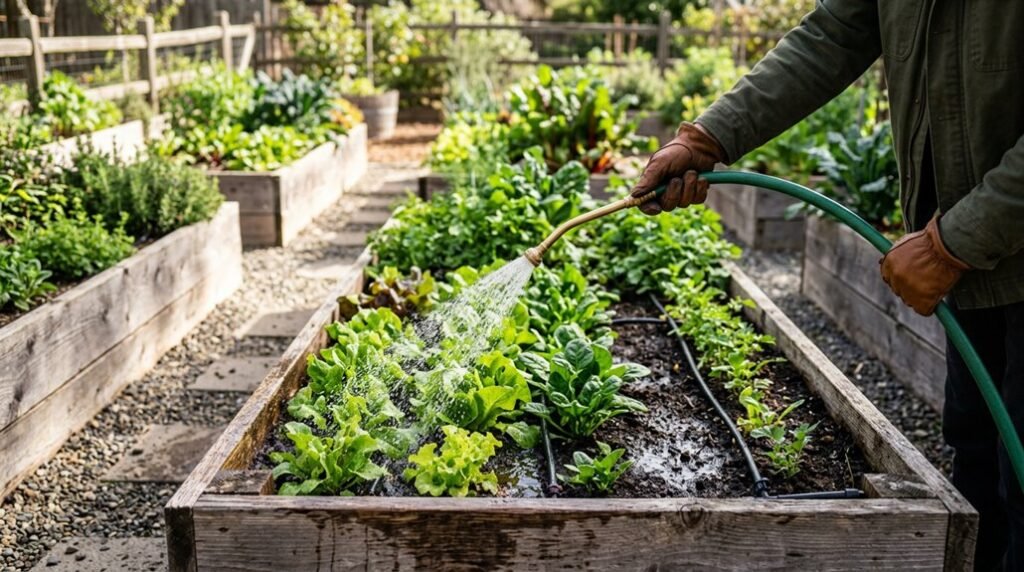
Hand watering lets me check soil moisture at the base directly, but I must stay consistent to avoid stressing plants. I always aim at soil level with a can or hose, never spraying leaves, and prefer early morning sessions.
Hand watering requires consistency, but the direct soil check and quiet morning ritual make it worth the effort.
Drip irrigation connects to my spigot, runs on a timer, and delivers steady moisture with less effort. I choose drip tubing over soaker hoses for slow, deep penetration that mimics natural rainfall.
I hand-water seeds and transplants until roots establish, then switch to drip irrigation for mature plants.
Oyas and Root Watering: Reduce Frequency, Boost Growth
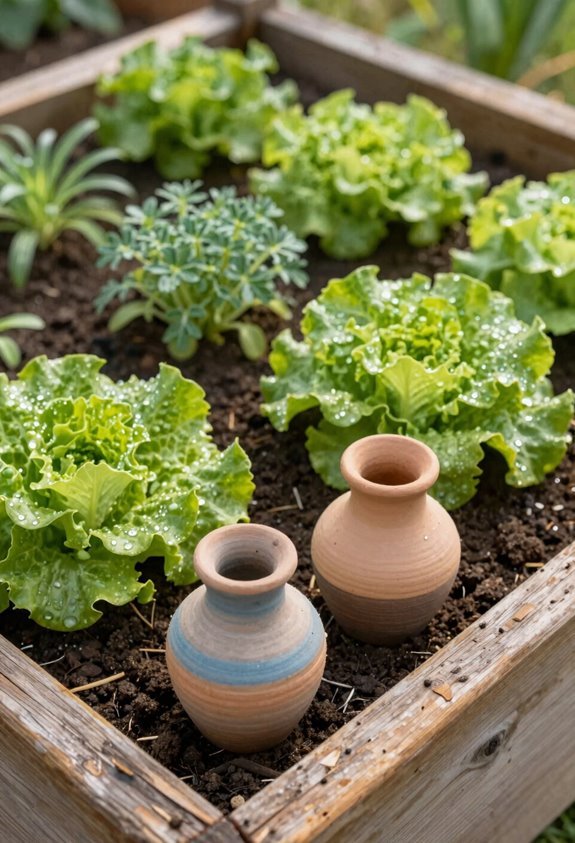
I recently switched to oyas for root-zone moisture delivery, and they’ve transformed my watering routine from daily fuss to weekly refills. These unglazed terracotta vessels sit buried at bed center, slowly releasing moisture directly where roots cluster without surface evaporation stealing a drop.
Root-Zone Moisture Delivery
I’ve often found myself searching for ways to water less while helping my plants thrive more, and root-zone delivery systems like oyas changed everything I thought I knew about irrigation.
Root-zone moisture transforms how we approach raised beds, slashing irrigation frequency while keeping plants consistently hydrated. These porous terracotta vessels sit buried at bed center, releasing water gradually to surrounding roots.
Here’s what makes this method work for our growing community:
- Direct delivery eliminates surface evaporation, extending refill intervals markedly
- One properly sized olla typically covers 2-7 days depending on climate and crop demand
- Bury the neck-deep, plant around the perimeter, and keep that lid sealed tight
- Expect hand-watering initially for 1-2 weeks while roots establish
- Perfect solution for travelers seeking reliable, disease-reducing moisture management
This approach builds real resilience into your garden routine.
Deep Watering Benefits
Deep watering consistently changes how we manage raised beds, and I’ve watched root-focused irrigation cut my watering schedule dramatically while producing stronger, more resilient plants.
| Method | Impact on Your Garden |
|---|---|
| Oyas buried in soil | 7–10 days between refills |
| Deep watering via root zone | 50% less water waste |
| Olla necks exposed | Quick refills, passive supply |
| Root-focused cups | Deeper moisture penetration |
I position my Oyas with buried necks, topping them every week while surface watering only seedlings. Deep watering targets the root zone directly, eliminating evaporation losses that plague overhead spraying. My plants develop robust root systems seeking buried moisture, doing well with less frequent intervention. This approach belongs in every raised bed gardener’s toolkit.
Decode Plant Signals: Wilting, Yellowing, and What They Mean
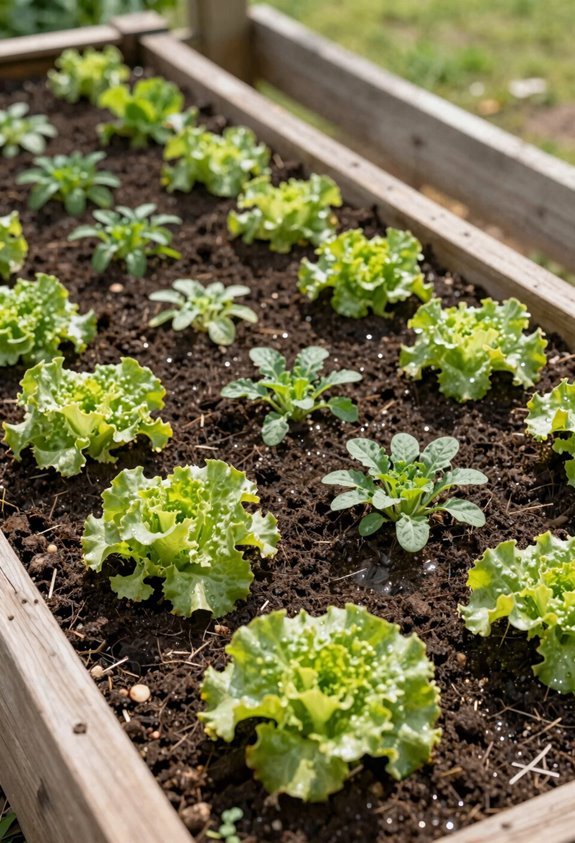
How do you know when your raised beds are truly thirsty? I’ve learned to read my plants like old friends, catching their cues before damage sets in. Wilting and yellowing aren’t just random complaints; they’re your garden’s language, and I’m here to help you translate.
Wilting and yellowing aren’t just random complaints; they’re your garden’s language, and I’m here to help you translate.
- Wilting with green, flexible stems usually means under-watering or heat stress, not disease
- Yellowing leaves often signal over-watering or root trouble after too much prolonged wetness
- Dry surface soil plus wilted canopy tells me I need deeper, slower watering sessions
- Leaf curling or edge browning reveals hidden water stress that quietly steals my yields
- Consistent moisture prevents the mixed signals erratic watering causes: wilting, yellowing, and stunted growth together
I check my beds morning and evening, trusting these patterns to guide my hand.
Mulch and Amendments: Extend Your Watering Intervals
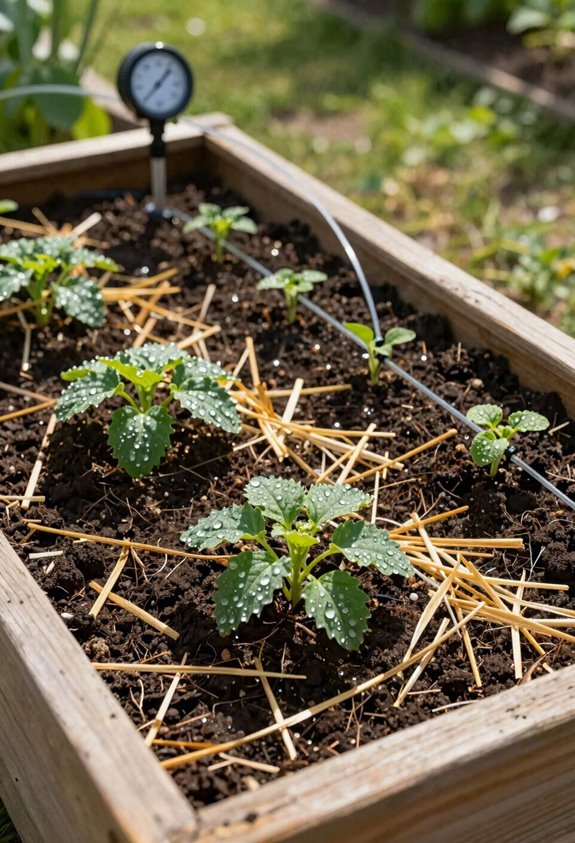
Reading plant signals gives you the starting point, but keeping that moisture where roots need it is what changes your watering from constant chore to managed rhythm. I never skip mulch in my raised beds, because it extends my watering intervals markedly.
A 2 to 3 inch layer cuts evaporation, keeps soil cooler, and blocks weeds that steal moisture. You’ll find yourself reaching for the hose less often, especially when heat spikes. Pair this with deep, infrequent soakings, and your roots grow downward instead of waiting for surface splashes.
I still check soil moisture with a finger test though, because mulch changes how long water lingers. In raised beds, this combination creates steadier conditions without guessing. You’ve built the structure; now let the mulch maintain it.
Water Less as Plants Grow: The Maturity Factor
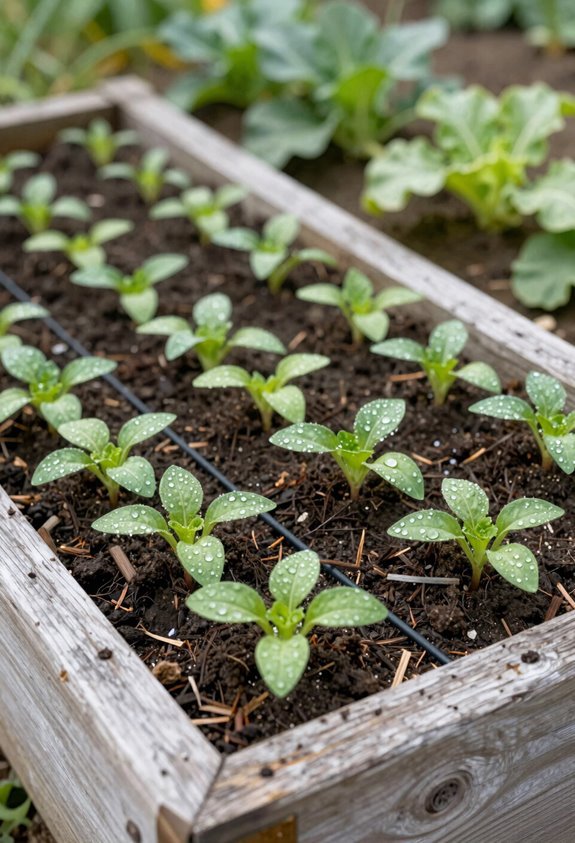
Why do I find myself watering less as the season progresses? It’s all about maturity. As plants mature, their roots expand dramatically, accessing moisture from a larger soil volume and becoming far more efficient at uptake.
Established roots explore deeper soil, reducing dependency on surface moisture. Stronger canopies shade soil, naturally slowing evaporation between irrigation cycles. Mature plants display less frequent wilting, signaling improved water retention.
Drip system schedules shift from daily to every 3 to 4 days at full maturity. Ongoing monitoring remains essential, even as growth stages stabilize.
I adjust my drip system accordingly, but I don’t abandon observation. I still test soil moisture with my finger and watch for subtle plant cues. Maturity changes the rhythm, not the responsibility.