Up to 50% of home garden water gets wasted through poor timing and technique, yet most vegetables do well with just one inch weekly. I’ve seen too many gardens fail from daily sprinkles that never reach the root zone.
The real question isn’t how often you water, but how deeply that moisture penetrates your specific soil. I’ll show you why morning irrigation beats evening, and how a simple tuna can solves the guesswork.
The 1-Inch Rule: How Much Water Vegetables Need Weekly
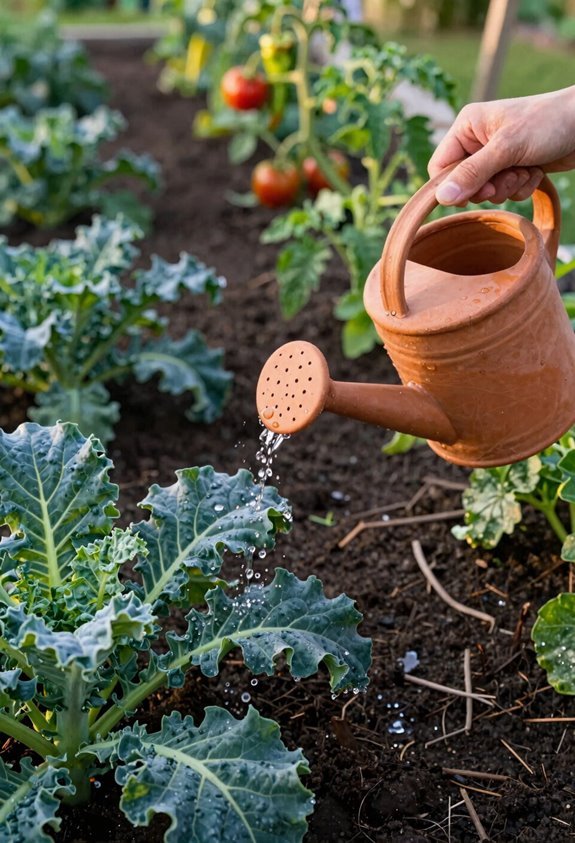
How do you know when your vegetables have gotten enough to drink? I rely on the 1-inch-per-week baseline, which gives my plants consistent soil moisture without guesswork. I measure this simply by placing a shallow container in my garden and running my irrigation until I’ve collected that full inch. This helps me achieve deep watering rather than merely wetting the surface where roots can’t reach.
Living in different climates means I’ve learned to adapt. In arid regions, I’ll double that baseline. I always practice weather-adjusted watering by calculating my average daily temperature: adding daytime high and nighttime low, then dividing by two. For every 10°F above 60°F, I increase my weekly target by roughly half an inch. This precision keeps my vegetables in good shape.
Daily or Deep? How Often to Water Vegetable Plants?
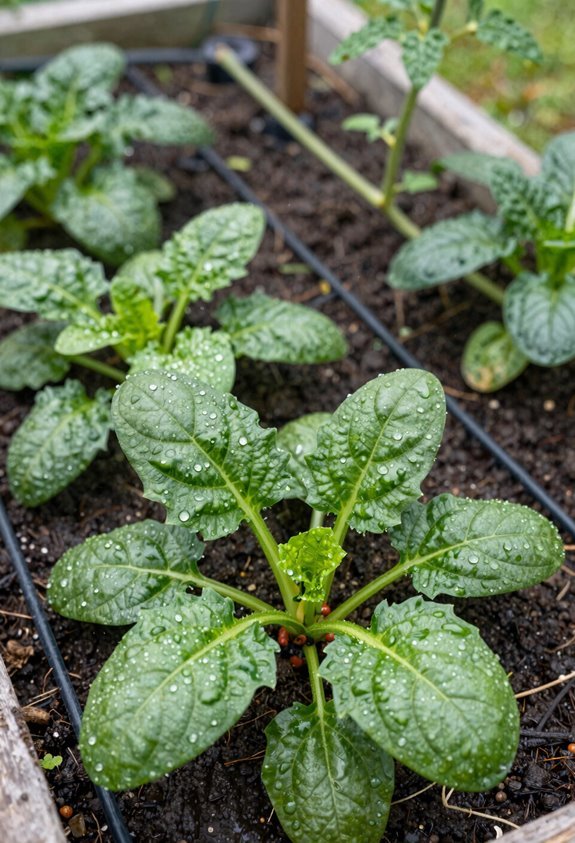
When I’m deciding on watering frequency, I always choose deep, less frequent irrigation over daily light sprinkles. Deep watering encourages roots to grow downward, building resilient plants that handle drought better than pampered ones.
I aim for about 1 inch per week, and I’ll tell you honestly, that total includes rainfall. Stick a shallow container in your bed to check you’re hitting your target; it keeps us honest about actual soil moisture levels. If conditions turn brutal, I’m splitting that into two sessions.
Drip irrigation helps me apply water slowly, right where roots need it, without waste. Water timing matters more than you’d think; early morning works best in my yard, and evening’s my backup when humidity climbs. We’re growing stronger plants together through smarter habits.
Match Watering to Your Soil: Sandy, Clay, or Loamy
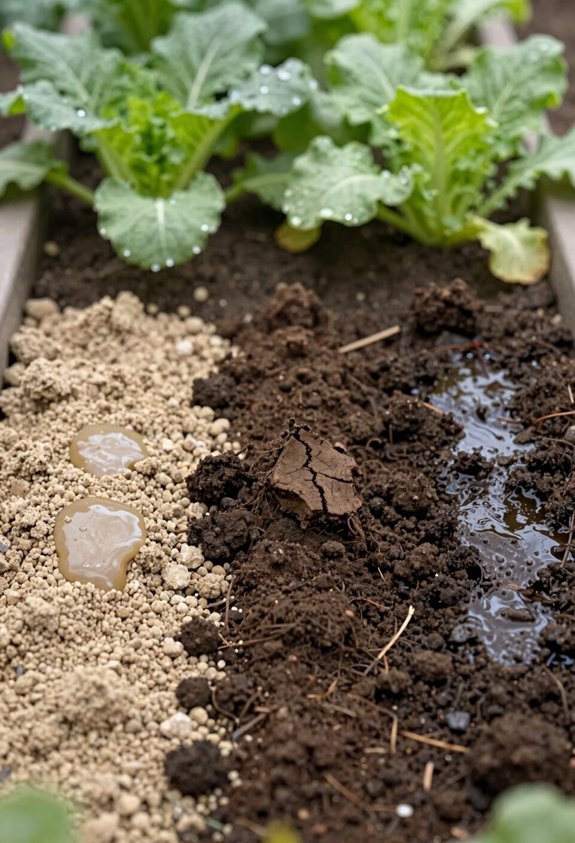
That one-inch rule I follow shifts depending on what I’m growing in, since soil texture dictates how water moves and stays put in my beds. My watering frequency changes with each soil type, and I’ve learned to read my ground before reaching for the hose.
In sandy soil, water drains fast, so I apply about half an inch twice weekly to keep roots consistently moist without drowning them. Clay soil holds water longer, which means I water once weekly to prevent waterlogging and root rot.
Loamy soil, that gardener’s gold with balanced organic matter, typically needs weekly watering since it retains moisture better than sand while draining more freely than clay.
I always check the top inch; if it’s dry but below stays damp, I adjust my schedule. Mulching extends these intervals further, helping every soil type hold precious moisture longer.
Calculate Extra Water for Hot Weather in Vegetable Gardens
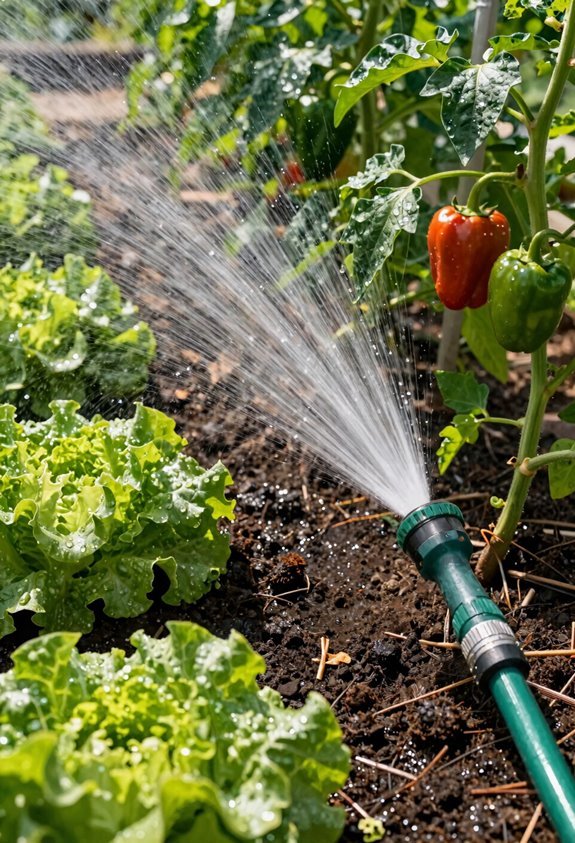
When summer heat climbs, I add about half an inch of irrigation for every 10°F my daily average sits above 60°F, stacking that on top of my standard one-inch weekly baseline. I figure my daily average by adding the daytime high and nighttime low, then dividing by two, so I know exactly how much extra water my vegetables need before stress sets in.
I always set out a rain gauge or shallow can to verify I’ve hit my adjusted weekly total, because guessing won’t cut it when evapotranspiration spikes.
Temperature Adjustment Calculation
How much more should I water when the mercury climbs? I’ve found that temperature adjustment prevents struggling vegetables and stressed plants. I start with a base watering of 1 inch per week, then I calculate the extra. For every 10°F above 60°F, I add another half inch per week.
When the average hits 82°F, I’m giving roughly 2 inches total weekly water. I figure that average by adding daytime high and nighttime low, then dividing by two. Last week, my thermometer peaked at 95°F and dropped to 73°F, giving me 84°F average. That pushed me past the extra inch threshold.
In hot climates, this simple math protects my harvest without guesswork.
Heat Stress Indicators
Why let heat sneak up on your vegetables when the signs are right there in front of you? I watch for wilting leaves during midday heat, especially on my squash, eggplant, and tomatoes; their large leaves lose water fast under stress.
When soil moisture drops and water retention suffers, I know heat stress has arrived. I calculate extra needs by averaging daytime highs and nighttime lows, then adding about 0.5 inch per 10°F above 60°F. That simple 1-inch weekly rule? It fails us here. I adjust totals upward, using drip irrigation to maintain steady hydration without waste. My crops resist wilting better when I read these indicators early and respond with precision.
When Lettuce, Tomatoes, and Roots Need Water Most
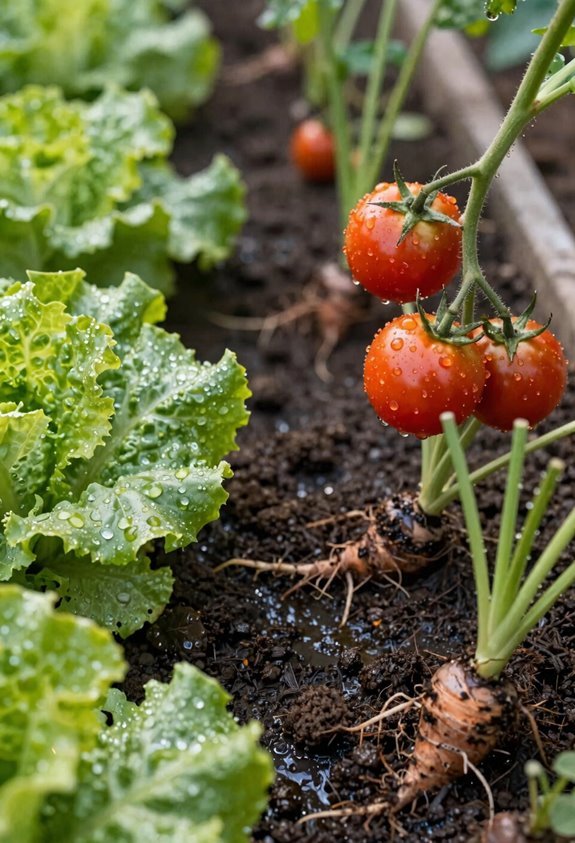
I want you to understand when your vegetables hit their peak water demand, because timing truly separates good harvests from disappointing ones. Lettuce, tomatoes, and root crops each carry distinct critical growth stages where moisture stress causes irreversible damage.
I’ll break down exactly how to recognize these windows and respond with precision.
Critical Growth Stages
When exactly does your garden need you most? I’ve learned that timing separates strong crops from disappointing yields. Different growth stages demand specific attention to soil moisture, and I adjust my approach accordingly.
My lettuce craves consistent moisture at the rosette stage, preventing bolting when heat strikes. My tomatoes reward steady care during flowering and fruiting, avoiding blossom drop and fruit cracking. My root vegetables develop resilience through deep watering, building systems that resist drought stress.
I watch my plants closely through these critical windows. Deep watering encourages roots to search downward, creating self-sufficient plants. I monitor soil moisture daily during vulnerable periods, never letting my garden face drought stress when establishment matters most. These growth stages define my watering calendar, helping me deliver support precisely when my plants need it to flourish.
Peak Water Demand
Understanding critical growth stages sets the stage for recognizing when demand surges. I watch my lettuce closely during the rosette stage, keeping soil moisture steady to stop bitterness and bolting before they start. My tomatoes need thorough establishment watering first, then consistent moisture through flowering and fruiting to prevent blossom drop and cracking.
For roots, I focus on the root zone itself, watering deeply but less often to encourage downward growth. When temperatures climb, I add about half an inch more water per ten degrees above sixty to protect those large leaves. I’ve learned that mulched soil holds moisture well, letting me reduce watering frequency for root crops. Sandy soils demand more attention to meet peak water demand, but the right approach keeps every plant growing strong.
Check Soil Moisture Below the Surface
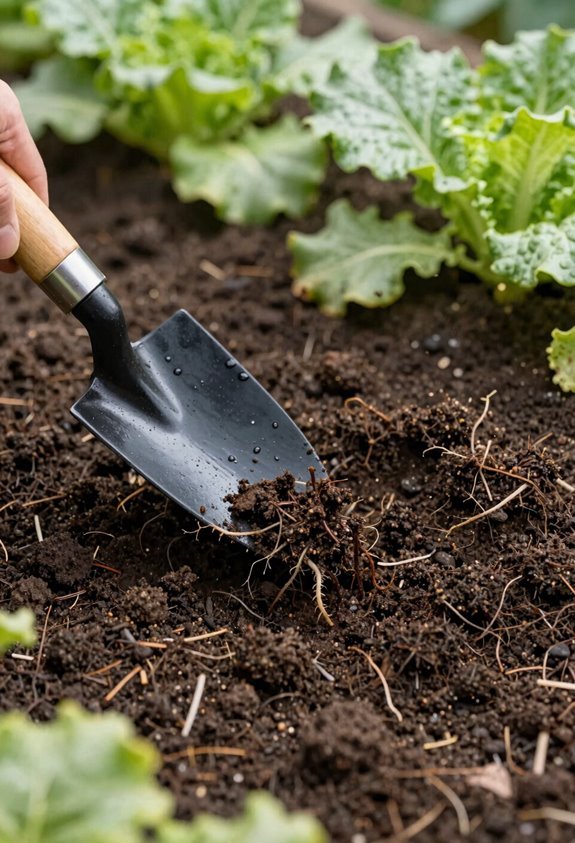
Why guess at the root zone’s needs when you can verify them directly? I always perform a depth check before deciding on irrigation timing, because looks deceive. Dry topsoil hides damp layers below, and vice versa.
Here’s what I recommend you try:
- Stick your finger or a small trowel 2–3 inches down to feel the real story
- Probe sandy soils extra deep, since they shed soil moisture faster than you’d expect
- Wait to water if the lower layer holds moisture, even when the surface crinkles
This practice connects us to our plants’ actual world. I know checking below protects roots from shallow watering that weakens vegetables over time.
When you verify conditions firsthand, you join a community of growers who rely on evidence over assumptions, and your garden rewards that care.
The Best Time to Water Vegetables for Maximum Absorption
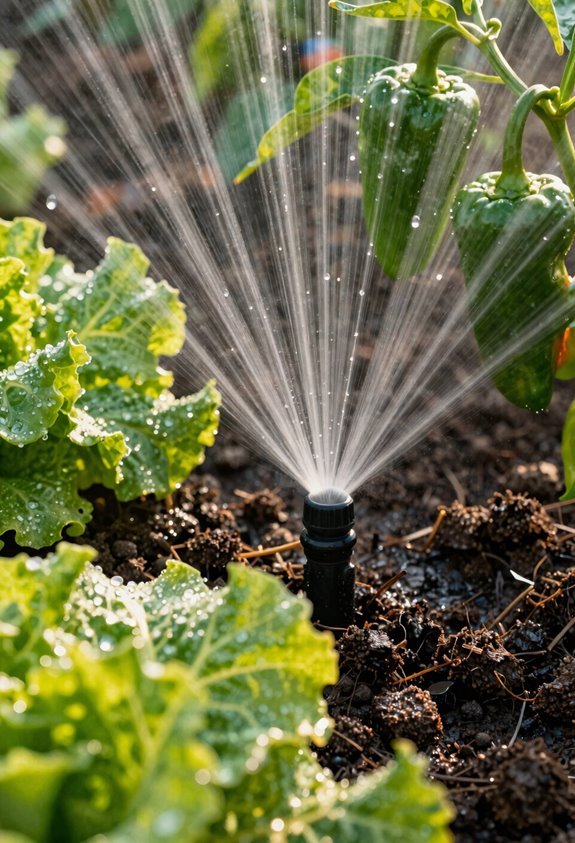
How do we make every drop count when the sun’s position shapes our garden’s thirst? I’ve found that the best time to water is early morning, when cooler temperatures and calmer winds let moisture sink deep into the root zone before evaporation steals it away.
Evening works too, though I prefer dawn in humid climates since wet foliage overnight invites trouble. Midday watering? I skip it entirely: rapid evaporation wastes precious drops, and heat-stressed plants don’t recover well.
My irrigation timing always starts with a soil moisture check. I dig down several inches near my plants, feeling for actual need rather than guessing. When the root zone truly thirsts, I deliver water slowly, letting it penetrate deeply instead of merely dampening the surface. This rhythm keeps our vegetables strong.
Drip or Overhead: Which Watering System Works Best?
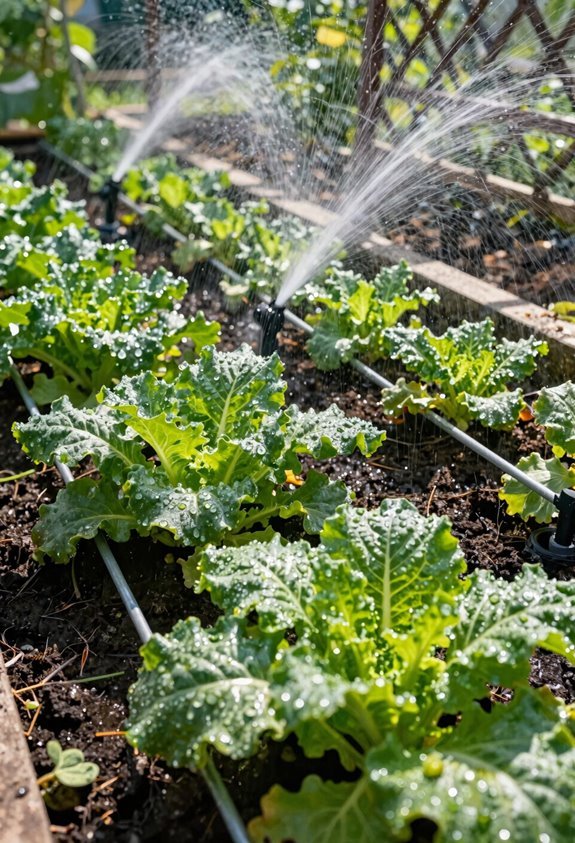
Once I’ve settled on the perfect timing, I turn my attention to how I’ll deliver that water. I’ve found that drip irrigation and overhead watering each serve distinct purposes in my garden, and choosing between them shapes my entire water scheduling approach.
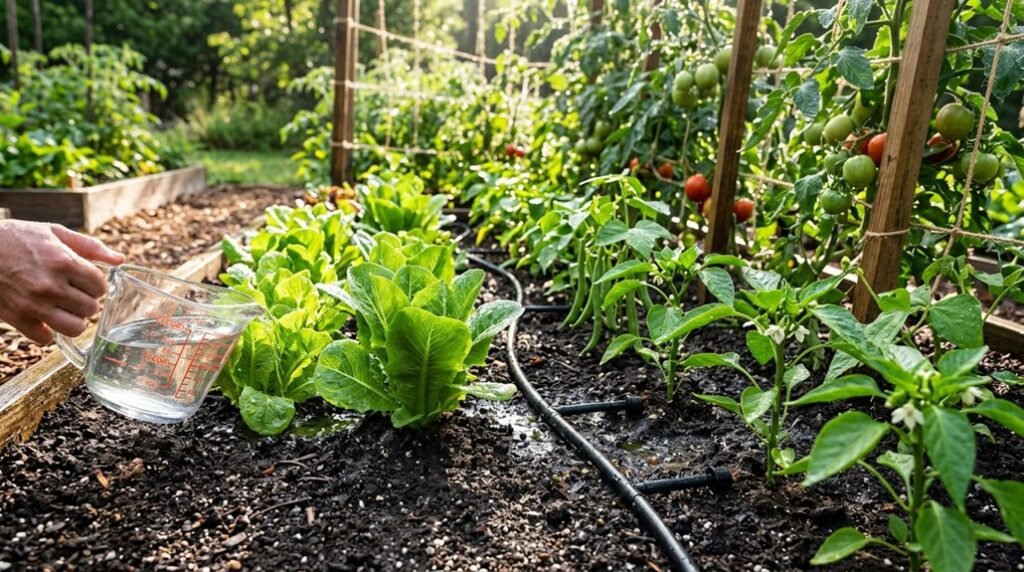
Drip irrigation targets the root zone directly, cutting evaporation and maintaining steady soil moisture even in scorching conditions. I particularly favor it for raised beds and arid climates where every drop matters.
Picture beads of water threading through black tubing, disappearing into warm soil beside thirsty tomato stems. Imagine morning sunlight catching arc-shaped sprays across broad bean leaves, rinsing away summer dust. Visualize my hand checking penetration depth, ensuring no hidden dry pockets sabotage tender roots.
I still occasionally supplement with overhead watering for leaf cleansing. Regardless of method, I measure weekly delivery toward that one-inch benchmark, adjusting for soil type and temperature shifts.
Use Mulch to Water Less Often and Keep Soil Moist
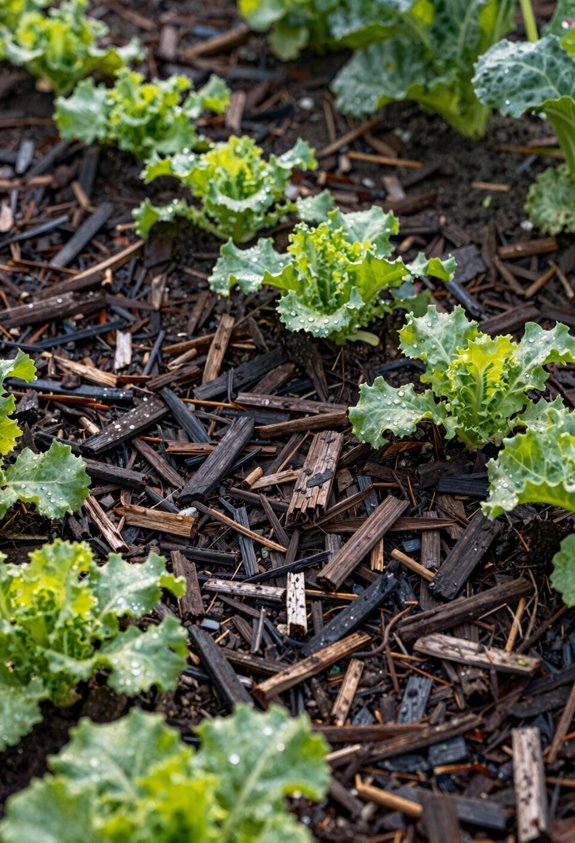
Where else can I trim my watering schedule without stressing my plants? I mulch.
Mulching locks in hydration, and I find it changes my entire approach to watering. A 2-3 inch layer of organic mulch surrounding my vegetables directly suppresses evaporation, which means I cut my irrigation frequency significantly without sacrificing plant health. The moisture retention this creates is remarkable; my soil moisture stays elevated for days, not hours.
I use straw, shredded leaves, or compost because these materials don’t just sit there; they build the soil’s moisture-holding capacity over time. My roots grow deeper, accessing reserves I couldn’t maintain before.
I’ll note one caveat: heavy mulching slows spring warming, so I adjust thickness by season. The trade-off is worth it. My plants do well, and I water less. It’s that straightforward.