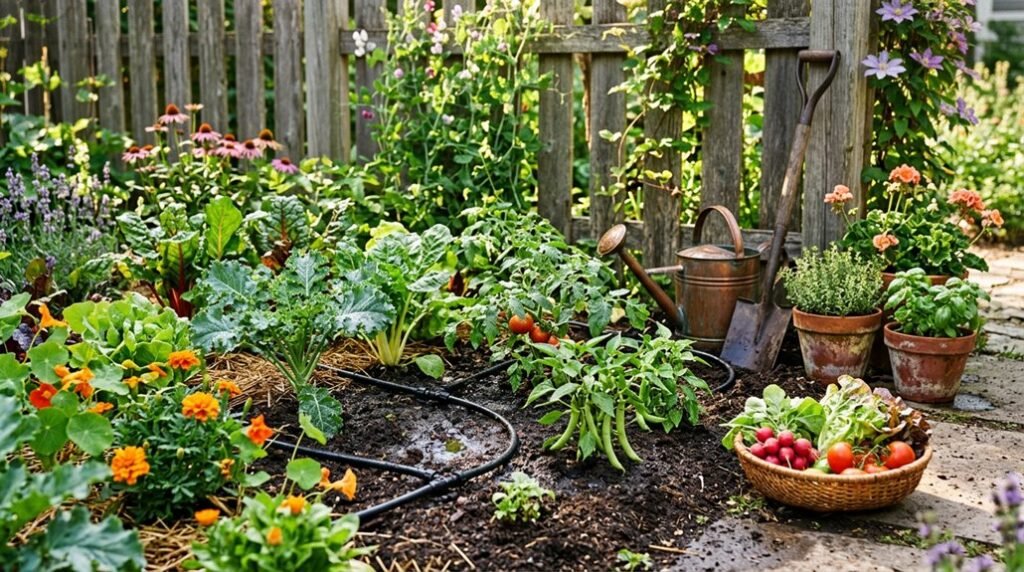
I’ve killed more plants with kindness than drought ever could. After fifteen years of gardening failures, I’ve learned that watering seems simple until you’re staring at yellow leaves and wondering where it all went wrong.
Most of us overwater, underwater, or simply water wrong without ever realizing there’s a science to reaching those root zones effectively. These ten essential tips changed everything I thought I knew about keeping outdoor plants truly healthy through every season.
Check Soil Moisture Before You Water
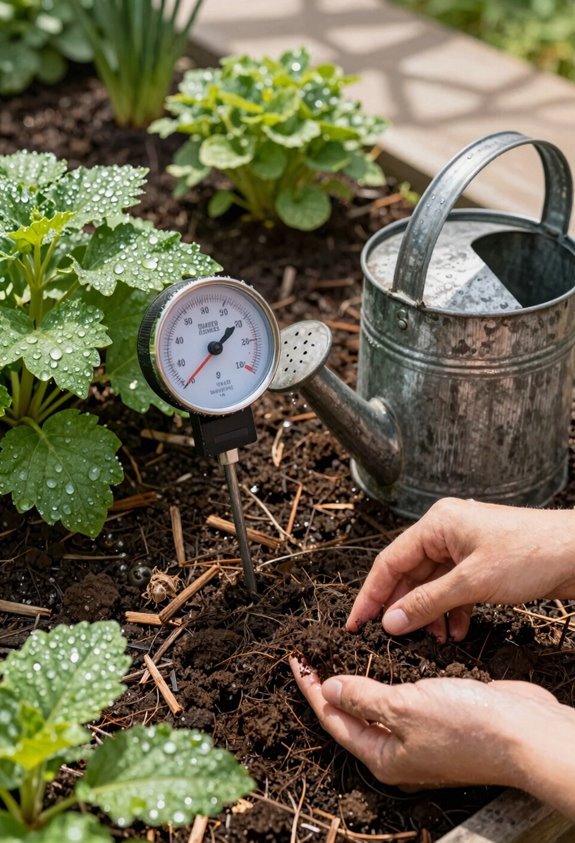
How can I tell when my plants actually need water rather than sticking to a rigid schedule? I used to follow a rigid watering schedule until I learned that soil moisture fluctuates constantly with temperature, humidity, and plant growth stage.
Now I check moisture before every watering. I grab a wooden skewer and insert it 3–4 inches deep into the soil; if it emerges clean, I’m dealing with dry conditions, but soil clinging means adequate moisture. I also use the finger test at two inches depth, dry signals thirst, moist means I wait. For containers, I weigh pots before and after saturation to calibrate my moisture testing instincts.
I’ve noticed my drought sensitivity awareness has sharpened considerably. Hanging baskets demand frequent check moisture routines since evaporation accelerates in summer heat. Rain gauges help me correlate precipitation with actual soil absorption, preventing root health decline from overwatering.
Give Outdoor Plants 1 to 2 Inches Weekly
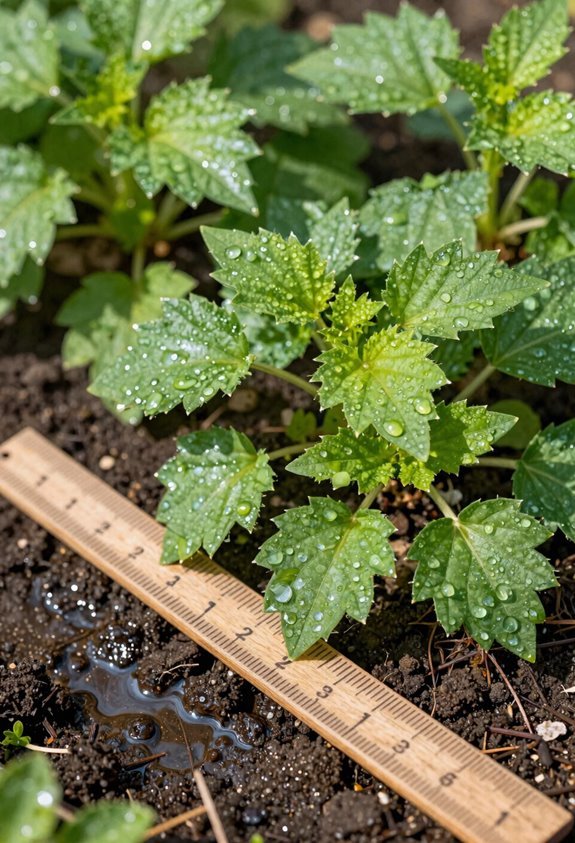
Why do so many gardeners struggle with watering? I’ve found that having a clear weekly target transforms uncertainty into confidence. I give my outdoor plants 1 to 2 inches of water weekly, adjusting upward when heat waves strike or winds whip through my beds.
Deep watering matters more than daily sprinkles, because soaking the soil thoroughly encourages roots to grow downward, building drought tolerance that sustains plants through dry spells. I place a simple tuna can among my plantings to measure precisely, ensuring moisture penetrates properly. This approach lets me monitor soil conditions and plant signals; drooping leaves or yellowing tell me when to increase within that range. Consistent weekly deep watering creates resilient gardens we’re proud to tend together.
Water Early Morning, Never Midday
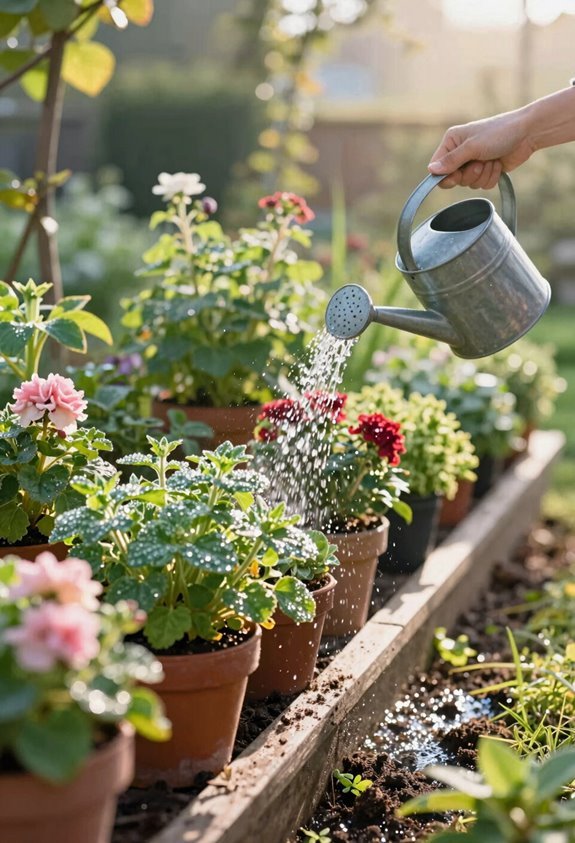
I always water my outdoor plants between 6:00 and 10:00 AM, when cooler temperatures and calmer air let moisture sink deep before the sun intensifies. Midday watering wastes precious resources, since heat and wind accelerate evaporation before roots can absorb what they need. Early timing also gives foliage hours to dry, which reduces fungal pressure and keeps my garden healthy without chemical interventions.
Optimal Morning Timing
When exactly should you step outside with the hose? I always aim for early morning, specifically between 6:00 and 10:00 AM, when the air stays cool and calm. This timing lets me practice deep watering that penetrates soil moisture layers effectively, rather than wetting just the surface.
Morning watering gives foliage time to dry before evening, which reduces mildew risks on vulnerable plants. I focus on delivering water slowly to encourage root hydration deep below, where roots actually need it. When I avoid evaporation by skipping midday, every drop works harder for my garden.
Here’s how I structure my approach:
| Technique | Purpose |
|---|---|
| Early morning timing | Maximizes absorption before heat rises |
| Deep watering method | Builds drought-resistant root systems |
| Slow application | Makes certain soil moisture reaches depth |
| Consistent schedule | Prevents stress cycles |
During hot spells, I maintain this routine while increasing frequency slightly.
Midday Heat Risks
How does midday heat sabotage your watering efforts before you’ve even finished? I’ve watched countless gardeners lose precious moisture to midday heat, scorching their plants while wasting water on rapid evaporation. When temperatures peak, water droplets act like magnifying lenses, burning tender leaves before foliage drying even begins.
I always adjust my watering schedule to beat this trap. Morning watering lets me deliver deep soaking directly to roots, filling plant tissues before the sun intensifies. This timing minimizes evaporation, making sure every drop penetrates soil rather than vanishing into hot air.
For your garden’s sake, never break this rhythm. Midday watering stresses plants, forces shallow roots, and demands constant replenishment. Rely on the early hours, and you’ll build resilient gardens that flourish together.
Fungal Prevention Benefits
Why gamble with fungal diseases when a simple timing shift protects your plants? I always choose morning watering, letting sunlight dry leaves before fungi take hold. This simple habit changes your garden’s health.
Here’s how I maximize fungal prevention every day:
- I water between 6:00 and 10:00 AM, ensuring foliage dries completely before evening moisture arrives
- I install drip irrigation at the root zone, bypassing leaves entirely while delivering precise hydration
- I layer mulch to regulate soil moisture, reducing splash-back that spreads spores
Night watering invites trouble; damp leaves breed mildew overnight. Midday wastes water through evaporation. My drip system paired with morning timing keeps plants resilient.
You’ll join countless gardeners who’ve eliminated guesswork. Your plants deserve this protection, and you’re capable of delivering it starting tomorrow.
Soak Deep Once, Not Shallow Sprinkling Daily
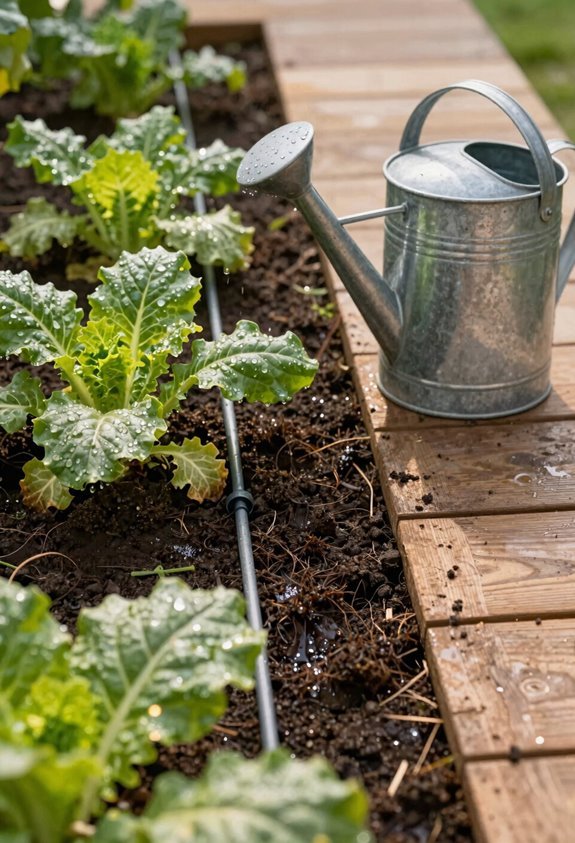
Because I want your plants to thrive, I’ve learned that one deep soak beats daily sprinkling every single time. I always water deeply, letting moisture penetrate several inches to encourage robust root systems that anchor plants through dry spells. Daily sprinkling creates shallow, weak roots that crave constant attention.
I perform moisture checks with a simple finger test or moisture meter, making sure I’ve reached the root zone rather than just dampening the surface. Early morning timing minimizes evaporation, making every drop count. For containers, I adjust my consistent watering schedule since drainage and evaporation accelerate dryness; I’ll water these more frequently, making sure excess flows from the bottom.
You’ll build resilient, self-sufficient plants when you embrace deep soaking as your foundation.
Spot Thirsty Plants Before They Wilt
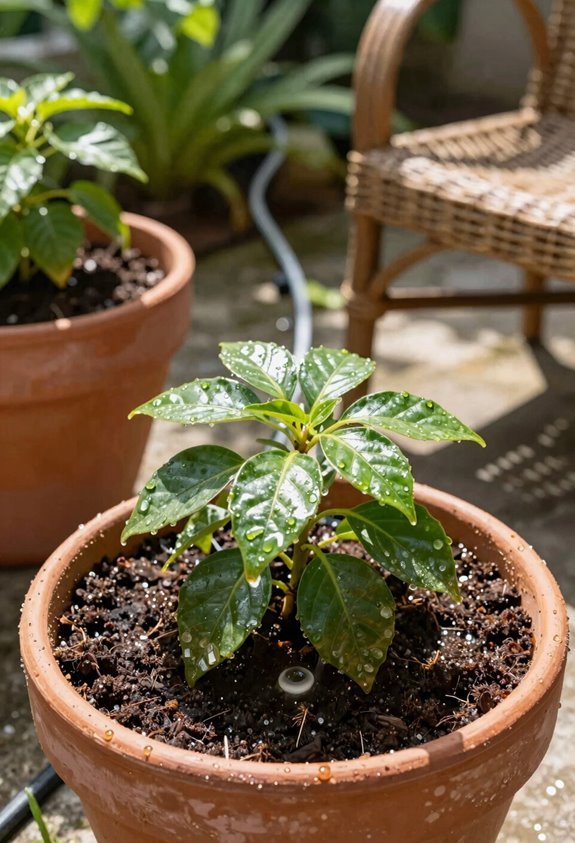
I look for visual warning signs like yellowing foliage or leaf droop before plants fully collapse, since many species won’t show distress until they’re critically stressed. When doubt creeps in, I rely on tactile soil checks, pushing a wooden skewer three inches down to gauge whether it emerges clean and dry or clinging with damp soil, to confirm what the surface hides. This pairing of observation and touch keeps my watering responsive rather than reactive, and it builds the diagnostic instincts every grower needs.
Visual Warning Signs
When exactly does your garden start whispering for help? I watch for visual signs before full wilting sets in, since some plants collapse only near death. Yellow leaves paired with dry soil signal genuine thirst, though yellowing alone demands checking soil moisture first, overwatering mimics underwatering. I schedule my irrigation for early morning, when roots absorb efficiently and evaporation stays minimal.
Watch for these subtle distress signals:
- Drooping stems that perk overnight
- Blossom drop or fewer flowers than expected
- Slow growth during peak season
Rapid wilting in hot sun differs from calm-day drooping, so I adjust frequency rather than drowning stressed plants. Recognizing these warnings keeps our gardens in good shape together.
Tactile Soil Checks
How do you know what’s happening beneath the surface before your plants broadcast distress? I rely on the finger test, a simple technique that reveals soil moisture where it matters most. I push my finger two inches into the root zone, feeling for that critical watering cue. Dry soil at depth means it’s time to hydrate; lingering dampness tells me to wait.
I’ve learned that drought stress doesn’t always announce itself through wilting, and some plants stay rigid until damage sets in. That’s why soil feel outperforms any calendar.
Yellow leaves with parched earth confirm thirst, while soggy conditions signal deeper trouble. By checking directly, I spot thirsty plants early, avoiding the guesswork that leads to overwatering or underwatering.
Check Container Plants Daily
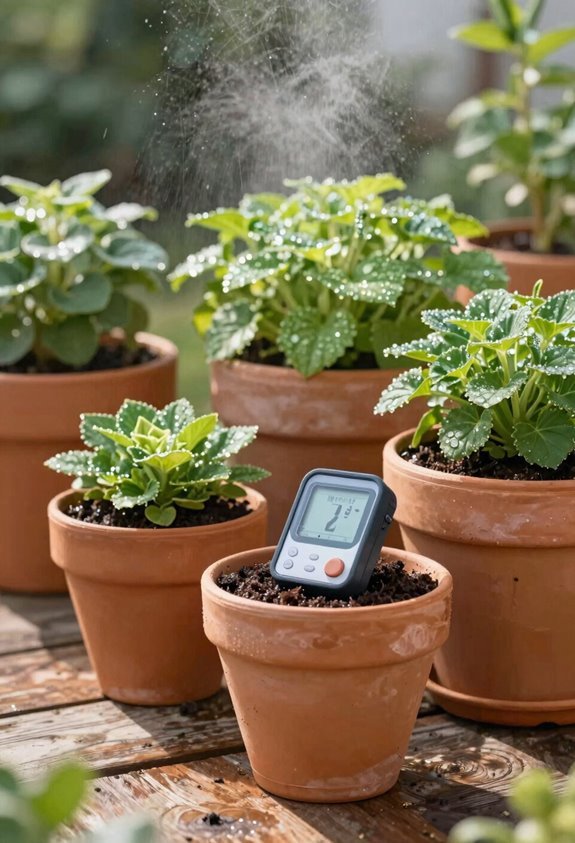
Container plants dry out remarkably fast compared to their in-ground counterparts, so I make daily checks a non-negotiable part of my summer watering routine.
I never skip the moisture test for my containers, because surface soil tells lies. Here’s how I assess true hydration needs:
- I lift the pot; lightweight means thirsty roots below
- I insert a wooden skewer 3–4 inches deep, checking for dry cling
- I water thoroughly until drainage streams from bottom holes, ensuring full saturation without guesswork
Limited soil volume accelerates evaporation in containers, leaving roots vulnerable by afternoon. That’s why I pair my daily checks with morning watering, minimizing loss to sun and heat. Together, we can keep our container plants healthy through the toughest summer stretches with consistent attention and proper technique.
Double Watering When Heat Hits 90°F
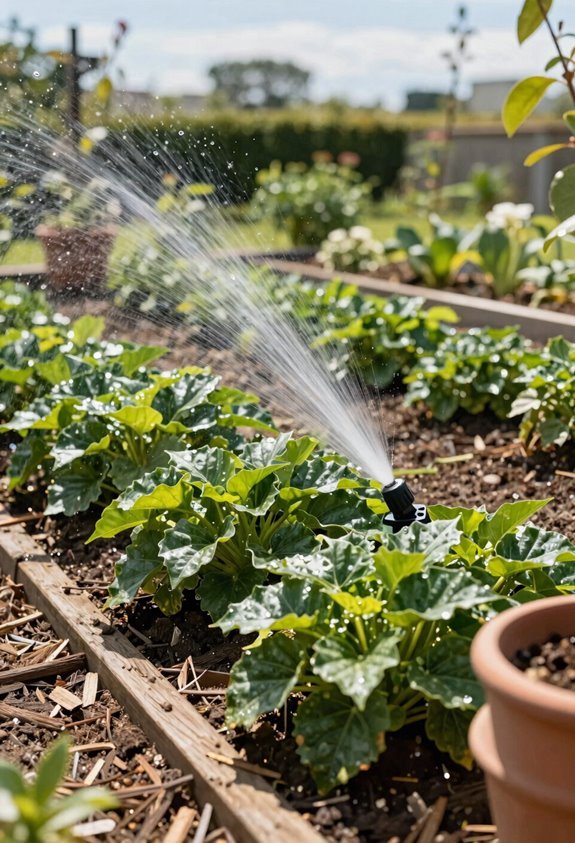
When temperatures climb past 90°F, I watch my plants closely for heat stress signs like wilting, leaf curling, or faded color. These signal they’re losing moisture faster than roots can absorb it.
I increase my watering frequency during these hot spells, pushing my weekly total toward two inches while keeping sessions deep and infrequent to encourage those drought-resistant root systems. This balanced approach protects my garden without creating the shallow, dependent roots that come from shallow, daily sprinkles.
Heat Stress Signs
Why should your garden suffer silently when the mercury climbs past ninety? I’ve learned that heat stress shows itself clearly when you know what to watch for. Wilting during peak afternoon sun often signals serious water stress beyond normal tolerance. When I spot these warning signs, I act fast with targeted deep watering directly at the root zone, where plants need it most.
I always water early to cut evaporation losses and let foliage dry before evening. During drought periods, I check soil moisture six to eight inches down; surface wetness fools many gardeners, but roots crave deep saturation. I confirm my efforts with a quick moisture check method after heat spikes pass.
Here’s what my observation routine includes:
- Morning leaf turgidity checks
- Midday wilting pattern assessment
- Evening recovery evaluation
Watering Frequency Increase
How do I protect my garden when the thermometer climbs past ninety? I bump my weekly watering up to roughly two inches, though I always adjust for rainfall and what my moisture test reveals. Daily sprinkles won’t cut it here; I’m after deep soaking that reaches the root zone, about six to eight inches down where it actually matters.
I check soil moisture with my finger or a simple meter, making sure that zone stays consistently damp without drowning anything. Early morning watering works best, letting me minimize evaporation while giving foliage time to dry. When I spot heat stress, wilting leaves despite adequate moisture, I deliver an extra deep soak immediately. This approach keeps my plants resilient, not just surviving but doing well through the swelter.
Water Trees, Vegetables, and Flowers by Their Roots
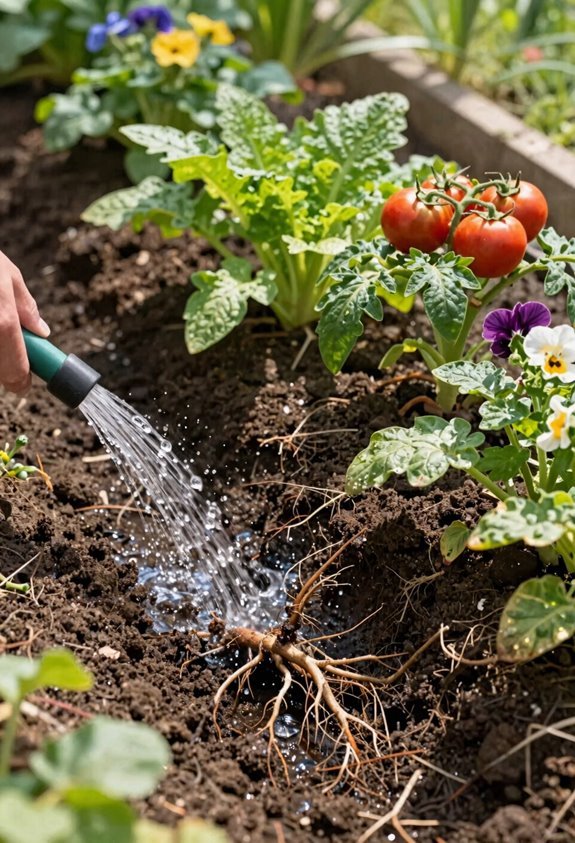
Where should you direct every drop when your plants need a drink? I always target the root zone, extending all the way to the drip line where feeder roots actively absorb moisture. Deep watering transforms shallow-rooted plants into resilient survivors, so I aim for about one inch weekly, rainfall integrated, adjusting upward during scorching spells.
Here’s how I make certain I’m doing it right:
- I soak until soil moisture reaches several inches deep, not just wetting the surface.
- I check moisture with my finger before adding more water.
- I water early morning or late afternoon, factoring shade and wind patterns.
For containers and fresh transplants, I lighten up, keeping root zones consistently moist without drowning them. This approach builds your confidence, and your plants will do well because you’ve supported them where it counts.
Mulch to Cut Watering in Half
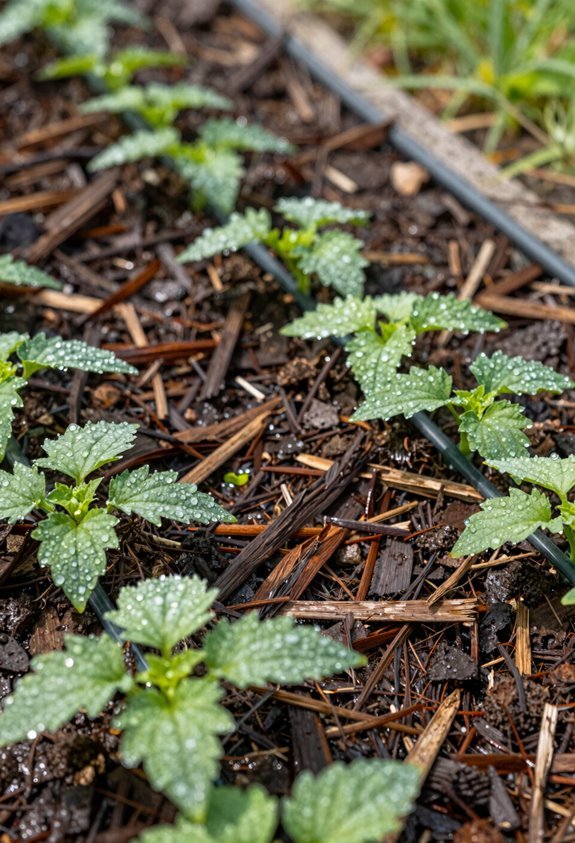
Now that I’ve covered targeting root zones for effective irrigation, I’ll show you how I’ve reduced my own watering schedule through one simple practice. I spread several inches of shredded bark mulch around my plants’ root zones, and I’ve cut my watering frequency nearly in half.
Mulch acts as a protective barrier that reduces evaporation from the soil surface. I’ve noticed my soil moisture stays consistent longer, even during hot spells. This means my plants’ roots access water steadily between irrigation events.
I apply mulch around my perennials and borders to stabilize moisture levels and suppress weeds. Over time, organic mulch improves soil texture and water-holding capacity. I’ve learned to adjust depth seasonally, since heavy layers can slow spring warming. This practice complements my watering routine well.
Soak New Plants Weekly for Their First Year
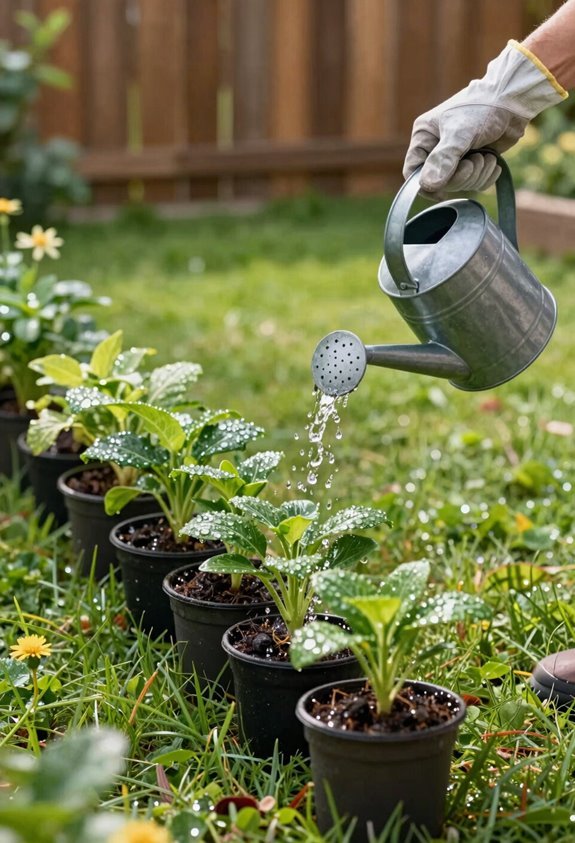
Establishing robust root systems requires me to abandon my standard irrigation schedule completely when I’m working with new transplants. New plants demand patience, and I’ve learned that a weekly soak beats daily sprinkles every time.
Here’s how I make my deep watering actually work:
- I dig 2, 3 inches down to check soil moisture before I’ve finished.
- I lift pots to feel weight, confirming water reached the root zone.
- I never skip the weekly soak, even when the surface looks damp.
That single deep watering session forces roots to chase moisture downward, building drought resilience you can’t buy. I adjust my weekly soak for heat waves or cool spells, but I never abandon it. This first year commitment turns tender transplants into established, self-sufficient garden members.