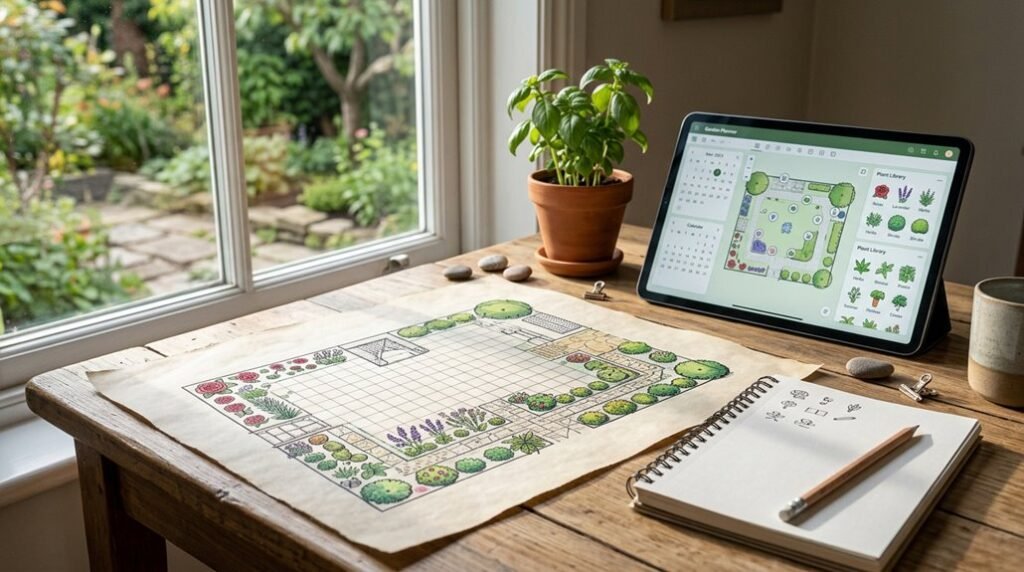
Nearly 70% of home gardeners now use digital tools to plan their plots, yet most haven’t discovered which platform actually matches their growing style. I’ve tested dozens of planners, and the difference between a generic grid and climate-integrated design software can change your harvest. Whether you’re mapping raised beds or tracking crop rotation, five standout tools are redefining how we cultivate space in 2026. Let me show you which one deserves your attention.
Garden Planner Buyer’s Guide: 5 Essential Features to Compare
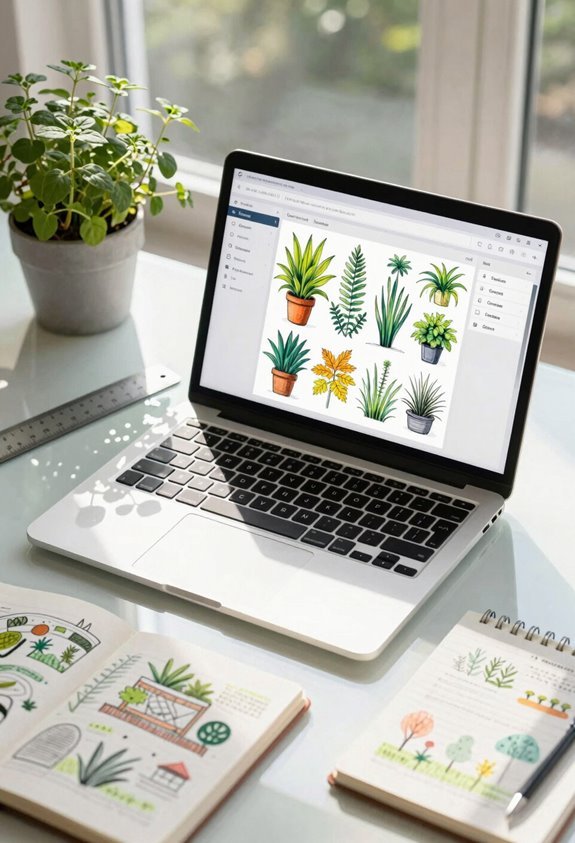
How do you choose a garden planner that actually fits your growing style? I always start with a free trial, like a 7-day Garden Planner trial, so I can test layout tools and planting dates before committing.
You’ll want drag-and-drop flexibility that handles rows, containers, raised beds, and Square Foot Gardening with equal ease. Climate adaptation matters enormously: look for local weather databases with 5000+ stations and personalized calendars for sowing, transplanting, and harvesting.
Robust plant libraries with 250+ vegetables, herbs, fruits, and flowers plus expert video guidance separate mediocre tools from exceptional ones. Finally, insist on a Garden Journal with progress tracking and localized pest alerts. These five features change planning from guesswork into confident, community-tested growing.
GrowVeg: Best Garden Planner for Raised Beds and Row Gardens
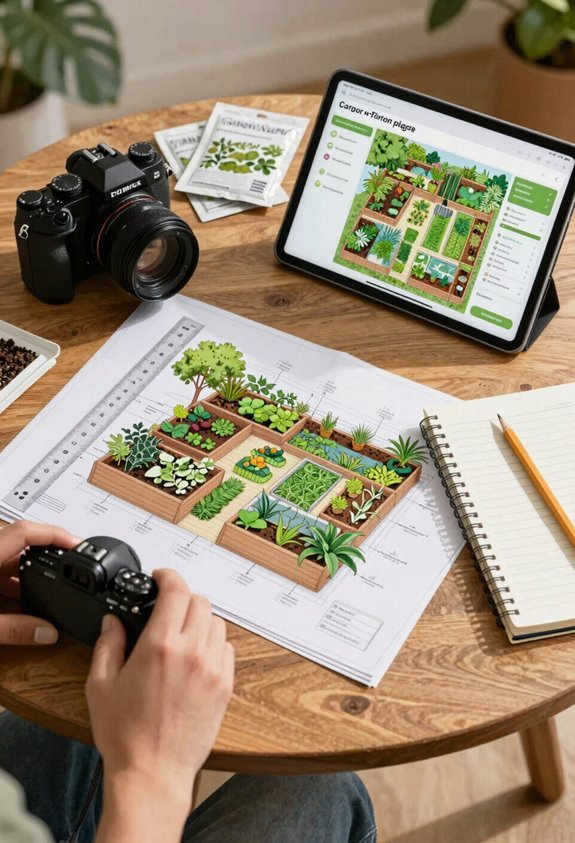
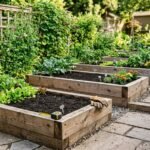
Why settle for a planner that forces your garden into a one-size-fits-all box? GrowVeg understands that raised beds deserve specialized attention, and this garden planner delivers exactly that flexibility. I appreciate how this online planner accommodates containers, square-foot layouts, and traditional rows without compromise.
The drag-and-drop interface lets me customize bed configurations while optimizing light exposure and water efficiency. Its data-driven planting schedule generates precise sowing, transplanting, and harvesting timelines based on each crop’s specific requirements. I receive timely notifications that keep my seasonal rhythm on track.
For gardeners serious about crop rotation, GrowVeg tracks plant counts and harvest expectations across growing seasons. The seven-day free trial lets you test these features before committing to an annual subscription. This tool respects diverse gardening approaches.
VegPlotter: Best Free Garden Planning Tool for Climate Scheduling
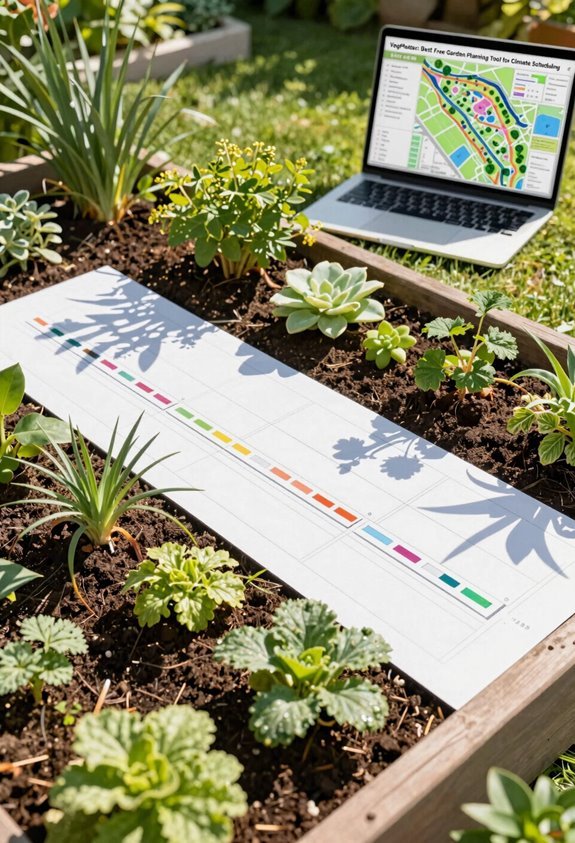
Where can gardeners find professional-grade planning without the price barrier? I’ve found it in VegPlotter, a standout tool that invites every grower into serious digital garden planning without upfront costs.
The free basic version delivers month-by-month climate scheduling that adapts to your specific conditions. I appreciate how it pulls from local weather stations to generate area-specific guidance, eliminating guesswork about frost dates and growing windows. The customizable planting calendar aligns sowing and harvesting with real seasonal rhythms. Companion planting suggestions help maximize space and yield.
Walkways, beds, and structures scale automatically to real-world measurements, keeping your virtual layout honest. For $30 yearly, advanced features activate, but the core experience builds confidence through precise, climate-aware design. VegPlotter proves serious gardeners belong here, regardless of budget.
Gardena My Garden: Best for Hand-Drawn Garden Designs
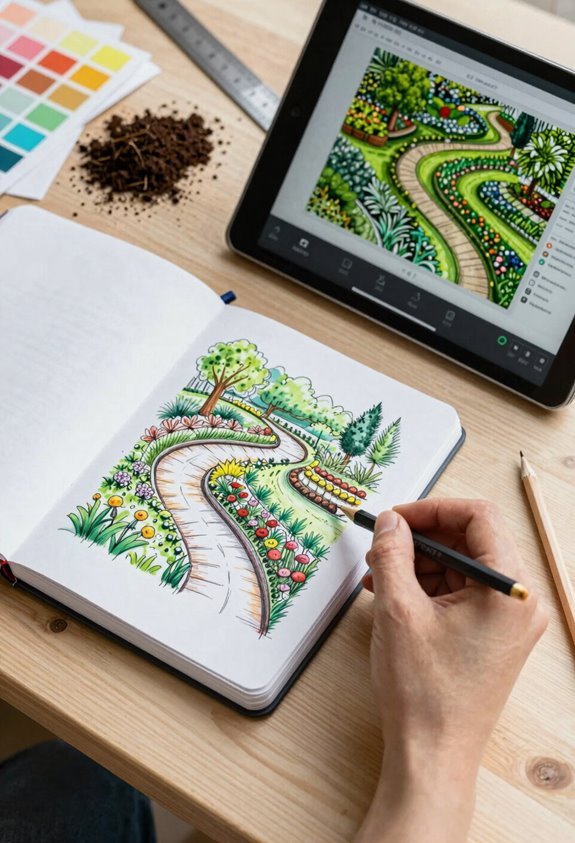
When precision feels too rigid for creative vision, I turn to Gardena My Garden Studio, a tool that bridges professional planning with artistic expression through its distinctive hand-drawn aesthetic. This garden planning platform changes technical layouts into welcoming sketches that feel personal, not mechanical.
I appreciate how Gardena My Garden Studio lets me drag-and-drop plants, features, and sprinkler systems while maintaining that organic, hand-drawn design quality. Whether I start from customizable templates or build from scratch, the flexibility suits my creative process. The expert example gardens give me confidence when I’m stuck, and I can refine any template to match my space.
Cross-device access means I plan at my desk or in the dirt. Once satisfied, I simply print or save plans for reference or sharing with fellow gardeners who understand this craft.
Planter: Best Mobile App for Small-Space and Container Gardens
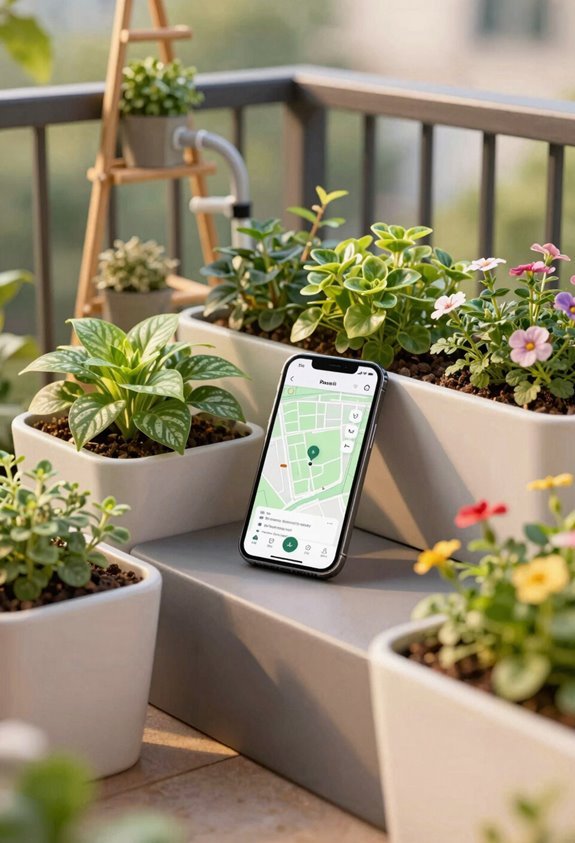
How often do balcony harvests or patio plots exceed expectations? With Planter, I transform cramped corners into productive food systems. This mobile app understands that small-space gardening demands precision, not compromise.
I open Planter and immediately start drag-and-drop planning on a responsive grid. The interface adapts raised beds, containers, and square-foot formats to my exact dimensions, automatically calculating optimal spacing for each crop. No more overcrowded tomatoes or stunted greens.
The planting schedules keep me on track with seed-start dates, transplant windows, and harvest predictions across seasons. I appreciate the compatibility warnings that prevent costly pairing mistakes, plus the auto-generated plans accounting for light exposure and water needs.
- Feel the satisfaction of harvesting vegetables you grew yourself, even on a fire escape
- Join thousands of urban growers who’ve discovered container gardens build community
- Experience confidence knowing your compact plot follows proven horticultural principles
Planter’s cross-device sync lets me plan anywhere, turning idle moments into productive growing strategies.