Some backyard dreams rest on shakier ground than we’d like to admit. I’ve seen too many pergolas surrender to the first strong wind because their anchoring method never matched their environment.
Whether you’re pouring concrete footings, threading bolts through existing decks, or securing to uneven terrain, the right approach keeps your structure standing for decades. I’ll walk you through four proven methods that balance engineering principles with real-world practicality, so you can build with confidence.
How to Choose Your Pergola Anchoring Method
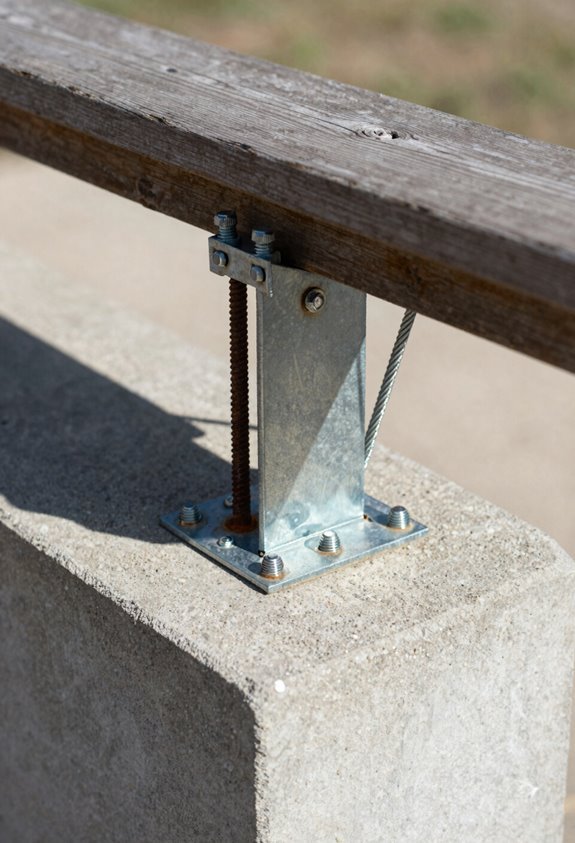
When I’m planning a pergola installation, I always start by asking what the ground beneath my feet will require. Your anchoring method depends on soil type, local codes, and environmental pressures you’re facing.
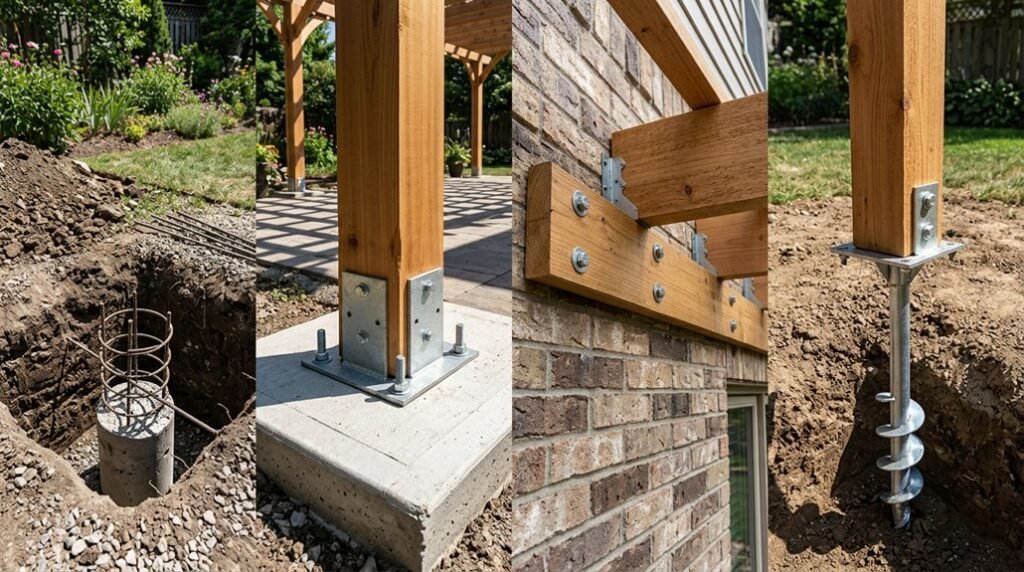
Concrete footings deliver permanent stability, particularly when I’m working with 4-inch anchor bolt holes and footing depths reaching 16–18 inches. In regions with severe winters, I extend below the frost line to prevent heaving.
Ground screws offer faster installation without excavation, especially on uneven terrain or compact spaces where traditional approaches fail.
I never ignore wind loads when selecting approaches, since uplift forces threaten every structure. Local codes ultimately govern my decisions, specifying minimum footing depths and anchoring specifications.
Your pergola’s longevity begins with matching foundation solutions to ground realities.
Anchor to Concrete Slabs and Footings
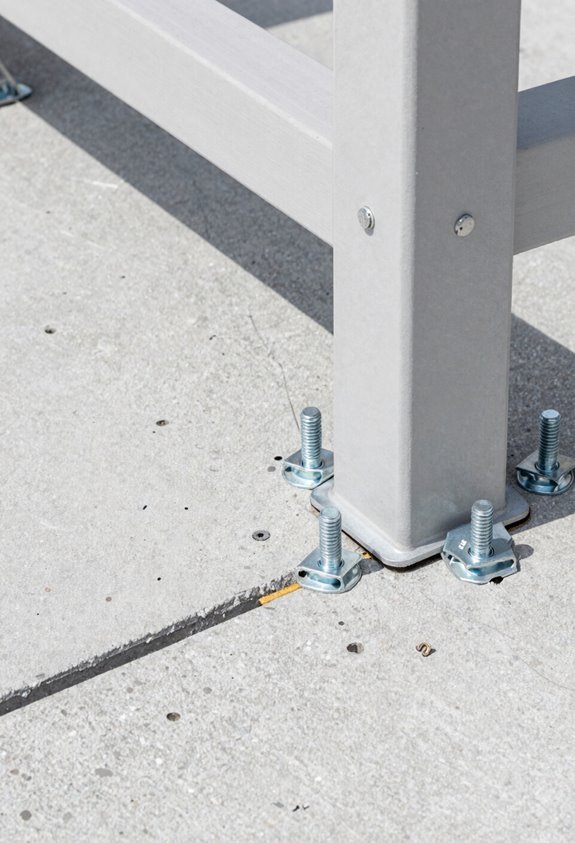
Concrete anchoring gives me the most reliable foundation for pergola posts, and I’ve found it works beautifully on both existing slabs and new footings poured specifically for the structure. When I’m working with a slab, I use high-quality wedge anchors directly into the concrete, making sure I have 4-inch bolt holes with 3 inches of edge clearance minimum. For post foundations on grass or bare soil, I install individual footings rather than pouring a full slab, though strip foundations work as alternatives.
Concrete anchoring delivers the most reliable foundation for pergola posts, whether you’re securing to an existing slab or pouring new footings.
Here’s my process for getting it right:
- Verify your frost depth locally, since footings commonly run 16–18 inches but cold climates demand 36+ inches
- Assess your soil type before anchoring, as shifting ground requires sturdier solutions
- Check code compliance with authorities regarding footing size and wind ratings
- Match your anchoring approach to conditions, choosing between slab or footing methods
Anchor to Wood Decks and Through Pavers
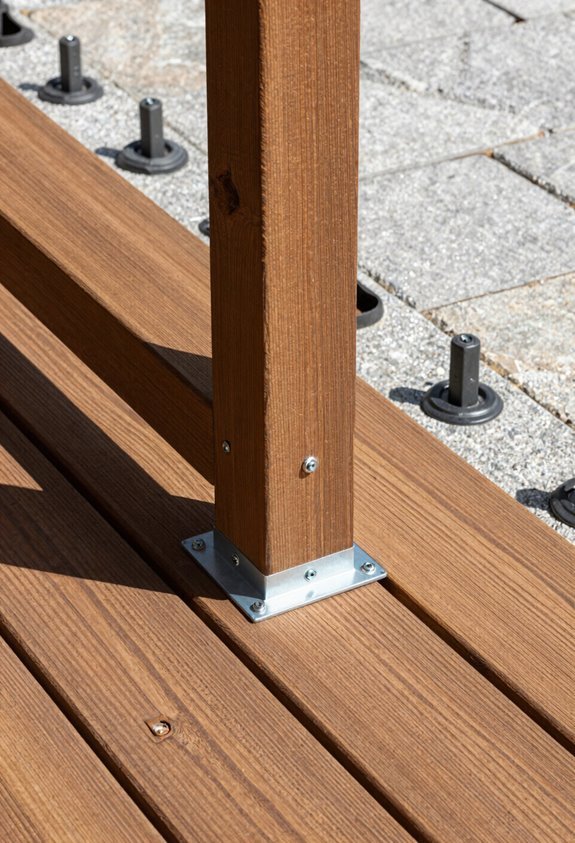
How do you secure a pergola when your outdoor space features a wooden deck or elegant paver patio? Let me walk you through anchoring to wood decks first. I always align pergola posts directly with joists, never surface boards alone. When joists alignment doesn’t match my layout, I add reinforcement blocking to distribute weight properly.
I drill pilot holes before driving hardware, preventing splits that weaken connections. Your deck must handle the full load, including furniture and guests.
For paver installation, I never trust floating surfaces for stability and wind resistance. Instead, I remove pavers temporarily, pour concrete footings beneath, then reinstall around anchored posts. This mirrors solid concrete methods, making certain your structure stays put. Your outdoor space deserves this level of care.
Anchor on Grass, Soil, and Sloped Ground
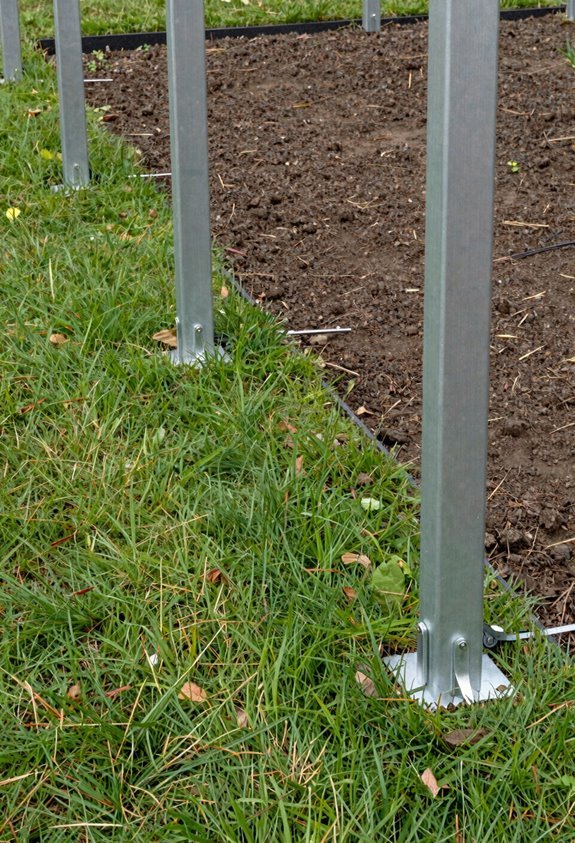
After tackling decks and pavers, I now turn to anchoring on grass, soil, and sloped ground where the earth itself becomes your foundation challenge. Grass lacks the firm foundation of concrete, so your anchoring strategy must compensate.
Here are four proven approaches:
- Concrete footings under each post provide the most stable foundation for permanent installations, especially on uneven terrain.
- Ground screws offer quick, dig-free installation on soft or sloped ground with adjustable stabilization.
- Weighted base plates suit seasonal pergolas needing non-permanent placement, though they sacrifice some wind resistance.
- Combined systems layer methods for maximum security where soil conditions vary.
Your pergola deserves to stand strong through every season. Proper anchoring on natural ground helps it remain a durable outdoor structure for years to come.