I’ve spent fifteen years translating muddy backyards into living blueprints, and I’ll tell you straight: garden design isn’t about knowing your peonies from your petunias. It’s about reading topography like a story, negotiating drainage grades with contractors, and convincing clients that “low maintenance” doesn’t mean plastic grass.
The path here isn’t linear, and the skills you’ll need might surprise you. Let me walk you through what actually matters.
What Garden Designers Actually Do (It’s Not Gardening)
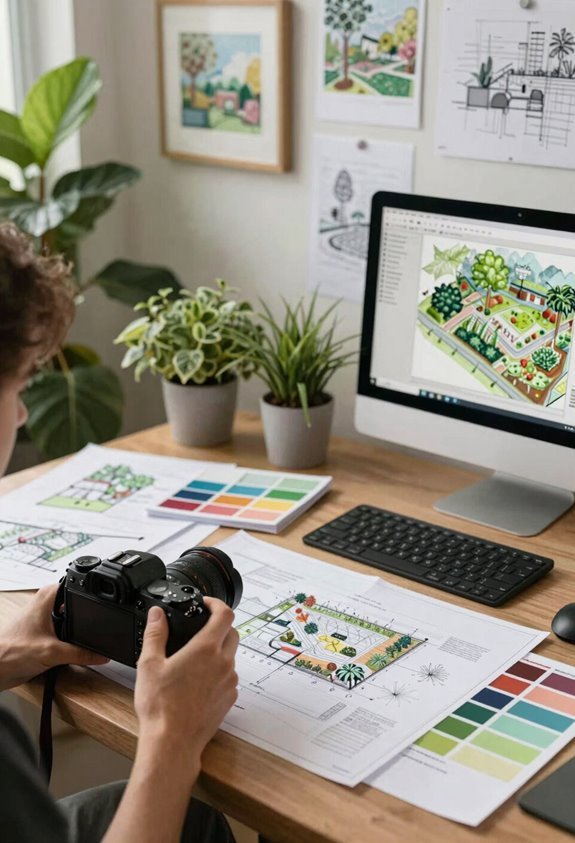
Why do so many people assume I spend my days with my hands in the soil? I’m not gardening; I’m shaping environments through landscape design. My work begins with client consultation, where I listen deeply to understand how you want to live outdoors. Then comes site analysis, measuring light, drainage, and wind patterns that determine everything else.
The design process transforms observations into technical drawings and planting schemes, blending botany and horticulture knowledge with hard landscaping decisions like pathways and walls. I create construction documentation that builders follow precisely. Project management keeps timelines and budgets aligned across trades. Every drawing I produce bridges imagination and reality, helping spaces succeed for years. You’re joining a profession where creativity meets technical rigor, and that’s where I find my purpose.
Garden Designer Salary: Freelance, Employed, and Starting Out
How much can you realistically expect to earn when you’re shaping outdoor spaces for a living? Let me break down the garden designer salary landscape so you know where you stand.
When you’re starting out in the UK, you can expect earnings around £18,000, though this climbs steadily as your portfolio develops. If you become employed at established design firms, senior designers and project managers typically pull in £45,000–£65,000 annually.
Career progression in UK garden design takes you from £18,000 entry-level to £45,000–£65,000 at senior level.
The freelance route offers solid income potential too, with experienced practitioners earning £35,000–£50,000+, and top specialists exceeding that on high-profile landscape design commissions. Location matters: London positions generally pay more reflecting living costs and demand.
Whether you pursue garden design through employment or independent practice, your financial growth aligns with expertise, reputation, and the complexity of projects you undertake.
Become a Garden Designer: Courses, Self-Teaching, or Both
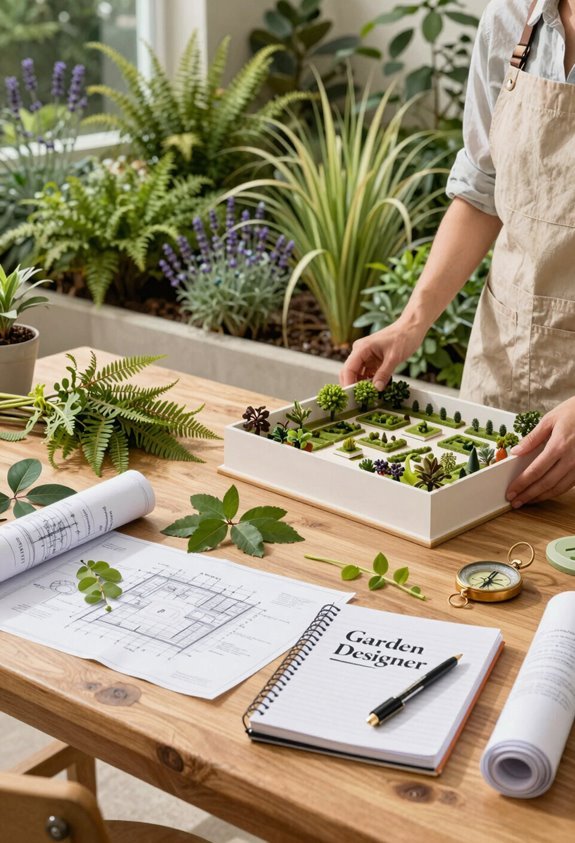
Where exactly should you begin when mapping your route into garden design? I’ve found that becoming a garden designer offers multiple entry points, each with distinct advantages for your career path.
| Path | Best For |
|---|---|
| Formal courses | Structured horticultural knowledge and credentials |
| Self-teaching | Flexible, budget-conscious skill building |
| Combined approach | Balanced design principles and practical experience |
I recommend blending an online course in landscape design with hands-on practice. You’ll absorb essential design principles while building a portfolio through real projects. Formal certificates from institutions like Longwood Gardens validate your expertise, and self-teaching through books and community projects develops practical experience that clients value. This hybrid strategy positions you among fellow professionals who’ve forged their own way.
Build These Skills: CAD, Drainage, and Client Management

When you shift from student to practitioner, three core competencies will define your effectiveness: technical drafting, hydrological planning, and client stewardship.
The transition from student to practitioner demands three non-negotiable competencies: technical drafting, hydrological planning, and client stewardship.
I learned that CAD and technical drawing aren’t optional in garden design; they’re your bridge between vision and reality. I build site plans that handle drainage precisely, because water management failures destroy landscapes, and reputations.
My client management depends on translating concepts into construction packs that builders actually use. I balance digital precision with hand sketches during consultations, since communication wins trust before contracts.
Collaboration defines my daily work. I share CAD files with carpenters and lighting designers, refining landscape design through ongoing dialogue. These technical skills, combined with real stewardship, create spaces where craft and connection grow together.
Create Your First Portfolio: No Clients Required
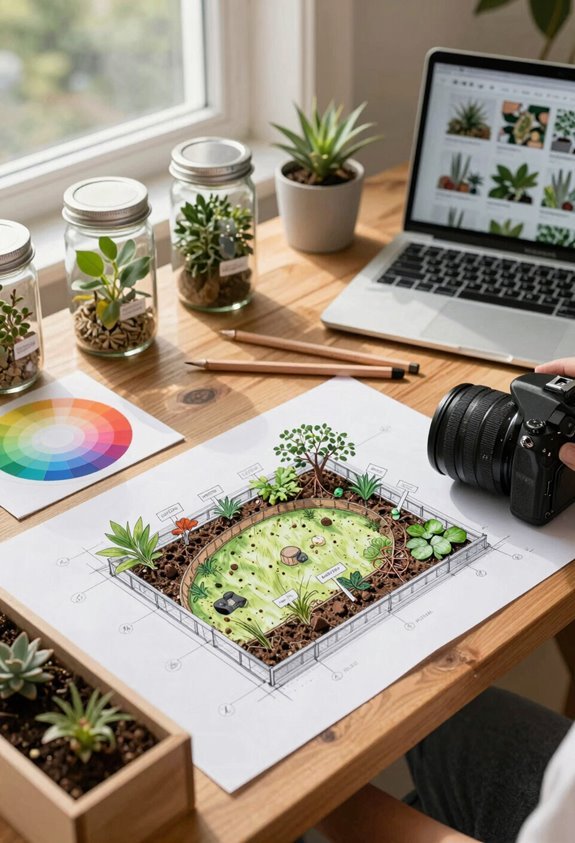
Although I hadn’t landed a single paying commission, I started building my portfolio the moment I could hold a tape measure and sketch a concept. I treated every early project for family and friends as professional practice, completing site surveys, client consultations, and full design process documentation.
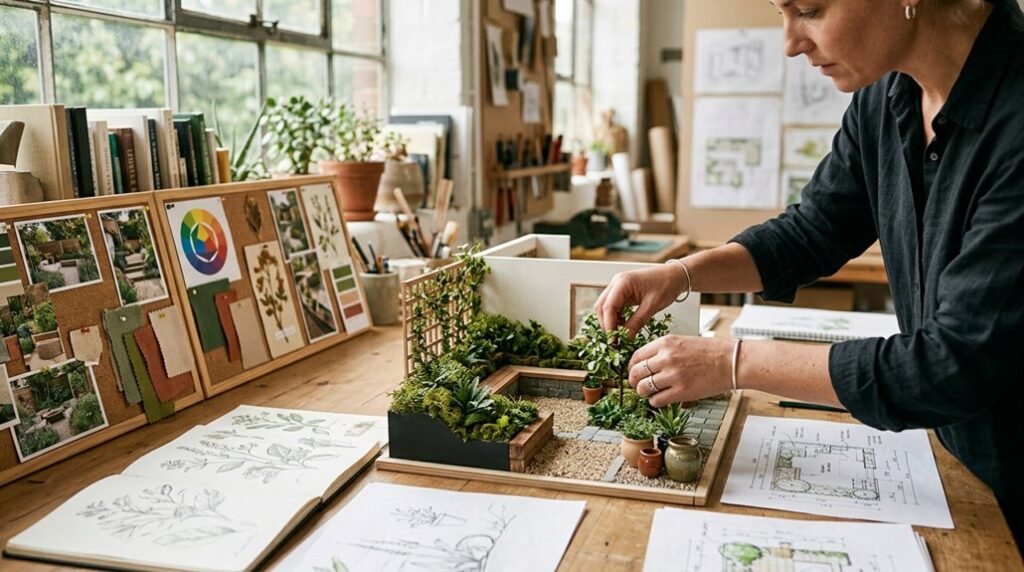
My portfolio grew through concept sketches and mood boards that captured spatial ideas before any spade hit soil. I balanced hand-drawn perspectives with CAD drawings, proving I could communicate across mediums. Each entry showed milestones: brief, revisions, final plans.
This mix demonstrated growth and readiness for real contracts. You don’t need paying clients to prove your capability; you need structured evidence of how you think, solve problems, and deliver complete visions that contractors can build from.