I used to waste space with long, messy rows. I wasted time with scattered plantings. I wasted energy on beds that looked productive but barely yielded.
Then I discovered that strategic layout design turns every square foot of a raised bed into productive growing area, and I’m going to show you five proven techniques that’ll change how you think about your garden’s potential.
Start With Blocks, Not Rows: Rethink Your Raised Garden Layout
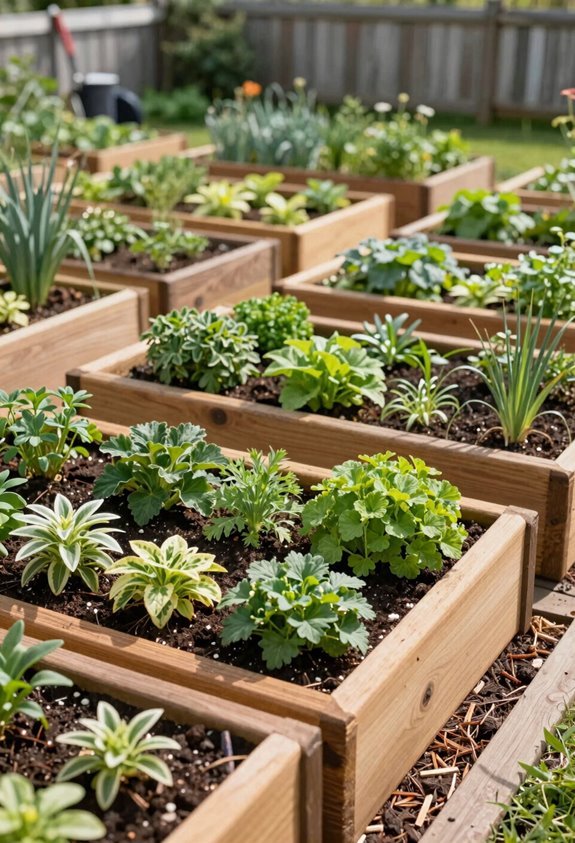
How often have you stared at your garden plot, wondering why so much precious soil sits empty between neat rows of vegetables? I’ve embraced block planting in my raised beds, and it changed my approach to space efficiency.
Block planting maximizes ground coverage through dense spacing, letting me grow more beets, carrots, and leafy greens in the same footprint. I group compatible crops together, creating a compact garden design that feels both abundant and organized.
Dense spacing turns the same soil into more food—beets, carrots, greens thriving together in organized abundance.
My perennials block sits apart from annual rotations, simplifying maintenance while protecting long-term plantings. Some crops still need single rows, but they’re exceptions, not rules.
Container options extend my kitchen garden layout onto the deck. Vertical gardening also integrates naturally with block arrangements. Together, we’ve built something that works.
Grow Up: Add Trellises to Double Your Growing Space
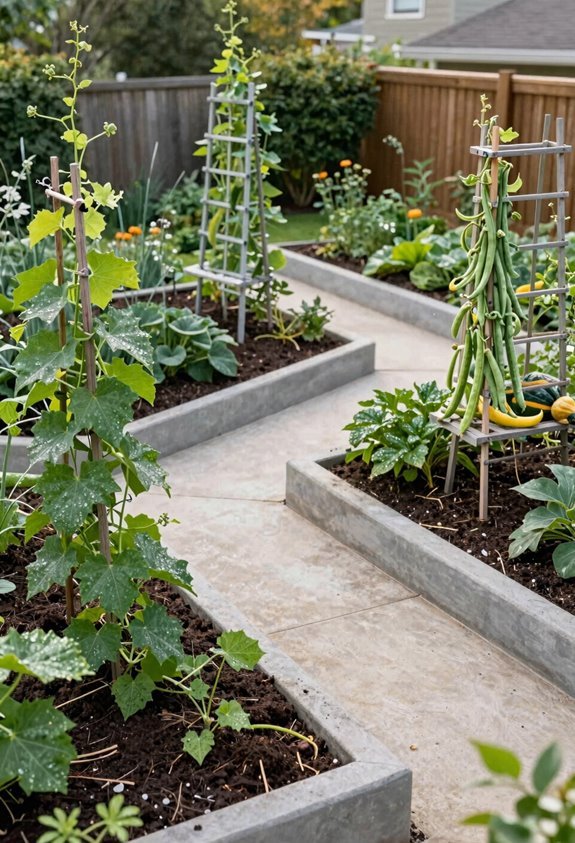
Why let your garden sprawl when you could build upward instead? I’m a firm believer that vertical growing transforms any space-saving garden into something far more productive. By installing trellises, you’ll maximize growing space without expanding your footprint.
I use back-of-bed trellises to direct climbing crops skyward, freeing precious soil for additional plantings. My cucumbers climb sturdy A-frames, with leafy greens tucked beneath. Pole beans and runner beans eagerly scale obelisks placed along bed edges.
For real impact, I connect paired beds with arch trellises, creating an inviting entry while supporting vigorous vine growth. Smart up-growing demands attention to sun exposure and harvest access. I position tall supports where they won’t shade shorter crops, and I make sure I can reach every bean. Combine these strategies with block planting, and you’ve doubled your yield potential.
Interplant Quick and Slow Crops in the Same Bed
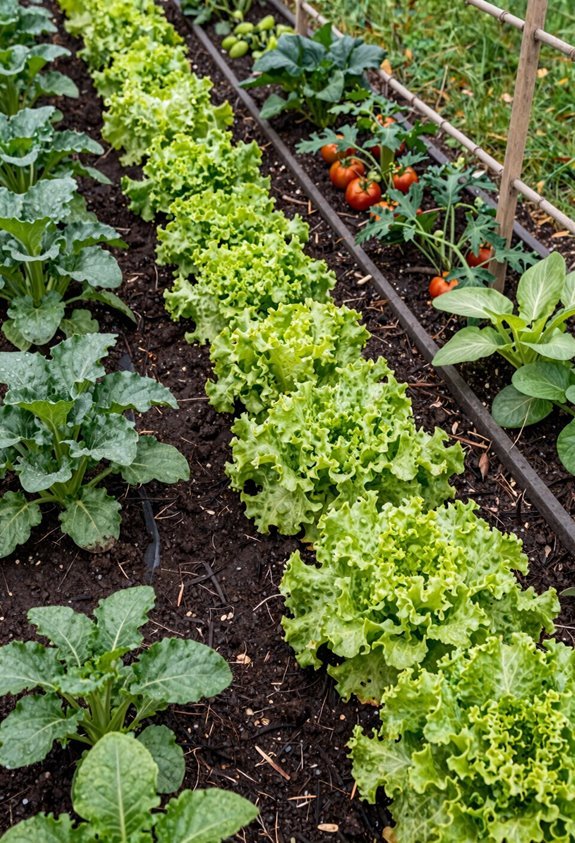
Where should you look for hidden growing space? Right inside your existing raised bed, where interplanting transforms single-crop thinking into dynamic, space maximizing ecosystems. I’ve learned that pairing fast-growing crops with slow-growing crops creates natural succession planning without expanding your footprint.
Here’s how I structure this approach:
- Seed radishes alongside carrots; harvest timing removes radishes early, loosening soil for developing carrot roots
- Apply companion planting principles by pairing garlic with brassicas or bush beans with squash
- Leverage strategic shading, positioning early crops where later growth shelters them from summer heat
- Practice crop rotation between seasons, replacing finished cool-season plants with heat-loving varieties
This bed layout keeps production continuous from spring through summer. You’ll harvest more while working less, and that’s the garden we all want to belong to.
Pick Compact Varieties Built for Tight Raised Beds
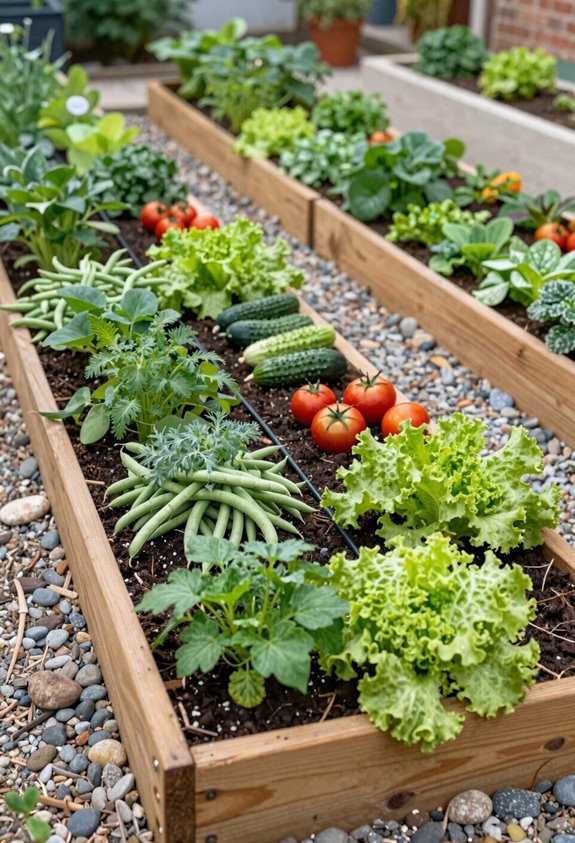
Every square inch of your raised bed holds potential, and I’ve learned that selecting compact varieties opens it up completely. I choose bush beans, short-stature tomatoes, and compact peppers because they’re bred for tight raised beds, fitting neatly within standard 4×4 or 4×8 bed footprints without sprawling chaos.
I maximize space efficiency through dense planting, spacing closer than traditional rows since raised beds allow intensive cultivation that boosts yield per square foot. Vertical trellising along back edges frees ground space for cucumbers and pole beans while maintaining airflow.
I prioritize early-maturing cultivars, which shorten harvest windows and keep my calendar flexible. Companion planting complements this strategy perfectly; I’ll tuck basil beside tomatoes and marigolds at corners, reducing pests while every layer works together. You belong among growers who refuse to waste soil.
Keep Beds Full With Season-Long Succession Sowing
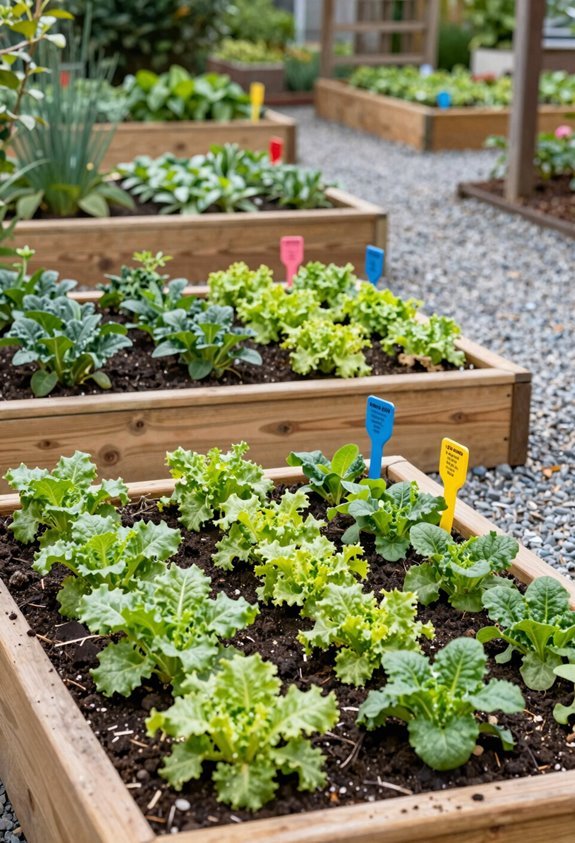
How do I keep my raised beds from sitting empty halfway through summer? I use succession sowing to maintain space utilization throughout the growing season.
My bed layout strategy involves four key practices:
- Replace harvested cool-season crops with heat-loving crops as temperatures rise, preventing bare soil from wasting precious growing area.
- Replant garlic and pea beds immediately with July-ready beans, kale, or carrots to maximize every square foot.
- Position early plantings to enable crop shading, extending cool-season crops beyond their typical window.
- Alternate quick-maturing radishes with slower carrots and beets for staggered succession and multiple harvest windows.
This planting schedule delivers continuous harvest through thoughtful crop shading and strategic timing. We’re maximizing productivity together, transforming seasonal transitions into opportunities rather than gaps.