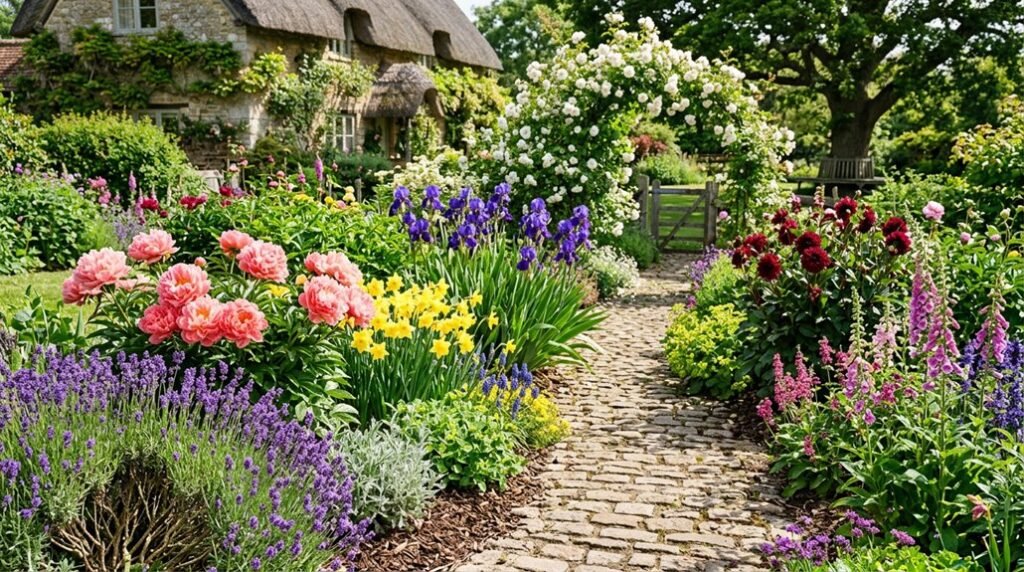
I’ve learned that the most striking flower gardens rely on intentional structure rather than crowded variety. Through years of refining my own beds, I’ve discovered seven layout principles that reliably turn chaotic planting into cohesive, season-long displays. These aren’t rigid rules but practical frameworks I return to each spring, and they’ve saved me from costly replanting mistakes more times than I count.
You’ll want to see how the first principle alone, working in bold blocks of color, can resolve the visual clutter most beginners face.
Flower Garden Layout Basics: Start With Blocks, Not Singles
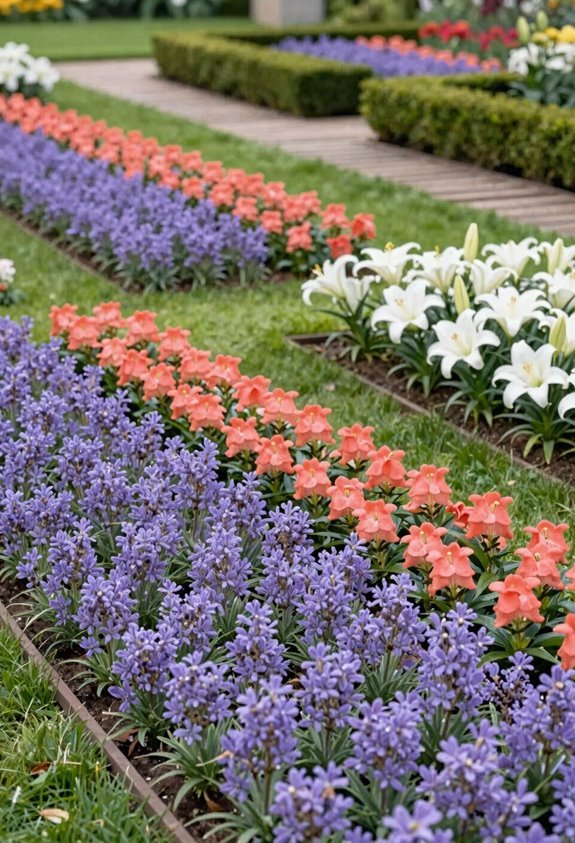
Several years into my own garden practice, I’ve learned that a few well-placed blocks of color outperform dozens of lonely singles every single time. I design my beds using block patterns that group similar plants together, creating rhythm and visual flow across the space.
You’ll want to arrange your drifts in odd numbers, think threes, fives, or sevens, to build natural cohesion without rigid formality. I’ve found that limiting my palette to high-performing perennials prevents the chaotic look of constant additions. Instead of buying new species, I divide established plants to expand my drifts organically.
Before adding anything, I edit ruthlessly: I remove underperformers, refine my palette, and establish a coherent foundation. This disciplined approach changes scattered efforts into gardens that feel intentional, harmonious, and welcoming.
Build Around Proven Winners: Choose Plants That Perform
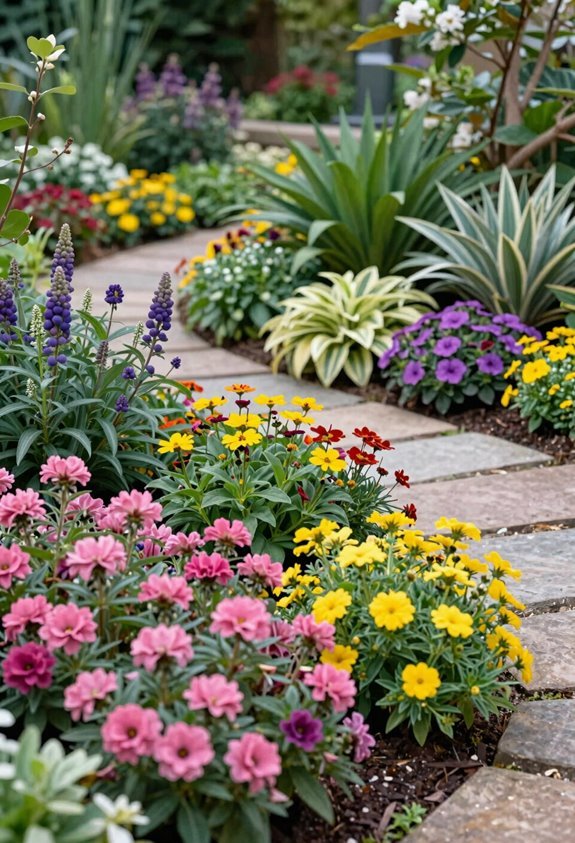
I always start my beds by selecting reliable performers, plants that’ve proven themselves in my local conditions with strong bloom, color, and pest resistance. Once I’ve identified these workhorses, I limit my variety and build the entire scheme around them, using multiples of each to create cohesive drifts rather than chaotic one-offs.
This approach keeps maintenance manageable while delivering maximum visual impact through repetition and massing.
Select Reliable Performers
Why gamble with temperamental specimens when you can anchor your garden with plants that practically guarantee success? I always start my layouts with native plants because they’ve already adapted to local conditions, which means less watering and fewer headaches for you and me.
Picture drifts of purple coneflower swaying alongside black-eyed Susans, their golden faces nodding in approval. Imagine robust swaths of salvia humming with pollinators from dawn to dusk. See established perennials returning reliably each spring, their root systems deepening like old friendships.
I prioritize perennials with extended bloom periods, then divide mature clumps to fill gaps without spending extra. You’ll find yourself reinforcing proven performers rather than chasing every new introduction, building a garden that feels like home.
Limit Plant Variety
How many times have you walked through a garden that felt chaotic, your eye jumping from one unfamiliar plant to another without rest? I’ve learned that setting a plant variety limit changes perennial beds from stressful confusion into spaces where we actually feel at peace.
I anchor my beds with proven building blocks, then resist adding new varieties unless they’re already established somewhere in my garden. When I do buy, I purchase in groups of three or more, creating intentional drifts that read as belonging rather than afterthought. Russian Sage anchors my designs beautifully, pairing reliably with fellow perennials.
I divide established plants regularly, expanding fuller drifts without introducing strangers.
| Approach | Result |
|---|---|
| Anchor with core plants | Cohesive, restful structure |
| Buy in multiples of three | Intentional, unified drifts |
| Divide existing perennials | Fuller beds, zero new varieties |
Layer for Depth: Height, Light, and Visual Rhythm
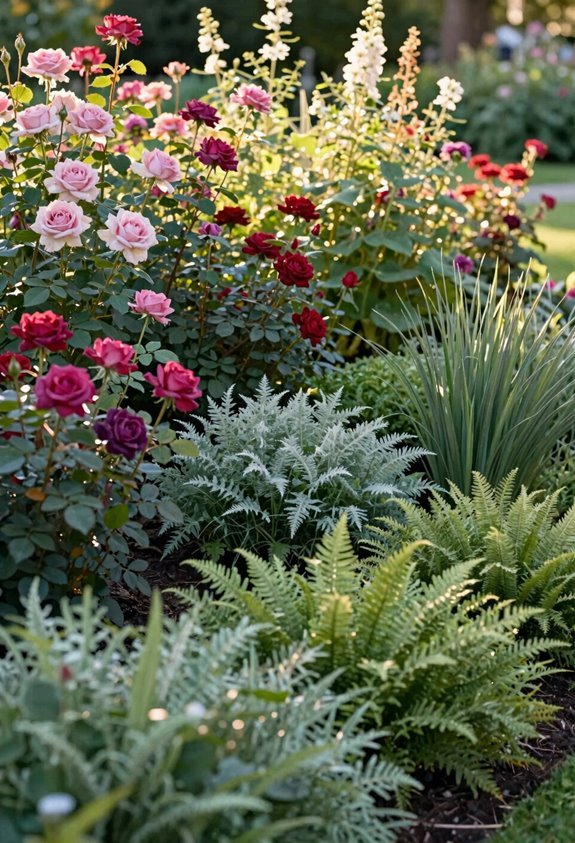
I layer my plantings from back to front, placing tall structural varieties rearward, mid-height performers centrally, and spreading ground covers forward to build recessed depth. Height contrast isn’t just about measurement; it’s a strategic tool that guides the viewer’s eye through intentional elevation changes across the bed.
I repeat these graduated groupings at measured intervals to establish visual rhythm, letting repetition create predictable flow without monotony.
Back-to-Front Layering
Where might your eye travel first when you step into a garden that truly captivates you? I use back-to-front layering to guide your gaze intentionally, placing tall varieties at the rear, mid-height specimens centrally, and ground cover up front. This builds a full appearance with strong color progression that welcomes you deeper into the space.
Tall anchor plants frame the backdrop, creating a living wall that envelops the border. Mid-height bloomers bridge the transition, ensuring no gaps interrupt your view. Trailing ground cover softens edges, completing the tapestry with unified flow.
I amplify visual impact by weaving contrasting shades within one color family across each tier. I also balance foliage forms; fine, mid, broad; while matching bloom times so taller companions never steal light from smaller ones. Start with core structural plants, then layer subordinate species to fill gaps and solidify cohesion.
Height Contrast Strategy
Why settle for flat, uninspired borders when you can orchestrate a living composition that pulses with dimensional energy? I layer perennial plants methodically, positioning tall specimens at the rear, mid-height in the middle, and groundcovers forward to claim every inch of vertical space.
You control the eye’s journey by alternating height combinations along the bed, creating movement that draws visitors inward. I pair contrasting light and dark foliage within matching tiers, so dimensional intrigue never disrupts your skyline steps. Color shifts reinforce this depth: lighter blooms ascend on taller stalks while darker anchors settle below.
Combine varied leaf shapes and densities at each level, and you’ll build richness that welcomes everyone into a cohesive, professionally crafted retreat. Together, we’ll reshape your outdoor space into somewhere you truly belong.
Rhythm Through Repetition
Visual rhythm emerges when you deliberately echo plant heights, colors, and textures throughout your borders, changing isolated specimens into a unified composition that guides the eye naturally. I layer my flower beds back-to-front, placing tall varieties behind mid-height specimens and ground covers at the front edge, creating depth that welcomes you in. I repeat plant heights in drifts of 3, 5, or 7, establishing a pulse that feels both intentional and alive.
Deep purples drifting into lighter lavenders within the same bed provides one example of this technique. Fine, coarse, and mid-sized foliage textures stacked across height levels offers another. I also place multiple species per layer, balancing them for staggered bloom times.
This approach helps your garden sustain visual rhythm season after season, even when individual flowers rest between shows.
Space Strategically: Room to Grow vs. Dense Impact
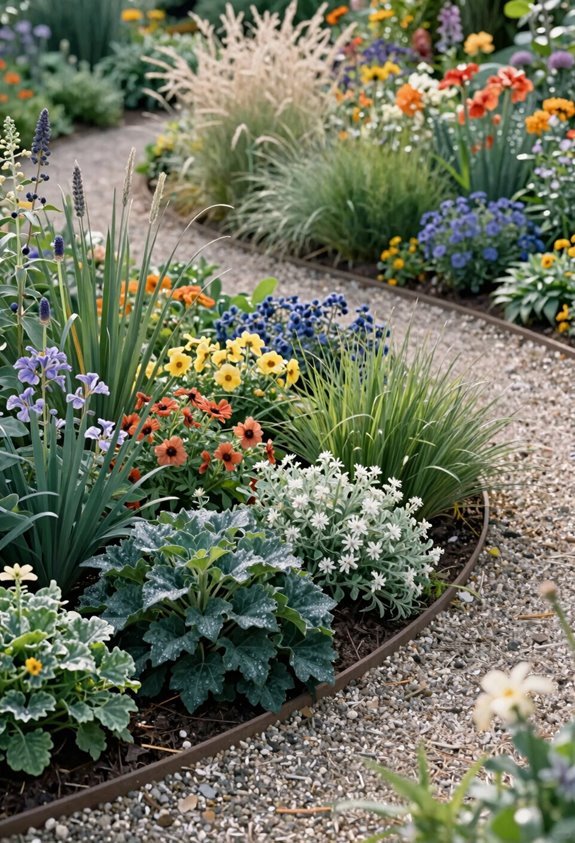
How do you balance the urge to fill every inch with color against your plants’ need to breathe? I’ve found that layered plantings offer the perfect compromise. I place tall specimens at the rear, establish mid-height rhythms through the middle, and tuck ground covers along the edges. This creates breathing room while delivering visual satisfaction.
When I’m after dense impact, I cluster plants in drifts of three, five, seven, or nine. Odd numbers create cohesion that solitary specimens simply cannot achieve. I define beds with clean edging for structure, or I let careful spacing and natural transitions soften the boundaries when space feels precious.
I align taller plants along fences and walls, pairing them with shorter companions below. This vertical strategy maximizes interest without sacrificing your usable ground.
Finally, I select high-performance, long-blooming natives. These durable performers deliver sustained fullness, reducing both maintenance and the temptation to overplant.
Plan Your Bloom Timeline: Keep Color Coming All Season
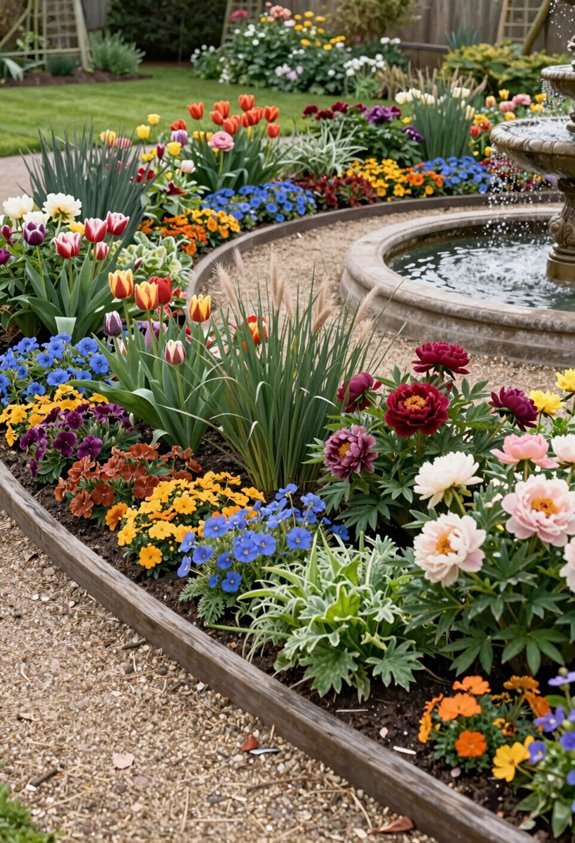
Once I’ve mapped out the physical structure of layered heights and rhythmic spacing, I turn my attention to the fourth dimension: time. I build my bloom timeline by selecting plants with staggered flowering periods, making sure color persists from early spring through fall. I track bloom times and color gaps using photos and notes across seasons, identifying missing intervals and adjusting my plant choices accordingly.
Early spring tulips and crocuses give way to midsummer perennials, then late-season asters and sedums finish strong. I visit local botanical gardens to observe which varieties do well in my climate, replicating successful color sequences in cohesive blocks. I establish a core palette of long-blooming performers, dividing established perennials to multiply bloom sources within unified color groups.
I schedule seasonal edits, removing underperformers and filling gaps with divided or multipotted plants only after my foundation feels complete.
Let Plants Self-Spread: Natural Fillers That Multiply
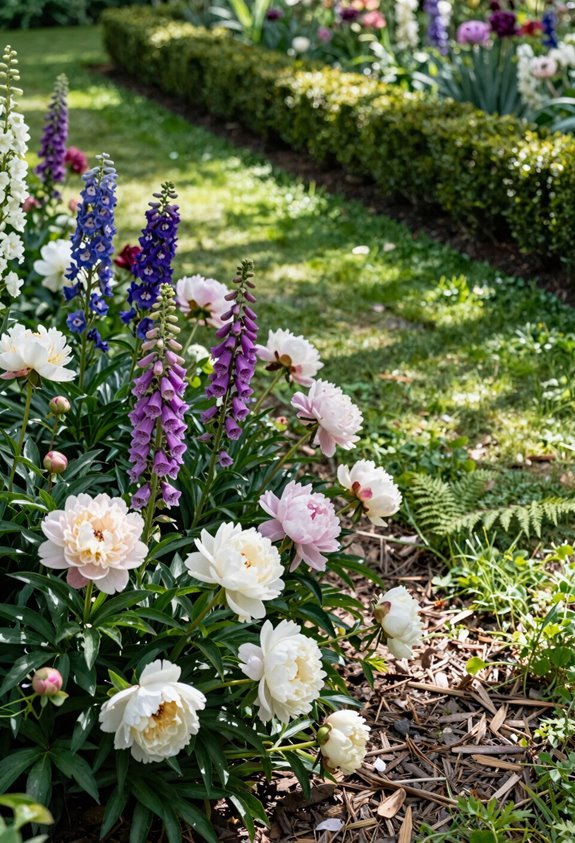
Why fight every volunteer seedling when self-spreaders can do the soil-to-spade work for you? I let self-seed varieties fill my borders naturally, creating that spontaneous, meadow-like beauty we all crave in our outdoor spaces. You’ll find less maintenance and more delightful variation in height, texture, and bloom timing when you embrace this approach.
I always prioritize native species, since they support our local pollinators and adapt without demanding extra irrigation or fertilizer. Their reliable self-propagation means you’re not constantly replanting.
Consider this layering strategy for natural rhythm:
| Layer | Function | Example Choices |
|---|---|---|
| Tall anchor | Structure and movement | Native grasses, self-seeding coneflowers |
| Mid fill | Color bridges and pollinator support | Coreopsis, black-eyed Susan varieties |
| Ground carpet | Soil coverage and base texture | Creeping thyme, low sedums |
Let your garden drift slightly beyond edges. That relaxed aesthetic builds true belonging with your landscape, enhancing biodiversity and year-to-year coverage without fuss.
Tweak as You Grow: Seasonal Adjustments That Work
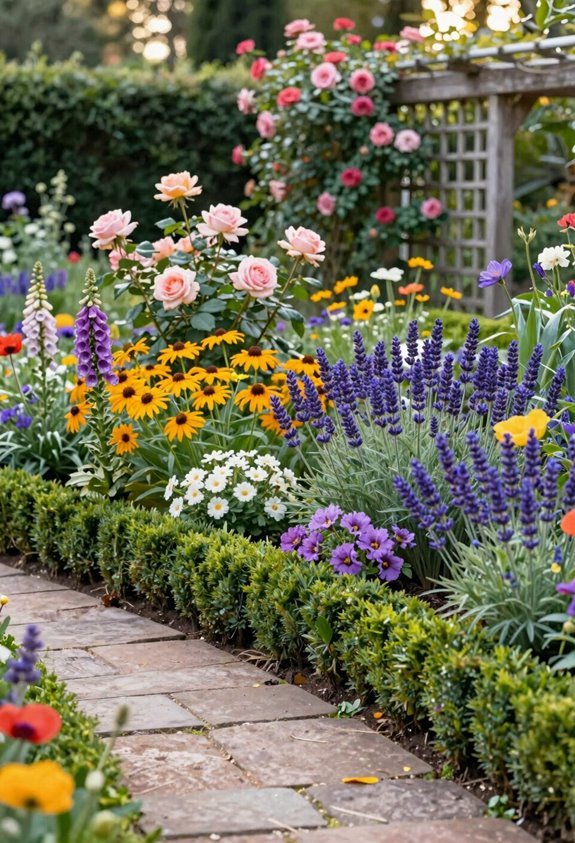
Self-spreaders give you a living foundation, but even the best meadow-inspired borders need intentional shaping as seasons unfold. I rely on seasonal adjustments to keep my garden cohesive, not chaotic.
Snap photos through the months to track bloom times, then edit out gaps before they glare. Divide Russian Sage and other repeat performers in spring to create rhythmic drifts of three, five, or seven. Remove underperformers promptly, replacing them with long-blooming perennials that bridge color shifts.
I visit local gardens each season, borrowing successful pairings and translating them into my own calendar. I add new varieties only in multiples, anchoring each block with building-block plants I trust. This rhythm of observe, divide, and refine keeps the work manageable and the results intentional.