
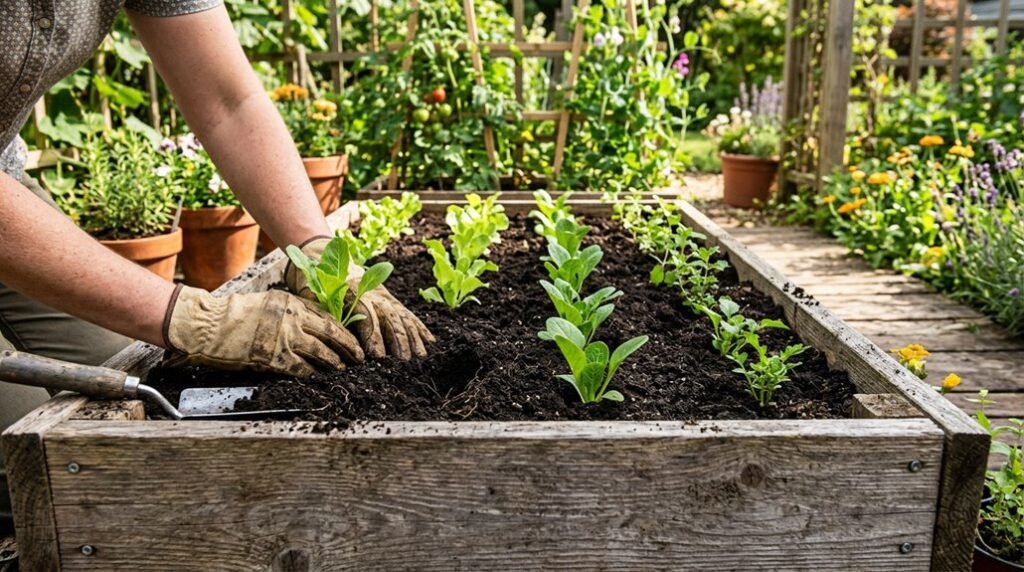
Like the wise man who built his house upon the rock, I’ve learned that choosing where to plant depends entirely on what’s beneath your boots. When your native soil runs deep and drains well, you don’t need timber walls to grow magnificent tomatoes.
But shallow clay or compacted subsoil demands elevation. I’ll show you how to test your dirt before you spend a dime on cedar planks.
When Raised Beds Are Worth the Investment: and When They’re Not
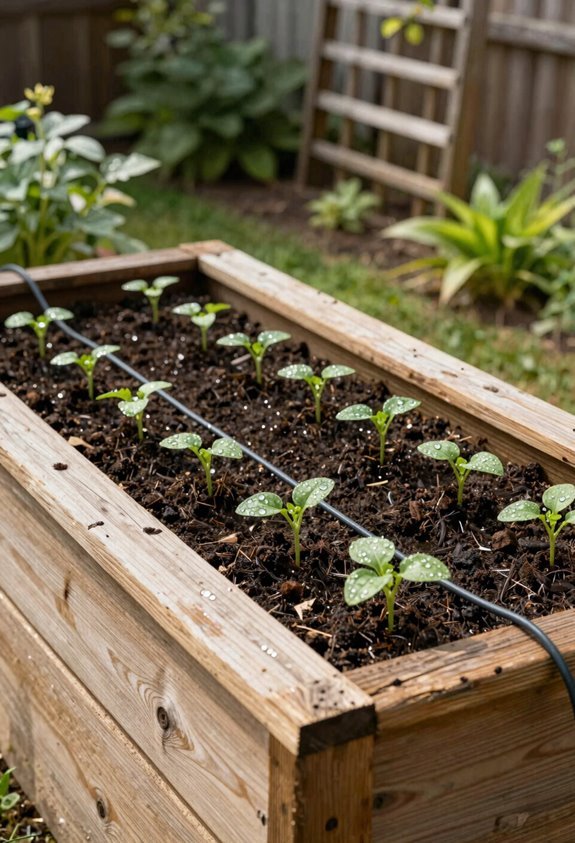
Why do some gardens thrive in raised beds while others flourish at ground level? I’ve learned it comes down to your starting point. When you’re dealing with shallow, compacted, or poorly drained soil, raised beds offer a real advantage. They give you 10–12 inches of controlled, deep growing medium that changes yields for demanding crops like tomatoes and winter squash.
But here’s what I’ve observed: if your native soil is already deep, level, and well-drained, you’re likely better off at ground level. You’ll skip the framing expenses and avoid the faster soil warming that can stress certain plants.
For heavy clay situations, raised beds improve drainage dramatically, though you’ll need to plan for soil replenishment as organic matter decomposes. Ultimately, I weigh my site conditions, accessibility needs, and long-term effort against potential harvests before committing to the structure.
The Real Cost of Building and Maintaining Raised Beds
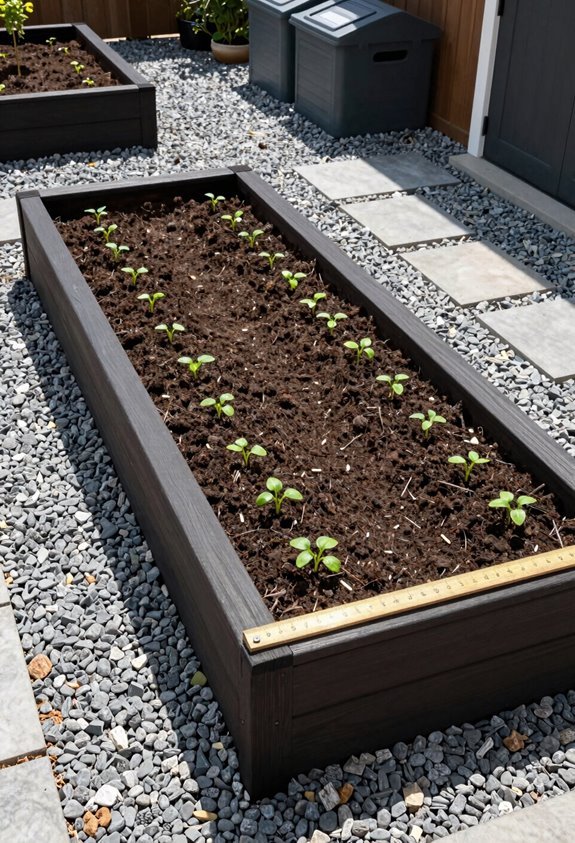
The price tag on raised beds extends well past that initial trip to the lumber yard. I’ve learned that framing materials, whether cedar, metal, or plastic, set the baseline, but soil amendments quickly compound your investment, especially when you’re filling multiple deep beds.
For larger gardens, the math gets sobering. Sixteen beds covering 3,000 square feet demand constant replenishment as organic matter decomposes, shrinking volume and demanding fresh compost, shredded leaves, or straw each season.
Scale reveals the truth: sixteen beds across 3,000 square feet demand relentless replenishment as organic matter quietly disappears.
I top mine off annually, watching costs accumulate with every cubic yard delivered. Premium blends for demanding crops push expenses higher still.
You’re committing not just dollars, but ongoing labor. Each bed you add multiplies your maintenance burden, and reconfiguration grows costly as structures age. Before building, I ask myself: am I prepared for this sustained relationship, year after year?
Why Your Bed Layout Becomes Permanent
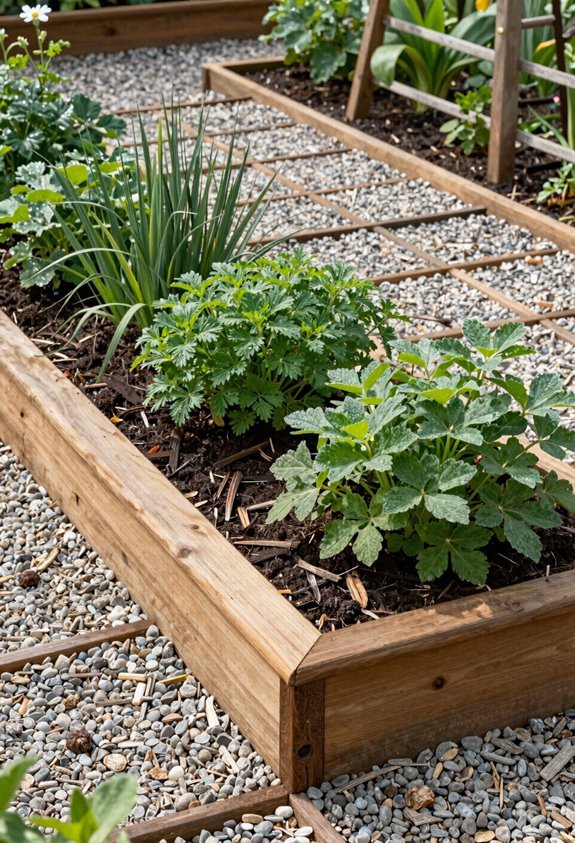
Beyond the ongoing investment of time and money, I’ve discovered another constraint that catches gardeners off guard: the permanence of bed placement. Once I’ve installed raised beds, the heavy upfront labor locks me into a configuration that’s difficult to change. Design flaws I didn’t anticipate persist across seasons, limiting how I optimize my space year after year.
Moving or modifying raised beds demands significant effort and cost I hadn’t budgeted for. My early spacing choices tightly constrain later decisions, making year-round food production harder to achieve than I expected. I’ve found my layout becomes fixed, reducing opportunities to switch between raised beds, mounded rows, or ground-level growing as my needs evolve. This permanence quietly shapes my garden’s future in ways I didn’t foresee.
How Raised Beds Break Your Favorite Tools

Where did my wheel hoe go? I buried it in my shed after discovering that raised beds and long-handled tools don’t get along. The edges stop me mid-push, and I’ve learned many of us in the growing community face this same frustration.
| Tool | Raised Bed Problem | What We Lose |
|---|---|---|
| Wheel hoe | Edges block the blade | Fast, clean cultivation |
| Seeder | Width limits wheel tracking | Precise, speedy planting |
| Broad fork | Barrier walls prevent insertion | Deep soil aeration |
I’ve watched my Jang seeder jam against wooden frames, and my spacing tool can’t find its rhythm in narrow runs. The confined dimensions of raised beds force me back to hand tools, slowing every task.
When I need efficiency, these barriers remind me that raised beds demand compromise.
Irrigation Problems Unique to Raised Bed Setups
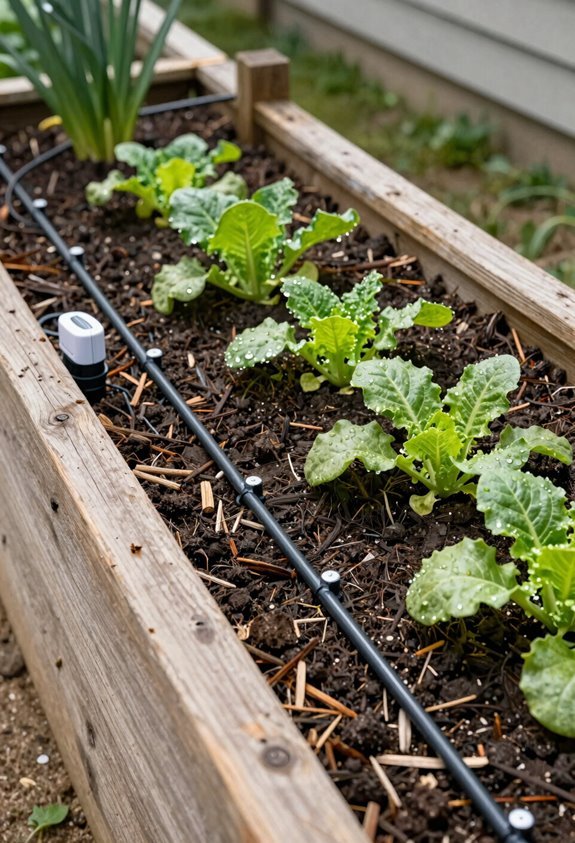
I’ve noticed that water distribution challenges and gravity flow issues can really complicate irrigation in raised beds. When I set up my beds, I quickly realized that elevation changes how water moves through soil, often leaving edges dry while centers stay soggy. These quirks mean I can’t just move my ground-level irrigation plan over without expecting some frustrating inconsistencies.
Water Distribution Challenges
How exactly does water reach every corner of your raised bed without creating soggy pockets or parched zones? I’ve wrestled with this puzzle myself, watching water pool at bed edges while center rows baked dry.
Drip irrigation helps, but narrow thirty-inch widths and twenty-four-inch pathways complicate placement. My lines snagged on corners, and flow rates varied dramatically across the bed. When I added rich amendments, they settled within weeks, creating unexpected dry zones my original schedule couldn’t touch.
Organic matter degrades faster than I’d planned, demanding constant recalibration. Some mornings I adjust emitters twice before coffee. The edges always drink first; the center waits thirsty.
Your soil settles, your amendments shift, and suddenly your “set it and forget it” system needs weekly babysitting. Precision matters here.
Gravity Flow Issues
Why does gravity suddenly feel like an adversary when you’re standing at the hose end of sixteen raised beds? I’ve watched gravity flow betray even careful planners, pooling water at bed edges while leaving corners thirsty. We’re in this together, navigating irrigation that demands precision.
- Uneven pooling disrupts distribution when bed layouts and edge constraints interrupt natural descent.
- Complex setups multiply with varying heights, soil depths, and staggered widths, each compounding delivery inconsistencies.
- Barrier interference occurs when weed liners inadvertently block drainage, trapping moisture where you least want it.
Your narrow pathways and precise emitter placement become critical battlegrounds against accumulated gravity effects across multiple beds. I recommend mapping flow patterns before planting, testing each bed’s response to gravity flow under actual conditions. Small adjustments now prevent larger headaches later.
When Weed Barriers Fail and Roots Invade

Where exactly do those supposedly impenetrable barriers go wrong? I’ve watched wood, plastic liners, and weed fabric surrender to UV exposure and ordinary wear, creating entry points for weeds before I even finish construction. Those creeping roots don’t respect boundaries; they slide beneath bed edges and infiltrate through degraded seams, turning my tidy raised system into a maintenance headache.
Bermudagrass laughs at plastic liners I’ve carefully installed, and once established underneath, these invaders prove far trickier to eliminate than in my old ground-level plots. The promise of total weed exclusion fades quickly in extended setups, leaving me with ongoing management rather than the low-maintenance sanctuary I envisioned.
For fellow gardeners seeking genuine belonging in their growing spaces, understanding these limitations helps us plan realistically, choosing strategies that acknowledge nature’s persistence without surrendering our cultivation goals.
Build Mounded Rows Instead
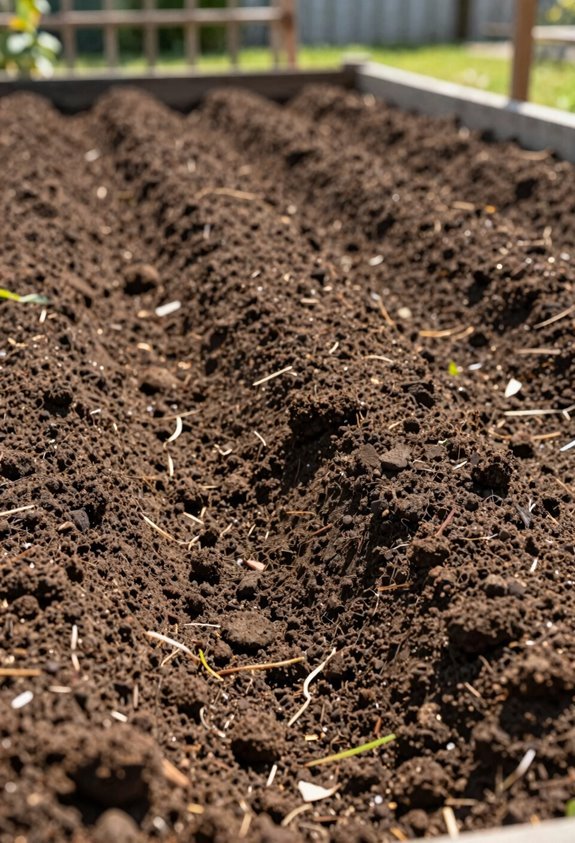
I often suggest mounded rows when clients want layout flexibility without the commitment of permanent frames, since you can reshape beds and pathways seasonally as your needs change. You’ll skip the expense of lumber or composite materials, and you won’t worry about liners degrading or frames rotting after a few seasons.
The approach still gives you that critical twelve inches of soil depth for deep-rooted vegetables, plus natural drainage improvement, while keeping your options open for future redesigns.
Layout Benefits
How might you capture the advantages of elevated planting without committing to permanent structures? I’ve found that mounded rows offer a flexible raised bed design that welcomes everyone into productive gardening without rigid barriers.
- Natural drainage: Soil contours let water flow freely, preventing root rot while keeping growing zones elevated and workable.
- Generous spacing: I use 30-inch beds with 24-inch pathways, creating room for wheelbarrows and companions to move alongside you.
- Lasting adaptability: Without degrading wood or plastic edging, your layout evolves with seasons and shifting needs.
You’ll skip enclosure costs while preserving depth and drainage. For those of us with deep, well-drained native soil, mounded rows even moderate temperature swings better than framed alternatives. This approach invites you into gardening’s circle without demanding permanent commitments.
Maintenance Reduction
Why wrestle with rotting frames and crumbling corners when your soil can do the heavy lifting? I build mounded rows instead of traditional raised beds, and I’ve eliminated the endless cycle of repairs, replacements, and soil replenishment that boxed structures demand. My pathways stay narrow and efficient, my drainage flows naturally without plastic barriers, and when I want to reconfigure my layout next season, I simply reshape the earth.
| Task | Raised Beds | Mounded Rows |
|---|---|---|
| Frame maintenance | Annual repairs, replacement every 5-7 years | None required |
| Soil replenishment | Frequent refilling as beds settle | Natural settling, minimal intervention |
| Layout changes | Labor-intensive disassembly | Simple reshaping with basic tools |
This approach keeps me growing year-round without the heat stress and irrigation complications I’ve watched neighbors battle. We choose simplicity, and our gardens do well because of it.