
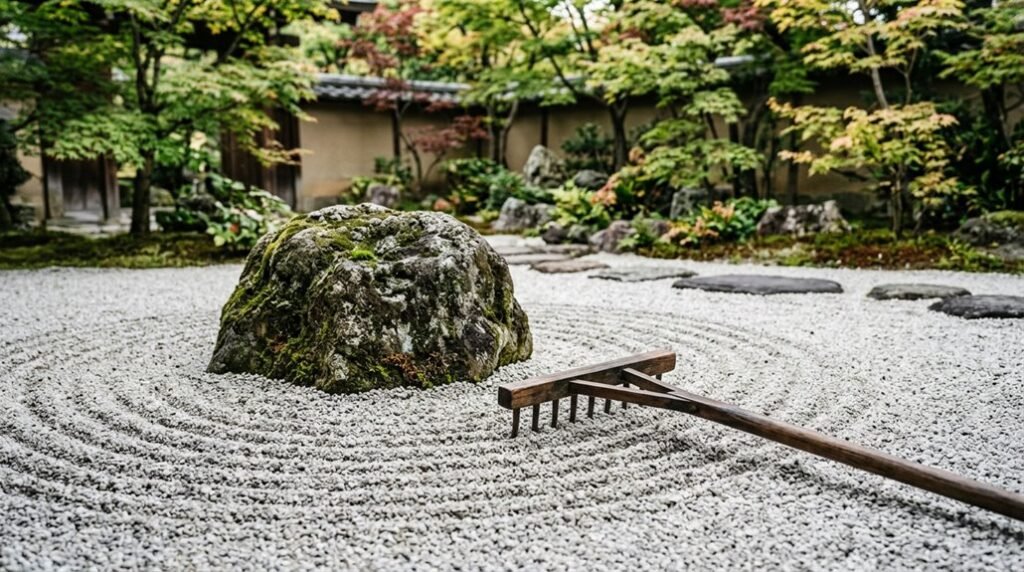
I sketch the layout, I gather the gravel, I prepare the ground; each step builds toward something greater than its parts. A Zen garden demands patience, but the reward is a living meditation you shape with your own hands.
The process isn’t complicated, yet one critical choice early on determines whether your garden achieves true serenity or merely decorates your yard. Let me walk you through what I’ve learned matters most.
Choose and Plan Your Quiet Zen Garden Space
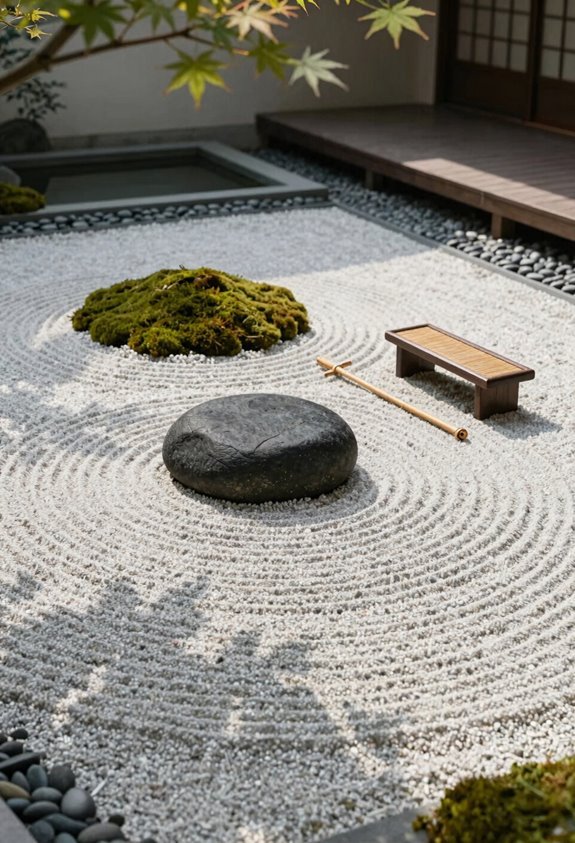
When I’m ready to build something truly restorative, I start by scouting a quiet corner that feels naturally sheltered from daily commotion, since privacy forms the backbone of any space meant for genuine reflection. I look for a secluded spot with enough room for large rocks and clear sightlines from my home, ensuring the Zen garden becomes a living landscape I can enjoy daily.
I sketch my layout before moving soil, applying classic principles that guide Japanese gardens: simplicity, deliberate asymmetry, and generous negative space that lets the eye rest. I position a strong focal point, perhaps a striking stone grouping, that anchors the composition through every season.
I plan my meditation spot carefully, placing a simple bench where morning light falls softly. I note sun patterns, knowing I’ll select moss, ferns, and evergreens that do well in my specific conditions.
Gather Materials: Select Gravel, Stones, and Sand for Texture
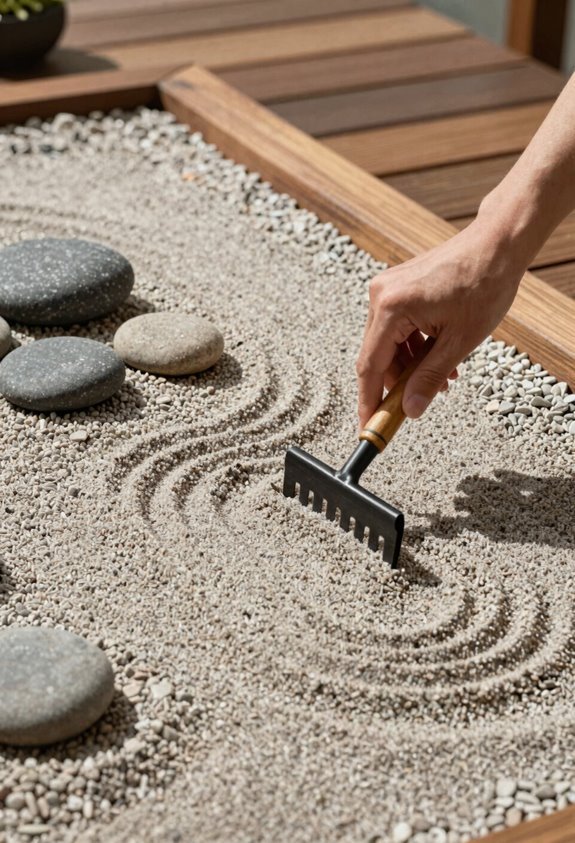
Several textures await my selection, and I’ll gather three distinct gravel grades to build visual depth across the garden surface. I’m choosing fine, medium, and coarse gravel varieties that’ll let me layer natural elements with intention. For my Zen garden materials, I’m drawn to calming colors, deep charcoal, weathered brown, soft gray, that ground the spirit without shouting.
My sand texture needs to support smooth raking later, so I’m adding a fine base beneath the main gravel. Large stones will anchor the composition, guiding where my eyes rest and my feet wander. These dry landscape principles demand weather-resistant choices that’ll age gracefully.
Here’s what I’m prioritizing:
- Three gravel grades for subtle patterning and depth
- Natural, subdued tones that promote meditation
- Flat, substantial stones as visual anchors
- Low-maintenance materials that honor the space’s quiet purpose
Prep and Build: Level Ground, Place Rocks, and Rake Gravel Patterns
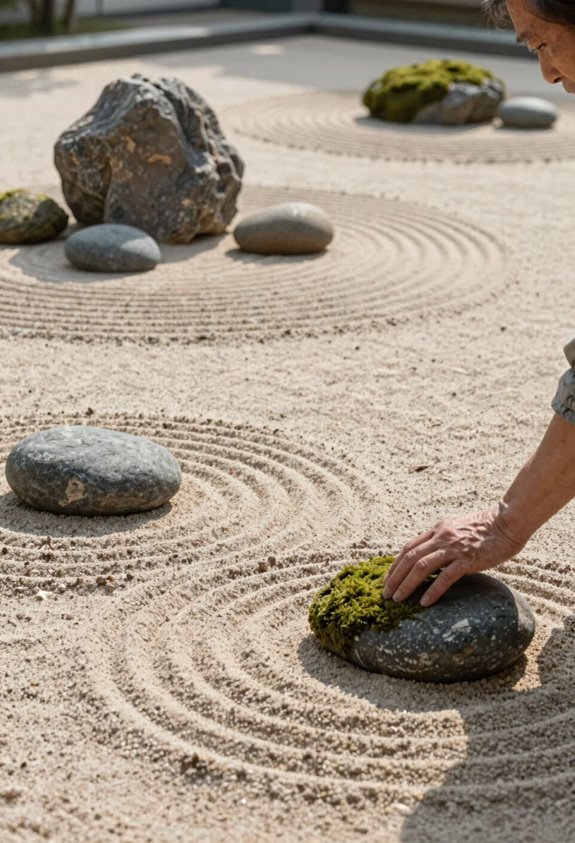
Where do I begin transforming raw space into contemplative ground? I start by leveling ground, creating a stable foundation that drains properly and sets a clean backdrop for what’s to come. This base matters; everything builds from here.
Next, I place rocks with intention. Large stones anchor the Zen garden first, establishing focal points that feel balanced without rigidity. I arrange smaller stones around edges, defining zones through asymmetry that honors Fukinsei, the principle that beauty lives in imperfection.
Then I spread gravel and begin rake patterns. A fine-toothed rake smooths surfaces; a wide-toothed rake carves broader, wave-like gravel patterns suggesting water’s movement. I adjust these patterns as the garden evolves, letting ripples flow around rocks in endless variation. This rhythm belongs to you now.
Plant Sparingly: Add One Focal Tree or Moss for Green Calm
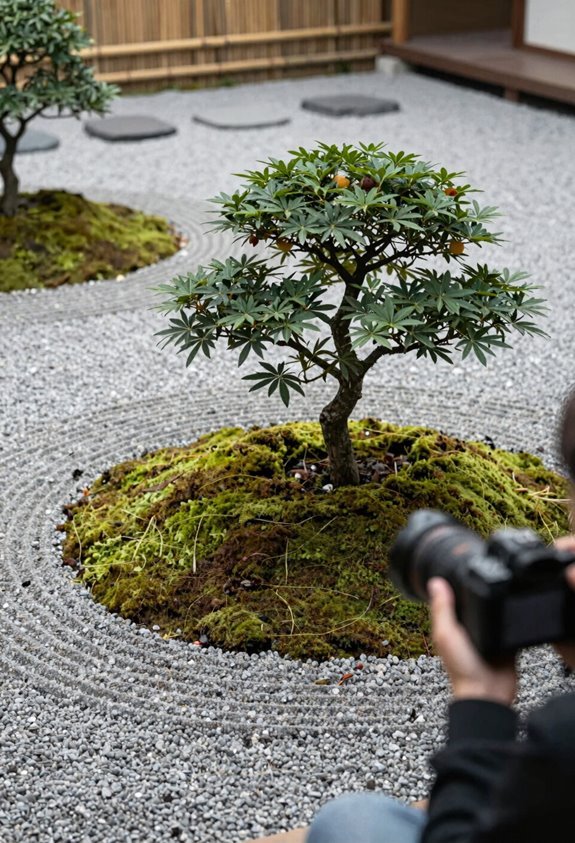
How do I introduce life without disturbing the stillness I’ve created? I add one living element, and I stop there.
In my Zen garden, minimalism isn’t emptiness; it’s intentional restraint. I choose either a focal tree or moss, never both competing for attention. A weeping cherry or Japanese maple anchors the space with graceful asymmetry, positioned to guide the eye without overwhelming surrounding rocks.
Alternatively, I blanket subtle ground with moss, recalling Saihōji’s famed forty varieties, creating quiet verdure underfoot.
Here’s how I preserve serenity while inviting belonging:
- Select one specimen that shifts subtly through seasons, offering year-round contemplation
- Position my focal tree to enhance visual balance, never crowding gravel patterns
- Combine moss with only restrained, low-growing companions
- Exclude dense color; Japanese garden tradition demands muted harmony
This sparse green element completes my meditative refuge without clutter.
Maintain Weekly: Rake, Weed, and Refresh Your Zen Garden
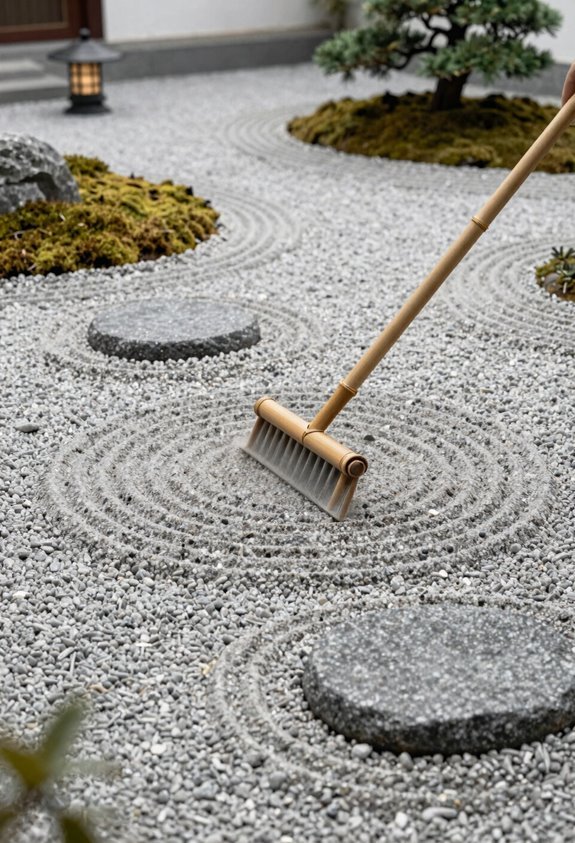
My living element now settles into its place, and I turn my attention to the rhythm that will sustain this calm. Zen garden maintenance becomes my weekly ritual, not a chore.
I rake patterns through the gravel garden, restoring those flowing lines that mimic water’s gentle movement. I pull weeds before they disrupt the minimalist canvas I’ve created. I inspect the large rocks, resetting any that have shifted from their intentional asymmetry. I gather fallen leaves from pathways and surfaces, preserving that clean, contemplative space.
Each sweep of the rake, each careful adjustment, folds into my mindfulness practice. This tending connects me to something larger; centuries of seekers who found peace in these same deliberate motions. I belong here, in this quiet work.