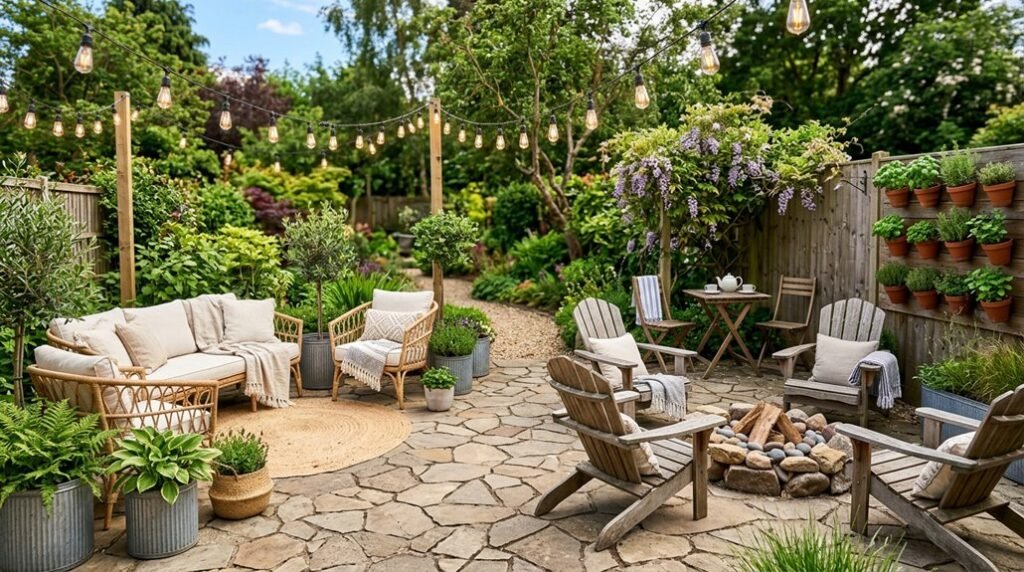
I’ve transformed cramped concrete slabs into magazine-worthy retreats without draining savings accounts, and the secret isn’t about buying more; it’s about strategic layering.
When you combine faux turf with staggered pavers, you’re cutting water bills while creating visual texture that reads intentional, not improvised.
Vertical planters turn blank walls into living privacy screens, and the right string light configuration at 2700K warmth tricks the eye into perceiving depth where square footage falls short.
These aren’t compromises; they’re calculated design moves that outperform their price tags. I’ll show you exactly how to execute each one.
Lay a Budget-Friendly Foundation: Pavers & Faux Grass for Small Patios
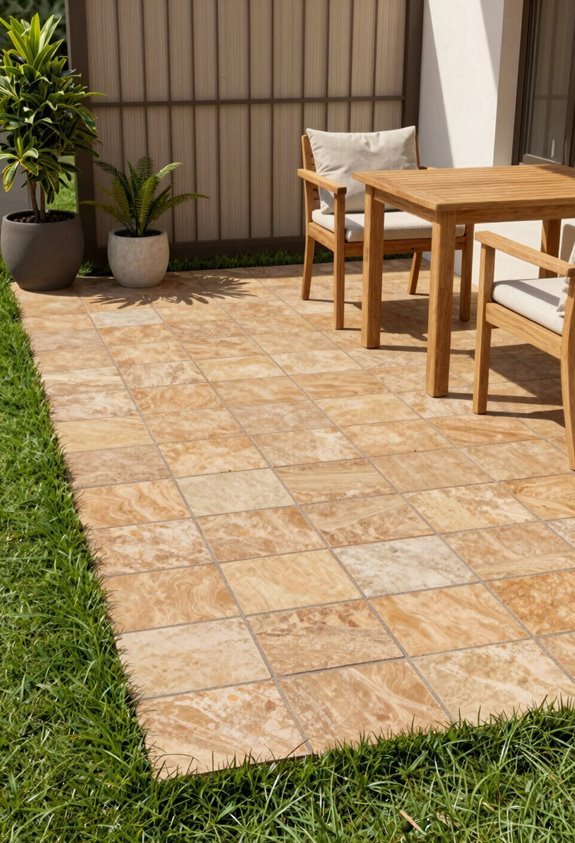
Why settle for a cramped, underused patio when I can help you transform your compact outdoor area into a functional retreat without draining your savings? I’ll show you how concrete pavers and faux grass work together to double your usable space without professional help.
You’ll lay pavers in simple patterns, creating defined zones that expand your footprint visually and practically. Between these hardscaped sections, I’ll guide you through installing faux grass: luxury appearance, zero watering, minimal upkeep. This combination maximizes every square foot while keeping costs controlled.
The materials withstand weather reliably, and I’ve outlined DIY steps that require basic tools. You’re creating polished, expensive-looking surfaces through smart material choices and straightforward installation. It’s an accessible change that welcomes you outside daily.
Build Up, Not Out: Vertical Privacy & Garden Solutions
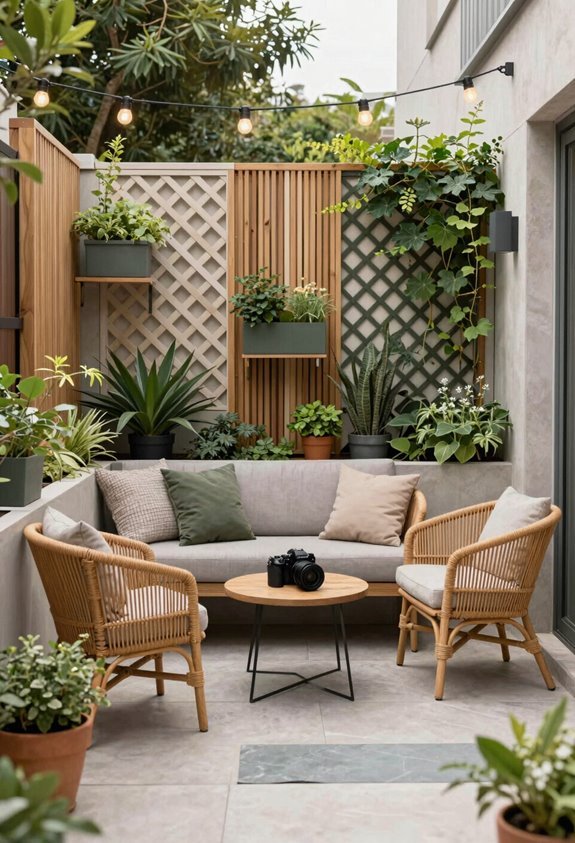
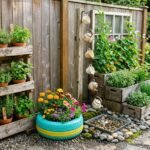
With your foundation set, I’m turning attention upward to capture space you didn’t know you had. Vertical privacy transforms bare walls into dense boundaries without sacrificing a single square foot of floor. I’m mounting wall-mounted planters and suspended boxes at staggered heights, creating living screens that shield your space from neighbors while drawing the eye skyward.
Your vertical garden becomes both sanctuary and pantry when you tuck herbs and peppers into these elevated pockets. I hang suspended pots on wire trellises with S-hooks, letting me rearrange plantings as seasons shift without drilling new holes. The result reads as intentional gallery display; greenery interwoven with art and lighting at eye level. These solutions demand minimal materials and straightforward DIY effort, yet deliver refined, uncluttered impact that feels curated rather than cramped.
Fit More Function: Double-Duty Seating for Tiny Spaces
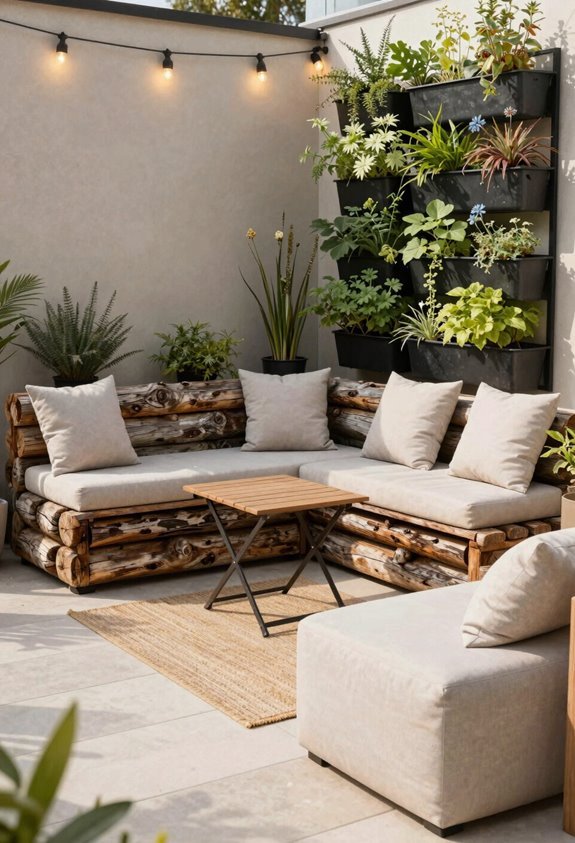
I’ve found that cramped patios demand seating that pulls double weight, so I’m focusing on two standouts: benches with built-in storage and ottomans that multitask. These pieces let you stash cushions or gardening tools while offering flexible perch options that shift from footrest to extra guest seating in seconds. By choosing hardworking silhouettes, you’ll expand your square footage without expanding your footprint.
Bench With Storage
How do you squeeze extra seating into a cramped patio without sacrificing every square inch of floor space? I build a storage bench that works twice as hard as standard outdoor furniture.
A well-designed storage bench transforms dead zones into functional hubs. I stack concrete blocks and cap them with sturdy 4×4 posts and basic boards, creating hidden compartments for cushions, tools, and garden supplies. This dual-purpose approach keeps my tiny space tidy without looking cluttered or cheap.
Weekend assembly makes this project ideal for renters and homeowners alike. I pair my bench with wall planters or modular shelving to define distinct lounging zones, maximizing every vertical and horizontal surface. The result feels intentional, cohesive, and upscale; proof that smart design beats square footage every time.
Ottoman Seating Solutions
When rigid benches reach their limit, I look to the floor. Ottoman seating transforms any outdoor space into a flexible gathering spot without the commitment of heavy furniture. I scatter poufs and floor pillows across my affordable patio, creating instant seating that disappears when guests leave.
These lightweight pieces pull double duty as footrests, side tables, or extra perches when friends drop by unexpectedly.
| Piece | Function |
|---|---|
| Woven pouf | Seating + drink surface |
| Floor pillow | Lounging + back support |
| Storage ottoman | Hidden cushions + perch |
| Modular cube | Side table + spare seat |
I mix colors and textures to build warmth without clutter. My tiny patio shifts from morning coffee to evening cocktails by simply rearranging these portable elements. No bulky sets, no storage headaches; just adaptable comfort that respects both budget and square footage.
Add Shade Without a Roof: Pergolas, Sails & Quick Covers
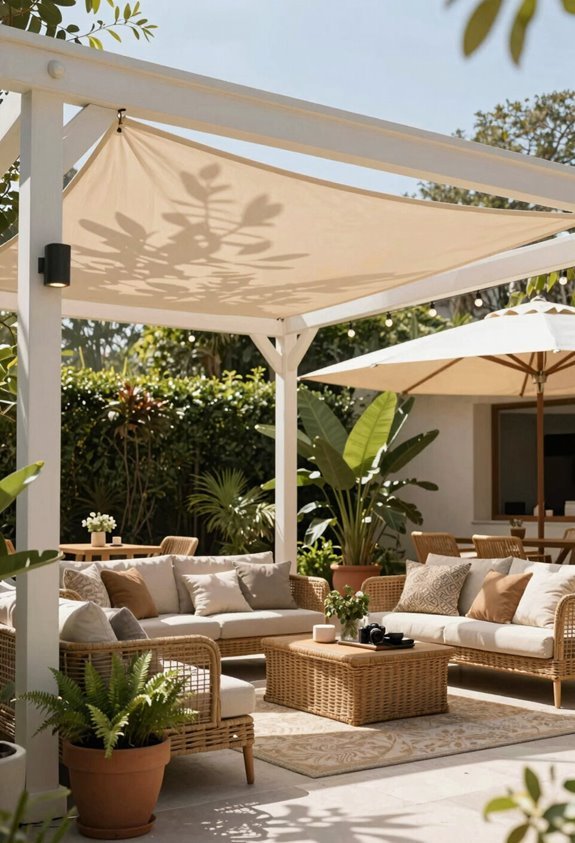
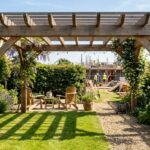
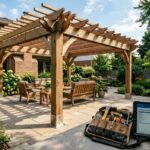
Why settle for sweltering afternoons when strategic shade turns your yard into a usable retreat? I build pergolas as my go-to solution, their open-slatted roofs filtering sunlight while inviting climbing vines to weave natural canopies overhead. These structures define outdoor rooms without the cost of full enclosures, and I’ve found attached versions particularly effective at blurring boundaries between interior comfort and open-air living.
For quicker coverage, I stretch a sail shade across exposed patios, anchoring corners to create sculptural planes of diffused light. I layer outdoor curtains beneath both approaches, establishing perimeters where privacy meets breeze. Together, these elements craft intentional spaces that feel considered, welcoming, and truly lived-in without demanding structural overhauls.
Layer Lighting for Ambiance: String Lights to DIY Chandeliers
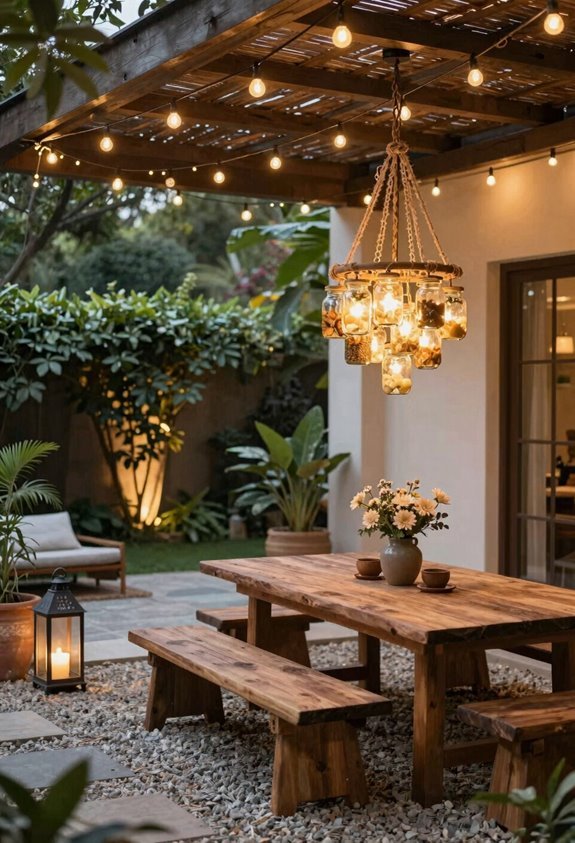
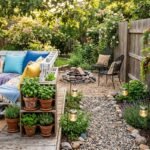
I’ve found that layering different light sources transforms an ordinary patio into an inviting evening retreat without touching your electrical panel. String lights remain my go-to starting point, since their versatile bulb styles create instant atmosphere above dining areas or seating nooks for minimal investment.
Once you’ve established that base glow, DIY chandeliers built from affordable materials let you add vertical dimension and polish that reads as custom-designed.
String Light Basics
How do you transform a basic patio into an evening retreat without calling an electrician? I reach for string lights, the simplest tool for building atmosphere. These luminous strands layer beautifully with lanterns or path lighting, creating dimensional glow without blowing your budget.
I’ve watched vintage Edison bulbs cast amber warmth across dining spaces, while sleek modern LEDs deliver clean, consistent lumens. Both styles anchor your patio’s visual identity.
The real magic lies in adaptability: I drape them overhead, zigzag across pergolas, or cluster bulbs at varying heights for improvised focal points.
This budget-friendly DIY approach demands no hardwiring, just sturdy guide wire and outdoor-rated fixtures. When I thread lights through existing structures, I’m drafting a blueprint for ambiance that rivals professionally lit spaces. Your space becomes invitation, memory, shared evening.
DIY Chandelier Options
Where do you anchor the eye when string lights alone feel too scattered? I build a driftwood chandelier as my centerpiece, and suddenly the whole space feels intentional.
I gather weathered branches, wrap them with battery-powered LEDs, and suspend the assembly above my dining table. No electrician needed, no permanent wiring, just layered illumination that draws everyone together.
This budget-friendly lighting strategy changes my patio into something that feels curated, not cobbled together. I pair the chandelier with perimeter string lights for depth, creating zones of warmth that invite lingering conversations.
The driftwood brings organic texture, while the soft glow eliminates harsh shadows. Together, these elements achieve that polished cohesion we all want, proving that thoughtful placement outperforms expensive fixtures every single time.
Fake a Designer Look: Paint & Textile Upgrades Under $50
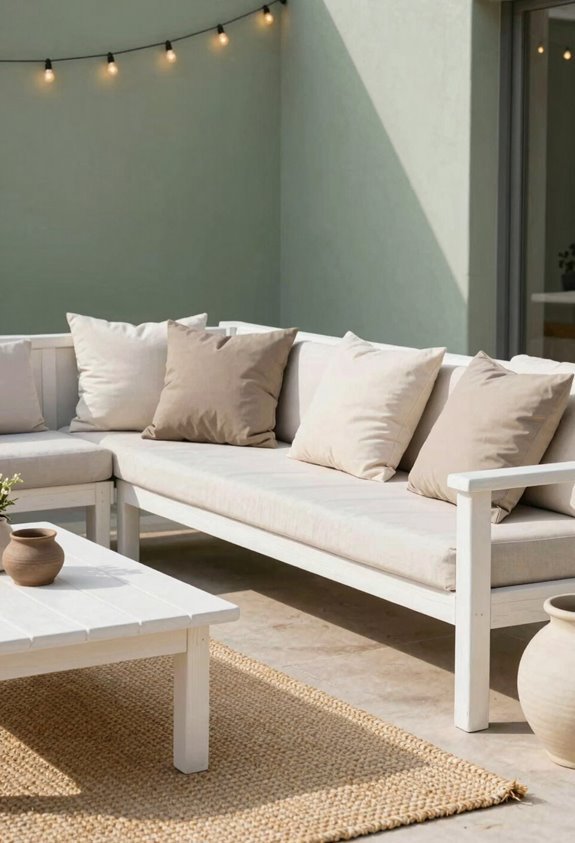
Why sink a fortune into outdoor renovations when a few strategic paint strokes and textile swaps deliver that coveted designer aesthetic for less than a dinner out?
I transform tired metal furniture with matte black or sage paint, instantly elevating pieces that cost hundreds at boutiques. Layered textiles do the heavy lifting: quick-dry Turkish towels draped over chair backs, mixed-scale outdoor pillows in restrained palettes, and a single textured throw create visual depth without clutter.
I stick to natural fibers with modern performance coatings, selecting fabrics that resist mildew while feeling substantial. A $12 can of paint refreshes a side table; three coordinated pillows reframe an entire seating area. Intentional restraint reads as luxury.
Fellow design enthusiasts recognize this approach: edit ruthlessly, invest strategically, and your space whispers exclusivity rather than screaming expense.
Protect & Entertain: Weatherproofing Hacks & Portable Luxuries
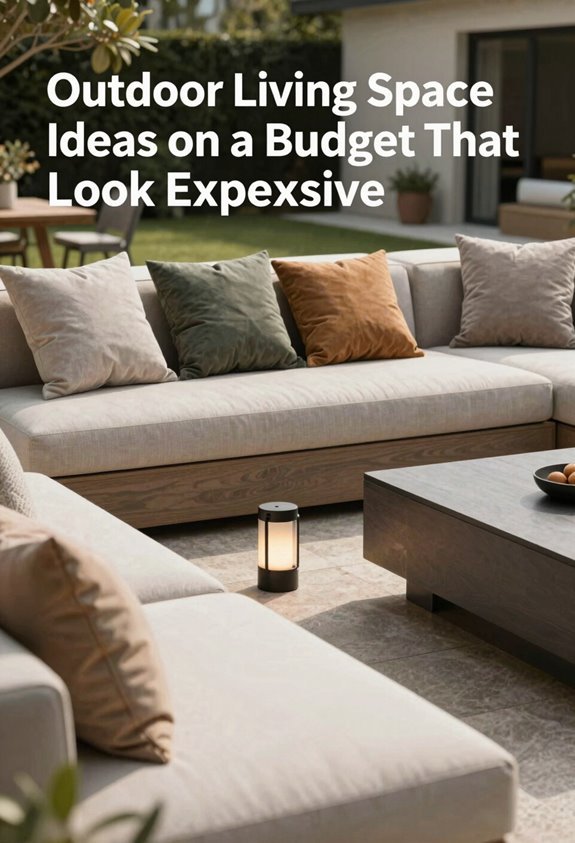
Several smart adaptations let me stretch my outdoor season from early spring through late fall, all without anchoring anything permanently to the structure. Smart weatherproofing means choosing fade-resistant fabrics that dry fast and withstand surprise showers, keeping our space welcoming even when forecasts shift. I stick to cohesive palettes across concrete, timber, and black metal finishes that read polished, not pieced together.
Portable luxuries turn ordinary evenings into gatherings worth remembering. These three moves deliver maximum impact:
- DIY sail shades block harsh afternoon sun and fold flat for winter storage
- Modular seating rearranges instantly for intimate dinners or larger groups
- Battery-powered lighting creates ambient glow without electrician costs
Strategic wind barriers and covered dining zones extend our usable hours. We belong outside longer, together, because thoughtful climate-aware design respects both budget and season.