Corner lots command twice the visibility, yet most homeowners treat them like standard yards sliced in half. I’ve watched too many beautiful homes fade into the background because their landscaping failed to address that unique intersection of sightlines.
The real challenge isn’t just planting more; it’s creating one cohesive vision that works from every angle passersby might approach. I’ll show you how to turn that exposure into an asset.
Start With These Corner Lot Design Principles
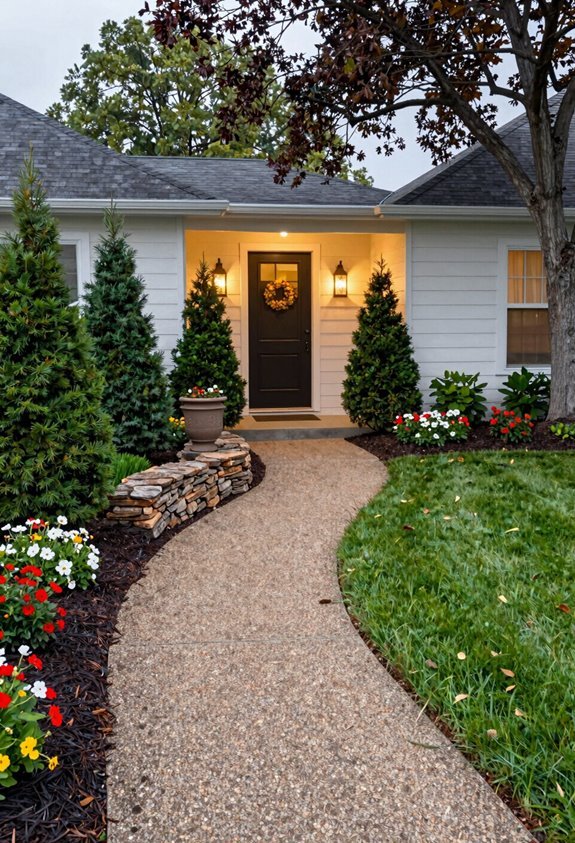
How do you reshape a corner lot from a maintenance burden into your property’s most valuable feature? I start with proven corner lot design principles that turn double exposure into double impact.
Your street presence depends on treating both street frontages as one continuous canvas. I always check local codes first: sight triangles at intersections restrict what I can plant near the corner, so I keep tall elements back and low. This protects drivers while preserving my design freedom.
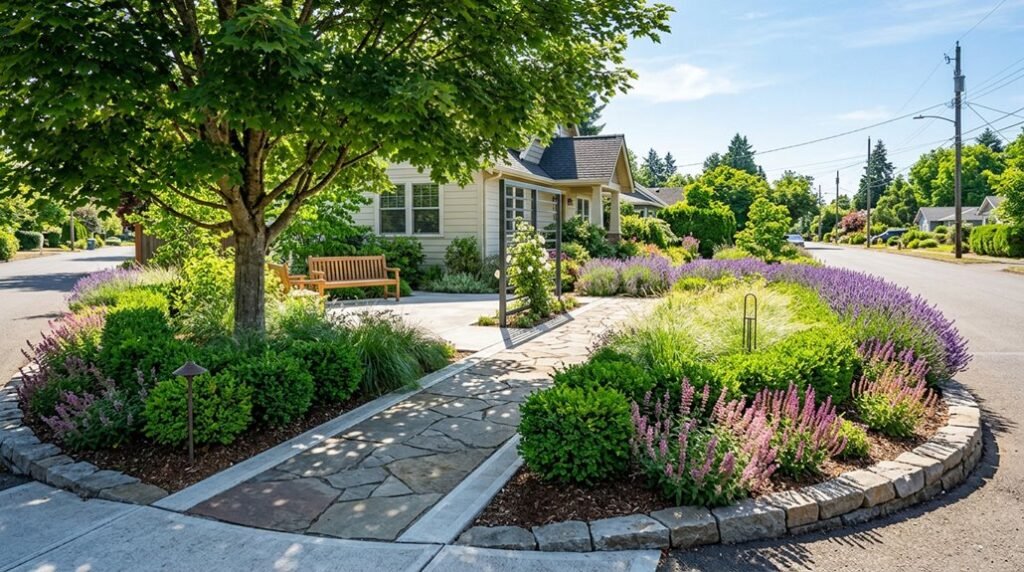
I anchor the space with one bold focal point, perhaps an ornamental tree or sculptural feature visible from both roads. Then I sweep curved planting beds along both edges, using matching mulch to unify the look. Layered evergreens, mid-range shrubs, and groundcovers deliver year-round interest without constant replanting.
Install a Wraparound Border That Unites Both Frontages
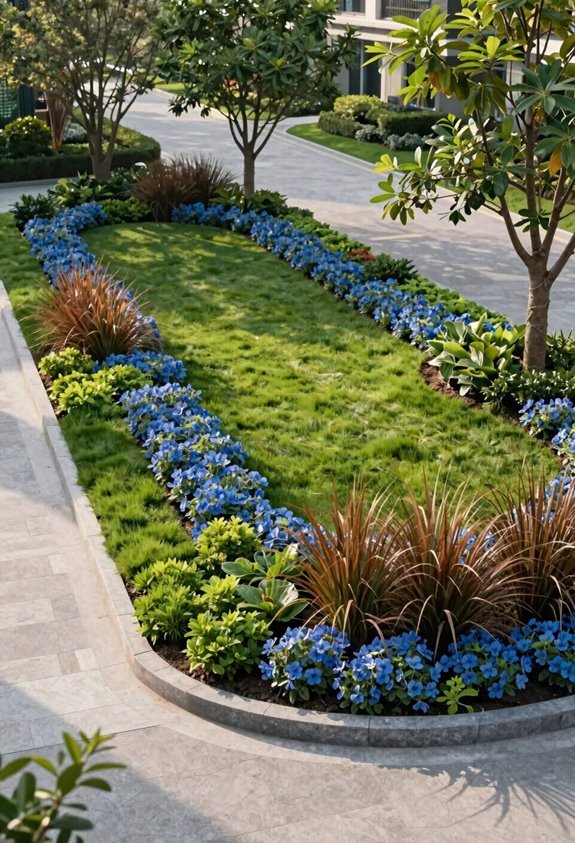
Once I’ve established my anchor point and sight triangle clearance, I extend the design outward with a wraparound border that treats both frontages as one flowing gesture. This approach turns the dual frontality that’s inherent to every corner lot into a cohesive asset, rather than letting it fragment the property’s presence.
I build my wraparound border with layered heights: taller plants at the rear, mid-level shrubs anchoring the middle, and groundcovers stitching the edge together. This creates depth without chaos, and I always size for mature growth to keep utility lines clear.
For maintenance, I’ve found drip irrigation indispensable; it waters both street faces evenly without waste. I weave lighting into the bed itself, so the landscape earns its keep after dark. Year-round structure comes from mixing evergreen backbone with seasonal performers.
Anchor the Corner With a Specimen Tree and Lighting
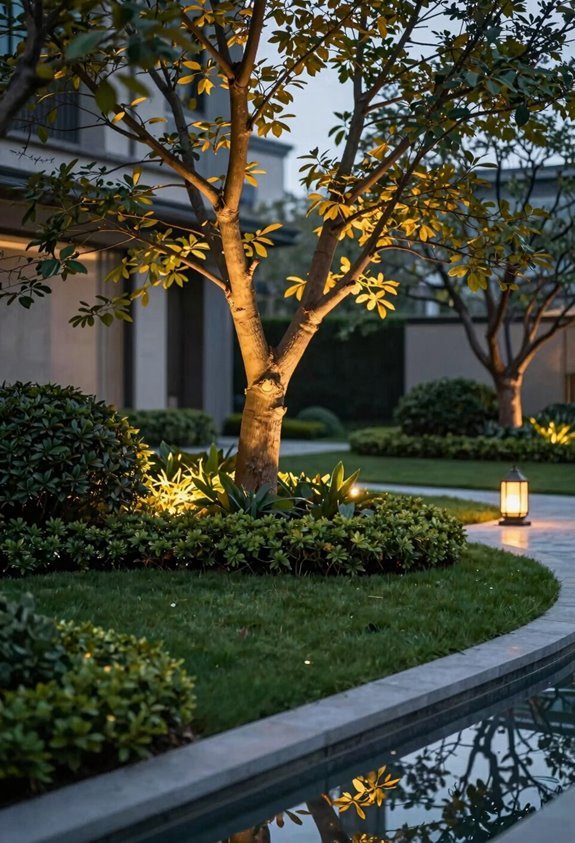
I recommend starting with a carefully chosen specimen tree that suits your climate and scale, then layering strategic uplighting to transform that anchor into a round-the-clock focal point. You’ll want to consider how seasonal maintenance keeps both the planting and illumination performing at their peak through every growing cycle.
Let’s look at how these three elements, selection, lighting technique, and care, work together to command attention from every approach.
Choosing Your Specimen Tree
Why settle for an ordinary corner when a single, well-chosen specimen tree can turn your lot into a neighborhood landmark? I select an ornamental tree that delivers year-round interest, whether it’s a Japanese maple’s sculptural grace, a River Birch’s peeling bark, or a crape myrtle’s summer blooms.
Check sightlines and utilities first, ensuring height proportion respects traffic safety and overhead lines. Plan for mature spread so your investment flourishes without future conflicts. Balance evergreen and deciduous mix for structure through every season.
I pair my specimen with curved beds sweeping both street fronts, creating that unified focal point neighbors remember. When I add uplighting later, the trunk and canopy become evening architecture. This corner becomes ours, a deliberate, welcoming statement that says we belong here.
Uplighting Techniques Explained
A specimen tree deserves more than daylight admiration, and that’s where strategic uplighting turns your corner into evening architecture. I position adjustable LED uplights at the base of my specimen tree, angling them upward to graze the trunk and illuminate the canopy. This landscape lighting technique accentuates verticality, casts dramatic shadows through branches, and extends your home’s presence well past sunset.
On a corner lot, your focal point works overtime, visible from multiple angles, so proper fixture placement matters immensely. I select weatherproof housings with long-life bulbs, and I plan for mature tree dimensions to preserve sight triangles at intersections.
Pair your specimen tree with sweeping border beds along both street-facing sides, using evergreen backings for year-round structure. The result feels intentional, welcoming, and distinctly yours.
Seasonal Maintenance Essentials
How does a single corner tree stay magnificent through every season? I keep my specimen Japanese maple alive and well through consistent landscape maintenance that honors its role as our neighborhood’s visual anchor.
I refresh the curved bed’s perimeter with ornamental grasses and seasonal color accents that signal we’re invested in our corner’s welcome. I trim the evergreen privacy screen quarterly, keeping sightlines clear while preserving that layered structure our neighbors admire from both streets. I adjust my LED lighting accents twice yearly, checking uplight angles so the canopy glows warmly through winter branches and summer foliage alike.
This rhythm protects our property’s year-round appearance, proving that thoughtful stewardship creates belonging. When you maintain that intersection anchor deliberately, you’re not just tending plants; you’re sustaining community pride.
Build Layered Privacy Screening for Street-Side Seclusion
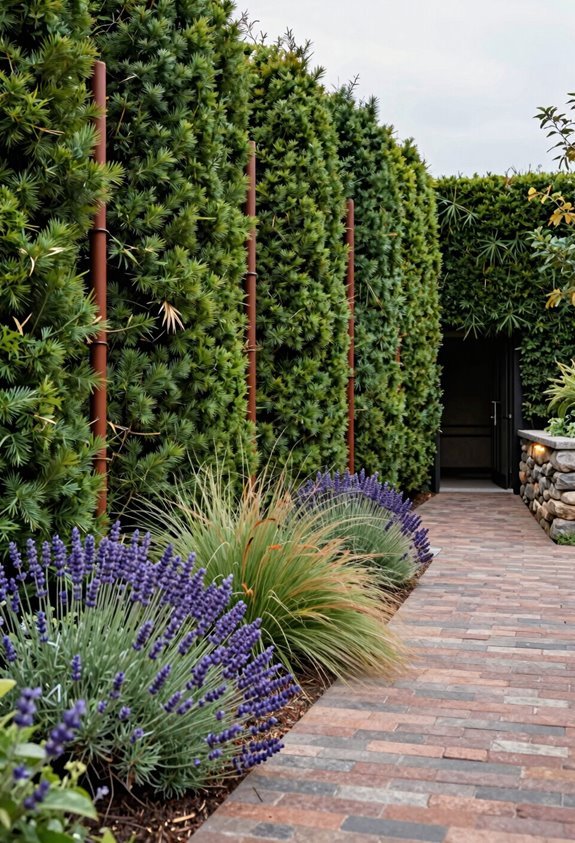
Where street traffic meets your front garden, I’ve found layered screening changes exposed corners into secluded retreats without sacrificing safety. On a corner lot, I position an evergreen screen of Emerald Green arborvitae or Sky Pencil holly further back from the intersection triangle. Then I layer lower flowering plants and ornamental grasses in front beds closer to the property.
This creates street-side seclusion while preserving critical sight lines for drivers. I curve the planting beds and add consistent edging to unify the design with surrounding landscape, using mulch for moisture retention and weed suppression. The back hedge stays taller than the front layer, ensuring year-round layered privacy without blocking visibility. Your corner becomes a sheltered sanctuary that welcomes you home.
Design a Pollinator Garden That Passersby Will Notice
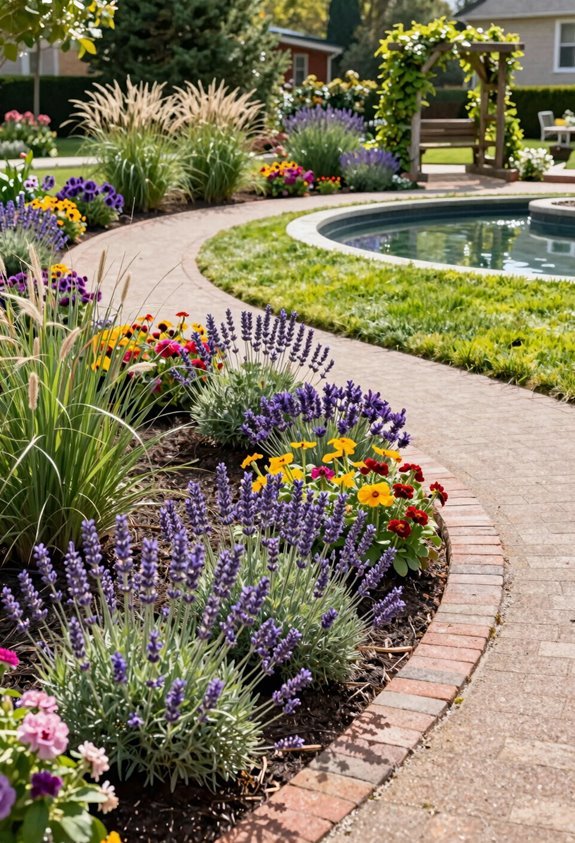
Why settle for a corner lot that merely occupies space when you can turn it into a living showcase? I design pollinator gardens that turn heads and build community connection through visible ecological impact.
Cluster native plants in bold drifts rather than spotty specimens, creating irresistible landing zones for bees and butterflies. Install a shallow water source with pebbles where pollinators refresh during hot afternoons. Spread mulch between plantings to lock in moisture and keep your display crisp through every season.
I always consult regional native plant societies to match species with my corner lot’s specific conditions. This pollinator garden strategy delivers serious street presence while inviting neighbors to pause, notice, and belong to something meaningful happening right at the intersection.
Create Modern Xeriscaping for Dry-Climate Corner Lots
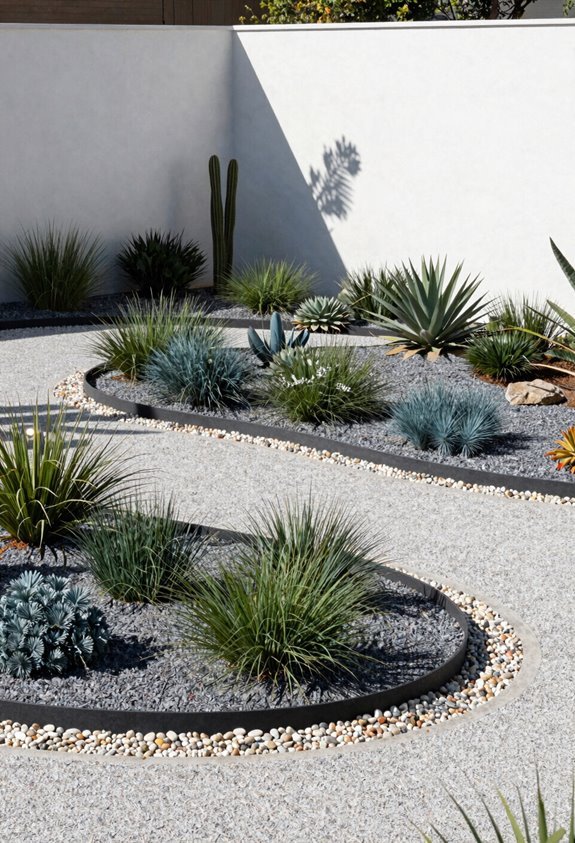
What transforms a sun-scorched corner lot from a maintenance burden into a striking architectural statement? I believe modern Xeriscaping holds the answer, pairing drought-tolerant plants with bold hardscape elements like gravel, concrete, and metal. You’ll emphasize structure and negative space, creating timeless visual interest that endures where water is scarce.
I start by layering materials: large concrete pavers, dark river rocks, lighter pea gravel. Then I select sculptural plants like Agave, Yucca, and Blue Fescue. These climate-appropriate palettes feel intentional, not sparse.
I group plants into hydrozones, matching water needs so irrigation stays efficient and simple. Before breaking ground, I test layouts using visualization tools on your corner-lot photos, refining bed shapes and balance. Your dry-climate landscape becomes a cohesive, welcoming statement your neighbors will admire.
Grow Vegetables in Tiered Beds for Edible Curb Appeal
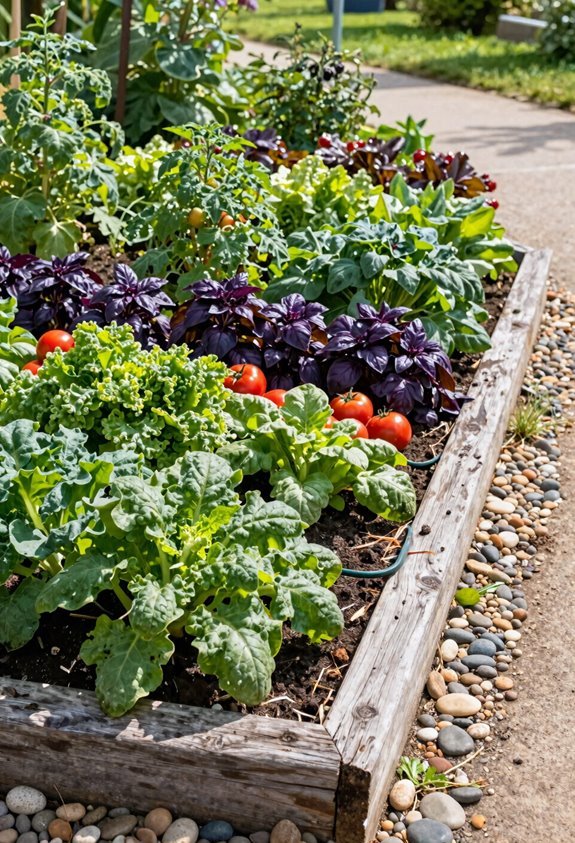
I’ve found that tiered raised beds turn a corner lot into something truly functional without sacrificing looks. You’ll want to position these beds where they’ll soak up six to eight hours of direct sun daily, since that exposure drives your actual harvest quality. Build with durable, elevated materials, such as weather-resistant timbers or steel frames, and stack them strategically to create architectural depth while keeping drainage sharp and maintenance manageable.
Sun Exposure Requirements
Wherever you place your tiered beds, you’ll want to track sun patterns first, most vegetables and herbs simply won’t produce without six to eight hours of direct light hitting their leaves. On a corner lot, I’ve found that positioning the tallest tier where shadows won’t steal precious light separates robust crops from disappointment.
- Map morning-to-afternoon sun movement before building, because prolonged shade kills productivity
- Group hydrozones by exposure levels, since sun-baked top tiers dry faster than lower levels
- Rotate vegetables seasonally to maximize your property’s appearance throughout the growing cycle
Your edible landscape becomes a point of pride when sun exposure and water management work together. I’ve watched neighbors gather around well-planned tiered beds, drawn to the vivid display of productive gardening that turns an ordinary corner into something remarkable.
Raised Bed Construction
Corner lot corners beg for something better than patchy grass, and tiered raised beds answer that call with structure you can build in a weekend. I stack these beds vertically to maximize your compact corner lot, turning overlooked space into an edible oasis that neighbors notice.
| Tier | Purpose | Benefit |
|---|---|---|
| Top | Deep-rooted tomatoes, peppers | Premium sun exposure |
| Middle | Leafy greens, herbs | Easy accessibility, no bending |
| Bottom | Shallow roots, companion flowers | Natural drainage, pollinator draw |
Elevating soil improves ergonomics dramatically, reducing back strain while you harvest. With 6–8 hours of direct sun typical for corner lots, each level flourishes. Layered construction ensures proper drainage and organized soil zones, making maintenance sustainable. Your tiered beds become farm-to-table curb appeal that proves edible landscapes belong in every neighborhood.
Visual Impact Design
How do we transform a functional vegetable garden into a statement piece that anchors your property’s visual identity? I build tiered raised beds that command attention on your corner lot, turning overlooked space into layered architecture. These structures deliver serious visual impact while keeping vegetables accessible.
Elevated tiers reduce strain during harvest, welcoming everyone to participate in growing food. Strategic perennial planting along bed edges ensures structure persists through seasonal transitions. Ornamental accents like compact herbs soften edges, maintaining polished appearance between crop rotations.
Your corner lot becomes a community landmark, blending productivity with refined design. Cascading tomatoes spill from upper levels while lower tiers host peppers and greens, creating dimension that neighbors notice. This approach proves edible landscapes deserve front-yard prominence, inviting connection through shared harvest.
Add a Focal Water Feature to Ground the Space
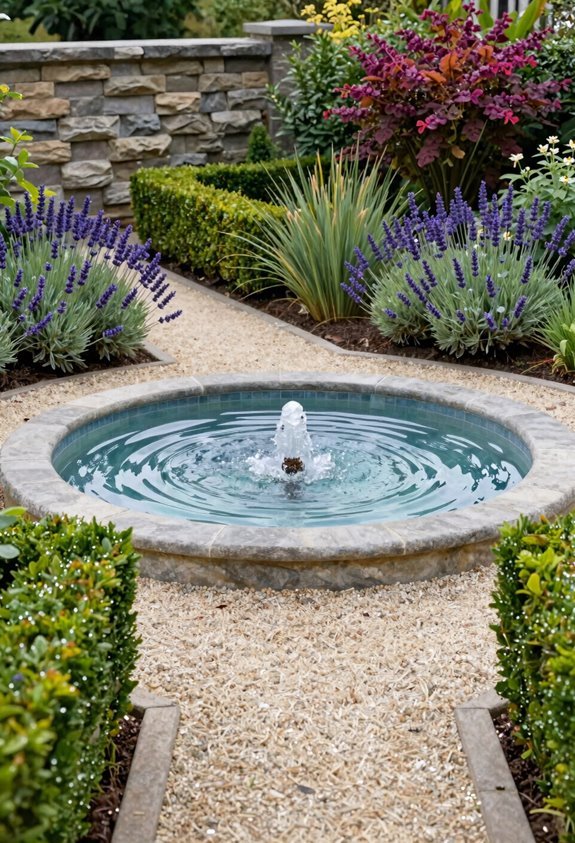
A well-placed water feature turns an exposed corner lot into a composed, intentional landscape. I recommend installing a focal water feature near the street intersection, where motion, sound, and reflection create a visual anchor that draws neighbors in and improves the property’s appearance from the street.
Choose a small formal fountain, cascading mini-pond, or compact bubbler rock sized within a 6–8 ft setback, keeping clear sight lines for drivers. Before breaking ground, I always check drainage and utilities, directing any spillover away from sidewalks to prevent slick surfaces.
Water feature maintenance keeps everything inviting: regular pump checks, debris removal, and seasonal algae control maintain that crystal reflection. For evening gatherings, lighting integration, underwater LEDs or subtle uplighting, extends your property’s visual appeal after dark while keeping energy costs reasonable.
Slow Traffic With a Curved Island Garden Bed
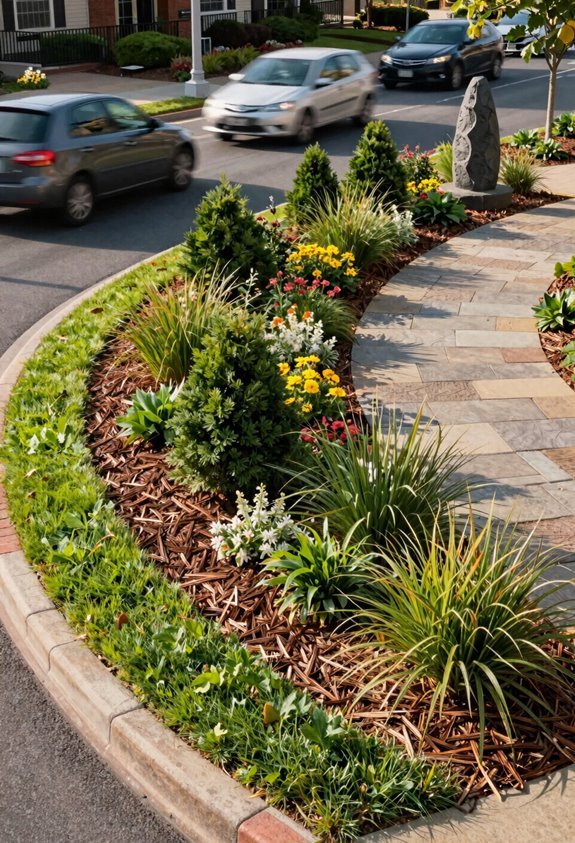
Why let speeding traffic dominate your corner lot when a gracefully curved island garden bed can reclaim the space? This landscape design technique turns exposed corners into welcoming, cohesive streetscapes that naturally encourage drivers to slow down and notice your home.
A well-executed curved island garden bed sweeps along both street-facing edges, softening harsh angles while anchoring your corner lot from every approach. Build planting layers: taller specimens at the rear, mid-height shrubs in the middle, and low groundcovers up front, to create depth that draws the eye inward. Consistent edging and mulch unifies both frontages, amplifying visual appeal through thoughtful repetition.
Anchor the corner with one ornamental tree, letting the bed curve organically along both streets. Match edging materials and mulch color across both frontages for seamless visual flow. Plan for mature growth, keeping sightlines clear while maximizing long-term impact.
Test Designs With AI Before Breaking Ground
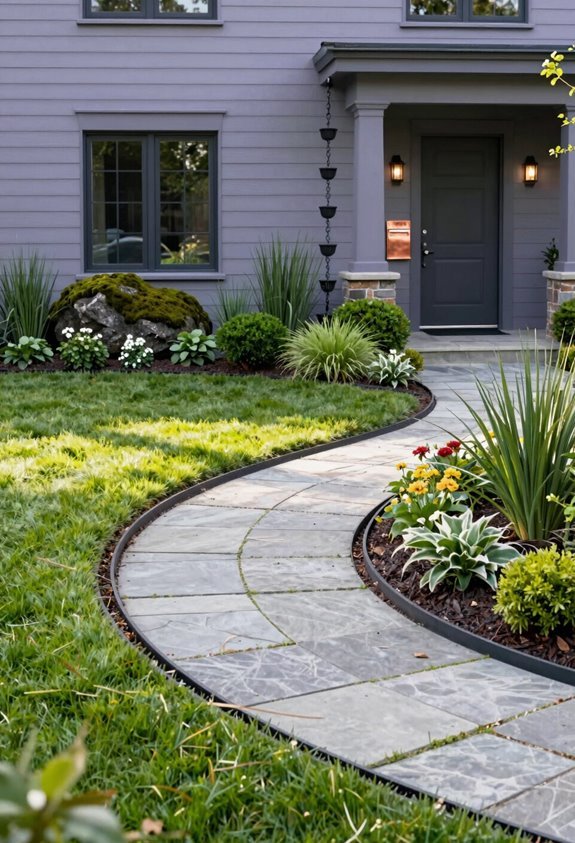
Before you commit to breaking ground on your corner lot transformation, I’ll walk you through how AI landscape design tools can save you from costly missteps and weeks of second-guessing. I use DreamzAR to upload photos and generate wraparound border visuals, testing plant palettes and bed shapes from both street views before spending a dime.
| What You Feel | What AI Delivers |
|---|---|
| Uncertainty about corner flow | Iterative previews showing one anchor tree unifying both edges |
| Fear of clashing colors | Documented palettes matched to your home’s architecture |
| Worry about nighttime impact | Lighting comparisons for refined silhouettes |
| Isolation in planning | Shareable layouts that connect you with pros and neighbors |
| Regret from rushed choices | Confident decisions backed by virtual proof |
AI Landscape Design turns your corner lot into a cohesive statement you’ll belong to proudly.