
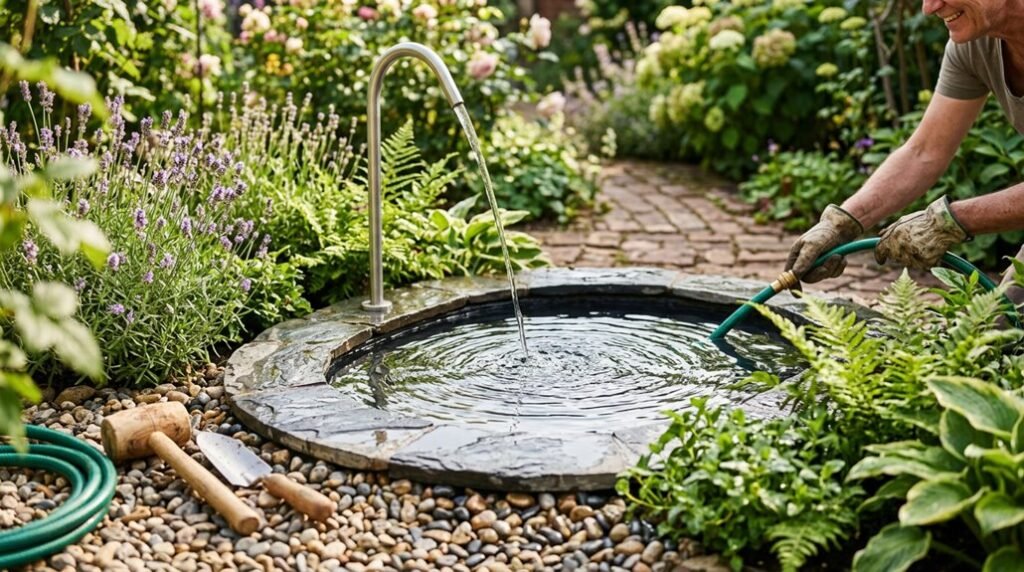
I’ve built dozens of pondless fountains for clients who wanted water features without the maintenance headaches of open water. The buried basin approach hides all plumbing underground while a recirculating pump keeps everything flowing seamlessly.
You’ll need to choose your power source wisely, since solar works for sunny spots but electric pumps offer more consistent flow rates. I’m going to walk you through exactly how I assemble these systems, conceal the equipment with natural stone, and keep them running safely through every season.
There’s one critical step most beginners skip that causes pump failure within the first year.
What Is a Pondless Fountain and Why Build One?
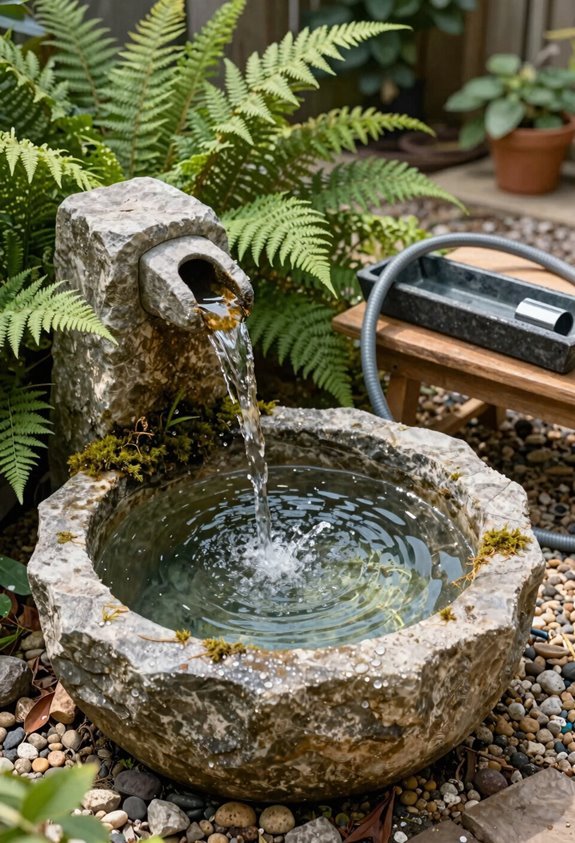
Why settle for a plain lawn when you can build something that transforms your space? I’m going to show you why a pondless fountain deserves your attention as your first water feature.
Why settle for a plain lawn when you can build a pondless fountain as your first water feature?
A pondless fountain, sometimes called disappearing or invisible, recirculates water from a hidden basin buried underground up through tubing to top feature elements. You’ll hear calming bubbling sounds while enjoying natural-looking rock concealment that blends seamlessly into your garden.
I appreciate how this design prioritizes safety for children and pets since there’s no exposed open water surface. You’ll also benefit from evaporation reduction compared to traditional ponds, which means less maintenance and lower water bills for our community of DIY builders.
Your installation requires a buried basin, fountain pump, and careful grate placement under decorative stone for that professional finish we all want in our outdoor spaces.
Choose Between Solar and Electric Pump Power
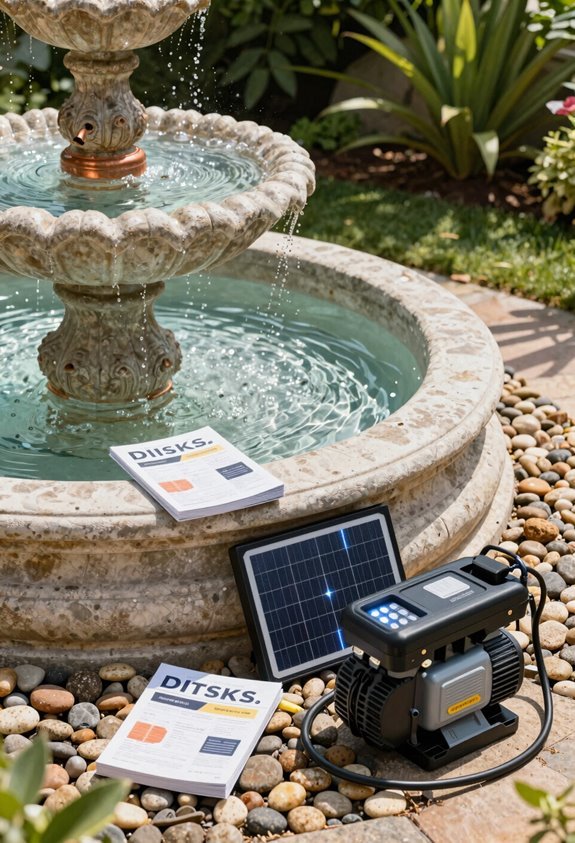
How do you power something that runs continuously without draining your wallet or patience? I always start my garden fountain projects by weighing this exact pump power choice, because it shapes every water feature idea that follows.
Your solar pump option typically means a 12V solar pump delivering around 160 GPH through a 10-watt system with a 16-foot cord to its panel. I love that I skip underground electrical runs, though I need solid sun exposure all day. Adding battery backup keeps my fountain alive after sunset or when clouds roll through, though kits run about $125 plus extra for storage.
My electric pump alternative uses a 110-120V electric pump, usually pulling 16 watts for 264 GPH of steady flow regardless of weather. I trade the cord for buried conduit or outdoor-rated extensions, gaining reliability wherever I place my garden fountain.
I choose based on my site’s sun patterns, proximity to outlets, and whether I prioritize budget flexibility or predictable performance. Neither option disappoints when matched to your conditions.
Build, Hide, and Maintain Your Pondless Feature
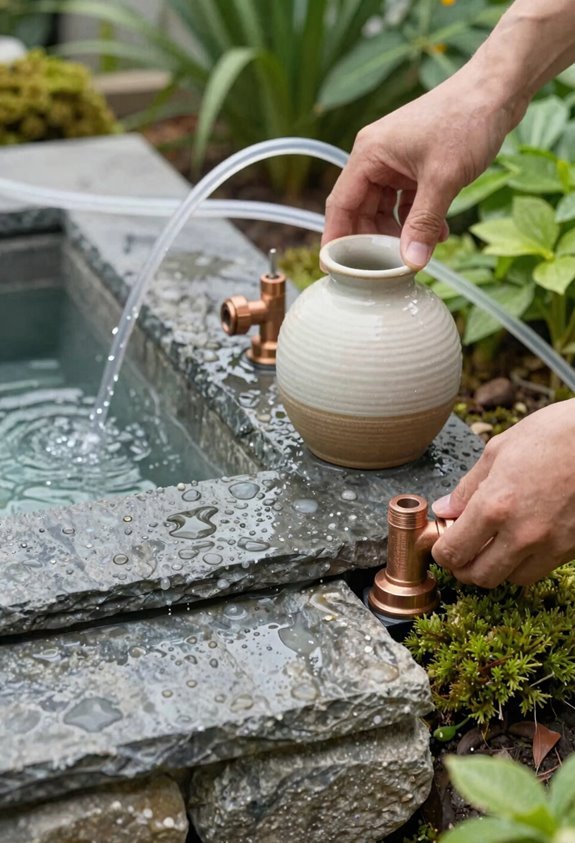
Where exactly does all that circulating water go if there’s no visible pond? I’ve built my pondless fountain around a buried basin that collects every drop, with the aerated waterfall returning water underground through layers of gravel. You’ll dig deep, install the basin, and run tubing through backfilled soil to your garden fountain feature.
| Component | Purpose |
|---|---|
| Hidden pump | Powers circulation from submerged position |
| Pump access | Trap door in hardware cloth for seasonal maintenance |
| Liner camouflage | Buried edges beneath rocks for seamless integration |
| Debris protection | Mesh cloche shielding intake ports |
Connect your submersible unit, bury wiring in conduit, and anchor everything against displacement. Regular maintenance means monitoring levels, clearing mesh screens, and winterizing responsibly. Your water feature disappears into the landscape, inviting wonder without demanding dominance.