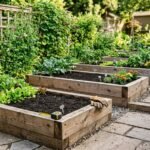
I started with two 4×8 beds, about ninety-six square feet total, and that first season taught me more than any book. I could manage the soil, test layouts, and spot irrigation problems before they spread.
Now I add one bed at a time, only after I know what my family actually eats. The real question isn’t how many beds you can build, but how many you’ll tend when the August heat hits. Your answer starts with restraint, not ambition.
Start With 2–3 Raised Beds (Not 10)
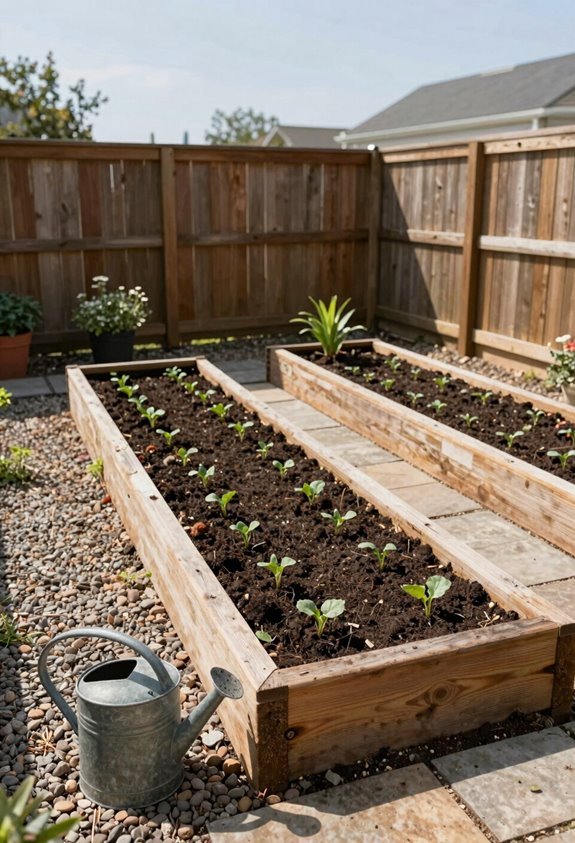
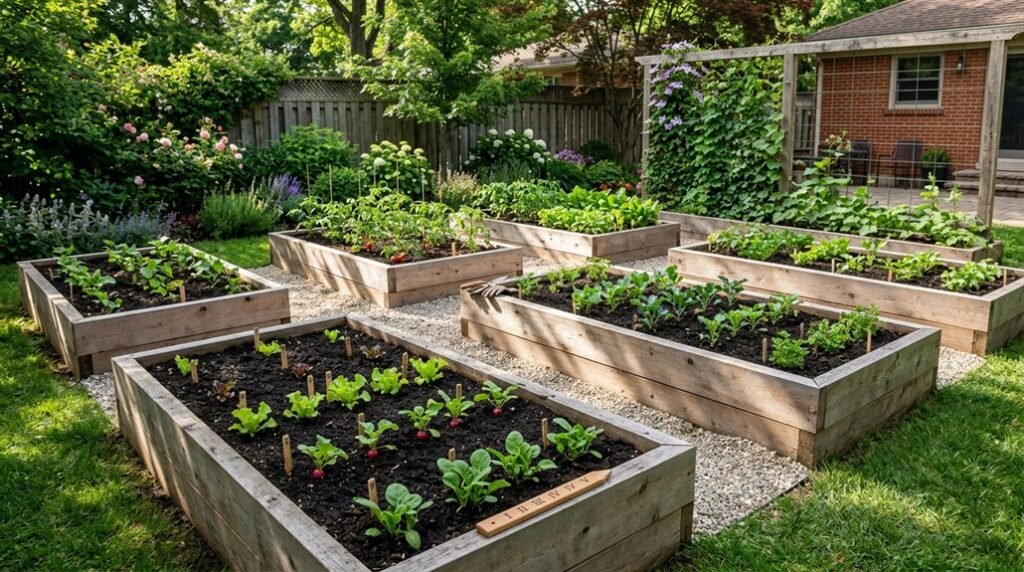
Why overwhelm yourself with a sprawling garden before you know what actually grows in your soil? I’ve learned that starting with 2, 3 raised beds builds confidence without crushing your schedule. These starter beds, typically 4×8 feet each, give you roughly 96 square feet of growing space, plenty for a family learning together.
Smart space planning matters from day one. I always leave room for pathways between beds, because you’ll need access for harvesting and maintenance. Soil prep for a compact setup feels manageable, not exhausting, and you’ll actually finish the job properly.
This restraint creates breathing room for an expansion plan that responds to real experience, not optimistic guesses. Once you’ve mastered irrigation and identified your family’s actual eating patterns, adding another 4×8 bed becomes a celebration, not a rescue mission.
How Many Plants Fit in One Square Foot?
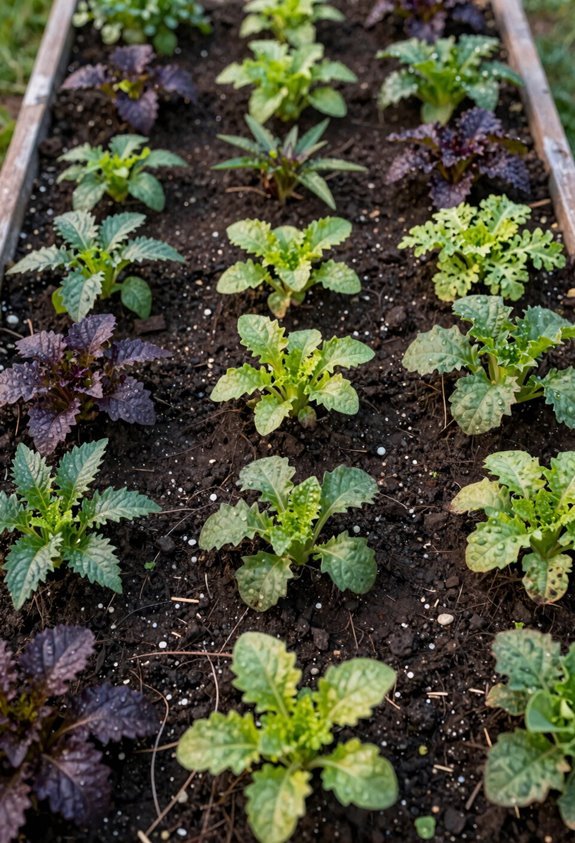
Exactly how many plants belong in one square foot depends entirely on what you’re growing. In Square Foot Gardening, I use a simple grid system to maximize my raised bed without overcrowding. Basil gives me 4 plants per square, while carrots pack in at 16 per square foot, quite a difference in planting density.
Tomatoes and peppers demand their own space, just 1 plant per square, since they need room to breathe. I plant cucumbers at 2 per square, but I’m careful with vining crops that require more air circulation between leaves.
Crowding plants reduces airflow and invites disease, so I often choose spacing beyond minimum recommendations. Your bed size and total gardening space determine how many squares you’ll fill, making each per-square-foot decision count toward a good harvest.
Pick Crops Your Family Eats Weekly
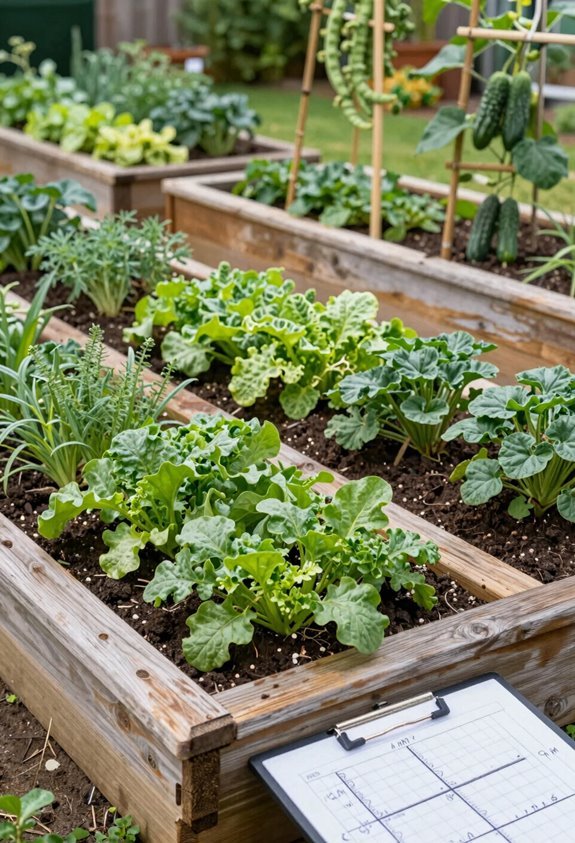
I’ve learned that cramming every square foot with plants means nothing if my family won’t eat the harvest. That’s why I focus on crops your family eats weekly: tomatoes, peppers, cucumbers, lettuce, and herbs, before I plan my raised beds.
When I map my square-foot gardening layout, I match each plant to meals we actually crave. I grow tomatoes for sauce, peppers for stir-fries, and lettuce for constant salads. Fresh herbs like basil and cilantro fill the gaps between larger plants.
This approach means every 4×8 bed serves our dinner table, not my gardening ego. I prioritize high-yield staples we consume without prompting, so tending these raised beds feels rewarding, not wasteful. Your garden should welcome you home.
Map Your Weekend Build Layout
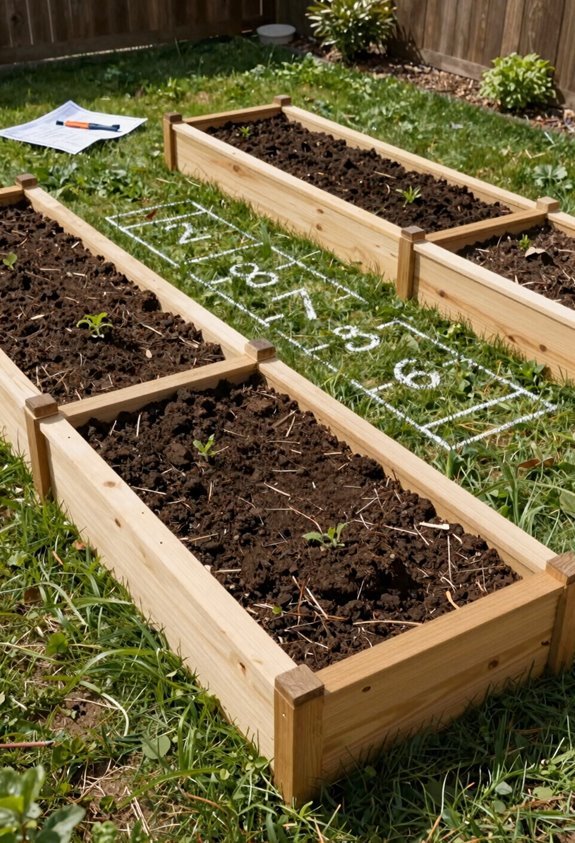
Where do I even begin when the weekend’s short and my yard’s a blank slate? I start with a simple layout: three 4×8 beds arranged for my weekend build, leaving room to breathe and move.
- Space 4×8 beds with 3–4 feet between them for accessibility and airflow
- Add 2-foot walkways around perimeters for comfortable tending
- Position irrigation lines along bed edges before filling
- Sketch an expansion plan with sun exposure and water access in mind
I keep bed spacing generous because cramped raised beds frustrate every harvest. My starter trio fits most families, and I orient them north-south for even light. With cedar or plastic-sided options at 16 inches deep, I’m growing this season without overwhelm.
Scale Up After Your First Harvest
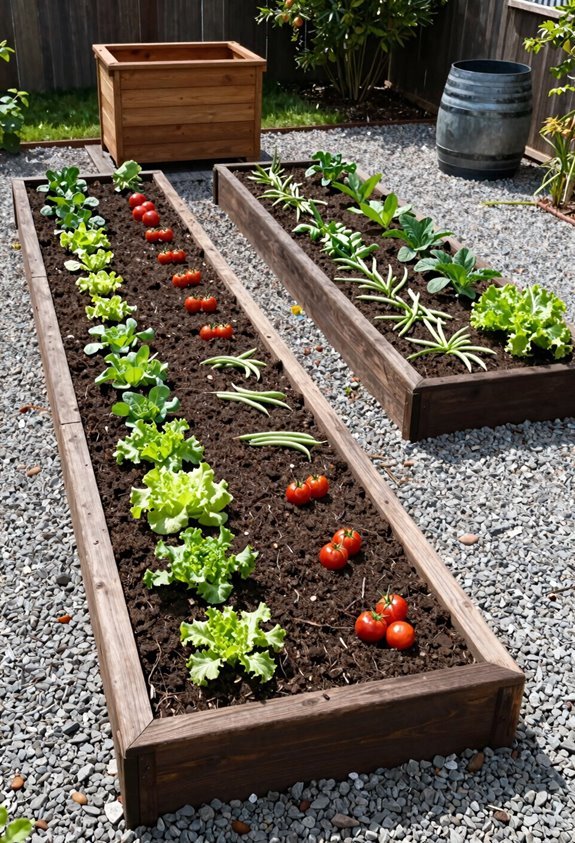
Why stop at a successful first harvest when your growing confidence demands more room to flourish? I started with three 4×8 beds, giving me ninety-six square feet to learn rotation and rhythm. That modular garden structure became my foundation.
After my first harvest revealed true consumption patterns and maintenance limits, I planned my expansion strategically. Most families of four eventually need eight hundred to twelve hundred square feet of growing area, but I adjusted downward based on actual yields and time.
My garden layout now incorporates two to four feet of access around each bed, making future growth seamless. I add 4×8 beds in compatible configurations rather than rebuilding existing structures. This scalable approach protects my workload while systematically increasing production capacity through manageable, incremental additions.